

Episode #58 · Jun 9, 2026
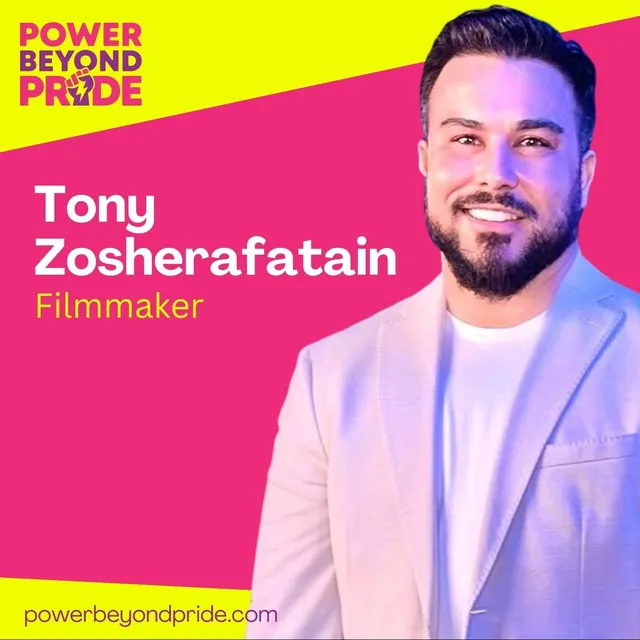
Visibility, Humor and Trans Stories with Tony Zosherafatain
Listen or watch
Watch this episode
In this episode
Daniel W.K. Lee and Mattie Bynum sit down with filmmaker and documentarian Tony Zosherafatain to unpack the emotional impact of telling trans stories in today’s political climate. Tony reflects on how his own transition inspired his filmmaking journey and discusses the deep connections he formed with the people featured in Trans in Trumpland.
The conversation explores visibility, progress, backlash, and the realities of navigating life as a trans person in red states across America. Alongside political commentary and personal reflection, the episode also celebrates queer humor, resilience, community, and the joy that continues to exist even during difficult times
TranscriptRead the conversationAbout 44 minutes to read · 6,607 words · Tony Zosherafatain, Daniel W.K. Lee, Mattie BynumOpen
- Tony Zosherafatain
- That scene was so emotional. Like I was in the room with Ash and we were showing each other our photos. It showed me how much progress has been made so that Ash's generation can come out younger and see themselves at 15, 16. I didn't know what the hell trans was. I think that's part of the reason why they're attacking us so much is because of how much progress has been made. It's like a pendulum, right? I'm proud of these younger trans and queer kids coming out. Bless them. That's amazing.
- Daniel W.K. Lee
- Hello and welcome to Power Beyond Pride, a weekly queer change making podcast bringing you voices and ideas from across our fierce and fabulous spectrum to transform our world. I'm Danielle W.K. lee, poet, author, and Billie Jean is not my lover.
- Mattie Bynum
- Ooh, yes, Billie Jean. And I am Mattie Vinyl. The one and only, loudest in the, the sweetest, the biggest heart and also the most ferocious lion you will ever meet. That is who I am in a nutshell. Yay. And Billie Jean was not my lover. But I did beat it a couple times. So I just. I mean, we gotta go there.
- Daniel W.K. Lee
- Uh,
- Mattie Bynum
- We are your co hosts on today's Queerpet's journey and we are delighted to have Tony. Okay, hold on, wait a minute. Tony Zoscher. Offatin. Offatin. I said it. Yes. Okay. Tony is an award. Thank you, baby. See, I heard him. He has a beautiful voice. Tony is an award winning director, producer and writer known for his timely and innovative stories. His work focuses on the ways in which people navigate identity and intersectional issues. Welcome, Toni.
- Tony Zosherafatain
- Thank you so much. It's an honor to be on this podcast. And uh, you said my name so well. It was like you're a pro.
- Daniel W.K. Lee
- Like we practiced it before we started or something.
- Mattie Bynum
- We did not just have a ten minute tutorial. Okay. Yes,
- Daniel W.K. Lee
- yes. Thank you so much for joining us on the podcast, Tony. For our audience, just to name a few of your titles, you've done short films, Fratello Venture out and short documentaries. I am Isaac. Call me Kai.
- Tony Zosherafatain
- Mhm.
- Daniel W.K. Lee
- Finding Cedar and your feature documentary, Trans and Trumpland. Why don't we. I'll start off with this question. How has your lived experience shaped or imprinted itself on your work?
- Tony Zosherafatain
- Yeah, absolutely. I first got into filmmaking in 2012 and that was only a year before I started my transition. I'm a trans man, so I. My, my identity directly impacts my work because it was transitioning that got me into filmmaking because I saw how little stories there were at that time and even now about trans people. So I was like, okay, well, I studied some film. Why don't I get into this and tell these stories that need to be told? Because I feel like at the time, right now, trans people are not in front of the camera or behind the camera as much as they need to be, and queer people, too. So that's. That's how I got into it, was I just felt this deep need to tell our community stories. So immediately, right away, I just connected this need for social justice for trans and queer people with filmmaking. So I mostly do documentaries, but I am getting into scripted a little bit more. I have some friends that are like, can you produce my scripted films? And I'm like, all right, I can do this. But. But y. Yeah, I love telling authentic stories.
- Mattie Bynum
- Yeah, no, I love it. And I think that's a beautiful thing that you allow space to share those authentic stories. So I got a question that's going to be flipped opposite. So instead of how have you imprinted on your documentaries and films, how has meeting the people you have worked with imprinted on your life? Like, how has it reflected to make you either be more introspective or to value things that has happened to you?
- Tony Zosherafatain
- And I realized, like, how much privilege I have living in a blue state as a trans person, because I can still, at, uh, the end of the day, fill my testosterone prescription. I can have some rights of. I get discriminated against, but these poor people that I met, they don't have those rights. And we live in the same country, and that's crazy. So they imprinted on me a lot. They. They made me more grateful. They made me more committed to telling these stories, and they made me, like, more committed to fighting for trans rights. And they're just lovely people because they're fighting every day in these awful states. Every day when they're so.
- Daniel W.K. Lee
- Have you done much? Kind of follow up on some of your subjects, particularly with respect to trans and Trump land, given this kind of. We're gone into this terrible, well, circle of violence with. With our own. With our own history, I guess.
- Tony Zosherafatain
- So, yeah, I've been following up. I stay in touch with all them specifically. I immediately followed up after Trump won with Ash, who's our North Carolina. He' a trans kid at the time of filming was only like 16. He's like closer to 18 or 19 now, and he's in college. So I was like, how are you doing? You're getting attacked as a trans kid every day. And he's good. And so I check in with them. Um, Ivana from the third episode, she's down in Mississippi. And I check in with them. I'm like, how are you guys doing? What do you need for me? And they're such fighters that they're always like, oh, yeah, I'm good. They always. They're like, yeah, don't worry about me. But I have thought about a season two. I just. I don't know emotionally if I'm ready for that, though. It's a lot.
- Mattie Bynum
- Yeah, I know it is a lot. But we definitely appreciate it as an audience. I just need m you to understand that. Because my next question was going to be, is there a number two coming? Because I'm telling you, watching it for the third time, I still saw things that I didn't see the first time. And I think a lot of people really, who have watched it, I know for me, I was able to see a part of me in each case, in each person that you talk to. Like, Ivanka, first off, honey, I'm very flamboyant as well, and I love my fur just like she does, so I love it. And I grew up in a black hairstyling salon, so I know all about the freeze curls and the pump it up. So I thoroughly enjoyed watching all of them. But I think you could definitely come out for second one. Yes.
- Tony Zosherafatain
- I think I gotta do it. I think I gotta go. It would be different states. It'd be still red states, but I think different ones. But I think you're right. Everybody always asks me, like, tony, when are you doing season two? And I'm like, all right, maybe I gotta buckle up and do it. But it's emotional. But it's. It's joyous too, though. It's nice to meet these people across the country. Yeah.
- Daniel W.K. Lee
- And isn't that the. Really the definition of the work you kind of. It's like. It is arduous, but it does. Can give you unexpected joy. Right, so.
- Tony Zosherafatain
- Exactly.
- Daniel W.K. Lee
- It's a kind of rewarding in that way, I'm going to take a quick step back with a quick this question. I know from growing up as a child of refugee parents that there is often a lot of pressure for their children to be high achievers. Uh, would you mind sharing what your experience was with, like, growing up? What was your journey? You have Iranian father and a Greek mother. Did you get kind of experience a kind of. I don't know, what's the way to say this? Like a. A, uh, desire to overachieve, perhaps to kind of, like, feel like you, you're, you're, you're, you're. You have a place in this world or earn your place in this world?
- Tony Zosherafatain
- Oh, yeah. I mean, I grew up with, like, Iranian parents there. My dad, if I got an A in a really hard class, he's like, why not an A plus? If I got A plus, why not a double A plus, which doesn't even exist? That's like the type of dad I had. My. My mom, like, Greek people are a little more chill. They're still like, whatever. But my parents always wanted me to have a better life than they did because they were both immigrants. So it was always ingrained in me and my brother. If you don't do have good grades, you know, you're just gonna do physical labor like us, and we don't want you to do.
- Mattie Bynum
- They.
- Tony Zosherafatain
- They wanted me ideally to become, like, a doctor or lawyer. That's very Iranian. But I became a filmmaker, so I rebelled a little bit. Still a successful filmmaker. But, yeah, I. I had that. That pressure growing up to be, like, a perfect straight A student athlete so totally resonates with me.
- Mattie Bynum
- And I relate to what you were saying. My dad was the same way. I come home with an A, and he like, okay, your point is, or why couldn't you do better? And I'm like, I got 100. What do you want me to get? 110, 120? And he was like, why not? Okay, so I definitely get you on the parents, but I do want to go back just a little bit to Trampland, because there was a part of Trompland that you did that really stuck out to me. And that was the conversations you had with Ash. And by the way, I'm from North Carolina as well, so I totally get all the red state. Good old. So, yes, I live in one myself. But there was a good moment where y' uh, all were sitting there talking and you were, you expressed to him that when you grew up before 2000 and before 2005, there was never a conversation center brown trans living period. So. And then watching the documentary, the first thing that stepped out to me was Ashley was like, I wish I would have had the opportunity to do what you're doing now in school instead of waiting till later on in life. Because growing up in the 80s and 90s, first off, you didn't even speak about gay and lesbian, let alone even knew that there was even people that were trans. So how did that moment sit with you and having that time to be able. Because it was almost like you were able to go back to your younger self and have a conversation with Ash. So how did that. I guess my question would be how did that resonate with you?
- Tony Zosherafatain
- I needed a moment, I needed a Kleenex. And for me it showed me how much progress has been made like right now so that Ash's generation can come out younger and see themselves. Because I didn't have that growing up at 15, 16, I didn't know what the hell trans was. I don't even think I knew what uh, like any anything was that age. I didn't hear trans until 19 in college. So I think that's part of the reason why they're attacking us so much is because of how much progress has been made. It's like a pendulum, right? So that was a very emotional moment because I saw myself in Ash because I knew at his age too that I was a trans man. But I didn't have the access to treat to testosterone. I didn't have the words yet.
- Mattie Bynum
- Most definitely because even when you were talking to trans, to Ash about it, the first thing I remember I was thinking in my thinking process while watching it was. I remember growing up, all I wanted to be was just a woman because I knew I was a woman. I didn't know what trans was until I think someone called me a trans woman when I was 25. And that was the first time I had ever, ever heard trans or be referred to as a trans woman. And I was like, no, baby, I'm a woman. And they're like, no, but you're trans, right? And I was like, um, okay. I mean, I'm not in transition at this moment. I'm here and I'm sitting and I'm a woman. So I definitely understand that.
- Daniel W.K. Lee
- Well, we will return talking a little bit about Trump land, at least the United States, after we take this short break. Please stay tuned with this episode of Power Beyond Pride, where we're in conversation with Tony Zoshirafitan. Welcome back. This is Power Beyond Pride, a queer change making podcast. And I am Daniel W.K. Lee, here with my co host, Mattie Bynum, talking to Tony Zosarapata. Yes, yes. I'm like, I keep on waiting for a little confirmation. I don't know why, but so my first, so my first question back is in this kind of. We were speaking earlier about this kind of turn of the wheel coming back to another Trump administration. Like, it's actually a turn of the wheel that's quite larger in that it doesn't seem that we're actually going anywhere. We're spinning our wheels in terms of have we made much progress and particularly even now.
- Tony Zosherafatain
- I think there's been, like, more visibility since the 90s. I will say that I think that's happened. I think there's a little more access to hormones, for example, and gender affirming surgery. But I think you're so right, Daniel, uh, with what you said about the pendulum, it keeps swinging. I feel like politicians swing it on purpose and create, like, new scapegoats. And now trans people are scapegoats. So it's like, it doesn't feel like we've actually gone too far since, like, Stonewall, for example. I do think some things have changed, but other things have stayed the same, to be honest.
- Daniel W.K. Lee
- Like what things?
- Tony Zosherafatain
- I think, like, access, uh, to hormones. I think, like, a lot of the research, like, about transition has changed. I think there are more trans characters and queer characters on screen, but the things that haven't changed is, like, broader understanding of trans people. Like, just having compassion towards trans people, especially in religious communities. I feel like that hasn't really changed a lot.
- Mattie Bynum
- It's interesting because I was asking you, do you think that we are more visible or do you think we're more of a novelty? Because sometimes I feel like people treat us like a novelty, sometimes more so than giving us the credit that we deserve of just being here in the same space with you.
- Tony Zosherafatain
- But why the hell did we. How did we go from 2014 to now with all the scapegoating? I don't understand. I don't know. I feel like a pandemic shifted everything, but I don't know. Yeah, I think. I think. I think we. We just need to be seen as. As humans.
- Daniel W.K. Lee
- Did the. Did the pandemic actually change your creative calculus a little bit?
- Tony Zosherafatain
- I think it did because we're all, like, stuck inside, and I feel like we all needed outlets. Whatever that was. A lot of people did the crochet or whatever. This baking.
- Mattie Bynum
- Don't die. Don't frown on crocheting. Don't frown on crocheting because I crochet, crossfish, and knit. Yes. Don't do that.
- Tony Zosherafatain
- No. Crochet is a fine. It's a fine art. But I feel like I turned into. Yeah, Like, I. I committed more to my filmmaking, I think, in 2020 and onwards. Definitely. It was a lot of editing. Was a lot. There was a lot of editing for transit tropline 2020. So, yeah, I guess I had a pro.
- Mattie Bynum
- I was like, I needed a break. Yes. Praise the Lord. Y' all getting on my nerves, so I can agree to that. But let me ask this question. I do want to get political again one more time. Cause I love politics. But, uh, so New York City is considered a safe sanctuary city for m. Not just trans, but LGBTQ members and also immigrants. Do you think that we will see more safe sanctuary cities pop up in the United States in the next coming years. Only because we are living under a tyrant that thinks that he can abolish anything and everything.
- Tony Zosherafatain
- I think so. I think like, I try and be an optimist, I'm a Sagittarius. I'm like, I think that because the pendulum has swung so far right, it's going to come back left if we, if it is just going to be a pendulum kind of thing. But I think we will see more pop up across the country. I know Northeast has a ton of them, but maybe I like to see like more states in the south like Austin become one if it hasn't already. I'm sure Atlanta already is. But yeah, I think, I think we'll see more because when you have this much like dictatorship, there's more resistance too. It's always like a counterbalance.
- Daniel W.K. Lee
- I feel like, I think though in the south there, there is something. And I'm, I'm not. This is speculative, I guess that. I mean, we have in, in Louisiana a pretty awful governor, and it's not like our shit face Governor Ron DeSantis 2.0, and that's something to be called 2.0 of him, um, but would try to ape this kind of like tyrannical, like, application of their agenda. And I can see how even, uh, like in a state like Louisiana that where even though New Orleans manufacture, like, produces or like really funds the state and because of our tax base in so many ways that the state would like, would enact like punitive actions somehow towards, you know, a city like New Orleans that would be like, oh, we're going to be, we want to be a sanctuary city or something like that. And I do think that they're. There could be kind of resistance in the south or parts of Greater South, Deep south or whatever there, where there could. There could be like another level of, of suppression, not, not just by the President, but obviously by the governors.
- Mattie Bynum
- Mhm.
- Tony Zosherafatain
- Yeah, that Ron DeSantis effect, like across the South. Yeah.
- Mattie Bynum
- Cause you got to remember, Georgia's still a real estate. And if, if Texas, if Houston hasn't become a safe sanctuary city by now, with all the LGBTQ members that live in Houston and Dallas, Fort Worth, I don't foresee it happening. And the only reason I say that is because I look at it like this and I'm going to relate it back to. And I might get some flack for this, but I do not care because I stand on everything I say. I'm going to relate this back to a racial situation. No Matter how loud black people are or how loud LGBTQ numbers are, cisgender will always be louder because their money and their voices carry over ours. And I think that that's what's gonna always stop us from being able to cohabitate peacefully. Because you gotta think about it. The victim, the hit dog, or holler every time. So they play victim so hard, that. And so loud that no matter how much progression we have, whether it was stonewall, even whenever we got gay, to be able to marry and equally be married, like, yet again, you gave us a bone, but you didn't let us get any closer to the table. Because even though. And I say this a lot, but even though we had the equality to get married, who benefited from that? CIS white gay men did, and lesbians, not the entire LGBTQ community did not benefit from that. So even though we went far, we still haven't gotten nowhere.
- Daniel W.K. Lee
- This. This package of privileges or rights, if you want to insist on that, and just said, okay, you're now allowed to have these things. And what has. The kind of. What has gay rights or any kind of rights have been, for the most part, being. Or saying. Saying that we deserve these rights. We deserve these rights. And so we're just trying to enlarge these circles rather than what radicals and queer people or queers in terms of, like, capital Q politics, which has been saying. No, the whole structure is prob. The problem. The problem is the idea of. Of part portioning rights for specific types of people. Everyone should have these rights, inheritance rights and all these things. Why should they be the providence or special for married people? That's. I think that's why we continue to just be so incremental, because our aspirations aren't to dismantle the systems. It's only to kind of, like, ingratiate ourselves to those things so we can enjoy them. So I'm with you there. At least kind of like, yeah, that I.
- Mattie Bynum
- Our.
- Daniel W.K. Lee
- Our. Our vision of, uh, politics has been on the short side because we were fighting for specific rights that we feel entitled to rather than always attacking a system that is. Just. Is part of these bifurcations or divisions and stuff like that, you know?
- Tony Zosherafatain
- Yeah, it's like after. I feel like the LGBTQ movement became something where, like, we wanted to get ingrained into this, like, cis heteronormative culture and lifestyle. When we don't really, at the end of the day, need that. There's nothing wrong with not wanting that or being different than that. And I agree, like, we have to, I feel like, topple the system to create better lives for everybody. Like, I think. Yeah, I agree with you both there. That's like, when you try and become something that you're not, it backfires. M and M. I feel like we need to embrace more, like, queer transness than anything.
- Mattie Bynum
- I think the beautiful thing about individuality is the fact that we are all individuals. Um, I can never remember the lady's name, but she's the, uh, doctor that always talked about how we're all from black people. The little short lady that has been around for years. But I remember she made a statement one time and she was like, instead of being a melting pot, why can't we just be a salad and let everybody be individual in who they are? I think that's the beauty of America. I can be 5 foot 9 thick, curvaceous, gorgeous and sexy and strut down the street, and you can be 5 foot 2 and a size 2 and do the same thing. And we both should be happy to be able to do and be our own selves. I think the moment that we're trying to all be one thing is the issue that stops us from getting past where we are and furthering the future. Because, like I say, individuality is what makes us special.
- Tony Zosherafatain
- Yeah.
- Daniel W.K. Lee
- And it actually kind of circle back to what you were saying earlier, which is that this kind of the bigger the platform, right? Like the. The. The. We can take up more space and our voices are amplified more or whatever. And that has. That has a way of distorting the playing field. And that is always a consideration in which how we can. We. How we are rendered, how we are perceived, how we get to be represented and stuff like that. And even though there's always this. There's always our own pushes to do that, there's still, uh, limitations to those things. Because existing power structures, kind of like will. Can have effect on, for example, how much distribution Tony's films can have or the like, how quote, unquote, palatable it might be if the subjects are trans or trans people of color or poor and that kind of thing. So, yeah, I mean, I think there's always going to be a limits of. Limits of representation and stuff like that. Not just in terms of the marketplace, but also as an ends, so to speak, towards, like, liberation. They kind of Keep on thinking of, oh, representation. Is the, is the, is the or, or even diversity, right? Is, is the, is the answer?
- Mattie Bynum
- You know, those segments be going by so fast. The conversation is so good.
- Daniel W.K. Lee
- I mean, they do, they do, they do. We're taking a short break here, but we'll be back. And to ask more insightful and prying questions to our guest, Tony Joshera.
- Mattie Bynum
- Welcome back to Power Beyond Pride where we are talking with the amazing Tony. I am not going to butcher his last name, so do not listen for me to say it, but I will say that he is gorgeous, beautiful, sexy and he is very smart and intelligent. So it's a great conversation. And I'm also accompanied by my amazing co host that I cannot leave out, Mr. Daniel W.K. lee, who is the most wittiest person in the room. Always. And I love it. So since we are back, I do have one question for you, Mr. Tony, is what is one feeling or lesson that you have inside of you and that when you are creating the films that you want to leave on, people who watch your films and your documentaries, what's your lasting impression?
- Tony Zosherafatain
- My lasting impression is that trans and queer people, we are so fucking badass because I'll tell you why. We find joy and humor in the most worst situations on earth and our humor and our sarcasm is unmatched. I gotta be honest with you, there's nothing like LGBTQ humor. We're just hilarious. So my lasting impression is no matter what you're going through, no matter how hard it is, if you live in a red state, you can find joy, you can find community, and you can all live your bigots. Yeah, I like it.
- Daniel W.K. Lee
- Sarcasm. I'm gay and I'm Cantonese and Cantonese is the most sarcastic language in the fucking world. It is right up my alley. I get you. All right, it's time for a speed round. It's fun for speed questions. Speed round questions. Let's get that right. And so we're just going to get to know you a little better. We want you to tap into your reptilian brain and try not to overthink the questions.
- Mattie Bynum
- Well, not too fast.
- Tony Zosherafatain
- Do it. All right. Is it like Truth or dare?
- Mattie Bynum
- It could be.
- Daniel W.K. Lee
- You don't know.
- Mattie Bynum
- We say truth or dare, but I mean, uh, it's more so truth than it is dare. But yeah, you know, I think that's something we should come up with, Daniel. We should come up with dares for people to do if they don't want to ask the question. Answer the question. All uh, right. So your first question is going to be what is your favorite ice cream flavor?
- Tony Zosherafatain
- Rocky Road. So good. I. That's.
- Daniel W.K. Lee
- Hm.
- Tony Zosherafatain
- My.
- Daniel W.K. Lee
- Go to Rocky Road. Does that have marshmallow in it?
- Tony Zosherafatain
- I don't remember. Yeah, it has everything. I don't know. Pretzels too, I think.
- Daniel W.K. Lee
- Pretzels.
- Mattie Bynum
- Okay.
- Daniel W.K. Lee
- I haven't really eaten ice cream in a long time, so. All right. What is a personal motto or mantra that you live by?
- Tony Zosherafatain
- Ooh, that's a good one. I think glass half empty, half full. Because I always try, no matter what I'm going through, to see how the glass can be full every day. I practice gratitude at the end of the day. So I feel like, no. I guess the motto would be no matter what you're going through, there's always something to be grateful for.
- Mattie Bynum
- That is so true. So true. What is a mindset? Choice. But it has to be. I think you, you are correct. And going back into what you said earlier about just being, staying joyful and hope you have to find the joy in everything you do. You do. That's the only way we get forward. So what's one specific way you prioritize your mental health?
- Tony Zosherafatain
- Hm. I get movement in every day, even if it's just a 30 minute walk. I'm also, I always. I have a lot of energy so if I don't get it out, I get like kind of crabby. So I take care of myself. First thing, uh, in the morning I try and go for a little walk, get the like my son in, go to the gym. Because I feel like when you get those endorphins running physically your mental health improves right away. That's just me though, maybe.
- Mattie Bynum
- And your day goes by so much smoother. I start mine off with exercise too. It's the best way to get your day to go.
- Daniel W.K. Lee
- Yes, I am a 5:30am gym person as well, so. Absolutely.
- Mattie Bynum
- Well, I ain't say all come. Uh, on 5:30. I'm still in the bed at 5:30. I'll meet you at 8:00'.
- Daniel W.K. Lee
- Clock. All right, next question. What's a specific moment when you felt truly connected to a group of people?
- Tony Zosherafatain
- M going back to the sarcasm humor thing. Like I went to LGBTQ Outdoors Outdoor Fest. It's like this organization called LGBTQ Outdoors. I volunteer for. It was last. Last a month, and I was there with 150 trans and queer people, all kinds of LGBTQ spectrum. And I was like, felt so connected to them. Cause we were just in nature together, we were in cabins together. And I'm telling you, I was laughing my ass off every second. Like, I have never felt so connected. That's when I realized our humor is unmatched. But yeah, I would say that would be one moment I felt we were
- Mattie Bynum
- one drawing off of that moment that you felt connected. What's one piece of advice you'd give to someone trying to be a better ally in this day and age?
- Tony Zosherafatain
- M. I think the best allies, they don't assume they know everything and they listen. And if they don't know something, they do their own research. They ask politely, but it's just all about listening and not assuming. You know better than. Than the minority that you're talking about.
- Daniel W.K. Lee
- 100%. Absolutely. Next question. Do you have a favorite tattoo?
- Tony Zosherafatain
- Ooh, yeah. I have so many tattoos. One of them, my arm sleeve, covers up my phalloplasty scar. So, like, phalloplasty is like bottom surgery for trans men. So I think it would probably be my arm sleeve, like the. I have a Spartan soldier on my bicep, so I think that's cool because it's like my inner warrior. So, yeah, my tattoo is. My arm sleeve is all Greek side. And then I have a back tattoo that's pers. My Iranian side.
- Daniel W.K. Lee
- Not might. I mean, I think most people who ever have tattoos are just like, they're just waiting or saving for the next one. I know I am.
- Mattie Bynum
- Okay, so what's one thing you wish more people knew about you? Mhm.
- Tony Zosherafatain
- M. I'm like, well, I am single, so there's that.
- Mattie Bynum
- I mean, the cat's got the bag, y' all
- Daniel W.K. Lee
- put that in a video clip. Thanks.
- Tony Zosherafatain
- I know, right? I guess,
- Daniel W.K. Lee
- man.
- Tony Zosherafatain
- I speak four languages. Spanish, a little bit of Farsi, Greek, and then I guess English too. I guess I speak English. Maybe not. I'm trying to think. What else? I don't know. Maybe I think I'm boring or something. I want to climb Mount Everest. So that's maybe something that people don't know about me. I want to try and climb it, so that's cool. I know it sounds like a crazy goal, but I can do it. So, yeah, I don't know. Are those interesting facts? I'm not sure.
- Mattie Bynum
- Send me Fish is when you get to Mount Everest. I'm not coming with you, but the other way I catch you.
- Tony Zosherafatain
- I'll send you. Yeah, I'll send you a, uh, video so you can feel like you're there.
- Daniel W.K. Lee
- What's one thing you're currently obsessed with that you're slightly ashamed about?
- Tony Zosherafatain
- Oh, I'm like, oh, no. I know. There's like a PG rated. No. What am I obsessed with? Oh, I have so many obsessions. I do have a Marvel obsession. DC obsession. So, like, I am a bit of, like, a comic book nerd. Like, I just. I just finished Peacemaker Season 2, which is like a DC comic show. So, yeah, I do. I do have a little bit of that nerd in me.
- Mattie Bynum
- Okay, so since you brought that up. Since you brought that up, DC or Marvel or are they equally matched?
- Tony Zosherafatain
- Ooh, I think it's Marvel slightly beats DC. But DC's recent movies and shows, they're on the upswing, like Superman. So could be. I could answer DC in a few years. I liked it. Yeah. I think it had a good, like, theme, like empathy and stuff. You didn't like it?
- Daniel W.K. Lee
- I loved it. I thought it was actually the best superhero movie I've seen in a long time, if not ever.
- Tony Zosherafatain
- Uh, yeah, I thought.
- Daniel W.K. Lee
- Even though I. Even though I love every Henry Cavill, but, like, yeah, I thought it was actually really great.
- Mattie Bynum
- I felt like it was a little too. But, you know, it's funny. It took me back more to the comic book. I will say that. So it was more comic bookish and it was cinematic, but I thought it was a little too trying to be funny, I guess, is what I got from it.
- Daniel W.K. Lee
- You know, what it was, was very earnest, and that's. Can be very arresting in a very sarcastic, gay, queer milieu. We're like. We're like, is this earnest? And we're like, we don't know what to do with that.
- Mattie Bynum
- Between Superman and his dog, I was kind of like, I don't know.
- Daniel W.K. Lee
- It wasn't even his dog. It's his cousin's dog.
- Tony Zosherafatain
- It's his cousins.
- Mattie Bynum
- Yeah, well, I've got me. Oh, yeah. Okay, my bad. I'm sorry. I did fall asleep halfway through it. Don't. Don't sue me. Okay.
- Tony Zosherafatain
- Oh, no, I think it's a.
- Mattie Bynum
- It earns.
- Daniel W.K. Lee
- It's. It's. It earns like a full viewing then. Yeah.
- Mattie Bynum
- Guess I gotta go sit and watch.
- Tony Zosherafatain
- Um, you gotta have the director of Superman so you can grill him.
- Mattie Bynum
- I know, and I have learned this day and age. Let me be careful what I say. Don't come after me to direct the Superman. I was not trying to put down your film, so if you are listening to Paul me, I'll cry. I promise you. It was cute. I'm good. Everybody else loved it. There you go. That's my psa. Yeah, you gotta be careful. Nowadays you can't save it so much because you will get canceled. Which I'm actually. Never mind. That's another conversation for another whole show.
- Tony Zosherafatain
- I'm a. I'm an ocean person. Water. Water is my element. Whenever, especially. There's a really good LGBTQ beach called Reese beach in Brooklyn. Whenever I'm there, I feel so grounded because I'm surrounded by community. So yeah, the ocean. Immediate grounding in the ocean.
- Daniel W.K. Lee
- And then finally, what does power beyond pride mean to you?
- Tony Zosherafatain
- Mhm. I think it's going beyond your identity to connect with people, but also being proud of your identity. Because I feel like my identity has shaped me, my adversity, adversities in life as a trans person, how shaped means to become more wise, become more empathetic. So I think my pride is my power in a way.
- Mattie Bynum
- I like that.
- Daniel W.K. Lee
- Where can people follow you and your work?
- Tony Zosherafatain
- The social media, the promoting. Um, if. If you want to learn more about trans and Trumpland, we have a Handy Dandy website, transantrumpland.com We're Instagram, trans and Trump Land, Facebook, Trans and Trump Land, and then me. If you can spell my last name, you can find me on Facebook. And then my Instagram, though, is super easy. It's at Tony Z Films, so T O N Y Z Films. So I made it easy for everybody.
- Daniel W.K. Lee
- Oh, it's good because is.
- Tony Zosherafatain
- I am, but I'm. I'm too like millennial boomer to use it
- Daniel W.K. Lee
- and I got into it. It's easy because it's very addictive.
- Tony Zosherafatain
- Well, Daniel, that's because
- Mattie Bynum
- That's a whole another conversation with. Yeah. And exhibitionist over there. But can we not having that conversation tonight? The show is almost over. Brought up in the beginning of the show about your voyeuristic tendencies. Thank you. That. But I will say I think I have four videos on Tik Tok, so I'm right there with you. And my niece cracks me up. She's always, you need to do more. And I'm like, it's too many social media outlets. Look here.
- Daniel W.K. Lee
- They're all pretty much compromised. The only one I'm I'm trying to like that is, I would say politically not compromised is, uh, upscrolled. And it's still a small platform. But anyways, I just wanted to thank you so much, Tony Tony again for taking the time to have a conversation. Conversation with us and please join us again. We'd love to have you back. Yeah.
- Tony Zosherafatain
- Thank you both for having me. I loved this conversation. Love this podcast.
- Daniel W.K. Lee
- Awesome.
- Mattie Bynum
- Well, thank you. Thank you. That makes us feel so special. Thank you so much, Mr. Tony. And yet again, I'm not gonna say thank you 20 more seven times. But I will say you have been a delight, truly a delight to sit and talk with tonight and, and I've enjoyed it, thoroughly enjoyed it. And for everyone listening, I am your co host, Mattie Bynum. Um, like I said before, I am the loudest person in the room and I love being that person. And you can follow me on my social medias at Instagram, @maddysimone737 at Facebook, Addy Bynum. And uh, I did just tell y' all I had a TikTok so I guess I need to promote that as well. And hold on, I think the name of that one is the same as my Instagram maddysimone737 and I'm your co host, Daniel W.K.
- Daniel W.K. Lee
- lee, poet, author and I admit gen Alpha slang kind of slays and you can follow me at strongplum on Instagram and upscrolled. I am on TikTok but I don't remember what it is. I think it's strong plum as well. Remember to subscribe and get your friends, lovers, neighbors, who enemies, frenemies to subscribe to Power Beyond Pride on Spotify, Apple podcasts and wherever you get your podcasts and check out our site@powerbeyondpride.com Power Beyond
- Mattie Bynum
- Pride is a project of a great idea. Uh, a queer owned design and content agency. Learn more about them atagreat idea.com this
- Daniel W.K. Lee
- episode is produced by Shane Lukas. Mattie Bynum is the project developer. Our editor is Jarrett Redding with support from Ian Wilson and M. Me and
- Mattie Bynum
- Daniel are both just a portion of our podcast host team. We are all awesome, fabulous and beautiful and we invite you to send in your questions and comments to Power Beyond Pride so we can stay in the moment and answer everything that you have.
- Daniel W.K. Lee
- Check out our new episodes each week and we look forward to Queer Change making with you next time. Thank you from all of us at Power Beyond Pride.
Transcribed automatically and lightly checked. If something is wrong — a name especially — tell us and we will fix it.
Episode #58
Visibility, Humor and Trans Stories with Tony Zosherafatain