

Episode #46 · Mar 24, 2026
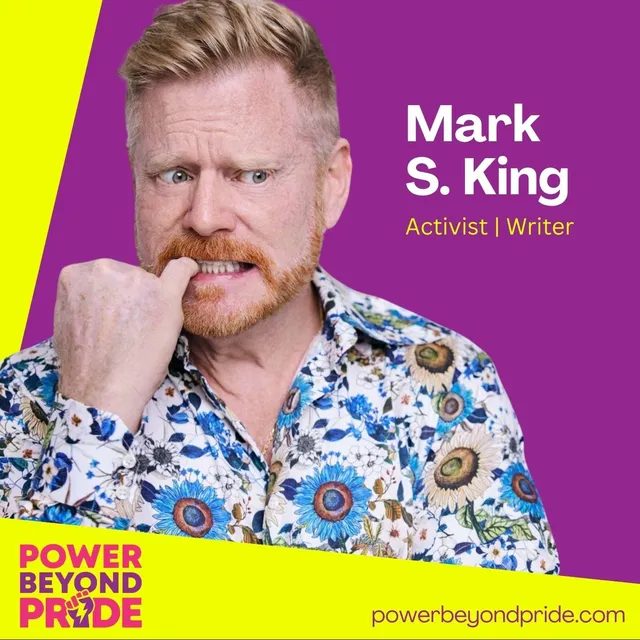
Truth-Telling, Humor, and Hope with Mark S. King
Listen or watch
In this episode
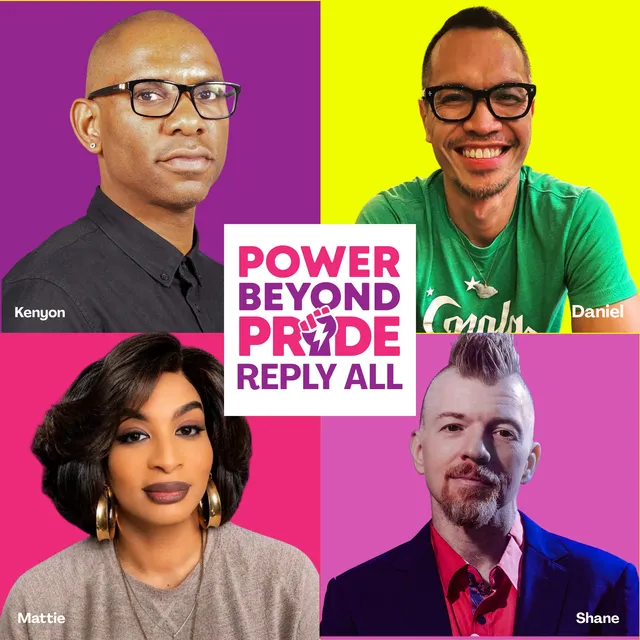
Author and HIV Activist Mark S. King shares with co-hosts Mattie Bynum and Shane Lukas a clear framework for movement work: credibility comes from truth-telling, and leadership means learning to hand the microphone to someone else. He breaks down what mentorship can look like in practice—spotting talent, offering encouragement, making introductions, and helping amplify voices without strings attached. The co-hosts also discuss how queer communities can respond when funding and infrastructure are stripped away, especially around HIV prevention and care access. Mark points to voting as a key lever to “stop the bleeding,” alongside showing up in community and staying engaged beyond the moments that feel urgent for the most privileged. The episode ends with a call to participation: keep building, keep advocating, and don’t confuse visibility with safety.
TranscriptRead the conversationAbout 66 minutes to read · 9,842 words · Mark S. King, Mattie Bynum, Shane LukasOpen
- Mark S. King
- I've always said that activism is driven by those with the most to lose. That's why regular CIS white men like me were so involved in AIDS in the 80s. We were dying. What happened? After we got what we came for, we left and were never seen or heard from again. And we left behind all of these folks who did not have the resources we had. And to me that is the outrage and the tragedy of what happened post aids.
- Mattie Bynum
- Hello and welcome to Power Beyond Pride, a weekly queer change making podcast bringing you voices and ideas from across our fierce and fabulous spectrum to transform our world. I am Mattie Bynum, the hostess with the mostest. And I am um, she. Her. My pronouns I will say. And I'm an actress, comedian, singer, dancer, funny, hoop, plus size model. Just all around great joy to be around. And if not, I don't care because I love me more than anything else. Yes. And I am here today with my beautiful amazing co host, Mr. Shane himself. Go ahead and introduce yourself baby.
- Shane Lukas
- Thank you, Mattie. I am Shane Lukas. He him his. I'm a lifelong harm reduction activist. I am the owner of a great idea and I am actually the victor in the war with a tick that decided to make its home on my nav. So yes, woo hoo.
- Mark S. King
- Woohoo.
- Shane Lukas
- I caught it before it could do damage. So I'm a winner of nature. I feel like a victor. And we are your nature. Always trying to kill you. I don't care what anybody says. Always trying to kill you. All right, you know who not we are trying to celebrate and elevate queer activists today. And today on our queer cast journey, both, both Mattie and I are going to be your co hosts. And in this episode we are talking to Mark S. King. Blogger, Activer, actor. Activer.
- Mattie Bynum
- Activer.
- Mark S. King
- Activer.
- Shane Lukas
- That is a new term. You heard it here. And I am going to make it a thing. HIV AIDS activist and the author of my fabulous disease Chronicles of a gay survivor. Mark, it's so great to uh, go. So great to meet you in person. You and I have been connecting in different digital forms forever. So thank you for joining today.
- Mark S. King
- You are so welcome. I love yalls energy. I'm Mark. He him his. I love to live in a world where we still share our pronouns to make the world safer for all of us.
- Mattie Bynum
- Okay, yes, yes, Love that. I love it. Well first off, um, can I just highlight again? Activer. What is an active or mark? Can you just give us the definition?
- Mark S. King
- I don't know, maybe you're acting like an activist, but that doesn't Sound too good. Because I think I've been the real deal for a while. So I don't know, maybe people say actors sometimes, and I guess that's true. I guess back in the day when I was just a little gaby in Hollywood, I was an actor. That's true. But, gosh, that seems like many lifetimes ago. We get a lot, if we're lucky.
- Mattie Bynum
- That's true.
- Shane Lukas
- We do. And a lot of performers do have an activist bent to them. They, I mean, need. Uh, we go to Pedro Daddy. Our zaddy of. The zaddy of the moment is Pedro Pascal has been quite, quite an activer. So I'm. I'm kind of. I'm kind of okay with that term.
- Mark S. King
- Yes, yes. Well, let's face it. The best activism has a sense of the theatrical, doesn't it?
- Mattie Bynum
- That is true. I think that's why actors and actresses make the best activists. Because we are overly dramatic for no reason and every reason. Yeah.
- Mark S. King
- And no matter what it is we're fighting or talking about or really elevating, we have a sense of humor. We have a little sense of humor. Even in the darkest days. I'm sure we're going to talk about this, but certainly my background, coming of age in the 70s and getting through, getting out of the 80s alive as an activist and AIDS, there was a lot of humor. There was. Gosh, there's a lot of humor. And I'm sure we'll talk about that. But anyway. Yes, well.
- Shane Lukas
- And I'd add courage to that, too, because I think it takes to be a performer, to get on that stage, to get in front of those lights, to, I don't know, do anything, that you've got a room full of people who are sitting there judging you, whether or not you're, like, got the right makeup on or the costumes or whatever. That is a level of courage that I think. I don't know.
- Mark S. King
- Or we've been craving it since we were three. I don't know about you, Mattie, but I have never been a stranger to the spotlight. I have no bones about it. I have no shame about it. Honestly, enjoy being up front.
- Mattie Bynum
- I would think since I became an actor, I tell people now I'm more of a S and M person than I was prior to being an actor. Because it is a sadomasochist to get on stage and sit in there and put your whole life story, especially as a comedian. Like not just being an actress, but being a comed and telling all my own faux pas. Oh, yes, that's a whole different form of sadomasochism, but it's worth it.
- Shane Lukas
- That's a whole dimension. You are walking us down to very different pathways around one's desire for the desire for the limelight and critique. But to your point, Mark, I mean, there's a level of performance and a level of taking that critique as an activist, because you have to be willing to confront people who don't agree with you and who may not like you.
- Mattie Bynum
- Right?
- Mark S. King
- That's right.
- Mattie Bynum
- So as we talk about being actors and activists and everything, Mark, I was telling you before we started the show that we had something in common. So now it is time for me to just talk about what we have in common other than both being beautiful actors. We both have something in common, and we're both fabulous. You have a blog and a book called My Fabulous. Let me make sure I say this correctly. My Fabulous Chronicles of a Gay Survivor. And for a lovely period of my time, I was on a show called My Big Fat Fabulous Life on tlc. Wow. So, uh, we both are very fabulous individuals. And I love you.
- Mark S. King
- My mind was reeling when you told me we had something in common, because I don't know if you're familiar with my kind of checkered past, but there's many things. I have been at one point or another, and I thought there might have been other intersections, but. Okay, fabulous.
- Shane Lukas
- I want to explore these intersections. I feel like you've just, first of all, so much fabulousness already in this moment.
- Mark S. King
- Yeah.
- Shane Lukas
- But also, I'm kind of dying to know, uh, what possible intersections you might have entertained.
- Mark S. King
- Well, I don't know. I don't want to project anything on you.
- Mattie Bynum
- Okay.
- Mark S. King
- But I'm. Yes, I was an actor. I owned a phone sex company for a number of years back in Los Angeles. And I'm thinking, well, Mattie has a lovely voice, so maybe there was that. Maybe it was that. I don't know. And no shade and no judgment, because I owned the damn thing. I made a living, a good one, for a few years, and so I thought, well, maybe it's that, uh. And then there's other darker dimensions of my past, and I don't want. So.
- Mattie Bynum
- Well, did you Google me before the show? Because it's funny you say that, because in high school, I was voted most likely to be a sex phone operator when I graduated because of my voice. Now.
- Shane Lukas
- Yeah, I'm gonna say the duration of this. Not now. The duration of this interview all has to be done as phone sex points.
- Mark S. King
- I want to go to the high school that actually has that category of award because that's where I want to go to high school. Yeah. Well, good for you.
- Mattie Bynum
- Well, good.
- Mark S. King
- I knew there was something there.
- Mattie Bynum
- Yeah. So, yeah, I think we do have a lot of similarities and cross intersections, but we'll discuss that later. We can't give everybody the tea. Everybody can't. Okay.
- Mark S. King
- All right.
- Shane Lukas
- No, we have to run this call for a period of time. Every minute is $1.99 of this podcast.
- Mark S. King
- My goodness.
- Mattie Bynum
- Oh, wait a minute. And if you would like to know more for 2.99aminute, you can call back in up that a dollar a minute for me that you need. On Power Beyond Pride. Yes.
- Shane Lukas
- I love it. Absolutely. This is.
- Mattie Bynum
- This is this.
- Shane Lukas
- I'm learning things about you, Mark, that I have not known. So I look forward to getting to know more about you. And I know this is just an exciting opportunity to be able to spend some time on where you are because you have had such an incredible career, you continue to have such an influence and a role in so many great, important conversations that having you here to talk about where queer activism is today is, to me, a really meaningful opportunity. So thank you.
- Mark S. King
- You're welcome. You're welcome.
- Mattie Bynum
- And honestly, for people who may not. I mean, how could y' all not know who Mark is and his amazing book and blog? But, Mark, could you give us just a quick summary of your journey that brought you here to where you are today?
- Mark S. King
- Oh, goodness. I'll give you the elevator pitch. Okay. Or the pitch. At least the. The thing. I am going to be 65 years old this year. I thank you. I came of age so in the 70s and spent the lot the 1980s in Los Angeles. So I was in West Hollywood during the dawn of the AIDS epidemic and tested positive the week the test became publicly available in March of 1985. And like everybody else, just figured I would never make it out of the 1980s, right? And. And somehow did and devoted myself to, um, lifting up that issue and helping others and marching in the streets and doing what we had to do to be seen and heard and for someone to care about us. Because there were definitely years in which, uh, it felt as if no one did. At least no one was in a position of authority to help us in our government, in our institutions, our churches, m. Civic organizations. And so we had to do for ourselves. And I learned a lot from that era and fortunately, live to tell about it. And for many years, I've just been an essayist. I write a first person about what's going on in my life. Our, uh, Aging, hiv, being a long term survivor, being, uh, recovering from meth addiction. That's been a big part of my story for a lot of years and, and telling the truth. And we were talking earlier about how it's scary sometimes to put yourself out there or whatever that's. That's been my bread and butter, is being scared, is being in front of my keyboard and saying, how do I say the truth about this thing? I'm talking.
- Shane Lukas
- Where does that courage come from?
- Mark S. King
- I have a certain shamelessness, uh, and I'm not sure where that comes from. I really do. And by that I mean I will not be shamed. I did that, and that took a lot of work. It's weird. It's like I grew up in Louisiana. I knew I was gay when I was a, uh, young teenager. And I figured if there was nothing wrong with it, and I decided there wasn't, then there wasn't anything wrong with anybody knowing about her. Now, that might have been a strange calculation when you're 16 and you live in Bossier City, Louisiana, but that is indeed what I did. Fortunately, I had older brothers that looked out for me. And I don't know. I don't know where that comes from. I think I have a curiosity about other people and about the strange decisions I've made along the way. And I, I don't mind telling the truth about it. And I think that's what it is. I think the. I think that. I don't think that I've, uh, My life has been any more interesting than anybody else's. It's just that I live out loud. I live on the page and I say the truth about what's going on, about the men that I'm having sex with and how much sex I'm having and HIV and how that all. And crystal meth and how that all kind of got tangled up together and telling the truth about it along the way. I guess there's so much more truth to tell. I'm facing 60. I'm facing 65. It's like I'm facing the Callows. But I felt that way at 35. Right. And, uh, here I am. And there's a lot of things they don't tell you about getting older. And so I get to tell people. I get to tell the truth about us as peers facing our late 60s. And so far, so good. I'm enjoying it. That was more than you needed to know, Mattie. But you asked.
- Mattie Bynum
- It's okay. You know what? But I was going to say, I think that also goes Back to being a Southerner. Southerners, we like to tell the truth, we like to embellish and we love storytelling. So we'll take a story and turn it into a 45 minute miniseries because that's what we do.
- Mark S. King
- That's true.
- Shane Lukas
- I'd love to ask you something around aging because it's something. I just turned 50. So this is a uh, whole conversation and things like that that have gone around and want what it means. And people talk about aging. I'm often like a lot of us who came out in that era, whether we were living with HIV or not, really didn't see a trajectory of aging. Like we didn't see that as a possibility. Uh, are you experiencing also this sort of. There's no model for what it looks like. For one, do you feel like there is a like part of the things you're wrestling with as you coming into this age? Hey, I don't know what this is supposed to look like for someone who has expressed who that authentic self early on. And now I'm in this space where I'm thinking in my peers and they're like. And I'm like, I don't think you understand the level that what this journey meant. And then I have another sort of more complicated sort of add on question to that. But first, can you express that going into 65 some of these challenges is part of it just your own set of expectations about not just the experience of living with hiv, but also just queer people did not really have what aging looked like?
- Mark S. King
- Well, no, first of all we didn't uh, in the modern era of being queer, let's say from the 80s on where we started being on the COVID of magazines and people talked openly about what it meant to be LGBT or back in the day, gay back. I remember whether it was gay and lesbian. Right.
- Mattie Bynum
- That's it. Those were the only two terminology. Well, the only two we'll discuss on the radio. How about that? On podcasting. But those were the two synonymous. LG either gay or lesbian.
- Mark S. King
- Right, Right. That those were our choices when they. And that was our only vocabulary. Right. And thank God our vocabulary has grown and which uh, I think is a great thing however in the modern day of what it meant to be gay and outward. We're not talking about the closeted and the self hating and the, the old sad queer that ages and dies alone from pre1980 or so. Right. The unfortunate thing is we lost a generation. We lost a generation of people who could have been our elders now, who could have been the mentors who were showing us what it looked like to age gracefully. We lost an entire battlefield with those men of uh. Me, I lost my mentors in that way. And I had fortunately a couple. I have had a couple who have demonstrated for me what it looks like to be older and uh, comfortable in your own skin, not feeling the need to be on the merry go round of circuit parties and beer busts and whatnot. And it has a sense of contentment about who we are and knows how to give back and ah, how to mentor younger gay men. It's a strange thing because there are some strange elements to it. How do we mentor younger gay men without there being a sense of sexual tension? Speak about daddy boy, that whole thing. In other words, how do you. How can you be a project, a sense of. No, I am m authentically wanting to help you. So, so, so this is not. Don't get it twisted right. It's hard because all we know, our relationships with each other as other queers by and large are transactional. Are you going to give you this? What are you going to. What's in it for me Sort of thing and it's hard to know when somebody is there to help you. And so fortunately I've had a couple of uh, in my case older gay men who were exactly that for me. They wanted nothing back but they saw in me when I was younger talents, our ability or. And they wanted to help nurture that and, and they did. And they introduced me to people and they supported my work or my writing or whatever it was and uh, it made a really profound effect on me. So I guess as I'm getting older myself. Have I had opportunities to do that? Yes, I have. I've had great opportunities where I've uh, recognized in a younger person real ability. And usually it's a matter of just telling him wow, what you wrote, what you said, what you. At that speaking engagement, at that roundtable or at that protest or whatever it was. You were terrific. Let me know if there's anything I could do to help you on that road to doing that or. You're a really good writer. Have you considered submitting to so and so? Um, let's. What do we do to amplify your voice? That's. I'm going to enjoy myself doing that because first of all, who doesn't want to be the arbiter, I mean come on. Of potential. Um, but also it'll be fun to do it because who doesn't want to discover talent and be able to nurture it. And especially somebody who maybe not doesn't even see it in themselves, but it's there, but maybe they don't even recognize it. Uh, they don't even realize, oh, no, you keep stepping up, honey. Step up, Go higher, reach further.
- Mattie Bynum
- I think, uh, as I look at aging as well as just this conversation, I think the best way to look at it is for me, I look at getting older as becoming my Jennifer Lewis mixed with Andre Batali. I mean, Andre Leon Talley mixed with just a little bit of earthly kids. So that's what my golden years like as a beautiful, trans. Gorgeous intersex. All these beautiful things. Because I, uh, don't conform to just one title like so. And I think that's what we have to look at it as we get older because we make the aging like. Margot, I'm gonna be honest with you. I'm looking at you now. You saying you're 65. I'm still seeing 36. I don't know where my look is coming from, but I think we as the individuals make the aging. And as we go to break and we come back to finish this beautiful conversation, I do want to take two seconds because Martha brought up a good. A good point. As we go to break, let's take a few moments of silence for those that we didn't lose, those mentors, those unsung heroes, those people that shaped a whole generation of young men and women that would probably not get the recognition they deserve. Okay? So as we go to break, let's just honor and memorialize those people and we'll be right back to Power BeyondProfit.
- Shane Lukas
- Welcome back. This is Power Beyond Pride, a queer change making podcast. And I'm Shane, here with my fabulous co host Mattie. And we are here having an insightful conversation with author and speaker Marc S. King, who makes this show, by the way, 2/3 ginger. Uh, so we'll come back to that, which is really exciting. It's actually probably more. How much ginger?
- Mark S. King
- Mark, I said now with more ginger.
- Shane Lukas
- Now with more ginger. Maybe beyond the, uh, like fda. Well, when the FDA used to actually wash these things. Probably would say this is too much ginger for any of your diets. But you know what?
- Mattie Bynum
- I don't know if it's 2/3 ginger, though, because the other day I was noticing as my hair grows out, it turns red and blonde, so it might be all ginger. Fi.
- Shane Lukas
- 3 quarter gender.
- Mattie Bynum
- I'm just.
- Shane Lukas
- All ginger. Oh, I like it.
- Mattie Bynum
- I like a little spice in my life, so I'm in good company. So we Good.
- Shane Lukas
- Well. And before break, Matty was noting that Mark, as we age, I'm just gonna say us gingers defy. We just defy many laws of the world. And as we age, we certainly are trying to buck our buck, buck the many years that we are grateful to have in our back pocket. One of the things that you talked about, which is really powerful, is the role of mentorship, the role of what it means to look for our elders. Obviously, we took a few moments to acknowled the loss of many community members. Why I think this is so important right now, and I think about this as I start moving into this sort of elder phase. Certainly there's young people who I'm hoping to coach and kind of continue to support, is that as I've looked forward to, one of the things that gives me pause about those who have been older now, there are exceptions to that. So I do want to throw some love out to people like Hardy Haberman. Ah, People like Reese Bannon, Suzanne Farr, many leaders in the community who've been just amazing, who've been around for a long time. But for gay men. One thing that I think I come back to sometimes is that many of the people who are pretending to be in positions of power are people who escaped a lot of the HIV epidemic era by being married, they have kids, they lived a life that wasn't the artists, that wasn't the queer courageous. It was this other life. And I think I'm really careful about the wisdom they throw. And I'm curious your thoughts on this, because sometimes that wisdom feels a little loaded with some of the normalizing that we've seen things move toward. And I'm like, but our elders, the real elders, the ones you know, again, I'm grateful there are people like you and other people who've been very vocal and very adamant about their role, have been really trying to draw attention to what it means and the beauty of the queer experience. But I'm really cautious around some of the elders who are showing up, who didn't really embody that. And I think for younger people, I get nervous about what they're asking them to be.
- Mark S. King
- Okay. I am going to reserve judgment on, uh, whatever choices anybody made back in the day when they were hiding out or had religious pressure or familial pressure that drove them to decisions that were not in their own best interest and had to live a lie for some period of time, I'm going to reserve judgment on them because I don't know what they went through and what drove them to do that. Now they show up now and have opinions. Uh, great. There are such a, uh. Because they represent a segment of our community that was driven underground for whatever reasons and they didn't feel the strength or they had too much fear or maybe they faced real physical consequences for coming out then and so they decided not to. So I'm going to set that one aside. In other words, I'm not going to go there and I'm not going to judge them and I'm not going to second guess why they did what they did, nor am I going to devalue their contribution in the here and now. Here they are now and now they're bringing us the perspective of someone who did have to live that way. That doesn't make them any less authentic. It doesn't make them any less valuable to uh, us, to the rest of us. And so I am all about activism is about inclusion. It's about addition, not subtraction. And we need all of us and includes people whose experience in our eyes may not be as authentic or maybe they weren't fully queer. Their whole. I don't care. I don't care. Welcome. Welcome in.
- Shane Lukas
- Well, and to that end, I don't. Yeah, I don't think my question is so much about their experience. I certainly value, and I share that it is that they have found security in a normalization.
- Mark S. King
- Mhm.
- Shane Lukas
- And that in the queer movement is sort of reflective of some divides going on between generational divides, as you mentioned before, the broader spectrum of identities and the landscape of identities and what has blossomed as different being in the world. But also class divides where you have people with enormous amounts of wealth that they accumulated through these different channels through by playing by the rules. And now they are in some cases working against the success of, for example, people with trans experience. There is, uh, a hostility to more, uh, inclusive spaces. And so I'm all on board with the idea of inclusion. But as you're aging, are you getting any sense of, hey, like there are people here who are leading and speaking in these movements, but they benefited in some ways by fitting in. And I think we, we aren't talking about what it means to, to be, uh, courageous.
- Mark S. King
- No, you're right. I think there's uh, two, there's two different conversations to be had from what you're talking about. One of them is what does it mean to be, in other words, in other words, those people who have, have adventurous, uh, sexual identities who are in a triad or they have open relationships or they're polyamorous or they're all of these, all of these different permutations of their sexual identities and, uh, how they live. Uh, me, I'm a monogamous guy who's married and literally lives in the suburbs. I'm that guy you're talking about. I'm that guy. But do I lift up and support and have enthusiasm for my friends who live differently? Yes, I do. I don't try to say this is the way we all should live. And look at me. I'm the heteronormative one. Aren't I great? You know, Absolutely not. I've always said that. And this kind of fits into that. Activism is driven by those with the most to lose. Uh, activism is driven by those with the most to lose. That's why regular CIS white men like me were so involved in AIDS in the 80s. We were dying. Uh, we were dying. And so we were very much involved in the fight. What happened after we got what we came for, after we got the medicine and we got the activism and we got the FDA to pay attention, and we got the support groups and the food programs and the housing program. After we got all of that, we left and uh, we went and got gay, married and lived in the suburbs and were never seen or heard from again.
- Mattie Bynum
- Can we just stop right there for a second? Because that's a whole conversation in itself and I think that we are using it to discuss the topic of the 80s and the AIDS epidemic. But just in general, once cis white gender affirming gay men, I'm not gonna say they're cis, but they can assimilate, I think m, once they got the right, the bigger portion of the fight for gay rights stopped all in itself. By itself in general.
- Mark S. King
- Oh, yes.
- Mattie Bynum
- Whether it is about AIDS prevention, HIV prevention awareness, whether it's about housing, whether it's about gay or lesbian trans marriage equality, or once that section of our community got the assimilation, that got the hey, you're welcome, come in, it was like, fuck the rest of us. And I hate to say it that.
- Mark S. King
- Way, and I make this point all the time in the HIV community because that's where I, the activism groups and I live. And I say we left and we left behind all of these folks who could not, who did not have the resources we had, who didn't have the privilege and the money and the, uh, oh, I know how to put on a fancy fundraiser and get all this attention. They didn't have all that and we left them. And to me, that is the outrage and the tragedy of what happened post aids. And that is that we left because we all stopped dying. And meanwhile, how many trans women are murdered every week? I mean, our trans family are facing a comparable level of death and dying and violence that we once did. And we are not there to help them. We are not. We have.
- Shane Lukas
- How are those communities responding when you say this? Like, as somebody who's been a voice in it for a long period of time pushing back this conversation and trying to say, hey, pay attention here.
- Mark S. King
- How are people responding? Unfortunately, I'm usually saying it to an audience of black women who are like, uh, uh-huh, huh. I mean, I'm not telling them anything they don't already know because they are the ones who are leading the HIV community based fight right now. HIV community based response activism is led by black women, period. And whether that's black trans women or, uh, black CIS women, it doesn't matter. They are the. That is the population who is loving each other and building communities and building responses and getting out people out to the polls. All of it is by and large led by black men. And when I make that point about how white guys like me kind of got up and left, it's, uh, funny. It's my way of saying, where are you? It's, uh, too bad thing when. And it's also my way of saying, oh, but I'm still here. I mean, I get to have my cake and eat it too. I'm making that point. But obviously I'm a guy that never left. Or at least I didn't. I didn't go. I didn't disappear. I stuck around. I stuck around.
- Mattie Bynum
- So let me ask this question. With you always being here and being very well represented. Thank you, Mr. King. We love that. Thank you, thank you. But you recently attended the 2025 HIV Prevention Summit. So with the administration where we are now, and with the environment of the AIDS crisis and just communities in general, what do you see? What's your outlook on it?
- Mark S. King
- Currently, we are exhausted. We are traumatized. We are. The administration has succeeded in its whole shock and awe approach of we are going to throw, uh, flamethrowers in every direction so that we just don't even know which way is up anymore. It's been incredibly effective and successful. And we have lost researchers. We have lost research into an AIDS vaccine, into AIDS treatments that cannot be resumed. The research has ended. Those patients that they're following are gone. You can't just, with another administration say, oh, okay, well, now we're going to pick up that research where we left off. No, it's uh, it's gone. Yeah, you gotta start that over again.
- Mattie Bynum
- Yeah.
- Mark S. King
- And I have people who are literally in tears in these conferences who have lost their research, uh, that they have personally been so invested in for whoever. And we're talking about an HIV vaccine, we're talking about injectable medications on once a year basis. Everything that we thought we would have that was on the horizon has been wiped out. And in the meantime, just funding for, just funding to get an HIV test. What clinic do I go to get an HIV test? Now chances are they are struggling and their hours are smaller. They're not sending out vans anywhere to go to come to where you are to test you. And what will the effect be there? The instances of HIV will rise. It will rise among those who depended on those kinds of programs, not people like me who could go to my doctor because I have one, because I have insurance and I can, if were I negative, get my regular HIV test in my nice doctor's office and everything's cool. Now we're talking about people who don't have that right. So uh, it'll be the most vulnerable. So all those places that we see, HIV has always been a problem in the south, uh, in Dade County, Florida, people who don't speak English don't have access to those sorts of programs. Those people will be, will die, will die because they will not get diagnosed. And then when they get diagnosed it will be because they end up in an emergency room with three T cells and pneumocystis pneumonia and they're gonna die like it's 1985.
- Mattie Bynum
- How about to say, yeah, we're going back to um, the 80s all over again.
- Mark S. King
- And I was there and it wasn't pretty. And that's where we're at. And so when you ask, what is the feeling? I just interviewed Paul Kawada. He is the exiting executive director, longest serving executive director of any national HIV place there for 36 years. And he was literally in tears during my interview with him. He was so exhausted and traumatized by what has been done by this administration and everything being stripped away that he had been working for 30 years. I don't even. He says, I have to find my smile again. I'm so exhausted and I need to go away and just try to get over this. And uh, I asked him, what do you want? What should people do? And he said, vote. The only thing that will change this is vote and vote like we've never voted before. Vote. We'll see what happens. So my activism Other than going to all of the funds. And I say fun. You know, they are kind of fun protests that we've had in recent months against Trump and Musk and all of that. All of my activism, all of my efforts, all of my donation dollars will go towards the election. We'll go toward the midterm and turning around the midterm so we could at least stop the bleeding.
- Mattie Bynum
- Mhm.
- Mark S. King
- Because right now it's a gusher.
- Shane Lukas
- Thank you. I mean, all of that is, is incredibly powerful. We're going to go to break here, but I wanted to just say how potent that message is and knowing these conversations are going on, my hope is that we not only acknowledge the conversations going on, but we really start talking about solutions. Like we really start talking about the way our communities can embolden each other, encourage that participation. Because to your point, uh, there's been so much distance as people stepped away from the immediacy and the urgency of a movement to them. And yet we've never really addressed so many communities who have had an ongoing challenge in access to healthcare, to prevention, to support, to, uh, behavioral health support, all of that. And I think my hope is we start thinking about what solutions look like as well, because we're gonna have to and sad that we are put in a position where we're gonna see so much cruelty enacted and hopefully our better selves show up in conversations and marches. It's great that you're doing that. And when we come back, I'd love to hear a little bit about the response to your vlog work, your other media work, and we're going to take a few minutes to get to know.
- Mark S. King
- You a little bit better.
- Shane Lukas
- So stick with us. Here at Power Beyond Pride, we are with the amazing author and activist Marc S. King. And we'll be right back after this break.
- Mattie Bynum
- Well, welcome back. This is Power Beyond Pride, a queer change making podcast. And I am the one and only Mattie Bynum. Sitting here with the awes some crazy Shane Lukas.
- Shane Lukas
- I feel seen.
- Mattie Bynum
- And I am having the most amazing conversation with someone that I have envied. And it's funny, Mark, I've never truly envied anybody. But you have one thing that I want to do, and I wish I could actually hear it in the original voice. But I have to ask you, how did it feel when you heard the words Marc Haynes from Shreveport, Louisiana, come on down. Like, how did it feel? And you got to meet Bob Barker.
- Mark S. King
- Okay. All right. Okay. So I guess I will be talking about this my entire life. I guess I Will. And why not? Okay, so, yes, it was 1980. I was 19 years old, and my boyfriend and I went to Los Angeles for vacation. We took a tour of CPS Studios. Um, excuse me. And so while we're on the tour, we see a line forming to watch the Price is Right. We're like, oh, why not watch the Price is Right? Sure. And they interview everybody standing in line. Some producer comes by and chats you up. And I could tell. I could tell. So when he gets to me, I just turn it on. Hi, my name is Mark, and I drove here all the way from New Orleans, Louisiana, just to be on this show.
- Shane Lukas
- And was it the Southern charm or the ginger power?
- Mark S. King
- Which was more bright red hair? Um, I had bright red hair and freckles. And so I looked very Opie Taylor, All American, whatever. Very misleading. But that's what I look like. And so, yeah, I got on the show and I ended up winning a car. And you can watch it on YouTube. Winning a car on the prize is right. 1980. I think it's on there. And it was hilarious because Bob Barker is talking to me about being a student in New Orleans and all of that. And he says at one point, so tell me, you got a girlfriend back there at the University of New Orleans? And for a split second, all the possible answers went through my head of, um, how to answer that? And meanwhile, my lover Charlie, who has been screaming from the audience wearing a matching outfit, by the way. We were both wearing outfits that were from the gay disco in Houston. And name tags they have on with, which is a big price tag. We put the name tags over the logo. We didn't want to out ourselves. But they're showing Charlie more than they're showing me because I'm up on stage and I'm kind of freaked out. And he's screaming and whistling and all that. So he's on the video a lot. Anyway, so I realized, okay, let's see, it's 1980. This will never get on TV. If I tell him, oh, no, I'm gay, Bob, and that's my boyfriend that was never gonna get on tv. So when he asked if you have any girlfriends back there, I said, several.
- Mattie Bynum
- Uh, uh, friends.
- Mark S. King
- I did not lie. So, yeah, it was the, uh, girls.
- Shane Lukas
- They're friends.
- Mark S. King
- Yeah, they're girls, uh, girlfriends. Oh, you guys.
- Mattie Bynum
- Yeah, any kid that was born, I would say before 1985, at some point in time, had a sick day fantasy. Being at home, stuck with your grandparents, watching Young and Restless, Boldly beautiful. But at 11 o' clock. I think every kid had that snow day, sick day fantasy of being on Price Is right. Cause at 11 o' clock that was all you could do. Because you remember, I know for me growing up, my grandparents, they watched the morning news. The Price is right at 11 midday M dues at 12. Young and arrested came on at 12:30. So you had to be still during. I'm, um, throwing prices. Right. And still to this day at, ah, beautiful 40 years old, Plinko is my favorite game ever. It's so funny when I meet younger people and they're like, what is Plinko? And I'm like, you'll never understand. Yeah, the beauty.
- Shane Lukas
- We gotta bring. We gotta bring a. Yeah, we gotta do a queer version of Price is Right. That's what we need.
- Mattie Bynum
- Yeah.
- Shane Lukas
- I think something that's somewhere between whatever that one is behind doors, where you have to dress up in costumes and the Price is Right. I think it has to be kind of a mix.
- Mark S. King
- Yeah.
- Shane Lukas
- Either.
- Mattie Bynum
- Let's make the deal.
- Shane Lukas
- Yeah, let's make a deal about.
- Mattie Bynum
- With prices.
- Shane Lukas
- I like that combo. Uh, so. So, Mark, obviously in addition to this 1980 appearance, your media empire did kicked off at some point. So do you want to share a little bit about your. Essentially what it's been like to build up these different media channels? Because you run a blog, you've been writing for a long time. You certainly are. Uh, you certainly built up a career as a spokesperson in many ways around different movement needs and your own lived experience. Like what, what has that response felt like in this current moment?
- Mark S. King
- It's been a lot of fun. First of all, I just picked up a camera early in terms of trying to figure out how to videotape things. I was videotaping with big Betamax camcorders and early on. And uh, so I incorporated that into my YouTube channel. My fabulous Disease. I'm all about branding.
- Mattie Bynum
- Yes, you have to.
- Mark S. King
- And. And so the YouTube channel is my Fabulous Disease. And really it was a matter of when I wrote my first book. It was a memoir of coming of age in Los Angeles running a phone sex company while AIDS appear. And it was called A Place like this. And so my web person just said, well, you need to have a web page to promote your book. And. And while you're. Since you've got that webpage, why don't you start a blog? I said, what's a blog? And. And she said, oh, you just write your stuff and use it. You kind of. Well, now that My Fabulous disease is the blog, it's. It's for all of my writing and whatnot. And so it's funny, I'm not as accomplished a videographer or at least I was for a long time. Mhm. But it is a lot of work. It was for me. We didn't have the modern tools we have now where you could just do it all on your phone and edit on your phone and put in people who are. And I haven't learned that. I. As I say to my husband, I'm full. I'm full. I've got. I've learned all I'm going to learn about tech gadgets and whatnot. I don't want to know. I don't want to know anymore. So. So my YouTube channel is not as active as it used to be. And it turns out that in terms of the traffic on my fabulous disease and all that I learned that even though I worked hard at the you at the uh, video stuff, I got just as much traffic when I was writing. If I had a piece that was honest and had something to say about our current situation or something that I some storytelling I was revealing about what once happened to me that was. That did just as well. And I said okay, good, I'm just gonna write. And so I've really just focused. I do a lot of writing for other publications and uh. But the uh, writing is really where it's at for me. That's now my media. I'll uh. The YouTube channel still exists. People can go through all sorts of. Look at all sorts of things. On myfabulousdisease.com I really focus on the writing and the storytelling and telling people what happened to us. And I think it's important. I think that there's always going to be people who are discovering it for the first time. I don't want to stuff it down their throats. I'm not one of those. Back in my day you need to know that we used to walk five miles for our easy to uphill both ways.
- Shane Lukas
- I'll uphill both ways in the snow.
- Mark S. King
- Yes.
- Shane Lukas
- Although you're in Louisiana so I guess in the swamp.
- Mark S. King
- Yeah.
- Mattie Bynum
- That's not what in Louisiana. Don't worry. I can say we embellished in the south to make the story make it so it could have snowed on a good April day in Louisiana. The devil came up and it just happened.
- Shane Lukas
- We have more to get to know about you now.
- Mattie Bynum
- I'm about to say Mark, this is the favorite time of the show, especially for me and Shane. You got two Leos as your host today and we love being petty. So this is the part of the show that we get to learn more about you. We get to be petty. Get to ask you some intriguing, intrusive questions too.
- Mark S. King
- Oh, good. Good answer.
- Mattie Bynum
- Please, at this time, are you ready for Speedrunner? Yes or no?
- Mark S. King
- Oh, please all.
- Mattie Bynum
- Ah, right, Shane. Well, let's kick it off. You got the first question.
- Shane Lukas
- All right. I gotta know. This has been on my mind. Favorite Superman. Reeves, Ruth Cavill or Cornswet?
- Mark S. King
- Cavill. Cavill. Because I think he could do some real damage.
- Shane Lukas
- Interesting. Uh, okay, okay. Very cool. Good answer. Interesting answer.
- Mattie Bynum
- Okay, so name this island. Name an island that starts with the, uh, R in the United States.
- Mark S. King
- Rhode Island.
- Shane Lukas
- That's a good one.
- Mattie Bynum
- What? That's not the answer.
- Shane Lukas
- But it's not even an island. That is the irony of Rhode Island.
- Mattie Bynum
- Oh, it's the island that's not.
- Shane Lukas
- But it does start with. It does say Rhode Island. I mean, I say points.
- Mattie Bynum
- Feel like that's a point because I'm gonna be honest with you, I didn't know Rabbit island existed.
- Shane Lukas
- Is located in New York too.
- Mark S. King
- I feel like the Miss Teen USA as who said. Described her perfect date. And she says June 28th.
- Mattie Bynum
- Sorry about that, Rhod.
- Shane Lukas
- This is. We're just learning about you. We're learning about you, Mark. And Rhode island it is. All right. Favorite junk food?
- Mark S. King
- Oh, uh, potato chips. Potato chips. Ruffles. Sour cream and onion.
- Mattie Bynum
- Yes.
- Mark S. King
- Okay.
- Mattie Bynum
- What's one fundamental truth or lesson you've learned through activism?
- Mark S. King
- It's driven by those with the most to lose. Tell the truth or uh, you don't have credibility. And then. No. And then people will stop listening to you. Mhm. And learn how to hand the microphone to somebody else.
- Shane Lukas
- That's three lessons. I feel like I got a three for one here. That feels like a very good deal there. That's a mentor moment. We need a little theme for that. We like. Mentor moment. I'm kind of into that. Do you prefer, when you're writing, do you prefer it to be silent or you prefer having music in the background?
- Mark S. King
- Oh, absolutely. It's quiet. Quiet. It's the only meditative time I have. And that is writing. It's usually early in the morning. The house is quiet. Nothing's going on, the TV's not on. It's the only way I can write. And it is truly the only meditative time I really have when I'm really kind of with my thoughts. It's the only kind of like spiritual moment I can have where I'm just quiet and I really look forward to it.
- Mattie Bynum
- So the next question feeds back into the last question. So I'm gonna switch it up a little bit. What is the most spiciest moment you've had in your life? And I'll let you use spicy. To your own interpretation.
- Mark S. King
- I, my star fucking moments. I would say probably because I'm a big media whore and a, uh, star. And so it, uh, would be some Star Fox story, probably.
- Shane Lukas
- So is it more important the celebrity level or like their general opinion? Is it about how they look or really just about.
- Mark S. King
- No, it's not about how they look, darling. It's about how big a star they are.
- Mattie Bynum
- I like it.
- Shane Lukas
- Now I feel like I want to ask questions like now I want to get, now I want to get down to like a Kevin Spacey or like somebody else question and be like, which one are you going to sleep with more Kevin Spacey, Basie or I'm trying to think of somebody in the kind of same realm of.
- Mark S. King
- Okay, we're just joking, right? Because I think it's pretty well documented what my history is. Okay.
- Shane Lukas
- I'm just asking if you had to prefer. I was, I was guessing your level, like your star quality preference between two. I would say not, uh, I would say unattractive or socially unacceptable.
- Mark S. King
- Well, uh, no, I don't think there was anything unattractive about Spacey.
- Shane Lukas
- Spacey or Diddy.
- Mark S. King
- Oh my God.
- Mattie Bynum
- Even a comparison. Oh, good God. Stars.
- Shane Lukas
- You have to pick one.
- Mattie Bynum
- No.
- Shane Lukas
- Is that, is that an appropriate. We can move on.
- Mark S. King
- I, I, I've written about this. I had an affair with Rock Hudson early on in the early 80s, prior to, obviously prior to his announcement. And this was like McMillan and wife era Rock Hudson. Okay, well, never mind. This was Google.
- Shane Lukas
- We'll use the, someone used the Google machine for. What is it? McMillan and what was it?
- Mark S. King
- So we could McMillan and wife. It was McMillan and wife. Uh, it was around the time, it was before he was on Dynasty kissing Linda Evans. He was a.
- Shane Lukas
- Which did not make him gay.
- Mark S. King
- We would be what you would call now a grayish, gray haired daddy.
- Shane Lukas
- He was a very handsome man all the way through. Yeah.
- Mark S. King
- Moments that the opportunity presented itself, I knew what would be happening.
- Shane Lukas
- And that seems like a euphemism I'm going to use. Opportunity presented itself as a new euphemism for us.
- Mark S. King
- And at the time I was a strawberry blonde twink in West Hollywood. And as I would later learn, it's more remarkable if I had not had sex with Rock Hudson, because that was very much his type of.
- Shane Lukas
- Oh, well, as a strawberry blonde, I say. Thank you for taking that for the tea.
- Mark S. King
- You're welcome. I'll tell your details offline.
- Shane Lukas
- Oh, well, I look forward to that. Some tea over tea, if you ask me.
- Mattie Bynum
- All right, well, let me ask this question. What does power beyond pride mean to you?
- Mark S. King
- Gosh. What does power beyond pride means? You. Uh, that's funny. I would have to really dissect that, uh, because I'm a word person, and so I think about pride and what's more important. What is more important? To have pride or to have power? What is the more important trait? And I would have to lean toward having pride. Because when you have pride in yourself, that leads to power. Right. M. Unfortunately, we're living in a world right now that power. What's being demonstrated from our White House is that power trumps everything and no.
- Mattie Bynum
- Play on words, but. Yes, huh? Uh-huh.
- Mark S. King
- Right. And so how do we m. How do we put as much emphasis on personal pride, meaning personal integrity, honesty, all sorts of, uh. Those sorts of traits that we value being just as powerful as unbridled ambition and all of those ugly things that we have associating with power right now. I have forgotten your question. I've gone down a rabbit hole of language.
- Shane Lukas
- We are not. None of us are opposed to rabbit holes.
- Mattie Bynum
- You are. Fine. I actually answered the question, and I just. We'll stop there and just sum it up there and just say thank you. Thank you. Thank you. Thank you. Thank you, Mark.
- Mark S. King
- You're welcome.
- Mattie Bynum
- You have truly been a mentor in this episode. You have truly been a ray of sunshine in this episode. You have truly lightened all of us up. I know me and Shane are happier today after this episode with the illustrious Mark. Like, we. It's been great having you here today.
- Mark S. King
- Very welcome.
- Shane Lukas
- People can follow you through My fabulous disease. Your YouTube channel. Are there other. Do you want to share a little bit of your social channels and any channels people can find you?
- Mark S. King
- They can. I mean, they can find me on Facebook as Mark S. King. My Fabulous Disease has a Facebook page. There is a. That really is the best way to, uh, find me as well. Both of my books are available on Amazon and I love Amazon reviews. There's nothing like an Amazon review. It's almost as good as going to sign your book in person. Some. Somewhere. It's life's greatest joy. And that includes sex. Signing your book, getting to sign your book. If somebody bought it and wants you to sign it. Oh, my God. Oh, it's the best.
- Mattie Bynum
- Why? A good review is kind of Better than sex. And yeah good review or I say.
- Shane Lukas
- Best review is a review of sex. Is a good review of sex. I'm going to go with getting a combo.
- Mark S. King
- Okay, great. Where does one read reviews of your seg?
- Shane Lukas
- Well uh, there used to be for those of us who are former sex workers there used to be a site where those things could happen.
- Mark S. King
- Oh that's what said what they thought of you.
- Mattie Bynum
- There is a website that where you can review fuck boys and guys. Because one of my friends, actually one of my friends, his friend ended up on the website. We were sitting around talking one night and we saw his friend and we were reading some of the things that was said and I was just like oh wow. So that's what you do in your spare time sir.
- Shane Lukas
- To be clear, Amazon reviews for Marcus King should not be reviews of Mark and any of his intimate experiences. I they those should be reserved for private emails I guess. So we'll go for those and positive reviews little like hand like one of those little face symbol charts and that's always I find those to be useful.
- Mattie Bynum
- The.
- Shane Lukas
- Mark, you've been an absolute delight. Thank you again so much for sharing your wisdom, your experience, your uh, joy, your insights. It is really important in this current moment and it's and something we're really proud of to not only hear from individuals who have been activists across the movement for many years but those who are also leading new parts in their life and have grown into spaces where they're starting to shape the conversations in their local communities. And so it helps them understand also that there's these legacies, there are these learned pieces, there are these coalitions that can all be built in this moment. And so thank you for doing that for so many years as well as continuing to be a voice that encourages people, that encourages them to step into the space. So thank you, thank you for that.
- Mark S. King
- It has been my privilege and my pleasure.
- Mattie Bynum
- Thank you for your work.
- Shane Lukas
- Thank you again. I am your co host Shane Lukas. I he him his and I am um, the owner of a great idea. I am a lifelong harm reduction advocate activist and a person who took my non lethal mouse trap and distributed my field mouse to a local rest area. So that that is what I did.
- Mattie Bynum
- Only you Shane. But I love it. I love it. Only you Shane. And I am your other fabulous co host. I am Mattie Bynum. She her and instead of listing my credentials I'm going to take this time to say and re echo Mark and Shane. We're coming up on a mid year election year y' all. It is our power. It is our duty to go, uh, vote. I don't care how you vote because at this point your vote is your decision. However, I just need people to vote. I need people to get out there. Instead of us having conversations, let's be active and let's make changes. Because we have the power. We are the people, of the people, by the people, for the people. So there you go. And with that m being said, remember to subscribe to get your every episode of Power Beyond Pride@PowerBeyondPride.com or you can find us on any platform, Spotify, Apple Podcasts, or wherever you get your podcast from. And make sure to always check out our next episode that airs every Tuesday of every week.
- Shane Lukas
- And Power Beyond Pride is a project from a Great Idea, a queer owned design and content agency. Learn more about them atagreat idea.com this.
- Mattie Bynum
- Episode is produced by Shane Lukas and I. Mattie Bynum is your new project developer and our editor is Jared Redding and with with the support of the amazing Ian Wilson and Mattie and I.
- Shane Lukas
- Are both part of this podcast. Awesome host team, Fabulous host team if you will. And we invite you to send in your questions and comments@power beyondprod.com and once.
- Mattie Bynum
- Again check out our new episodes each week on Tuesdays and we look forward to Queer change making with you next time. Thank you again from all of us here at Power Beyond PR.
Transcribed automatically and lightly checked. If something is wrong — a name especially — tell us and we will fix it.
Episode #46
Truth-Telling, Humor, and Hope with Mark S. King