

Episode #37 · Feb 3, 2026
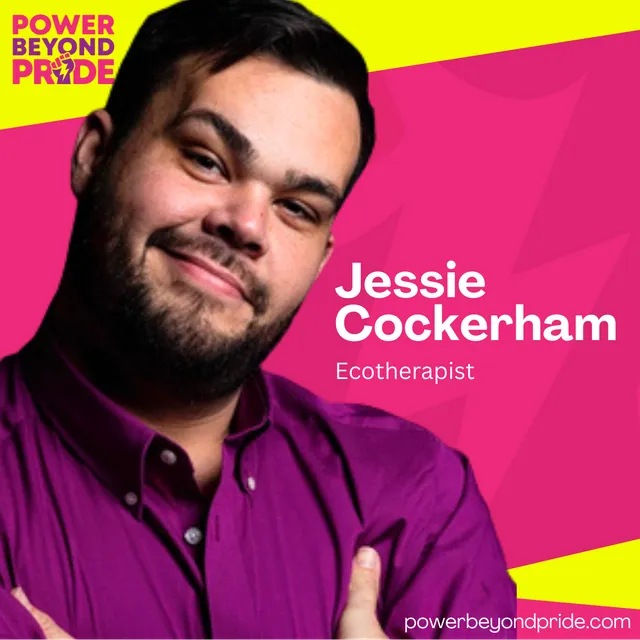
Therapy, Trees, and Transformation with Jessie Cockerham
Listen or watch
In this episode
In this episode, Co-hosts Mattie Bynum and Kate d'Adamo sit down with Jessie Cockerham, a therapist and founder of Wolf’s Refuge Counseling and Healing Services in North Carolina. Jessie shares how growing up in Appalachia shaped their understanding of trauma, survival, and community care—and what it means to heal in the same places that harmed you. They break down modalities like DBT and EMDR in plain language, with a focus on helping LGBTQ+ and BIPOC clients peel back protective layers built for survival. Jessie also introduces eco-therapy practices that reconnect people to nature as a living relationship, not just a backdrop. The conversation closes with practical grounding tools for staying regulated in a political climate designed to keep us in fear.
TranscriptRead the conversationAbout 43 minutes to read · 6,473 words · Jessie Cockerham, Mattie Bynum, Kate D'AdamoOpen
- Jessie Cockerham
- I kind of grew up in the Appalachian culture and recognized that something was wrong with the village and that led me to start my first job in social work, working at a group home and working with at risk youth and seeing lives through our eyes. And I learned a lot about trauma. What keeps me going is to know that I am making impact regardless if it is on the individual scale. And sometimes with my educational pieces through TikTok and on social media, I am making a larger impact. But I think that's what keeps me going is those small stories of I made this small change.
- Mattie Bynum
- Hello and welcome to Power Beyond Pride, a weekly queer change making podcast bringing you voices and ideas from across our fierce and fabulous spectrum to transform our world. My name is Mattie Bynum. I am the hostess with the most this TV personality, comedian and all around just a joy to be with. I am here tonight joined by my lovely co host, Kate. And Kate, would you like to introduce yourself?
- Jessie Cockerham
- Absolutely.
- Kate D'Adamo
- Hello, I'm Kate, your resident high hard femme and we're your co host hosts on today's Queer cast journey. In this episode we're talking to the power packed, multi talented counselor and therapist Jessie Cockerham, msw, lcsw Yusui Holy Fire and Karuna Reiki, master from Mount Airy in North Carolina.
- Mattie Bynum
- Welcome. Yes, welcome. So good old Mount Airy is in the building. Yes. How's the weather up there?
- Jessie Cockerham
- It was hot today. It was so mudgy. Even where though we're in the mountains, it still gets hot.
- Mattie Bynum
- North Carolina is one of those states that it doesn't matter how everybody else feels. We get the converge of every season and every weather system. So it could be. It, uh, was funny yesterday, I think it was 82 degrees and my cousin was like, oh, that's not bad. I said, well, the heat index is actually nice, so it's still bad.
- Jessie Cockerham
- And we get to experience all four seasons within weeks of drops.
- Mattie Bynum
- So Jessie, thank you for taking the time to join us today. So I definitely want to get jump right in and get started. You started the World Refuge Counseling and Healing Services that provides a lot of specialized services like dbt, EMDR counseling that support the LGBTQ and bipoc individuals. How did you embark on this journey and what drives you?
- Jessie Cockerham
- That's a big question. I guess to start with, um, what kind of made me embark on this journey was this idea of I kind of grew up in the Appalachian culture here in N.A. and recognized that something was wrong with the village, I guess, essentially. And that led me to start my first job in social work as A working at a group home and working with at risk youth and seeing lives through our eyes. And I learned a lot about trauma and, uh, that started my path for the Wolf's Refuge and kind of counseling in general. And what keeps me going is to know that I'm. I am making impact, regardless if it is on the individual scale. And sometimes with my educational pieces through TikTok and on social media, I am making a larger impact. But I think that's what keeps me going is those small stories of I made this small change.
- Kate D'Adamo
- And so that's beautiful. And so we heard a lot of kind of Alphabet soup in there. You practice dbt, emdr, for folks who may not know about that. Can you just tell us a little bit about your philosophy behind counseling and the way that you approach it kind of more generally?
- Jessie Cockerham
- Yeah. So in therapy, my direct approach is to be very person centered, strength based. Uh, but dbt, or dialectical Behavioral therapy and emdr, or eye movement desensitization and reprocessing, put different lenses down on what that looks like and then bring in eco therapy. And I am looking as radical as you can as a therapist. But so just on a basis, dbt, I look at you as a human and you come in on. I know you have different things going on in your life and you kind of tell me what's going on. And I look at you through a lens of four stages. And so stage one, the house is on fire, or stage two, we're just dealing with a lot of trauma. Or stage three, you're just dealing with life and trying to figure out what that means to you, values and stuff. And then lastly stage four is, do you want to explore what spirituality looks like to you? Do you want to explore the meaning of life and what that might look like differently for you? So I interweave the other two M modalities, EMDR and eco therapy, in throughout that process. But my goal is you are. It's your journey. I cannot tell you where to go. I can't tell you what that's going to look like. I. It's up to you.
- Mattie Bynum
- I definitely understand that. I know counseling is something that's really near and dear to you. So how do you think that this benefits the LGBT community?
- Jessie Cockerham
- Oh, that's a good question. Especially since mental health has always been used to, uh, stigmatize to not only the LGBTQIA2s plus spirited community, but also to bipoc individuals as well. And so I always keep that in mind as people approach me and ask questions about mental Health. But I think the thing that I have recognized working with people who are queer identifying or uh, bipoc identifying is that we've created so many layers to protect ourselves in the society because, well, at least for my generation and older, it's. We had to survive, especially these ruler areas in North Carolina. And so it's like peeling back those things. What does self truly look like? What does it look like to be your independent self and without shame, without fear? And I, that's a lot of what.
- Kate D'Adamo
- I do that makes sense. And that makes sense why that question, how do you be your kind of true authentic self is so important for queer folks and queer communities. If I can ask a personal question, how did your own queer journey kind of inform that work?
- Jessie Cockerham
- That is a good question. So growing up in the south, in the rural South, I definitely created so many different layers for myself just to survive. I had a father who literally, uh, looked at me one day and said that he would kill the Essler if he ever knew one. And so I knew right there quickly that things weren't safe where I lived. And so it wasn't until I had a conversation with a friend in the restaurant environment I was working at and he was like, you're being really an homophobic. And because he was presenting and free with himself and I was like, my world started to shift. I was like, me, how can I be homophobic? And so through that process, once I got into social work and I learned about decolonizing therapy and decolonizing and deconstructing oneself, I started to recognize like these layers that I had put on top of myself to survive. And I still do to an extent, just because I am in the south again. But I'm learning how to rip that off. That is, that's been my own journey and that's how it's informed my practice so that I can sit there as a therapist. I have to know who I am on a deeper level in order to go deeper with you.
- Mattie Bynum
- If you don't mind me asking, what does that look like? Because it's interesting that you brought that up because I actually had a friend say that to me as well, years ago. Because I had learned to adapt my mind, or I would say I learned to adapt my thinking to being closed minded, but not intentionally being closed minded. Does that make sense? I was like you, like, I didn't realize I was even being closed minded towards people because in the south you learn to assimilate to what you have. So that way, I remember one of my family members Told me one time they was like, it's okay to be gay, just don't do gay shit. And so after hearing those statements, it was just like, okay, well I either have to be the best woman I know how to be or I have to be the best man I know how to be. So that way I don't stick out. And in the process of that, I started realizing that I was actually being homophobic or disrespectful to other members of the community. So how do you work through that? Like, how do you deal with that?
- Jessie Cockerham
- Thank you for sharing that. I think a lot of people have heard that that same of don't bring that around me. Um, so thank you for sharing. And for me, two things really took me in a different direction. So I remember when I started at State and I got to do my first research paper on whatever I wanted to. And it was, I chose the topic. Is the identity of gay genetic or is it something we choose? And like through research, there's a lot of research showing that this is something that can be genetic even through like different ways of like people and hormones and stuff. So that was one. And then my other one is when I started eco therapy. That has probably been the biggest eye opening for me to recognize how queer nature is. Like mushrooms, for example, a millions of genders and genes and sexes and all these things. And then there's monkeys who participate in pansexual group orgies. And it was just like, what is going on? And then it just. For me it was uh. I was like, this is so natural. This is what's happening in everyday life. So it's helped kind of go that back. And it's constantly self reflection. I think that's the key to it anymore. A lot of people, a lot of people struggle with that to self reflect, but especially bringing in especially white queer men struggle to do that piece showing up in this community.
- Kate D'Adamo
- You get some very large head nods. For everyone who can't see us right now. It so deeply resonates. And I know that resonates the way that we learn our own homophobia, we internalize our own homophobia and then we project it others to try to feel a little bit better with that tension in ourselves. And, and it hurts so much, especially that inner community piece. And so in kind of in when you were talking about that, really naming that trauma and I know that EMDR is also kind of a trauma response. Could you talk a little bit about the way that trauma shows up, especially around those internalized pieces?
- Jessie Cockerham
- Yeah. So EMDR and ifs another piece that I do have started to learn or internal family systems kind of looks at how our society has created these layers. I guess, uh, how can I say this? So, like, for example, for me, when I was living with my living in the household, I burned through traumatic lenses of, okay, this is what's safe, this is what's maleness. This is what is appropriate. And so unlearning that in my only MDR therapy has been like, well, what did I have to recognize in the other individual that made me mad? What is it about other individuals that is making me uncomfortable? Because that's something that I learned somewhere along the way, either through a, uh, religious upbringing or toxic masculinity, there was these things that kept showing up in my own therapy.
- Mattie Bynum
- I am enjoying this conversation because I tell you right now, you have me actually doing some therapy right now. I don't know, K, if you are actually having some. Do some inner therapy in this particular episode. But Jessie, you are really making me sit with myself right now. However, I do need to tell the people at home, I need y' all to go sit with yourselves for about two minutes so we can go and pay these bills. And when we come back, we're going to keep talking about how to deal with yourself, do self reflection, and we're going to embark on eco therapy. Because that sounds very interesting to me. I know where my mind goes with it, but I know that's not where it's actually supposed to go. So when we come back, we'll discuss that. We'll be right back. Welcome back. This is Power Beyond Pride, a queer change making podcast. I am Mattie Bynum here with my co host, K. And we are talking to the amazing Jessie Cockerillum. We are having the most amazing, intense conversation about therapy. And Kate, I think you have the next question.
- Kate D'Adamo
- Yeah. So I wanted to go back to how gay nature is. Eco therapy was something that you mentioned. Could you share a little bit about what that is?
- Jessie Cockerham
- Ecotherapy has become one of my biggest passions because, uh, of the principle and the idea behind it believes because society and capitalism has cut us off from our connection to the world and to the earth, we've created our own disease, our disease with ourselves, disease with nature. And that's leading us to have chronic diseases, anxiety, depression, a whole host of trauma. And so with that principle, what I do and what eco therapists kind of lead us, lead anyone through is trying to figure out how to reconnect back to nature and see it as another living being. So, for example, One of my favorite practices is getting people to get permission from a tree to go under its leaves and then touch the tree with a smooth sensory, somatic experience. Because you're touching the tree, you're feeling it, and then that's when we go inside. And what is it that you feel as you connect with the tree and then allowing the connection to come through as the tree speaks to you in its own way? So it's. For some people it sounds a little woo woo, but it's the idea of what indigenous people have always told us. Nature's alive, it has its own personality, it has its own needs, um, and we just have to connect into it.
- Kate D'Adamo
- That makes sense. And I think what you really mean is to western white folks, it sounds woo. Because I think too a lot of the rest of us actually sitting down and connecting with our land. That sounds like the exact way to grow in Hiwa.
- Mattie Bynum
- Yeah, it definitely is. Now I might sound a little when I ask this question, but how do you get the permission from the tree? Does the tree just extend? Like, uh, when you said that, I thought of Pocahontas, the old Disney movie with the weeping willow that came to life. So how does that. Could you talk us through just a little bit? How does that work?
- Jessie Cockerham
- Yeah, yeah, we're using different types of scientific tools. So electromagnetic magnetism tools. I know I just butchered that. But like you're finding that there's like resonance and energy coming off trees through electromagnetic waves. And then ions are being sh. Ions and electrons are being shared between us and the earth with bare feet. But so permission with the tree. So giving that little background, the idea is you're going to stand at the tree line and you're just going to hold yourself and kind of go within and just try to quiet the mind. And then you're going to look at the tree and the idea is to say, I would like to connect with you. Is that okay? And then you just kind of quietly listen to that yes or no. But you have to allow the no. As humans, we like to think that we're. We're the center of the world. And sometimes that that dilutes that yes or no. And so just being patient and allowing the no to come if it's there. And allowing the yes if it's there.
- Mattie Bynum
- That's very interesting. I definitely want to try that. And actually it's funny that you said that this is one of your passions, because my next question was to ask you what are some of your passion projects that you work on? So I Would say, is there more that you like to work with as well?
- Jessie Cockerham
- My biggest thing is always trauma. Trauma is what got me into this work and it will continue to get me into this work. But the other things that I've come to love in therapy outside of eco. Eco therapy is, um, a spoken word. So being able to write poetry or running narratives and then using that to find ways to heal has, uh, been really impactful even in my own journey. Because I have a spoken word community here in Monterey that I go to and I use that rage and depression that I get from my clients and lay it out there. And then the people of Mount Airy get to hear me roar. And I always encourage it for my clients and anyone who, uh, is looking for a way to find their voice.
- Kate D'Adamo
- So in what we've been talking about, you've expressed so many things about land and about nature and about community. And you're from Appalachia, so how does being from that beautiful space, that beautiful land, those roots, how does that inform your work and what you do?
- Jessie Cockerham
- I think the Appalachians, the mountains, is really what brought me to eco therapy. The idea. I've had a couple of friends who live from the air and we leave and it's. We talk about how this place, how these mountains have a hold on us and they always call us back home. It's so weird to have that connection and just have that feeling of this is something I don't want to leave or I can't leave for too long. But also within that, um, I think the community aspect while I was growing up was always there. I remember running around at chicken stews and pancake, uh, breakfasts to like, fundraise for individuals and fundraise to help people maybe who couldn't pay bills or had medical pro procedures done and they couldn't afford them. A lot of that's gone now because I think due to certain circumstances, smaller communities are starting to dwindle. But it's kind of, it's different here, I guess. And understanding that, uh, the Appalachians was an like where oppressed people went to find refuge has also learning that information. Don't get me wrong, there is some places I would never go in the Appalachian Mountains, but knowing that history is there and then there's this whole group of people called the Melungeons. It also informs my practice because it's, it's possible, it's impossible for all of us to come together and create community and be our best selves.
- Mattie Bynum
- So I definitely remember as a kid growing up going to the Kiwanis pancake breakfasts for $6 to raise money for the different organizations in the community. But I. Working in therapy and dealing with people who have different types of trauma, how do you handle whenever a patient is combative or not receiving the therapy tools? Like, how do you deal with that?
- Jessie Cockerham
- You hear that? That is, I think, an everyday struggle sometimes because. But it also is humbling because I have to remember I am not the master of their life. I am here as a person who does have tools, and you can accept them or not, and you can find your own tools. And if you come to me and you tell me you use this tool and it worked out. Didn't work out that well. Okay, if I give you tool and you're like, it didn't work for me, I'm going to be like, you probably. There's probably some issues there, but I'm going to be like, okay, this is your journey. I don't. Can't force my own beliefs on you. I can't force anything on you because if I did, then I wouldn't be doing what my predecessors have always done. So it's, uh. Sometimes it's hard because, like, I have clients that are, like, floundering and trying their best to figure out life, and I'm just like, take my hand and we can do this. But on the other hand, it's just like, nope, I wanna flounder for a little while longer. And I'm like, okay, I'm still here when you're ready.
- Mattie Bynum
- But do you have to tell sometimes? Like, tell people? Just trust me and trust the process.
- Jessie Cockerham
- Oh, especially when it comes to trauma therapy. Yes. Because it's like, people don't wanna address these deep, dark things. It's hard, right, to go back and face what some call demons, to face what some call this big black darkness. It's scary. And I think to do it is really brave. I think to do it is main. Means that you want to end curses on your life and your family. You want to break these cycles that have been put on you. And those pieces are really beautiful. And so when they get resistant and they push back, I'm like, it makes sense. You're scared, and I'm here to walk with you. And that's good. Like, that's here. And so then that was, uh.
- Mattie Bynum
- No, I was gonna say, I think the hardest thing is to actually admit that you have trauma, especially when you. I'm not gonna say this is just localized in the south, but in the south, we have learned to adapt to Trauma. I remember growing up and dealing with things and was. We don't discuss that. That's not a topic you talk about. So you learn. So then as you get older, it's like when someone tells you that you have trauma. It's almost, no, I don't. I'm good. I'm fine. But to actually sit with it and realize it. This is why I'm not a therapist, because, yeah, I couldn't deal with people in their own trauma. I have enough of my own.
- Jessie Cockerham
- I think you're right. And they're calling out. What we talk about in trauma therapy is capitalism doesn't give us time. Capitalism tells us like, no, you gotta keep going, you gotta keep moving. And then in the south, where it was just like you had. There's so many people were focused on survival, especially bipoc communities and people here in the mountains or people in poverty, where every day you didn't know if you were gonna live, you, uh, didn't have time. And so now as we've moved into this, into these later generations, we're finding time, but now all the other generations are pushing back and. But no, don't do that. What are you doing? You're disrupting stuff. Don't. What You're. You're woke. What are you doing?
- Kate D'Adamo
- M. And I just want to uplift. Like calling generational trauma curses and really just naming that. This is about. Yeah, this is about breaking family curses. And I love how you're thinking about and talking about trauma. And a lot of what we've talked about is really one on one in terms of how we've talked about therapy. What do you think of the role of therapy, especially when we're talking about things like community building and coming together and doing the kind of collective solidarity work that we all desperately need right now?
- Jessie Cockerham
- Well, I think 1. It does call to this intergenerational piece. It's so interesting to sit down with people and, hey, where do you, like, if you can, if you have the privilege of knowing where your family comes. Let's explore that. And, um, here's all these pieces that are in your DNA now that have caused you to be the person you are. But I think that's very important to recognize in community work because, like, we have to understand where this generation's coming from and because especially generational, we're seeing such a divide happening between, um, millennials from boomers and now millennials and Alpha. There's like such a big divide. And I think where therapy kind of comes in and where us as Practitioners need to start coming in and focusing on more macro level stuff. Is this conflict resolution? I feel like our communities have lost conflict resolution. Uh, growing up, I just remember people would get in tiff and the next thing you know, they would go start their own club or they would go start their own whatever, because we were never taught how to deal with these emotions. You've made me mad now. I'm just done cut off culture. Right. So, um, I think that's really one of the things that we bring to the table as therapists in community work is like trying to be that mediator of conflict resolution. And when things get sour, things get messy. We're there to kind of help through that.
- Mattie Bynum
- Well, we do have to go to another break. Y' all do. I'm so sorry. I'm always the person telling us that we gotta stop talking, but we know we gotta keep the bills and then keep the lights on. But Jessie, I do want you to think about this while we go to break, because I know a lot of people have this question right now. What are tools we can use in the face of trauma versus having to go back and deal with trauma? Because living in the political climate that we're in now, there's trauma everywhere. So when we come back from break, I would like for you to tell us, like, what are things we can do to allow ourselves to still be free, still be seen, but work through what's being dealt with us right now. So, babies, we'll be right back and take a few moments and we'll be right back with Power Beyond Promise. Welcome back to Power Beyond Pride. We are here talking with the amazing Jessie Cockrum and we're talking about trauma and how to deal with trauma in the face of trauma. We've dealt with past trauma, but now with the person that is elected to be our so called president, the trauma that he's dishing out, and not even the trauma that he's dishing out. But I will say this, Jessie. The level of trauma he's allowing other people to think is comfortable to project to the LGBT community. What are some tools that you see that we could use to get through that?
- Jessie Cockerham
- Yeah. The one thing that I am focusing on with TikTok education right now is staying present grounded and regulating your nervous system. Just because like you said, right now we know they're trying to put us into dysregulation and put us into fear. And a lot of people are experiencing things. Real things are happening out there, and it does produce a lot of fear, even for me. So there's a lot of different tools I can give you. Uh, I always like giving people choices. So we can do grounding or some breathing, or I could teach you about how you introduce yourself to nature. Those are some options. Which ones would you. Which ones would you want to learn about?
- Kate D'Adamo
- I would love to learn about, uh, introducing myself to nature.
- Mattie Bynum
- I'm with Kate on that one. I think I want to introduce myself to nature as well.
- Jessie Cockerham
- Okay. So the. It involves grounding, but the idea is, what you're going to do is you're going to go to a threshold in nature and you're going to say, I'll just do mine. Hi, my name's Jessie. I am a settler here on this land. I live and work on the Shira nation, the unceded territory of the Shira nation. My family hails from Western Europe, um, Ireland, m. Scotland, England, France and Germany and Switzerland, and they were entrepreneurs and agriculturalists. I am currently a mental health therapist, and I'm just looking to find ways to connect and ground today. So once I've done that introduction, what then happens is I am led through wherever I'm at to find a piece of nature that wants to connect with me. Again, asking that yes or no. And once I get that yes, I sit down and I just ask, what is it you want to communicate with me? I started with this intention. It's really cool practice because you're building community, you're grounding and being in nature, and you're also resetting your nervous system m by connecting with something that wants to help you. So that practice is name, family of origin. If you're a settler or indigenous here, naming the land that you're on and what indigenous people did reside there or used to reside there or still reside there, and kind of your family lineage and what they did as work and what your intention is.
- Mattie Bynum
- Okay, that was a lot. So I'm gonna need you to write that down for me later on so that I will remember that. Because if you're like me, I got a lot of answers to the questions. I mean, a lot of ways to say that stuff. So. Yes, but that actually does sound like a good technique. Okay. We need to go and ground ourselves the next time we get together so we can get through the next couple years of, uh, this dictate. I mean, this democracy that we are dealing with currently.
- Jessie Cockerham
- This. The other popular one that we could do together is ocean breathing.
- Mattie Bynum
- Now, what's that?
- Jessie Cockerham
- So ocean breathing is the idea of focusing and expanding the lungs so that you can expand Your capacity for stress and then releasing all of the stress out, or what I call releasing the bullshit. Uh, so what you do is you do a breath in and then you try to fill as much as possible and then you're going to do another breath in to expand that lung capacity and then breathe it out like the ocean. So we can do that together. I'll lead y'.
- Kate D'Adamo
- All.
- Jessie Cockerham
- So breath in, breath in and blow it out. And then just sitting with that and allowing your body to adjust. Ocean breathing is most people's favorite. Uh, those are gorgeous.
- Kate D'Adamo
- And that's such a beautiful way to be in relationship with the land around you and actually see it as a reciprocal relationship. Thank you for sharing those. And so when we talk about the queer movement to pivot us a little bit back to our very gay center, and we often talk about pride. So when we talk about power beyond pride, what does that mean to you?
- Jessie Cockerham
- I think for me, thinking about power beyond pride is this idea of pride is where we shove out in the streets and are, uh, real loud and we're proud and we let you know we're here and that we're never going to go away. But I think beyond pride, it's very important that we continue to carry that energy. We show up in these spaces and those with more privilege show up and advocate for policies to change for. And calling out behaviors of, hey, you just misgendered this person or hey, and being willing to sit with that conflict because it's uncomfortable. Um, but it's also this idea of recognizing we as individuals are beautiful, powerful people and we have the ability to create our realities as long as we continue to believe and be self reflective in ourselves. And that's kind of what comes to mind when I think about car beyond crime.
- Kate D'Adamo
- Thank you for connecting it back to that solidarity and for naming the discomfort of doing that. I feel like we often talk about, yes, we should show up for each other and then don't talk about the oh, but it's hard and it's really scary sometimes. So thank you for just saying, yeah, it might feel a little uncomfortable and that is okay.
- Mattie Bynum
- I like how he brought it right back too. And just talking about the connecting and allowing a person to just be, be able to say, you know what, this is hard, but I'm here for you. I'm showing up the best way I know how. Because I agree with K. I think a lot of times people don't show up because they don't know how. And instead of saying, I don't know how, they Just don't do it, period. M. You know, so I love that. Okay, so now we're going to go into our rapid fire questions.
- Kate D'Adamo
- Sounds good. And, Jessie, thank you for all the work that you do. I loved this conversation and really appreciated everything you've really shared with us today. So now we're going to ask you a series of some very quick questions. Uh, and I believe that Mattie has the first question, but are you ready?
- Jessie Cockerham
- Yes.
- Mattie Bynum
- Do you choose to accept this mission? Well, I'm be honest, because the rapid fire questions, they can range from everything, so let's just be ready. So the first question I do have for you is. And you have two seconds to think of your ancestors. The first thing that pops off your head. Cannonball into the pool or dipping your.
- Jessie Cockerham
- Toe in first cannonball.
- Kate D'Adamo
- Do you relate to your astrological sign?
- Jessie Cockerham
- Um, both. My son. M. All three of them. My son. Moon and rising. Yes.
- Mattie Bynum
- Okay, well, do you like a brand name? Are you a bougie? Or do you prefer something that's nice and homemade and you hear it from the heart?
- Jessie Cockerham
- Because I'm deconstructing a homemade.
- Mattie Bynum
- Okay.
- Kate D'Adamo
- Are you able to watch shows one episode at a time, or do you binge the whole season somewhere in between?
- Jessie Cockerham
- I can't throw all semen, but I can't do just one.
- Mattie Bynum
- So thinking of a spot. Because you are a therapist, you would get a lot of information from people. Do you think you would be good at being a spa, or do you think that knowing too much, you'll blow it?
- Jessie Cockerham
- Ooh, my face would blow it. My face does it before I do. So.
- Kate D'Adamo
- Do you believe in ghosts?
- Jessie Cockerham
- Yes.
- Mattie Bynum
- I like that.
- Jessie Cockerham
- You have to bring a, uh. There's an element of spirituality in what I do, so.
- Mattie Bynum
- Most definitely. And then I'm not afraid to sit down with Casper and have a good little talk. Like, I'm one of those people. I'm right there with you. So this is actually one of my favorite questions because I love hearing people's answers to this one. Are you in the pursuit of money or are you in the pursuit of happiness?
- Jessie Cockerham
- This question. It's just because, like, if we're honest, it's capitalism. Sometimes we have to get money because to survive. But I would love to just be happy. Um, but, you know, that would be me just sitting in the woods and talking to Amble all day long.
- Mattie Bynum
- Oh, that actually don't sound bad. I'm just saying. With the mushroom in it, too.
- Kate D'Adamo
- M. And follow up to that. What's your favorite animal to talk to?
- Jessie Cockerham
- Uh, on a Spiritual level bears. On a physical level, the ones that are around here are birds or my dog.
- Mattie Bynum
- Mhm. What is this? Oh, well, give us a scenario of a time where you were, you knew the tools and the practices to deal with your trauma, but you just could not work with it at all.
- Jessie Cockerham
- That recently happened. Just because of the onslaught of stuff happening, seeing all of this darkness that's constantly happening on a daily basis. And then dealing with my patients. I had an anger outburst and I had to be like, whoa, where did that come from? And then I used skills. So just because I'm a therapist, I'm also a human.
- Mattie Bynum
- That is so true. Well, where can people follow you, Jessie? Where is. Can you give us all your social medias?
- Jessie Cockerham
- Yes. So Instagram is at the Wolf's Refuge, pllc. And I think that's the same for TikTok. Uh, Facebook. You'll have to just search the Wolf's Refuge Counseling and Healing Services PLLC. I can't remember. I think that's the URL. And I have a LinkedIn, but that's just me, Jessie Coffin. So.
- Kate D'Adamo
- Well, Jessie, thank you so much for this wonderful chat. We are unfortunately out of time at, uh, Power Beyond Pride, but will you please join us? Join us again?
- Jessie Cockerham
- Of course. This was great.
- Kate D'Adamo
- Thank you. There's so much that we didn't cover. I would love for you to come back.
- Jessie Cockerham
- Thank y' all for being great.
- Mattie Bynum
- Oh no, you know what, we had a great time with you. You made us great. So don't think that we were great. You made us great, Jessie. But everybody please remember to go to his socials like he stated before. Jessie Cock. Cochran Cockrum. Excuse me, I keep messing up your last name and I don't know why I'm messing it up. And I am your co host for the evening, Mattie Bynal. And you can look me up at maddysimone737 on Instagram. Facebook is just simply Mattie Bynum and.
- Kate D'Adamo
- I'm your co host Kate and you can find me at reframehealth and justice.com and on Instagram at uh, Harm Reduction Femmes. Remember to subscribe and get your friends to subscribe to Power Beyond Pride on Spotify, Apple Podcasts or wherever you get your podcasts and check out our site@powerbeyondpride.com.
- Mattie Bynum
- Power Beyond Pride is a project from a Great Idea, a queer owned design and content agency. Learn more about them at a, uh, great idea dot com.
- Kate D'Adamo
- This episode is produced by Shane Lukas. Smita Sarkar is our project developer. Our editor is Jerry Redding with support from Ian Wilson.
- Mattie Bynum
- We are both part of the Podcast awesome host team here and we invite you to send in your questions and comments to powerbeyondpride.com so we can stay afresh and abreast on all the hot topics.
- Kate D'Adamo
- Check out our new new episodes each week and we look forward to Queer Change making with you next time. Thank you from all of us at Power Beyond Pride.
Transcribed automatically and lightly checked. If something is wrong — a name especially — tell us and we will fix it.
Episode #37
Therapy, Trees, and Transformation with Jessie Cockerham