

Episode #39 · Feb 13, 2026
Reply All: Organizing, Solidarity, and Strategy to Melt ICE
Listen or watch
In this episode
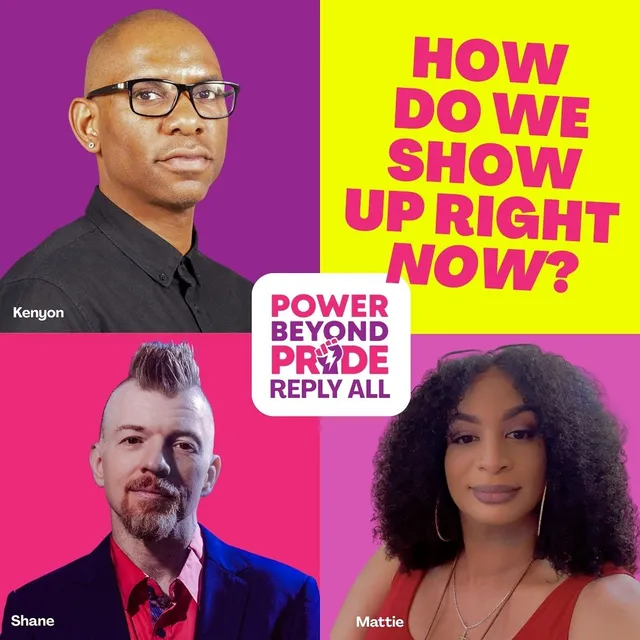
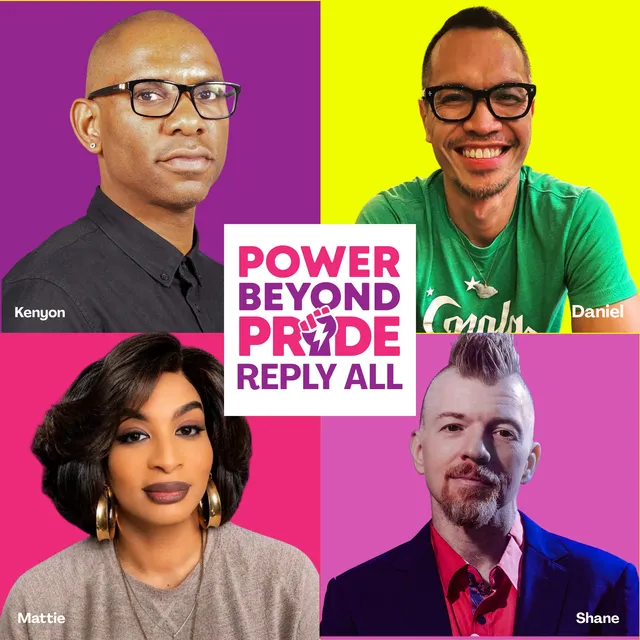
This Reply All episode of Power Beyond Pride brings Mattie Bynum, Kenyon Farrow, and Shane Lukas together to unpack what it means to organize, stay connected, and tell the truth in a moment of escalating harm. Kenyon frames the rapid mobilization in Minneapolis as a continuation of the 2020 George Floyd uprisings, arguing that visible “mass response” is built through sustained, long-term organizing—not spontaneous outrage. The hosts connect that lesson to queer and trans strategy: LGBTQ+ organizations and community members can’t only show up when an issue is explicitly labeled “LGBTQ,” because immigrant justice and queer justice are intertwined.
Shane and Mattie name the layered risks facing LGBTQ+ immigrants, especially trans and nonbinary people in detention, including misclassification, abuse, and the broader ripple effects of fear—people avoiding healthcare, work, and school. Mattie shares the emotional toll of staying informed and the need to manage anger and overwhelm without disconnecting from community.
The conversation turns to whether progress for LGBTQ+ people has stalled or reversed. Kenyon points to coordinated right-wing messaging and a lack of effective counter-narratives from Democrats, while Shane argues backlash also reflects deeper cultural discomfort and unresolved internalized bias, even within LGBTQ+ communities. Mattie questions whether acceptance ever truly arrived, suggesting representation grew faster than real respect.
In the mailbag, they discuss how media narratives name (or erase) queer identity in stories of violence, and close with practical steps: know your rights, don’t isolate, share location with someone trusted, memorize key phone numbers, and shorten the time between harm and community response.
TranscriptRead the conversationAbout 63 minutes to read · 9,502 words · Mattie Bynum, Melodie KG, Shane Lukas, Daniel W.K. LeeOpen
- Mattie Bynum
- We're becoming an America that's more fascist today than it has ever been in the world. We're becoming an America where it is okay to openly disrespect and hurt people. We are coming into an America where I feel safer carrying my gun to go buy a carton of eggs than I do, rather than just to be outside, period. And that is because of him. So he has changed America. But was it for the better? I doubt that.
- Melodie KG
- Hello and welcome to Power Beyond Pride, a weekly queer change making podcast. Bring new voices and ideas from across our fierce and fabulous spectrum to transform our world. I'm Melodie KG, a Minneapolis based artivist, consultant, writer, provocateur, and I look forward to chatting today about the, uh, rise of fascism. Who else do we have with us today? We will be talking about that today for sure.
- Shane Lukas
- I'm Shane Lukas, lifelong harm reduction activist, a great idea owner, and the glitter budget oversight manager. That's right, any glitter that goes across across this show, that's I, I'm, I'm, I'm, I'm the glitter control. I tell ya, on this show we're talking about what happens when your identity, your protest and your vote all end up on the political chopping block. Mhm. And I am Mattie, always the loudest one in the room.
- Mattie Bynum
- And I can definitely say, Shane, you do sparkle. So I can definitely see how you are in glitter patrol authority. So I can get that. And I think that at this table we all care about how policies hit real people. Because when states can rewrite IDs and Washington can rewrite rules, it's the marginalized communities that always get affected first. All right, so let's go ahead and get into our first topic of, uh, today. So we're going to talk about the state of Kansas. On Thursday, February 26th, State of Kansas revoked the gender marker changes on driver's license for trans residents. That means people who legally updated their IDs are now being told, actually no, your ID is illegal. So my question is, what does this mean for everyday safety for trans people? And how does an ID that doesn't reflect your correct gender increase the danger or risk on their lives? For me, I worry about accessing social services because the moment that you have to present an ID that matches some other document or that matches how you present, or et cetera, et cetera, it's already a dicey system. And now if you have a certain gender marker, you can be denied social services. You can be denied entry into certain types of shelters that are gendered. For example, uh, so I, I really feel for folks who especially are on the margins or who are accessing different types of food benefits or WIC or TANF or other just anything.
- Melodie KG
- This is really gonna suck for a lot of people. Well, I would definitely say the biggest thing I look at it as is, is when you go to get your gender markers changed and the first thing you have to get changed is your license, and then you can get your, your birth certificate changed, you can get a passport or get your passport changed at that point. So my concern is, does this now affect the other paperwork? Because if this is now going back to reflect your gender marker of what you were born, now none of your paperwork is going to match, Melodie was saying. So does that null and void?
- Mattie Bynum
- And if it does, what does that mean in that sense? You know what I'm saying? Because then it's like trying to travel. I always think of as trans traveling to another country. What if I go to Dubai and my passport says male, but I'm presenting as female? How does that work? How do I get in? So you have to look at all of those different things and think about the fact that it might seem simple because it's an id, but that one change now affects a whole trail of other things to be changed. Well, in the institutional consistency too. In addition to that, when we talk about social services, as Melodie highlighted, and then obviously passport access and what that means to again actively have a system work against your self identification, like all of these things being critical.
- Shane Lukas
- But then what happens in healthcare, what happens in other institutions, not just those in uh, public services, but really other institutions which at some level have some gender relationship or some gender of identification through that process. And now when there's dissonance, how does that get resolved from a practical standpoint? But I think what's to me fundamentally important is what this means in terms of testing the waters on continued attacks and vitriol shown against our trans plus community members. Like how that is being deployed and institutionalized that way. We've seen it at the federal level. Whether that's through questions, uh, around passports and renewals. I know a number of transplus community members went and hurried and got their renewals done as soon as possible before certain, uh, processes were shifted. And there's just a lot of uncertainty as to what will pass, what will not pass through those renewals in this current time. It just doesn't seem to be uniformly applied. And that's a fundamental challenge. But a state that's going to uniformly dismiss all identity, all IDs in that context. I mean again, it has many different implications, many of which again, not living in that experience in Kansas and that who knows what that means on a day to day basis when somebody asks for an id, when you have a credit card, what that means, when you are going for a job interview, what that means through the varying parts of your existence. And when that calls into question that level of disclosure creates enormous vulnerabilities for communities that are already under assault and, and already experienced that transphobia at nearly uh, every intersection. And so they're doing it on purpose. I think it's really important to know what this long term intention is. Is Kansas intended to be a test to see whether or not other states will begin to deploy similar transphobic policies? And then really a big concern around queer activists is the simmering, uh, idea that somehow this isn't a battle worth fighting. And I think that sits among a lot of queer community members, especially those in power, who talk about whether this is either a distraction or just not as important as other facets of, of the queer assaults in varying ways. And I think it's really important that we recognize while trans plus community members make up a portion of the queer umbrella, it is an incredibly important, all of them are incredibly important portions of the queer umbrella. And, and where they're looking for those fractures and those vulnerabilities, those are tests, those are ways, they are looking for other ways that they can find. And they just are capitalizing right now on a transphobic sentiment. And if we continue to allow, and I mean we broadly in terms of queer people with power who seem to want to think this is not a battle worth fighting, I think they're mistaken. I think that every individual among our queer communities who experiences this questioning of their identity, of the, who they are, their value, their human, their, their human identity, whether they become dehumanized or not, that should be a big concern for every single person. So I see Kansas not just for Dorothy, but I see it very much as this test run. They are literally trying to use it as a, as an example. And I think we, we, we really have to be careful of our own community members as they have their own discomfort and they yield to that even in a moment like this. I think it's, it's um, a, it's a moment we have to, we have to be very vocal in our pushback and it could be very divisive within the trans community because. Obvious because the, the way a ID that is invalidated by. Only through the perception of who actually looks that idea ID and who's presenting it because obviously, uh, because someone who may pass as, who may pass and that may not be as like a gender rebel and not uh, you know, whose presentation may seem more conforming, may have less of a target or may have less obstacle with their, with their accessing of things.
- Daniel W.K. Lee
- If they say present female and their, and their IDs say that they're, that they're female, I mean the law seems like just, it just invalidates the ID and so then, But I don't really, I don't really know what, how that, what that actually means in terms of oh, I, if I, if I'm a trans person in Kansas, my ID is invalidated. But the only way that anyone could see that it's invalidated is if they, if they see that, oh, my card says I'm female but I present differently. It's really divisive within the gen, the gender expansive community to, to oh, obviously they're more vulnerable than someone who presents in a way that's passing. All right. Right. So it's, it's very odious and, and, and, and horrific and another layer in which like the states seem to be picking out the mantle and of trying to target the most, most vulnerable. Yeah, I mean it's all fucked. Well, speaking of the state, well, speaking of the state, I think one of the other big pieces of this last week is we got to witness the most recent State of the Union. I do want to mention just uh, real quick as we, before we dig into the State of the Union, we did just recently attack Iran. We did do so and remove their leader.
- Shane Lukas
- I think it's just important to note we probably won't dig into that much today. We certainly are aware of the violence that happened there. The many community members both here who have family in Iran, as well as Iranians and queer Iranians who are uh, experiencing a lot of probably different, different things right now. A lot of, A lot of violence. A lot of witnessing a lot of violence. We won't have, uh, we talked about it uh, before we, before we kicked off today. We'll, we'll, we'll dig into this likely in the future as we talk about the way that America is enforcing and bringing its power abroad. It's not the first time we've done this in the last year. So that's horrifying in and of itself. But, but our thoughts and our arts do go out to all individuals who certainly are, are, are feeling that impact again from their families if they're feeling it here, however you're feeling that it's. It's a pretty intense experience and we, we recognize that. But we do want to talk about the State of the Union a little bit because that was, um, long. For those of you who are not aware, it is the longest State of the Union that might have been on record an hour and 45 minutes. Not that I listened to it. I listen to highlights like everybody else. So that happened. But we want to talk about a little bit from a queer lens in a translates. I couldn't sit through an 45 minutes. Could. Could you if you did, listener, we certainly want to hear how that experience was for you. So we want to talk about a little bit of it. Again from queer lines, from a trans lands, from the perspective of somebody, ah, wondering whether their healthcare, their marriage, or even their legal identity is secure. As we saw in Kansas, we were looking for an update from the State of the Union. And yet. And yet, what did we get? So when the President gave the address, what did LGBTQ Americans hear? Did we get assurance? Did we get silenced? Did we get a warning? What do you all think?
- Mattie Bynum
- I want to be honest and say, I think that I got a bunch of reality sound bites from the State of the Union address. What I did listen to and what I did actually try, I tried to watch it and I couldn't. I really couldn't. I tried. But what I did watch and what I have caught up on since, I will say to me, I don't think he focused on anything other than himself and trying to make himself look like he is the reason that we are in the position, which is funny because he made a statement and said that we are becoming a greater America than we've ever been because of me. Now, you're right. We are becoming an America that we've never been. We are becoming an America because we're becoming an America that's more fascist today than it has ever been in the world. And that is because of you. We're becoming an America where it is okay to openly disrespect and hurt people. And that is because of you. We are coming into an America where I feel safer carrying my gun to go buy a carton of eggs than I do, rather than just to be outside, period. And that is because of him. So I do think he was correct. In essence. He has changed America. But was it for the better? I doubt that. Doubt it. So that's my opinion on the State of the Union. And then, oh, uh, uh, yeah, you only could get applause because you brought the men's hockey team, U.S. united States. And then. Yeah, that's all I got. I mean I didn't watch any, any of it. I can't even listen to that, that man's voice, let alone try to go an hour and change for it.
- Daniel W.K. Lee
- But I understand he. So he told a story of a, uh, Virginia teenager, uh, who was kind of socially transitioning and used the kind of to not use it to attack states and schools allowing, allowing transgender and non binary students to, to kind of walk in this world as the, as the gender they wish to present. And I mean uh, it just seems par for the course for this through him and in his administration to kind of again attack the most vulnerable trans trans youth and try to make, I don't know, uh, score points with his base to be like the most mercilessly like awful piece of shit ever. I mean it uh, I don't think he's presented anything new, just shown himself to be willing to attack institutions and other actors who are trying to actually help trans people and trans kids. I'll add, I'll add two things to that before, before we go to break.
- Shane Lukas
- One is I think it's important to note the way that storytelling is used in, in especially in these particular instances where the exception is used as the rule. So as you said, talking about a young person who struggles with transition is important because we can all talk about the universality of queer experience. Trans experiences there, there, there just simply are many different, which is what makes us all human. A lot of different experiences. What we can look is the data. And of course when we're looking and, and they're elevating a story in that process, they're often elevating the far end of the exceptions. And I think it's important this person who struggles with that. It's great to acknowledge. I want to say they say did the same thing around trans sports. They chose what as somebody who came in fifth and, and that's that that became their marker of the entire experience about how trans athletes are somehow displacing other athletes. Somebody who came in fifth who would not have come in even close to first under the best case scenarios if they had not or not best case. But if they had excluded all trans athletes, that this person was never going to be someone who is going to be in uh, in the, in those spaces. And yet this is the way they're going to storytell. So I think it's important because they're not using data, they're using these individual stories. They elevate these individual stories and then we, we give it air. Um, or I should say the culture gives it air because it, it basically amplifies a discomfort that already exists. So I think it's just really important. If you're not comfortable with people of trans experience and you hear a story like this, then you glom onto the one exception that's going to make your position true. And I think it's important for those of us who want to advance and make sure that we're talking about inclusive practices. We talk about the data, we talk about those successful stories, we talk about what it means, even the successful stories that have themselves conflict. Because we could talk about people. Because again, as queer people, if you identify lesbian, queer, bi, whatever, you have had many different steps along your journey. And I think it's important we amplify this idea that it is not a one and done experience for most people about their journeys of identity, gender, sexuality, all of these things that these journeys are themselves. They have a lot of different pathways. And that's important, right, because it is part of the human, part of the process. And I think that not talking about that gives them some error to be able to talk about the things that they do in fueling their work. The second thing I want to do, and then we'll head over to break, is really along this idea of, hey, the power positive thinking of Trump is anything and listening to. And I listen to about again nonstop. I listen about 45 minutes. I couldn't really tackle the full hour and 45 minutes. I had to really, at some point just stop because it was just a lot. But there is a lot of power. But he also recognizes, like, no one is paying attention after the first 45 minutes. I think the data on the drop on, on it goes pretty fast right after the start. That is the power positive thinking. It is the, uh, it is the constant reiterative use of, hey, the economy's better than it's ever been. Which none of us feel having this sort of over and over sentiment. As you stated, Matty, America is the better than it's ever been. I would probably take, I would probably differ one place with you, Matty, which is to say America has a long history of fascism. This is not, this is not new. I'm not, I'm necessarily saying we don't have great things about the nation. I'm saying that, hey, like, we do have histories where we have been on the borderline of embracing. And one would argue, actually historians would argue that, uh, we even modeled A lot of the things that fascism sort of took on in the 1940s. So our history is one of complexity, and I think that's important. So I think the, the bedrock of the nation still has some of the things that, that they're triggering. What I think is important to note is that power positive thinking, if it doesn't jive with your reality, like, then, yeah, those are good questions for people to have and we want to elevate those questions because I don't know about you, but it doesn't feel like the economy is great. I don't know about you, but it doesn't feel like things are on an even keel or that there's a sense of certainty or predictability or these things which help us plan what we want our kids to do in the future, what we want our jobs to be in the future, what we want our, what our retirement or our. What do we want to be doing in the future. At this point, it's just, uh, like one uncertainty after another. And every week is something different. And I think not speaking to that is, is something that I would feel would be a gross dissonance whether whatever political side you're on, and my hope is that people do hear that kind of, hey, power positive thinking kind of thing and just go, that's not my existence. And so, uh, again, I'm hoping that, that if anything helps do some of the fracturing with certainly that line of political leadership. But we'll have to see. Again, we're just through the primaries, uh, for the midterms this week. We'll see how those shake out. And on that note, we'll take off to break and we'll come back with a deeper dive in some key headlines on the other side of this break. Please stay tuned, informed and connected.
- Daniel W.K. Lee
- All right, welcome back. This is Power Beyond Pride, a queer change making podcast, and I'm Melodie KG here with my co hosts, Mattie Bynum, the loudest one always, Shane Lukas, the Firestarter and Daniel. While we were at break, I had a thought. When leaders talk about freedom, who are they picturing?
- Melodie KG
- It's a good thought. I definitely don't think that they're taking an effect, everybody. I think it's a very narrow view that they look at when they're thinking of freedom. I think it's about freedom of self, right? Like at the end of the day, it's the freedom to want what I want and access what I want.
- Shane Lukas
- I don't think there is a sense of a collective sense or the impact of those Freedoms. I think that's the biggest, that's the big tension in America is this idea of freedom for me and freedom for everybody and how other people's freedoms encroach upon my sense of freedom. That is the tension. But uh, that is what we have a government contract for. And so that, that would be my sense, is that why we have a government is that every individual agrees that there is going to be a structure to monitor and control those, those parameters?
- Daniel W.K. Lee
- Yeah, I mean I think it depends on who's, who's speaking. I think when like Trump or the Republican Party or even probably some Democrats, freedom means to do whatever you want without consequences, to, to have impunity. And certainly there's others who, who think otherwise. But I mean it also I think is, you know, depends on who they're talking to. Right. Like their, their definitions are shifting depending on the messaging and this kind of opportunism of messaging and um, makes uh, the electorate and I think people like, like questioning what do these, what are these, these hats, these political heads, what do they mean? Because it doesn't seem like they are tethered or wedded to an actual idea or a value of any sort. Yeah. And I think we see this in how, how like the electorate is set up, as you said, how you treat folks who don't fit narrowly within or neatly within certain boxes. Certainly if we think about things like the, the, the SAVE Act.
- Melodie KG
- Right. Which was introduced in Congress in 2024, uh, reintroduced. Right. Currently on the docket, if passed would, would claim to ensure that only citizens have the right to vote. Right. Which like on the surface seems. Okay, well fine, only citizens have the right to vote, whatever. That's in line with current rhetoric. But then also what that does, it actually removes some freedoms to vote for people who are citizens. Right. Uh, because of the bureaucratic requirements that it's putting forth. Right. So if passed, the act will actually prevent millions of citizens from voting by requiring people to show a passport or a birth certificate in order to register. And also currently a uh, current government issued driver's license or id. Right. So it's, it's just, it's interesting to hear all of this rhetoric around freedom, around choice, around uh, strengthening individualism. Meanwhile, like the things that are being enacted or talked about or reintroduced are actually like stripping us of real freedom. And as Shane so lovingly brought up earlier, like we've been seeing fascism in different forms for a long time and this all just feels like more of the same. Right. It feels like these different pieces are Coming together that are actually anti freedom, that are anti individualism, that are anti rights, and more about uplifting, holding a specific vision of what Americans should be an American should look like. And it's white and it's Christian and it's cisgender and it's capitalist and it's well resourced. Right. I mean, part of the, part of the, the, the things that make this so interesting is that America has, compared to a lot of other democracies or social, socialist, democratic, socialist nations, we have a low turnout. Like we do not vote at higher levels. So one of the interesting things and the, and the sort of underlying themes of this is this fear that somehow our elections are having all these people who, who are voting who, who, who should not be there, either because they're fraudulent or because they don't have a vested interest in the nation.
- Shane Lukas
- And yet two things about that. One, in those rare instances, and it is very rare that if there have been incidences of voting fraud that have ever been documented and acknowledged, it is almost universally been conservatives. Almost universally. Like again, I, I can't think off the top of my head of any progressive who's had that issue, but I'm sure I don't want to excise the idea that it, that it's possible, but I'm saying it is by and large every incident, whether it was here in North Carolina, in Mecklenburg county, within even just the last five, six years, or other places across the country, it has almost universally been conservative. And people who are afraid about change and fundamentally want to stack existing forms of power and oftentimes at the cost of people of color, oftentimes at the cost of rural communities, that's often the case. The other part about it that's really interesting to me is in principle, the idea of having people who identify in their citizenry to vote doesn't seem too crazy of a thing to do. What I think we don't often dig into and what you're hinting at, Melodie, I think, is that there are institutional practices which do inhibit individuals from accessing those things. This has been compared to poll taxes. For those not familiar with poll taxes, those were done to prevent people of color. Essentially it was uh, an economic cost to being able to vote and in that inhibit community members who might not have access to resources. But also it's important to note that those poll tax processes also came with their own levels of hostility and they came with their own levels of, of the way they were used that were not just if you didn't have the resources or had the resources, but it was also a case of what you had to encounter in order to access the uh, that process. And so as we discussed earlier with Kansas for uh, people with trans experience, like using and, and using these licenses and these, these government issued IDs as a tool, as a bludgeon in many cases, it's important to be very skeptical about how that's applied and how that's being used. And so this is obviously targeting people of. Well actually it's, it's arguing it's targeting people of color, but it's also strangely uh, targeting older populations because again there's a lot of people who are retired, people who are uh, seniors who do not drive and they don't tend to have the same IDs, they tend, tend to have them on them all the time. And so there's a lot of sort of many communities that are actually impacted by this that reduces their voice in, in, in voting. And the bigger question is who benefits when less people vote? That should always be like the idea that we're trying to reduce the number of people from voting. That should be a big concern. If, if you are in fact pro democracy, as, as you raised at the beginning, Melodie, like this idea of uh, freedom, it is, it is this, this thing that has to be protected and looked after. But if the system is fundamentally wanting us to not raise our voices, if it is fundamentally working against that, then how free is it? I mean that would be, for me that's a, that's a big problem. And I'll also go to the extreme and, and, and, and look at the worst case scenario is like I look at what we were talking about and it says that driver's license or uh, current government issued driver's license, including real ID, military IDs and tribal IDs alone would no longer satisfy voters. Voting registration. What else? Like I, I don't understand the difference of my driver's license and my birth certificate proven that I'm a citizen, if that makes sense.
- Mattie Bynum
- Like I, I mean I'm, and I'm being funny at the same time. I'm facetious. Cause I get it. Like the birth certificate proves I was born here. But wouldn't like at some point in time I'm like wouldn't if I have to have a real id and in order to get a real id, I gotta show my birth certificate. If I gotta show that to get a real id, then what's the purpose of the real ID at this point? Cause if that's not gonna satisfy all Your information, but I still gotta come out and find all this other stuff to bring to you. I don't get it. That's the part I don't get about the SAVE Act. And it is a nuisance and a hindering. Because that's why you're discouraging people. Because it's. Think of people who. We're activists, so we know and we stay and we try to. But like you said, Shane, think of the older people who are like, I haven't seen my birth certificate in 30, 40, 50 years. I don't even know where it's at. So now you gotta go petition the county that you lived in. God forbid, if you moved across the country. Like, now you gotta figure out how to get back there to petition that county to cut you a new birth certificate just so you can go vote in California and you used to live in North Carolina. That's crazy.
- Daniel W.K. Lee
- I'll just add that I think it's incredibly. Which is. That's intentional. All, uh, this is intentional to disenfranchise. Very much so.
- Mattie Bynum
- To. To exclude. Right. Older voters, black voters, uh, immigrant voters. I mean, I don't have a birth certificate that's.
- Daniel W.K. Lee
- Would satisfy any. Any poll here or whatever. Or naturally. Naturalization certificate, which I. I think I know where it is. I mean, I do have passport. But like, uh, again, I think that's all on purpose and. And, uh, serves to benefit certain folks and we all know who they are.
- Shane Lukas
- I mean, I was hatched, so there's no. This is my big challenge. Oh, Shane, not too hard. Just like Stewie Griffin said. I thought you were just congealed from the gutter.
- Daniel W.K. Lee
- All right, that's all right. The Family Guy reference.
- Melodie KG
- I love a Stewie reference. Speaking of power, people in power. Power always tolerates protests until it doesn't. And historically, when a movement starts gaining traction, the system tightens its grip. As of late last month, uh, the DOJ announced a new indictment charging 30 additional people for their roles in the anti ICE protests at a Minnesota church.
- Daniel W.K. Lee
- The indictment, which occurred in early 2026, previously resulted in charges against former CNN anchor Don Lemon and no others for conspiracy against religious freedoms. Are we seeing an escalation on how protests are handled federally? And what message does this send ahead of the heated election cycle to other journalists and peaceful protesters? Deeply troubling, as far as I'm concerned, that they are doing this under a religious. A religious freedoms ruling or, uh, religious.
- Shane Lukas
- Religious freedoms complaint, simply because that is both unrelated, which I think is important to the demonstration or the or the, or the, or the relationship to the institution. It was not uh, there to specifically and certainly my understanding is, and even listening to the video, it did not in any way antagonize the faith nor the faith participants. It antagonized specifically ice, again the, the law enforcement agency that is, that is, that is attacking immigrants and that is all right. So that was the specific nature of, of the, of the demonstration. So doing it under religious freedoms is really complicated. But it sounds like they are looking for any ways they can to punish of people who are antagonizing or working in Descent of the ICE raids. And Melodie, the reason I, I uh, uh, would love to hear your thoughts on this is being in Minneapolis during this time. What kind of feeling and vibe and overall these types of incidents have elicited from the local activist community. If you're hearing things around that. Yeah, I mean the church, the church operation was wild to hear about and to witness because just as you said, like there was uh, a minister of a church I think in St. Paul who was found to be not only just a member of ice, but like a ah, uh, regional leader for part of the operations and the community showed up and peacefully protested and all of those folks were arrested and just were I think released today or yesterday.
- Melodie KG
- I don't think all of them were, but I think some of them were. And I think Twin Cities folks have done an incredible job writ large of uh, organizing of um, showing up, protesting and occupying spaces where ICE agents have also been occupying. There's like several underground networks of citizen or not citizen, but rather civilian observers who blow whistles and who have signal chats open alerting neighbors requesting rapid response to certain neighborhoods where they're spotted. And I mean we were continuing to deal with this even though the project has technically been stated in the media as having been uh, it's over. Right.
- Mattie Bynum
- And it's actually not. We're seeing more and more military style vehicles coming into our Whipple Federal building where ICE is operating out of. We're seeing a lot of different tactics being deployed. Uh, they're kind of disseminating out from the city centers into the suburbs and doing the same sorts of things. So I think we're going to continue to see these things happen for a long time.
- Melodie KG
- I mean they shot two protests, they shot and killed two protesters in the Twin Cities. Uh, they've killed more people across the country who were peacefully protesting as well. And that's fascism baby. It's, it's wild and it's crazy and it's destabilizing to individuals and to communities. And we're still here, like fighting back as best we can, providing mutual aid, uh, trying to get our elected officials to give a shit. And the protesting is continuing to happen despite folks getting arrested illegally. So that's where we are. Well, and I want to continue that conversation. We're going to continue it. We're going to go to break here for a minute, but we're going to come back because it, I want to continue this melody a little bit because it's certainly tied into one of our first questions coming in from the mail bag.
- Shane Lukas
- And I think just continuing in that line of conversation because there's, there's so much to unpack. And uh, certainly I know many, uh, in my communities we admire and our support for much of the dissent going on there in Minneapolis St. Paul with the organizers has been incredible. The commitment to innovative strategies, community, uh, based strategies, really staying on top of those conversations was just powerful. And I think that there's more. We want to talk about that right after this break. So we'll see you right.
- Mattie Bynum
- And welcome back to Power Beyond Pride. I am Mattie Bynum, um, sitting here with my amazing co host Shane, Melodie and Daniel. And before we went to break, we were talking about how the DOJ has issued more indictments dealing with the peaceful. And we have to continue to keep saying peaceful protest that happened in Minnesota. But I also wanna bring in our first question from the back because it actually goes along with it. So the question is, at what point does peaceful protest become something the government treats as a crim, as criminal? And I guess, I mean, to be honest, to tie back into what we're talking about, I think is this is that point. I mean, because. Well, first off, let's be honest, the government has never shied away from weaponizing the law against whoever they don't agree with or don't agree with with them in any way, form of fashion. And that's something that we've seen at all times. But I think it's interesting now because it reminds me back of, uh, the 30s and the 20s, whenever the government was more of a mob mafia type situation. And now because it's like, how are you now in the place where you can tell the Associated Press what they can and can't say, or you can press charges on someone like Don Lemon who wasn't even there protesting in the first place. Can we acknowledge that he was never there to protest? He was there to, to cover the protest. And so how is it that he can get charged at this point. And these are people doing their jobs. And I, I think the simple answer to the question is just whenever they want to, they can decide it criminal because police have discretion, prosecutors have discretion, federal agents have discretion. They all have immunity. They can. They can do whatever they want.
- Melodie KG
- It really is about who's in charge and how they want to deploy the crazy amounts of resources that they have to uphold whatever narrative suits them, full stop. But I think the big reason, the big thing to. I guess I want to dig into that a little bit, Melodie and say the reason they want to do it that way. Right? Like, at the end of the day, it's fear.
- Shane Lukas
- Right? So, uh, what they're looking to do is keep those lines gray. And we see this melan and I organizers in areas like around bodily autonomy. And so we see this a lot in. Around sex work, decrim and other spaces. It is to use very gray lines in the application of law, because what they're looking to do is instill fear so that there isn't anybody who'll push back against the particular decisions that happen, even if they are unlawful, even if they are criminal. In the case of, again, law enforcement engaging in everything from sexual assault to the homicide of. Of. Of. Of two individuals. Although it is not the first time that, uh, law enforcement has been absolved of such responsibilities. And I would. It's hard to even call ICE law enforcement too. That's a whole other complex layer within that conversation. And, and how they are quote, unquote, licensed in this context to do their law enforcement. Those are all really fundamental because it is weak. It is, it is a weak application of law. And so they have to instill this level of fear. And so going after. Even if they're unsuccessful, like getting back to your point about Don Lemon or other other individuals who are charged, it is not whether they are successful. It is that whether or not that ends up instilling this idea that I could be vulnerable for acting in dissent. And I think that to me, again, I, I have the utmost respect for. For so many people in St. Paul and Minneapolis who have collectively acted in aggregate. And that may be one of the ways the strategies that is effective is doing it in large enough of a pool that it is. It is hard to hold accountable that same number of people when you have a lot of people in that space. That being said, with the kind of drone technology and the kind of law enforcement technology and, and the power that's instilled within the courts and the federal government, it's understandably There is a level of fear, there is a level of risk. So the conversation has to be like what level of risk people are comfortable with within that dissent and then how we better strategize and structure. Again, major kudos that the Systems of following ICE agents in St. Paul and Minneapolis have been incredible. Like, they, they keep their distance, but they follow and record them. If they're recorded, then they tend to do less. They tend to arrest people, they tend to try to work their way around it to see if they could try to make their numbers again, numbers having nothing to do with actual reduce of criminality or challenges from our immigrant refugee communities, but simply numbers that they want. So they're going after people who are, are, are just doing no harm, doing no harm, being here and specifically causing enormous amounts of harm. And so those citizens, those neighbors, those community members, those people who are themselves being, taking that risk, to be part of that, that dissent is, is incredibly powerful and important. And so we, we, we appreciate them and we appreciate all activists who are doing that. Queer people have been doing this for a long time. Trans activists been doing this for a long time, often working against some systems. But we've, we've rarely seen them, at least in the last several decades, mobilized in the kind of force that they are today. And so I do think it is important to note, as you said, Melodie, when they want, they can apply this power. Maybe it draws attention to the reality that our law enforcement accountability has never been good. And again, many communities of color, many communities in, uh, varying experiences have certainly seen this. And maybe the rest of America needs to see that too, that law enforcement is, uh, like our government. It should be a social contract. And if we, if we do not have an equitable contract, then we should figure out what, what that looks like and we should demand it. I mean, I want to problematize this idea that it's law, it's law enforcement or lawfulness or even rule of law. I mean, at this point, the Trump administration has demonstrated an absolute antagonism towards just judges and whoever, and whoever has said, oh, you cannot do this, or this is unconstitutional or whatever, and has gone, gone ahead and deported people anyway and everything.
- Daniel W.K. Lee
- ICE is really about law enforcement. They're not applying law, they're just doing rule of power. Right. And so I, I just wonder if the, if holding on to the trope of rule of law, this has any kind of as useful as a trope or in terms of narrative. Uh, but fundamentally, I mean, I think you're, what you're pointing to SHANE and what Melodie has said is, is absolutely true, that really it's, it's, it's under the kind of capricious, uh, decision of the executive branch at this point, whenever it wants to, whenever it no longer will protest, no longer or is threatening to the narrative or the agenda of the government, whether it's the, uh, executive branch or even Congress. Congress has been very complicit to things. Peaceful protests outside of ice, clearly they also attacked peaceful protests on campuses early in Gaza, organizing and shut them down and crushed students. I've been thinking about this because I recently, because I think we do need to be more destructive. That lawfulness has become a way for us to not be brave enough to be so disruptive. Uh, out. So we really kind of stop this status quo because the things that we've been doing haven't been sufficient enough. I mean, I think that's a valid, it's, it's a, it's a, it's a valid critique, especially of progressives, that maintaining a system that is fundamentally inequitable and oppressive or even just slight incremental shifts M Are not actually the, the moving toward what we want to accomplish. And so there, there just might be, there's certainly some, some reason to critique. Whether or not we are playing nice by a system that fundamentally doesn't want you to survive is probably not the answer either. That being said, uh, being in coalition and using social capital to make those changes is also part of that work.
- Shane Lukas
- Would be, would be what I would say, like pushing against the system for sure, but encouraging also communities with capital. And again, that capital can be resources, money, power, all these kind of things to do that will create more opportunities for success in that retaliation. So that's again where I think St. Paul and Minneapolis have been incredible because they have brought together a very diverse coalition of communities to do that work. Those, I think, who cross economic classes, racial identities, gender identities, queer identities to do that work. And I think that is, uh, an uh, incredible model of what the rest of the country should be looking at and building.
- Daniel W.K. Lee
- Oh, we're going to move on to our next question, uh, which is if a state can reverse someone's gender marker from their driver's license, what protections do trans people actually have left at the federal level right now? To be honest, I feel like there's not many protections, period. A little clown horn you play when something bad happens. M. This is, this is that feeling right now. And, and I don't mean to be, I don't mean to be flippant about it, it's serious.
- Shane Lukas
- Like, it's very serious. There are very real reasons, I think in some ways it's interesting to me that the nation has experienced for the first time in many, many years, multiple decades, a migratory pattern where the number of people leaving the country is higher than the number of people coming into the country. And I do know of a lot of people of trans experience, either or with children or trans experience, partners of trans experience, a variety of families who are in the process or have left the nation. And there will be people in the more conservative avenues who are going to be like, great, that's awesome. These are people, all people bring value to our neighborhoods. And the diversity of our neighborhoods is what makes our neighborhoods amazing and vital. I should also note that of these individuals that I know who are leaving, they also include people who hold the intellectual capital that make this nation also very strong. These are also community members who bring a lot of different things into the conversation. Um, now again, that's not all. And I want to make sure I'm not being very sort of privileging too much privilege in that, in that process. It is a very scary moment in that way. And again, it is the test. The immigrant community and the transplants community are the test. And if you don't find yourself on the right side of history in this test, then as far as I'm concerned, you've, you've failed. Like, you've, you've failed the test about what it means to look at and create spaces of human compassion. If you cannot look at what is happening to both of these two communities specifically targeted because they are capitalizing on prejudice and bias that has snuck in, I don't know, snuck in is not even the right word. Has, has manifested to be much better, greater than it than, than, than I think people assumed it would be. And I think this, this idea that like we'd ever, you know, locked out all of transphobia in the country, I think was naive. And the idea that immigrant and xenophobic sentiments were gone was also, I think, naive and that those have been capitalized on and, and, and heightened and hyped for the last two decades. Really, I think is, is a, is a, is, is a, is, is just something that should alert everybody about what their, what their basic human rights look like in this nation. So again, I, I, what protections are left to get to the question? None. I mean, I, I, the, the federal government has really at this point, eked out and made very clear in a variety of statements, and certainly Congress has done nothing to impede that, as Daniel mentioned, any considerations there? And so there are, there are, there are really no protections left that I know of, um, around rights of transplus individuals. Now there are considerations and there are individual organizations, some uh, that have government funding, some that don't, that have made some uh, abilities to address the concerns. And specifically around states have done some preservation. And I think it's important to acknowledge where states have stepped in. New York, California, a number of states have stepped in, but that, that doesn't mean that their funding isn't being threatened. That doesn't mean that they won't make consolidations or negotiations to that process. So again, from a federal level, none that I know of. From state levels, there are still some protections that still, still remain. I definitely think that right now the true only protection I think trans people can find is in our community. And that's something. And I know we, we never want to try to challenge one another, but I do, I think I would challenge some of our viewers and just people in general. If you know someone that's trans, stick up for em, because nobody else is gonna do it right now.
- Mattie Bynum
- And because we have taken the, the, the title trans and stigmatized. Well, no, I'm not gonna say we have, but the word trans has been stigmatized and we know other incidents where a, uh, name or a label of people has been stigmatized to make it such an outlandish thing that I think right now, if you like I said, and we have to as a community, I said this on one of our other episodes. I don't care what color you are at this point, the community needs to come together because the only way that we can protect one another is if we come together. The country cannot, uh, target all trans people. If we don't surround trans people and keep them covered. They can't. It's the same thing. We have to band together. It's time out of stop saying, well, that doesn't involve me or that doesn't affect me. Yes it does. You may not be trans, but someone you know is trans. Someone that is in it and connected to you directly is or may be. But the thing is, if it happens to anybody, it can happen to the next person. So we gotta stop sitting here saying, well, I'm not an immigrant or I'm not black or I'm not poor class or I'm not trans or I'm not LGBT or this doesn't affect me or this is not. It affects all of us. At this point, if you are not a part of the 1%, your ass is in the grease. We're all in the grease together. We all. And. But I'm being honest. I really am. I'm not even trying to be funny. We're all being affected. I was talking to a friend the other day and they were like, well, I'm set. Are you? Because you. Not the 1%. Let's just be honest. You're not. Your job can be gone tomorrow. What do we do? I want to add one thing to that, because I think what you brought up, Mattie, is actually really important, which is to say, and queer people, all of you activists and all, all of us activists, I think we've experienced this, and I think there may be a reason to remind ourselves also of our own legacies. We did not historically look to these systems for our safety and security. And I think it's time we look outside these systems, and we have to look outside these systems. So to your point, Mattie, what can you do?
- Shane Lukas
- There are a lot of things to do. There's a lot of community efforts. There's a lot of shared resourcing. There's a lot of quiet underground systems. I do not love that we are having to have a conversation about sort of rekindling many of these systems, but it is necessary for the preservation and care of our communities. And I think it's important that we really have a hard conversation about what that means. That sometimes dissent is that survival and resilience. And that resilience is really only possible. Obviously, individuals bring their own heart and their own courage, and I want to encourage that too. But individuals alone, that is not, that is not, that is not what is in my value system. And so it is really important to me that, that I think about, and I, and I encourage everybody listening to this also thinking about what systems are we there creating those spaces where people can thrive in spite of a system that fundamentally does not want to see them be successful. The history of this goes into anti racism. The history of this goes into misogyny. This history of this goes into transphobia. It goes into anti anti queer work. But it is important we tap that history. All right, well, uh, again, we, uh, appreciate your questions. So wonderful to get them from activists and icons across the country. If you have questions about your activist experience or how queer change making can impact your communities, send it to mailbagowerbeyondpride.com or you can visit and submit your questions there@powerbeyondpride.com or even better, send us the video at any of our social channels.
- Melodie KG
- We definitely want to see you, hear you and be in community with you. That's all we have time for in this reply all Our first our first episode of the spring so we're excited about that. We're getting to where this year is moving by pretty fast. And I am um, your co host Shane and you can follow me at shanelucas. Com as well as we uh, are AGI on Instagram and frankly any bathroom stalls between here between the coasts actually
- Shane Lukas
- yeah, tea room train baby. And I'm your co host Melodie KG, Minneapolis based artivist and provocateur. You can follow me on Instagram at melodykg or on substacklodypg.substack.com and remember to subscribe and get your friends to subscribe to Power Beyond Pride on wherever you get your podcast and check out our site@powerbeyondpride.com and I'm your co host Daniel Wkle and you can follow me at strongplum on Instagram and upscrolled and I am Mattie Vinum, your fun loving, laughing, warm hearted co host over here and Power Beyond Pride is a project from a Great Idea, a queer owned design and content agency.
- Mattie Bynum
- Learn more about a great idea.com and you can follow me maddysimone737 on Instagram Mattie Bynum on Facebook this episode is produced by Shane Lukas and Mattie Bynum is our project developer. Our editor is Jarrett Redding with support from Ian Wilson and I'm so glad to be here with my amazing co hosts with the melody KG and the Daniel W.K. lee and the Mattie Bynum.
- Shane Lukas
- We are a few of the many co hosts from around the country and so again really glad to be in community with all of you and you can remember to send in your questions and comments@powerbeyondpride.com and check out each of our episodes each week and thank you for listening to us. We love you.
- Mattie Bynum
- for listening to us. We love you.
Transcribed automatically and lightly checked. If something is wrong — a name especially — tell us and we will fix it.
Episode #39
Reply All: Organizing, Solidarity, and Strategy to Melt ICE