

Episode #43 · Mar 6, 2026
Reply All: IDs, Pushback, and Power
Listen or watch
In this episode
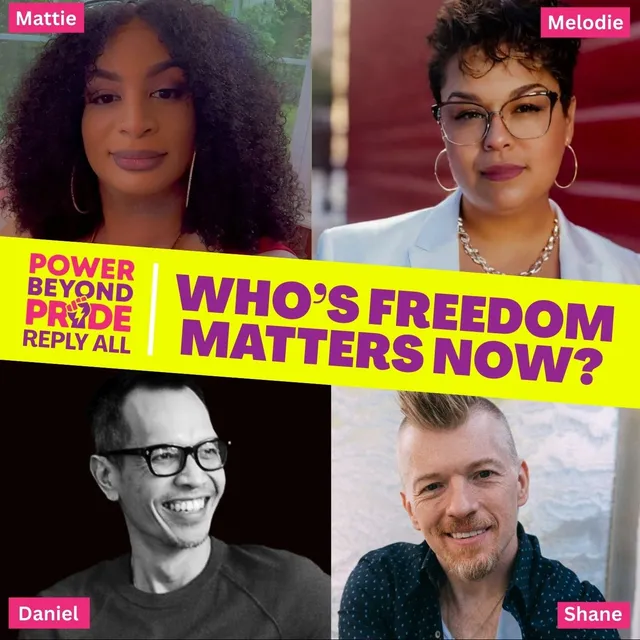
From Kansas ID rollbacks to the State of the Union, co-hosts Mattie Bynum, Melodie KG, Daniel WK Lee, and Shane Lukas discuss how power uses narrative, bureaucracy, and selective “exceptions” to justify broader harm. The co-hosts unpack how “freedom” gets framed as individual impunity rather than collective safety—and how that framing fuels policies like the SAVE Act’s documentation requirements. They connect these moves to older strategies of disenfranchisement, arguing that reducing participation is the point, not a side effect. The episode also explores how protest becomes criminalized when it threatens the story those in power want to tell, including escalating federal responses to anti-ICE organizing in Minnesota. Underneath it all is a warning: when the system tightens, it’s testing how divided—or united—communities will be.
TranscriptRead the conversationAbout 75 minutes to read · 11,223 words · Shane Lukas, Kenyon Farrow, Mattie BynumOpen
- Shane Lukas
- I love that the court blocks this. Right? They block it and make sure that we are able to provide gender, uh, affirming care for trans youth. But at the end of the day, like, we are depending on very shoestring kind of courts, and we're really looking to the court to be that salvation because certainly the legislature. The legislature's not. And certainly the executive branch is not going to do anything good. Right. So we're really dependent on a very fractured court system, too, that I, uh, think is going to double back on itself multiple times, and we're going to end up back in again. These sort of federal and supreme court conversations.
- Kenyon Farrow
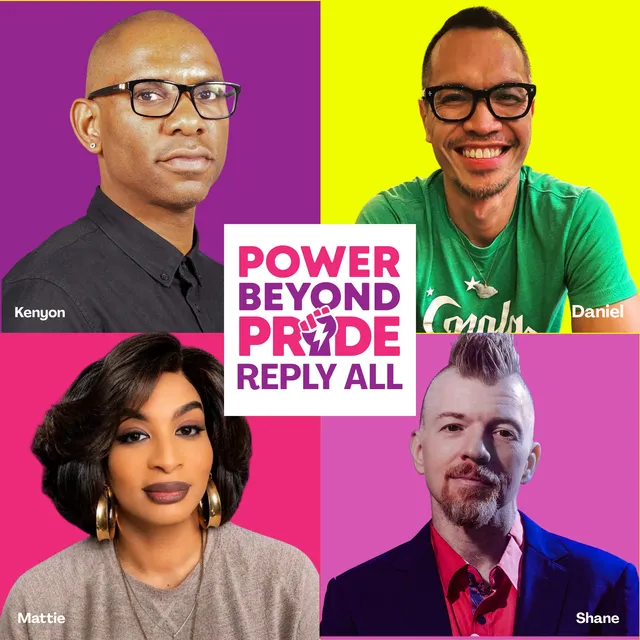
- Hello, and welcome to Power Beyond Pride, a weekly queer change making podcast bringing you voices and ideas from across our fierce and fabulous spectrum to transform our world. I'm Kenyon. I'm a writer, activist, communication strategist, and I'm super happy to be here.
- Shane Lukas
- And I'm Shane Lukas, and I'm super happy to be here with you, Kenyon. I am a lifelong harm reductionist, owner of a great idea, uh, troublemaker, ginger rocket and roller derby queen in aspiration.
- Mattie Bynum
- Well, Kenyon kind of set the standard. Made me feel like I was at, like, uh, a work conference with the. I'm glad to be here. I'm Mattie Bynum. And I'm glad to be here as well. But no, I am, um, I am your hostess with the mostest. I am an actress, singer, comedian. Well, actually, I'm not a singer. I'm a singer in the shower because I do not sing in public. But I do like to riff a good Whitney every now and then. So. Which we're. Oh, wish Whitney, of course.
- Shane Lukas
- Oh, classics, classics, classics. My name is not Susan Stuck in my head the other day, and I cannot explain to you why, but it was there.
- Mattie Bynum
- Are you a Susan at heart?
- Shane Lukas
- No, I don't. I can't explain it, but, you know, Whitney, we miss you. You are. And apparently we're, uh, vibing in some way, so there we go.
- Mattie Bynum
- All right, well, I would like to kick off the show. We typically start our show with what's hot and what's going on, and we always go straight into politics. But I wanted to start it off with politics again. Yay. But this time on a light note. First off, uh, let's just take time to reference this past weekend, we had another round of no Kings protests, and I was interested to see all the People that came out in solidarity and standing together. Even internationally, there was a lot of international no Kings protest this weekend. So that let me know that we all hate the same person, and we all really would like the same person to be gone so we can all come together on that. Don't you think?
- Shane Lukas
- I'm here for collective action.
- Kenyon Farrow
- I think it's absolutely.
- Mattie Bynum
- And why not? And then also, too. Well, let's talk about this. We can also be happy about the fact that of this past week, a Michigan ag, Dana Nestle. I think I'm saying her name correctly. And a coalition of 21 other states and the District of Columbia have secured federal court order blocking the Trump administration from pressuring health care providers to stop providing care for transgender youth. So that's a win. That's a win. It may not be the win that we want, but it's a win, right?
- Kenyon Farrow
- Yes. We'll take it.
- Shane Lukas
- I mean, I think it's. I think it's great.
- Mattie Bynum
- So let me ask this question. Do y' all think that we are in an upswing winning, or do you think that we are in a situation where we're getting just enough, but we're not meeting tomorrow?
- Kenyon Farrow
- Right? So this. This is a. Is a win that you just mentioned. But, uh, and also, I think the no Kings rallies are. Are a win. Although there's a lot of debate about what's the point, why are we doing this? And I. I think, actually I talked to a friend of mine, white queer woman friend of mine in Wyoming, who, for the no Kings protest, said there were 22 rallies in Wyoming that happened, uh, this past Saturday. And so, ah, if. So, yeah, if you're In New York, D.C. louisiana, the big blue bubble cities, it may not seem like something to you, but I think where we're seeing this turnout happen in places where there is no turnout, usually for anything, I think is important. But I think those things are wins, I think, though. So when we're. It's like. It's almost like one step forward, two steps back. Right? So the win that you just named, right, about, uh, trans youth and, uh, getting health and health providers providing care to them. But then we also had the Supreme Court say that conversion therapy is totally okay with only one dissent. Shout out to Supreme Court Justice Ketanji Brown Jackson for that dissent. And so I do feel like we are fighting, but I. There's so much just colossally wrong all at the Same time that it feels like. Like a real sludge uphill. So I think. I think it'll be a while before I feel like, okay, we're really riding the ship here. But I. But I do think we're fighting.
- Shane Lukas
- And I think especially we're recording this on Transgender Day of Visibility. So it is never been more important that we are elevating the contributions, the existence that, uh, our neighbors of trans experience all across our communities.
- Kenyon Farrow
- And.
- Shane Lukas
- And yet this is where the challenge to me comes, is that, yeah, these demonstrations are great. I'm not. I'm for any advocacy that. Where people are willing to put their bodies, their. Their. Their person in a space and talk about a point of dissent. But I really wrestle with. I don't think they care. I think that the challenge is that a lot of the untethering has been done from systems at which there's oversight or accountability, and it's easy to miss those simply because they were quiet, they were weirdly worded legislation with a lot of Swiss cheese holes in it that they've taken advantage of and other systems. So, yeah, I love that the court blocks this.
- Kenyon Farrow
- Right.
- Shane Lukas
- That they block it and make sure that we are able to provide gender, uh, affirming care for trans youth. But at the end of the day, like, we are depending on very shoestring. I don't know if that's the right metaphor, but shoestring kind of courts, because so many have been packed and so many have been overloaded with the previous Trump administration as well as this one, that it's going to be. I think it's going to be hit and miss to, uh, Kenyon's point about what kind of rulings we're going to get that are going to be in our favor. And we're really looking to the court to be that salvation, because certainly the legislature. The legislature is not. And certainly the executive branch is not going to do anything good.
- Kenyon Farrow
- Right.
- Shane Lukas
- That. That I think is going to double back on itself multiple times, and we're going to end up back in again, these sort of federal and Supreme Court conversations. So I love that people are out there. I love that. And I do think that there is a conversation, to Kenyon's point, what is the next step? Like we learned. I hope we learned, we should have learned from the first civil rights movement. Uh, maybe first is not the right word. But the 1960s and 70s Civil rights movements on what it means to show up in spaces versus what it means to force hands of power to make negotiations. They're not the same thing. Like, the appearance of dissent is really important. It's good to show that Americans are there. However, the real work was done through boycotts. The real work was done through other tenants of the system that essentially forced the hand of enterprise and corporate systems. And I don't, I don't know that we have that upper whatever, or at least we're not talking about what that upper hand means. The strike on May 1st that they're talking about will be interesting to see if America engages in that type of mass behavior. If 8 plus million, 8 to 9 million people do call out. As a small business owner, uh, it's a little contentious too, and especially for communities did not have access to resources. It's a little like I, I'm a little concerned around who's footing that bill for that type of thing. But I do think,.
- Mattie Bynum
- And I don't mean to cut you off to stop you, but I think that's the point that we need that contention. I think that's the problem. We're scared of leaning into the contention of it, but I think we have to get to a point to where we have to put our foot down and say, where is enough enough? Because I think to point to what Kenya was saying, what's the next step? The next step is actually making the people who get paid to do their job do their job. Like do your job. You may be a part of the same party that elected that president. However, if you don't agree with Trump, say you don't agree. Do your job. You're a congressperson.
- Kenyon Farrow
- I mean, the Republicans should be icing on the cake. We don't even have the Democrats, frankly, wanting to do too much. And that's, that's, I think a big part of the problem. So, like a lot of, you know what I've been saying thinking about the no kings to people again is, look, mass mobilizations can do a lot of things. And I think what people's disappointment is, I think an assumption that they can do everything right. Like we're not ending racial capitalism because 8 million people turned out of. But, but that, but that mobilization is still important because it does other things, right? One, just, I think it does what good organizing, uh, like you stress test, right? You sort of test to see how far this is what Bayer Rustin strategy was doing those small and organizing those sort of small civil disobediences at southern lunch counters, or riding the Greyhound across state lines and not moving to the back of the bus. All of those were stress tests to see, one, you know, how far you could get legally, right. What would happen if you just broke those laws? Two, uh, if you incrementally move people along those things where people then begin to show up. And so what started to happen was people started to spontaneously. Right. Organize those things. Once they started to see them happen, they started to then just take and do them. In Orangeburg, South Carolina, famously, a bunch of other actions that happened, were done, were inspired because somebody did something small that people thought, oh, what the fuck is that gonna do? Or what is this mobilization? So I think we have to really. One, I just think it's also too early to say whether the no Kings is successful or not, because it's. We. I think we won't know for 10 years, right? But I think it is doing something that is getting to test to see where, how many people you can mobilize. And then once people get. Especially in these places where people don't. Aren't in the culture of activism, right, we're going to a rally or protest or march. It's like that shit we do for breakfast, lunch and dinner in a lot of the big cities, right? But in other smaller cities, rural towns, that's just not the culture of things. And so seeing if you can move those people on some basic principles, obviously we're not all going to agree on everything, then you might be. See, okay, so now that we got people finally showing up for these things, then will they, will they then boycott? Will they then strike, right. And not go to work? Or what are the other kind of things that people write down? Well, they show up and then block an ICE facility or some other kind of institution. You have to start thinking about like, how it can build from there. And I, Yes, I think that that's like where we are in that moment. We're testing some things and sort of see what, what sticks. And then, uh, the problem also, again, I think you were just saying, Mattie, really smartly, that the, the people, the political apparatus that ought to be bolstering these actions are just showing up to get their picture taken, but they're not taking that. And then Going back and in to D.C. and doing anything legislatively or with the political power they have to help augment what people are showing up to do. And so I wish people were more mad at the Democrats than they were at the no Kings organizers for not taking this energy and then doing something with it with the power that they have.
- Shane Lukas
- Well, do you think the SAVE act, like the fact that they held back on the SAVE act was them trying to show some of that? Like I, I think it was a, uh. I uh, wouldn't say it was to the extent that I would prefer, but I think they didn't sign it, which left this moment of RTs, uh, agents and the whole situation there. So they at least held over them this idea around voter recognizing that what they were trying to add was a poll tax.
- Mattie Bynum
- Right.
- Shane Lukas
- And so being able to hold that back was to me their first execution of trying to hold power. It still felt really fragile and it uh, still feels like they, they, they gave in maybe sooner or in a way that I'm not thrilled about.
- Mattie Bynum
- But.
- Shane Lukas
- Do you think it's them testing the water?
- Kenyon Farrow
- Like the gun like you testing the water in 2026. Bitch, you're too late. You should have been testing like just even in the current administration like the. And it's been talked about by a lot of people, not before me, that like this time last year when they were threatening to shut down the government, that's when they should actually did it from which was only a few months into Trumps. That's when the doge was happening, when people were being massively laid off, when they were raiding offices. They should have shut shit down right then and there and not budged and actually forced the Republicans to then pass a decent budget. Right. Which was the fight. But they kept kicking the can down the road. So to me I'm like, okay, yeah, thank you for the SAVE act piece, but this is uh, a day late and a dollar short as far as I'm concerned.
- Mattie Bynum
- Like I get tired of people trying to act like this is New under the sun? No, it's just they picked a different group to target. But this all goes back to civil rights. Point blank period. So I agree with Kenyon. I think it's a day late in dollar short to now try to test the waters. We've had years of time to test the waters and we have examples of where we tested the waters when. I mean, if we want to keep it recent, when Trump was in office the first time, when he ran against Hillary, Kamala ran for president, I think whenever Biden was like, we've already tested the waters in so many ways at this point. If you're just testing the waters, I beg to differ and say no, you're just scared at this point. You don't want to dive in because the thing is you're going to get dirty.
- Shane Lukas
- Like an anti government approach. Right. Like we saw it with the early libertarian movement, with the Tea Party movement. We saw it with this sort of growing conversation. And even Democrats. Right. Often times would talk about big government as a fundamental problem and oh no, we would hate to have government clean my roads. Like we would. We would. Like I would.
- Mattie Bynum
- Right.
- Shane Lukas
- We've never imagined what a government contract would look like where we all share in that contract and what that might look like.
- Kenyon Farrow
- Right.
- Shane Lukas
- As cis, we've never really. Or as neighbors, we've never really had a constructive conversation about what an imagination of that looks like. And to me this has been a slow unraveling. Not. I mean, Trump certainly accelerated the damage that could be done and bull in a China shop in the second term, certainly in the first nine months. But there were a lot of things, like I said, Swiss cheese in the system that fundamentally were let to be there because we'd already. Whether it was. I'm blanking on the name of the Supreme Court case. But whether or not it's corporations or people, whether or not, like the un. The un sort of unraveling of this social contract happened a while ago.
- Kenyon Farrow
- Yeah, I mean there's a lot of different kind of points in history we could point to, to be like, this was it, this was, this was a moment. There've been a lot of moments. But if I had to say in uh, our, in the most kind of contemporary moment, I would say that the Supreme Court giving George W. Bush the election in 2000 over Al Gore and stopping the recount and really investigating what the fuck happened in Florida, that was where to me that's, that's the moment that was where uh, I think we're going to look back historically and realize that everything in the last 20 years, that moment in the 911 was right after that. And then Katrina happened. And within that period was also where we started to see that like Congress couldn't. Congress has almost not passed an on time budget in 20 years. I think we forget that. And then to me, if you're, if the, when that is the, that is the basic uh, function of Congress, which is to manage the money. It is to pass budgets and make sure that money is appropriated and that it's spent where it's supposed to go. That is the Congress's first job. And at the point at which we stopped being able to pass a budget on time was the sign that we were on our way to becoming a failed state. And now we're at the point that even basic, like the basic government functions are uh, like the airports, the, I mean we go through the list of things that are increasingly fragile and falling apart, the infrastructure as just further evidence of that. So to me that I think we really look at and like I said, particularly in more recent times, really like the early 2000s is when a lot of this stuff got cemented and we're living in the wake of it now.
- Shane Lukas
- Thank you for sharing that because that's really powerful, that kind of legacy. And at this point we're going to take a short break, but I love that we're having this conversation because I think it's not only just acknowledging that these Kings protests are part of a larger conversation because again, to get to a point where there's no kings, you have to have gotten to a point where you release so much power to the executive branch and you've, you've really lost any trust and faith in any of the other institutions. And so I come back to my core question, which is, I don't know, I'm curious what we'll build if we're going to build something out of this. But we will find out more about how we feel about some of the other headlines when we come back. On the other side of the break. So please stay tuned, informed and connected here at Power Beyond Pride.
- Mattie Bynum
- And welcome back to Power Beyond Fraud, a queer change making podcast. I am one of your beautiful hosts tonight, Mattie Bynum. And I am joined here with my two amazing co hosts, Shane Lukas and Kenyon Farah. Uh, and for once, I can honestly say we're all on the east coast.
- Kenyon Farrow
- Yes. Praise God.
- Mattie Bynum
- Thank you, Jesus. Hallelujah.
- Kenyon Farrow
- Yeah.
- Mattie Bynum
- So let's start off with this question. Now that we're back. The past week, Tennessee was advancing a bill to create a list of trans people in their state. Now, historically, this has never been a good thing. If a state starts creating a list of trans people, where do we draw the line between policy and surveillance? And what does it mean for the LGBTQ community when identity starts being tracked by the government instead of being protected by it? Uh, I know that was a heavy
- Shane Lukas
- question, but it bad that there is no time in history that the tracking of any population by identity through a government effort, especially one that has specifically been antagonized or antagonizes those communities, has been a good thing. And so, ah, again, they're just, uh, there's such a playbook here. And it's not just a 2025 playbook.
- Kenyon Farrow
- It's.
- Shane Lukas
- It's German and Ellis island and all of the things that go ahead of it. So, yeah, I mean it's, it's, it's incredibly horrifying. It's horrifying. And actually I should also note something that was also announced this, uh, just recently is that I believe it's one of the Pennsylvania universities has to give a list of its Jewish students to the administration as well. So I just want to. This isn't just about our transplants community members. All communities are important in these conversations. But I think it's important to know that this is, this is. There is an attempt to draw attention to and identify a number of communities who have faced and are facing hostilities directly. And we should be scared.
- Kenyon Farrow
- Yeah. Any just with you. There's no registration of. Of people based on identity as such that ever ends in a good. Obviously it was the Nazi Germany example. It was also a, um, McCarthyist in this country that was. So much of that was give me the names of all the communist people who world were not communists, but people did it to, to get off the hook themselves.
- Shane Lukas
- Well, tribal wars. Tribal wars in Africa did the same thing. You have?
- Kenyon Farrow
- I mean, just frankly, it's, it's, it's, it's fascist. It's often a leading way to ethnic cleansing and genocide, et cetera. Right. We could go down the list. So, and you're right, it's not just. It is trans folks in some of these more acute, uh, examples, but we also have seen it in this country and other ones. And certainly there's an article today, I think, in the Guardian about how Trump has weaponized the EEOC to go after the groups that the EEOC normally protects in. To supposedly protect white people. Right. So. And this is something that's happening in my job, right, as a. Working for a California labor union representing a higher, uh, ed faculty. The Trump administration went to the university system and said there's too much antisemitism at one of the campuses. And so you have to get. And this was through the eeoc, right? You have to give us all the names of the faculty and their personal information so we can investigate antisemitism on this campus. And, and the CSU Cal State University did it. They gave them. And my union sued the university, uh, and we settled the case out of court. But, but yeah, so they're, they're doing this to get lists of people to be able to use the state to, to harass and target people further. And so these kinds of lists and registrations are never a good thing. It also happens in the X Men. I mean, for all you comic book nerds, there's so many X Men, the comic stories that are about the government trying to register mutants. Right? Like they're using that allegory to get people to think about what that actually means.
- Mattie Bynum
- I'm about to say, and I think that's why with this question, my answer would be, what more evidence do you need? I don't think there is a answer in a sense to like, how do we. It's just, what more evidence do you need? Like you said, we got up team examples of what lists can do to people.
- Shane Lukas
- No, to me, to me, there's just a, uh, it's challenging in some ways, right, because you. At the same time, we want things like the census, because the census helps us see a portrait of allocation of resources, of what it means to make sure that communities are served and underserved communities get access to shared resources. And so it is again, coming back to what role does the government play and what I feel like this is is basically weaponizing systems that weren't necessarily inherently. EEOC is a good example, weren't intended to do harm. And yet what they've been able to do without getting their hand slapped in the way that you they should be is essentially weaponize these same systems that have been used to protect community members. It's coming back in this cycle. Whereas I don't know, I'm not a fan again of trying to create a registry of individuals based on those identities. But I also understand you talk about resources, you talk about our indigenous community members or other community members were populations that have been excised from a lot of conversations. And so there are sometimes necessary needs to make sure that communities self identify so that we recognize resources in different ways.
- Kenyon Farrow
- But uh, they have to be data collection. Data collection is a different thing. Right. Like when you're collecting data to understand how a particular disease or a particular issue impacts a particular group. That is a very different conversation. And we need to know your name for no other reason other than we are registering these aberrant or people that we want to, to to watch. That's a, that's a whole different thing than we need to understand and say how many the. The health outcomes of trans people in St. Louis. That's a whole different good faith collection of data. Right.
- Shane Lukas
- Like a good faith collection of data. It is a trusted collection of data.
- Kenyon Farrow
- Right. But it also is not tied to your name and your address necessarily. That's the other piece of it.
- Mattie Bynum
- Because I challenge when you talking about the census. Yeah. The idea of the census was a good thing but has it actually done what was the idea was supposed to do? Because yes, getting the information of knowing your demographics and knowing how many people are in this area and this and that was supposed to allocate but there's still a lot of undeveloped uh, areas that still have yet to got funds. So the idea of a census as a collection of identities as a whole, not just subjugating out a group. Yes, it sounds good but even in that it still hasn't done what it was supposed to do.
- Kenyon Farrow
- You still don't get the resource, the community.
- Shane Lukas
- Not. Not again I'm not here to defend it. I'm weird feel weirdly feel like I'm defending the census. Um, it has, it does shape things like the number of representatives you get from your region. So that can play a factor in your electoral politics. So that if you are a region that is highly populated or dense or not populated. Well, like finding ways again now so many gerrymandering has happened. So again these systems have been abused. But I think the principle behind it in terms of what is a representative democracy, that, that I can understand the value of it in the sense of making sure the communities do not get ignored, that we don't hyper, we don't under report community members. And the same again for there is an allocation, there is history of allocation of resources in areas where the census for example finds pockets of populations that may be either multi language speaking or other, other capacities and being able to address those things. But that's all a good faith argument. Like the idea is that it's a good faith conversation, that the census was always a nonpartisan conversation. It was a, it was a collection of data and facts. And then you would take these data and facts and either party or either political, any political construct could then come up with a solution to say, oh, this population doesn't have access to X and Y thing or there's no supermarket within this district. We should probably find something here to deal with a food desert. There is a good faith argument, but to your point, it's anonymized data. Uh, it is intended in good faith. And that is not what any of this is. And that's the challenge is like these same systems then are being weaponized and people don't understand the systems so they don't understand that it's being weaponized. Yeah.
- Kenyon Farrow
- So I want to pivot us from uh, sort of higher level political discussions and talk more about relationships and how we are personally. So we're going to, we're going to get a little softer in this, this question. But I'm curious what y' all m think because I could see myself in this actually. But there was a recent article that was published in the Journal of Personality and that it stated that psychologists have determined in this particular article that people who enjoy being alone are, are the most loyal and faithful partners and friends to others. Which I just thought was very interesting. So if uh, people enjoyed being alone, tend to be more loyal and faithful per se, does that challenge how we think about independence and relationships? And I will just say up front that I, I am that person. I am very, I can be very much alone in my bubble for days. I cannot talk to people for days on end.
- Mattie Bynum
- don't know the correlation. I would say for me, I'm Definitely that same person I love being. As a matter of fact, I had a friend tell me that my house was my fortress of solitude because it really is. Like, I love working at home. I love it, and I love having company, But I also love saying bye to company because it's just something about being able to have your own space. But does that make me a more faithful and loyal partner? I could say yes, because I think once I get a partner, I probably would seem more loyal and faithful because I've been so alone for so long that I would probably cling to that person to a point. I don't think it necessarily makes me more faithful or loyal.
- Shane Lukas
- So I feel like I'm gonna get personal. So get close. Get close. Youngins here. Let's hang out.
- Mattie Bynum
- Oh, right.
- Shane Lukas
- And so I tend to be very loyal. I can. I can. I have friends who, you know, I may not talk with for a period of time, but, uh, they are. I choose them in my life, and I recognize that I do not need them in my, uh, life. I know it sounds weird to say it, and maybe it sounds insensitive, but what it means is that, like, I also, because I come from a very unstable household, realize that when people are harmful to me, I don't want to be around. And so I also try to choose people who are going to be constructive because I know that I can walk away. And I encourage people in my life to feel the same way. Like, you should build a life in which you do not need to endure trauma where you feel like you deserve it or you feel like you have to endure it. My hope is that you feel, like, secure enough in yourself to do that. And I think that fosters that independence. Like, I think of myself as highly independent. People see me as a very type A, but I'm really more of that. Whatever that new version is, right that Type A. But, like, my battery goes down. Like, I love my time in the woods and I am high. I am fine on my own for long, like long, long periods of time. But when I want to be social and when I want to be in a relationship and I want to connect to people, it's a choice. And I like that I get to revisit that choice regularly. It doesn't mean I'm afraid of commitment.
- Kenyon Farrow
- Yeah, I would say. I also think it's about. I think it's about a, uh, certain level of security. Right. I think. I think that people who struggle to be alone are struggle with also being insecure.
- Mattie Bynum
- Right.
- Kenyon Farrow
- And so people. And there's obviously lots of folks who are not in monogamous relationships. Some of this is set up as like a kind of monogamy versus, like the. So, uh, faithful is always a weird thing to me because it's always about kind of monogamy frame. But let's just say, like, I. I have certainly experienced or known people, if they are insecure and therefore have a lot of anxiety around, like when you're not there as the apartment, whatever, they will sometimes do things to work out their anxiety. Right. That might actually be. Break whatever kind of rules y' all have. That's about their own shit. And so I think so to me, it's not just about just because a person likes to be alone. I think there's a certain kind of a, uh, security that you have as a person. If you are the kind of person who can be by yourself for a while, that then that means that you are probably going to be somewhat of a more secure partner when you do enter into partnerships or in your friendships for that matter, because you're actually. You're not. What's the word? I want kind of like using people for their.
- Shane Lukas
- You're not hunting for approval. And the challenge about kind of faithfulness is that if I don't get that approval in this moment, then I'll seek that approval Somewhere else. And then. And it's not even like an unfaithfulness, it's just a, uh, like a, uh, like you said, I think a panic. Oh no, if I'm not approved, then let me go find some approval and I'll find this approval or. And that approval doesn't necessarily mean infidelity. It could just mean you shift focuses or you act out of anger and you like all kinds of things. But I do think that security, I like that you named it as security.
- Mattie Bynum
- And I think that that comes from. Because I have that issue now, being single for so long and being secure in my singleness that I have found in, in recent past relationships. I don't validate the other person enough. Uh, because I'm like, well, I'm good by myself. I don't need your validation, but clearly you need mine. But I'm falling flat. Cause I don't know how to validate you anymore. Because I validate me all day, every day. Boo. Like, it's good.
- Shane Lukas
- Because I've thought about it and I see friends of mine who are single, friends of mine who are in couples and partnerships. And part of what I think I did very consciously when I was younger because I saw the way that people who are highly independent and sort of looked very similar to my own pathway would start to do and live alone and create a life where they had that independence, which is great. But to me I was like, oh, I could get really used to that. And then I was like, oh, I could get really used to that. So I always had a roommate because I was like a roommate or somebody around in close proximity because I think there's a skill set to learn to negotiate people. In some ways it was very focused. Like I love my old roommates, they're all great. I've had great roommates and that kind of stuff. But it was a very conscious effort both for me to have someone else there that I needed to like. Negotiate space with.
- Mattie Bynum
- It.
- Shane Lukas
- Because I've learned how to create those spaces, navigate those spaces and create sort of separations and also define what it means to have us, things and my things and create a space. Because I know if I don't have my things, that, uh, I will not find a good space. And I'm like, you have your things, too, and that's great. I don't need to have your things. You have your things, and then we have our things. But some people, I think when I. When I see them in relationships, they're like, everything's ours. And I was like, oh, my God, I would suffocate so fast in that kind of involvement because they're like, I'm incomplete, and I need you to complete me. And I'm like, if you're incomplete, then we're not in a good place.
- Mattie Bynum
- Yep,
- Shane Lukas
- I'm already complete.
- Mattie Bynum
- So what gets you on that one? Well, look. Yeah, so we're going to make this like we always do everything on Power Beyond Pride. We're going to challenge our viewers and listeners to get involved in this conversation. We're going to give you a few moments to sit alone. So in those moments, as you sit alone and we take a break, when we come back, I want you to reflect on how it felt for the 60 seconds that you sat alone. And does that make you more of a faithful, loyal person at that 60 seconds. Okay, we'll be right back. Thank you so much.
- Kenyon Farrow
- I love it.
- Shane Lukas
- Welcome back to Power Beyond Pride. I'm Shane Lukas, and I'm here with my phenomenal co hosts, Kenyon Farrow and Mattie Bynum. And on the break, we talked about something that queer people are talking about all over. So we want to take a moment and kind of dig into this for real quick, because this is a good moment. More career makers ourselves. And so when we talk about a lot about politics and. And different topics, we don't get a chance to talk about pop culture quite the same way. We talked a little bit about it before break, but right now we want to talk about this interview with E.J. Johnson. It's basketball star Magic Johnson's kid. And, uh, his, uh, their interview, rather, with Carlos King. Now, the interview itself was actually very good. However, I would say that, that, that there were we. I don't know if, if, if they're okay. Do you think that wealth changes someone's experiences as, as a queer person?
- Mattie Bynum
- Because the interesting is a very descriptive but safe term to describe the interview. I will say, uh, the whole interview itself was interesting. Some of it was eye opening and some of it also was a mirror moment for myself because I saw some things that he said. Well, I heard some things that he said that I could understand. But I think the biggest thing for me is yes, I think money does change things. Because what I got from the interview as a whole is it's easier to be very. A matter of fact. And it's easy to have a very good stance when you have less people telling you no to your face. When you grow up in an environment where people yes you because of whether it's your financial status, the color of your skin, the privilege or whatever, when you have that type of a upbringing, it is a little bit harder sometimes for you to recognize maybe someone who is standing in the same position you're in. But they had to go against their entire family, leave everything they know from their past, their town, their community, their people, their respective things, leave that behind to finally be their truthful self.
- Kenyon Farrow
- Yeah, I mean, I would agree with that. And I'd like levels to certain kind of privilege. Right. So in that sense, I'm quote unquote privileged because I also came from a very pro queer family. Like I. There was queer people around.
- Shane Lukas
- You're queer?
- Kenyon Farrow
- But at the time it was like the drag queens or whatever, folks in the. In the community. And it was never a Secret and everything. But. But we were also poor. This was the projects in Cleveland. Right. So it wasn't like. So that. That, that kind of privilege wasn't there.
- Mattie Bynum
- A level.
- Shane Lukas
- A level is like being at the bottom of the nine foot end of the pool.
- Kenyon Farrow
- Yeah, no for sure. I don't even try to diminish it. I'm just. But there was definitely a level of. I have grown up with. Not with a m. Lot of money and also with a certain kind of status of being Magic Johnson's kid. That all that came with. Now that also came with a lot of hard stuff because being tall as EJ is or whatever, but not being in the same kind of masculine shadow, like people assuming that EJ would grow up to play basketball probably like those kinds of things probably were there and were hard to deal with even while you had a supportive family. So I don't. Whatever.
- Mattie Bynum
- Hold on one second. Key, not to cut you off. But also being outed because we do want to acknowledge EJ was outed at 13, so yet again that we're not taking away from those things.
- Kenyon Farrow
- So I think to me, the part of the conversation that kind of took up the most like, kind of discourse on the Internet was EJ talking about going to gay bars and I don't. And saying essentially I don't. I don't meet men romantically in gay bars. Most of the men who approach me are straight and they are. And I tend to meet them in straight bars. So if I go to gay bars, it's with my friends to just hang out and have fun. But it's not. That's not where I'm. I'm getting romantic or sexual attention or whatever. And people got really angry at that. But, but, but, uh, I. And that's actually the part of the interview that I thought was the realest. I couldn't, I couldn't understand ew because like. Cause, like. Cause like, let's be. Let's be honest. Let's be. Cause like, I feel like we want to have it both ways. I think people would. I think people were just so mad about the, the, the level of like richness and some level of elitism that they couldn't get they. Around that piece. Because we can't have it both ways. We can't both critique the Gay bar culture, being hyper masculine, being whatever, all these things. And then somebody says as a non binary gender non conforming person who, who and who presents in a more kind of feminine of center sort of scale that oh we like like that somehow their experience that they're recounting going into gay bars and being ignored romantically is somehow not real. And also even for me, like I, because I had to think about it even for my. If I saw EJ in a gay bar I would probably assume that EJ was trans and would. And would probably make the assumption that they probably also wouldn't be interested in my gay ass if they're laporte in that way. And we don't. We do know that trans women and gay men sometimes like date or have sex whatever. Like we do know that, that, that happened. But that would probably be my first assumption as well. It doesn't mean I would, I would treat them shitty. Doesn't mean I wouldn't dance with them or hang out ever. But I, but that would be just my, my assumption just because that's just the, that's just the nature of those spaces. And also I have other. I'm a very close friend of mine who's also non binary and is the kind of like person who just the way they were born. Uh, no um, facial hair, very little body hair at all. Very pretty face, voice sits higher in range just naturally sits higher. And it's. I, I hate to use the word naturally but just. And just was born in, in a body that is just. People don't know how to read gender wise or read reads more feminine if they're just wearing one thing versus what they wear the, the other. That's just how they, the body that they're in. They get approached by straight men all the time. Like all the time A majority of the men that they are like having sex with straight men. Right. And who. And men who find out that they are was assigned male at birth like often get over it like once they, they, they're attracted to that person and they move. So, so I think that that part of the conversation. Well I couldn't. I think people were angry at just like the general elitism of it all but couldn't actually really hear that piece for what it was because that's just the, that's just the truth of gay bars right that they, they generally. That there's a range of different body politics in those spaces. That there's a hierarchy of uh. And that EJ as a person if it was not there to perform drag or whatever would probably have a difficult time if that's what they were trying to seek out romantic partners. That, to me, is just.
- Mattie Bynum
- It was a derogatory word. Because even I knew gay guys that did not like to be called gay. Because it was like, if you ever heard someone say, oh, that's gay, or that person was gay, that was some punk, some sissy fies, some. That's how I grew up. So to hear EJ say, I don't date gay men, I date straight men. I told my friend, I said, honestly, I can understand that. Because what I hear when he says straight, I honestly go to DL, uh, guys. But that's how I was raised. That was the community I was raised in. I was raised around where I knew gay guys.
- Shane Lukas
- No.
- Mattie Bynum
- And so when people hear, well, I don't date gay guys, I date straight guys, we have to stop looking at the literalness of gay and straight and realizing that, first off, the words don't even mean what they used to mean or what they should mean in general. Because we've put titles on so many titles on people that now we gotta keep up with titles of the titles of the titles that now everybody's gonna get offended because the title doesn't. If that makes sense. So that's how I also viewed that same part of the conversation. Cause was he wrong for what he said? No. Was his attitude and his delivery wrong? Yes. I do agree. Like, I think there was a different way you could have delivered that conversation. But when it comes down to him saying, I don't date gay guys, I date straight guys. Because there was a time when I was engaged before I even knew who I was Today, before I came into my understanding and having a conversation with my parents and learning that I was intersex, like, even before that conversation even came about, I remember going to gay clubs and I was like, this ain't for me. The men here don't want me. Well, I would always get mistaken as a drag queen. Oh, you here to perform tonight, baby.
- Kenyon Farrow
- You here to perform.
- Mattie Bynum
- I want to sing, and I can make you laugh, but that's not my calling. So I can understand where EJ's coming from in that conversation of saying, I don't date gay men. Because if somebody would have asked me in my 20s, do you date gay men? Hell no. I date straight men. And I knew the difference, distinctness of it, if that makes sense. That's, that's how I got.
- Shane Lukas
- I guess my question, I guess, I guess my, my conundrum here is. And, and I think part of it is what we're pointing out is that there is a anti femininity. I don't know a better way to frame it among gay men, like a, uh, kind of a, uh, distaste of the feminine in a lot of male spaces, which is what EJ calls out. the same time, what I think is, to me a little troubling around it is that there is a conquest narrative in straight men. There's a validation narrative in straight men. And I feel like he's all, well, again, I want to make sure I get his pronouns right, but I believe. Is it he his, or they themselves? Um, I can't remember.
- Mattie Bynum
- He. When the interview started, he said he was renouncing all titles. So I don't know what titles.
- Shane Lukas
- I just want to honor where, where they're at. Uh, yeah, non binary. Again, I, I, I, I don't remember that part of the interview with that. But I, but I, but I think that idea of the conquest, I think is also fundamentally challenging. And I don't feel like they undermined it. I guess that's part of their point, was to try to undermine it. But in fact, I think that they were in no new part of this interview did they try to elevate their own ego and their own narrative. My suffering was terrible too. It was so hard going to all these parties. I was in Paris having a hard time. You're like, okay, well, okay, okay, okay. Like, I'm not. I, uh, whatever, okay, we'll deal with that. But I, but I think the, but I think that idea of the straight men and being attracted treatment was also being used as much as a, as a, as a marker, as a, as a sort of. See, I am, I have a validation here. And I, and I don't know, at one point it's a critique because like you said, EJ was In these bars, people were paying attention to them. And that's a fair critique of gay culture. And it's sort of anti feminine kind of narrative. At the same time I feel like they double down on it because they say, well, straight men are like the uh, straight men. Look at this, look at this thing. I get to, I get to put on my shoulder this trophy straight man thing. Because I've heard gay men do that. They're like the straight man is. That's the conquest, that's the narrative, that's the award. And I'm like, are they straight? Because I used to work with high risk men in like parks and like I've met straight men like who will have and, but it won't involve dating or relationships. Like it involves an exchange and that's the extent of it. But once it moves beyond like an exchange, like essentially uh, they're basically getting off for all intents and purposes like the emotional. And none uh, of that is there. Once it goes beyond that to me, are they like, I have a hard time at that point you're calling them straight.
- Kenyon Farrow
- Yeah, no, I think that's fair. But I, and I agree with you that there was a level. I'm um, glad you mentioned that There was part of that was a kind of, there was a braggart part of his. Of EJ's.
- Mattie Bynum
- Yeah.
- Kenyon Farrow
- Yeah. Like I attract straight men. Right. Like there was definitely an element of that. And maybe I'm a little more. They young. Uh, like a little bit. A little bit. A little bit. The unk in me was a little bit like they young, uh, that ah, some shit'll wake them up a little bit off of that, you know, maybe whatever. So. But that was absolutely there. So I don't take anything away from that. But I think to your this last point. Yeah, like also I just think that people have a range of journeys. Right. And so while I would agree that like at the point at which somebody like goes beyond like just getting hit in the park to considering dating somebody or starts to have some kind of emotional attachment to another, a queer trans person and then the question of whether that person's. Can they still say that they're straight? But I've uh, been. That takes time. And so even, even if that person is In a place that that is influx or may shift or that. That there's a they. There may be a while that person is. Still considers themselves straight despite whatever other experiences that they. They may have. I and I. I have a thing in one straight friend of mine who had a relationship with a. With a man for a period of time and, and it is very. Acknowledges it was what it was, but still thinks of himself as a straight man. Right. It doesn't. So I, so I just think it's. It's complicated at that point. I generally just go with like whatever you tell me I'm a rock with. Right. And not put my own shit on it.
- Mattie Bynum
- But I think that's also too why I get into the whole thing of, uh, this is why we got to be careful with label and putting titles and labels on things. Because the thing is, sexuality itself is a fluid experiment. It is, it is like, because I just had a conversation with my cousin about it today, in a sense, where it was like, if a woman tries. If a woman sleeps with a woman in college. Let's just say it like this. If a woman sleeps with a woman in college once, maybe twice, and she chooses to never sleep with a woman again, is she now considered a lesbian? No. But if a man has any encounter with another man once, twice, even thinks about it in his life, he is now forever the rest of his life a gay man. Why we have to be careful. I don't agree with that.
- Shane Lukas
- Like I said, like I used to work in parks. I don't, I don't think that's necessarily true, but I think it's. It's. To me, the line is crossed into a different place when there's an emotional and intellectual attachment. If it is, I played with somebody and I had gay sex, then that's the thing. Or if it's. Again, if I'm having same sex engagement as, as exploration and it's not really tied to an emotional and an intellectual investment, then I think it's different.
- Kenyon Farrow
- Right.
- Shane Lukas
- At that point. At that point, it's a pleasure, it's corporeal. That's fine. It's all of that. And I wouldn't assign much to that. But I think once you make an investment in that person, and what I think is really important to me about EJ statement is that in some ways they have to be straight. People like that felt like that was the attraction, like that felt like that was the justification and the honorific that they were trying to carry. In it. So I imagine if one of those people went, well, actually, I'm, I'm, I'm pansexual or I'm bi or I'm exploring. I don't know that they, I don't get the sense. And again, I do not know this person very well. So I only know them from these interviews and this stuff. I don't know that that would be interesting. This person. I wonder if EJ would consider that relationship still. Like, those are the things I think that.
- Mattie Bynum
- some people like to conquest, like you said. So. Yeah, no, yeah, there's a lot. Yeah.
- Shane Lukas
- But I hear you. There should be more fluidity and we, we need. And I love that there's more fluidity in the spectrum. I just wonder how the power dynamic impacts and how reinforcing that helps, if it helps at all.
- Mattie Bynum
- Kenyon, as we go into our next segment reading, we have a contention of if we're going to call it a mailbag, a mail slide, a mailbox, a mail hole, whatever. It still has yet to been determined by our viewers of what name we should name it. But I think you have a question.
- Kenyon Farrow
- Mail Hole is crazy. Mail Hole is wild.
- Mattie Bynum
- Come on. I love people. Continue.
- Kenyon Farrow
- Go right here.
- Mattie Bynum
- No, I said, but I think you have a question from a viewer that we need to respond to. Yes.
- Kenyon Farrow
- So I'm going to go with this question. I'm dating someone I really like, but they're not into politics, quote, unquote, and don't really engage in LGBTQ issues. Is that a red flag or am I expecting too much? In a way connects to the EJ conversation.
- Mattie Bynum
- I would say for me, yes, for me it will be a red flag only because I am an active person. And I think that if you, if we don't have some level of the same ideology, then it's going to be hard for me to truly be able to have a conversation with you on a level of a, uh, relationship. If that makes sense. Yeah.
- Shane Lukas
- Now, again, not everybody's going to be an activist and that's fine like that, that makes sense. But if you absolve yourself of interest in the conversations. Yeah, it's hard because our relationship at some level, because I identify as queer, even if, even if I had an opposite sex partner who identified as a cisgendered female and all, if you aren't interested in laws and things that impact me and our relationship, then that would be A fundamental challenge, because we have to make decisions based on that. We live in an equitable system, and I would hope you would at least be aware of that system. So I guess it depends on what not into politics really means. Like, I understand also tapping out of the debate or the, or the drama cycles, but if they're uninvested, they're sort of like, I don't care about any of that stuff. I just want to watch Star wars movies and do my cycling classes. Um, I, I would have a hard time with that because to me that, first of all, it says a level of privilege where you feel like you could tap out and you don't have friends who also are impacted by these concerns. Again, whether that's just LGBTQ issues or issues around racial justice or anything else, if you're not. If your friend group and people in your community are not impacted by many of these things, you do not have a very diverse community.
- Kenyon Farrow
- Yeah, it would be a problem for me on that level. And also just because I'm generally very interested in politics and like, what's happening in the world and current events. This is something I've always been through, even as a kid. And so some of it, I just, I generally find people who are of that sort of opinion really fucking boring.
- Shane Lukas
- You're just gonna cut to the chase? There we go.
- Kenyon Farrow
- Yeah. Cause then you, uh, to me, I just like, what are we gonna talk about if we're not also just thinking about just whatever. Not just like our relationship and our day to day, but what's happening, the things that are happening in the world, good, bad or indifferent. But, uh, to not have a level of curiosity. To me, it's also about some of the times it could be privilege. And sometimes it's just a lack of curiosity about the world and what's happening and whatever. And also just. And the thing I can tell my nephews and my nieces, like, look, if you could not watch, and thank God they're not like this, but let's just say if they were, you could not watch the news or not pay attention to politics all you want, but there will come A time when some, you gonna get blindsided by some shit that you could have been paying attention to. So a, a, a, a layoff, a job cut, scholarship, gone, this, that and now they, now it's, it's in the news. So they, they're, they see it. But we used this thing I used to tell them when they were kids, if you're not paying attention to at least just some of the bare minimum like of what actually is happening in the world or stuff, it's an old statement. You can say you don't do politics, but politics are going to do you. So there's a level of that for sure. But, but in, but uh, for me just on a more like whatever surface level maybe is, I just find people like that just dull and boring and I just don'. Want to hang out with you.
- Shane Lukas
- You're not. It just tells me you don't care about other people.
- Mattie Bynum
- That's I guess part of it is
- Shane Lukas
- And so I do care what happens there. And I don't necessarily, again, I get wanting to stay away from the caustic back and forth, the debate, the shock, politics, all of it. It's exhausting. There's a lot of that, that is exhausting thing. But that's to your point, Kenyon, that, that curiosity about what is going on in the world and how am I invested or how does, how do I participate in this world? I, I, I can't think of anybody in my life that I would want to spend time with who uh, was not interested in the world that they have, who is not interested in the world. Now I do want to say there's probably a little bit of classism in that and I want to acknowledge that because I think that's also a case where you have community members who, especially in low resource communities who are just like hey look, I'm just trying to work a job, put a roof over my head, make sure there's food table. I can't think about to that. But I do think even in my experience in communities where, and community members where that is the case and neighbors where that is the case. It did not take a long conversation to talk about their understanding of, of the impact these decisions have because I think they're aware about whether it's minimum wage or wage labor, labor rights or other things that there is an interest in it.
- Mattie Bynum
- I would say I think that, uh, like you said, I think it tailors to the viewer that that wrote that question. And so we thank you for writing that question. But I think all of us can collectively say if it doesn't meet your standard, then that might be a red flag because I think everybody's politics standard is different. I have a homegirl that will refuse to discuss politics altogether. I have another friend that's, I'll discuss it, but I really don't care. So I, like you said, Shane, I think there's a level of what people, how they feel and where they feel. But to all people, we thank you so much for sending us questions. We thank you all the time for filling our mailbag with so many things to talk about that we can always feel like we're very much in a part of the community. And if this is your first time listening or seeing this show, you can always go to powerbeyondprod.com to submit your questions. Or you can submit them directly to our email, which is mailbagowerbeyondprod.com I'm willing
- Shane Lukas
- to create an alternative mail hole at, uh, Power beyondproduct.
- Kenyon Farrow
- I was sitting here thinking that, but
- Mattie Bynum
- even better, I was too classy to
- Kenyon Farrow
- say it out loud.
- Shane Lukas
- Classy, that is, that's, that's a given. Even better, send us a video on any of our social channels. Of course. We want to see you, hear you and be a community with you. We appreciate you paying attention to this podcast and, and, and being, being curious in your own communities about the work and transformation that's possible.
- Kenyon Farrow
- Yes, thank you, Shane. And unfortunately, that's all we have time for in this reply. All our episode of Power Beyond Pride that went by really fast. We didn't even get to all the questions, but it was really fun. I'm glad you all joined us. And again, just in closing, I'm your co host, Kenyon Pharaoh, and you can find me at all the socials just Enyonferro my name. It's not that, uh, creative with my handles. Uh, but I'm so thankful to be here with my two great co hosts.
- Mattie Bynum
- And also I am Mattie. You can find me at maddysimone737 on Instagram or just simply Mattie Bynum on Facebook. Because just like everybody else on Facebook is one big family reuse most of the time. Uh, anyways, but remember to subscribe and to get all your friends and family to subscribe to Power Beyond Pride on Spotify, Apple Podcasts or where you get your podcast. And check out our website, Power Beyond Pride for all the latest news on Power Beyond Pride.
- Shane Lukas
- And I am, I am your. I am the other co host. I, Shane L. I am an activist, harm reductionist. You can follow me@shane lucas.com. oh, I'm also, uh, the king of debauchery and Power Beyond Pride is a project from a great idea Queer owned Design and content agency. Learn about them at a great idea dot com.
- Kenyon Farrow
- This episode is produced by Shane Lukas, who you just heard, uh, Matty Bynum, also here as the product developer and our editor is Jared Redding with support from Ian Wilson.
- Mattie Bynum
- And yet again, I'm going to say it one more time. How many times can you say Power Beyond Pride? So we are all a part of the podcast awesome host team at Power Beyond M Pride. So remember to send your questions and comments to where people Power Beyond Pride
- Shane Lukas
- power BeyondProduct.com There we go. Check out our new episodes each week and we look forward to career change making with you next time. Thanks to all of us from Power Beyond Pride.
Transcribed automatically and lightly checked. If something is wrong — a name especially — tell us and we will fix it.
Episode #43
Reply All: IDs, Pushback, and Power