

Episode #44 · Mar 10, 2026
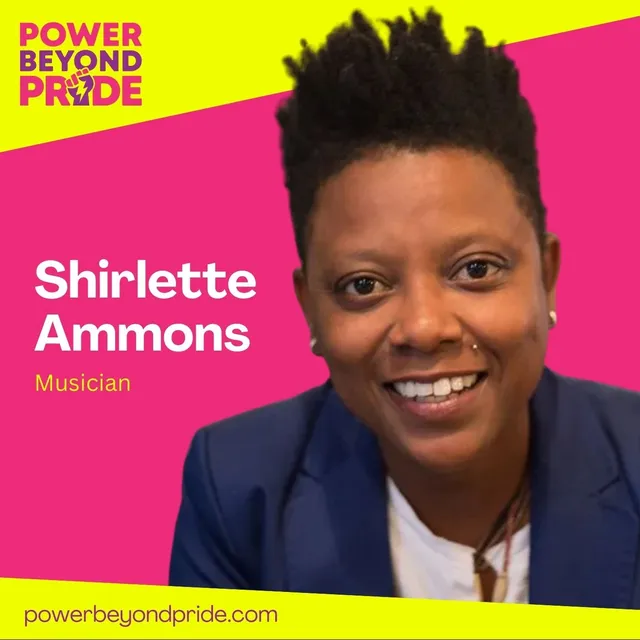
Queering Hip Hop, Liberation, and Telling Truths with Shirlette Ammons
Listen or watch
In this episode
In this episode, musician and artist Shirlette Ammons digs into what it means to be an interdisciplinary artist—moving between music, poetry, and page-based writing with different tools, stakes, and intentions. She reflects on influences ranging from church music and mass choirs to Janet Jackson, Meshell Ndegeocello, Tribe, De La Soul, Outkast, and Lauryn Hill, describing a “rich” musical palette that shaped her sound. Shirlette also explains how learning about blues singer Gladys Bentley helped her “queer” her approach to hip hop performance and build the project Twilight for Gladys Bentley around the question, “What would Gladys Bentley do?” Co-hosts Daniel WK Lee and Mattie Bynum connect her work to movement-building, emphasizing that there’s “no movement without music,” and Shirlette argues the arts are essential for free thinking and critical thinking—especially when independent thought is being discouraged.
TranscriptRead the conversationAbout 50 minutes to read · 7,523 words · Shirlette Ammons, Daniel W.K. Lee, Mattie BynumOpen
- Shirlette Ammons
- The ability to free think and critically think comes from an engagement in the arts, in my opinion, being able to express yourself freely and I think the arts imperative to doing that. It almost makes me want to cry to imagine what my life would have been like without access to music and drawing and painting. I don't really understand a world without that.
- Daniel W.K. Lee
- Hello and welcome to Power Beyond Pride, a weekly queer change making podcast bringing you voices and ideas from across our fierce and fabulous spectrum to transform our world. I'm Daniel W.K. lee, poet, author, and middle child without middle child syndrome.
- Mattie Bynum
- Are you sure?
- Daniel W.K. Lee
- I'm sure. I'm the only son.
- Mattie Bynum
- You don't have it. And I am Mattie, the other co host for today. I am the hostess with the loud laugh in the room. I promise you, I'm always gonna be the loudest person. I'm country, southern, and beautiful all the way around. And we are your co hosts today on this queer cast journey. So thank you for joining us and listening to our podcast. On today's episode, we are talking with Shirlette Ammons. She is a hip hop artist, poet, and producer from Durham, North Carolina. She is known for combining music, poetry, and film, and for exploring themes of race, gender, and sexuality. Welcome, Shirlette. How you doing today?
- Shirlette Ammons
- Hey, y'.
- Mattie Bynum
- All.
- Shirlette Ammons
- Thank y' all for having me. M. Appreciate. Appreciate y' all having me on.
- Daniel W.K. Lee
- We are so honored to have you. Uh, before I get to our planned questions, I don't know if you were paying attention to the news today, but did you have any thoughts on the fatal shooting of conservative pundit Charlie Kirk?
- Shirlette Ammons
- I actually, I think that's what I had. As we were connecting, I was listening on my. A computer. I mean, it's like, yo, you just. There's some irony there. That's all I got to say about that. Yeah, you gotta be understatement. Yeah, yeah, yeah. You can't speak hate and expect hate not to be taken out upon you. So this feels like that. Honestly, very hateful dude.
- Daniel W.K. Lee
- So, yes, he was very glib about gum, like.
- Shirlette Ammons
- And the irony. Yes, the irony. That's what I was referring to.
- Daniel W.K. Lee
- For sure. For sure.
- Shirlette Ammons
- And top of all the other vitriol he spewed out in the world. So, yeah, maybe people think about creating a world that we can all live in and be safe in, and this maybe will be some sort of. Well, you would hope that this will be some kind of come to Jesus moment for some folks, but we'll see.
- Daniel W.K. Lee
- We'll hope.
- Mattie Bynum
- I must say, that's a long.
- Shirlette Ammons
- That was a little I don't know, you would think, but we've seen so many other opportunities for that to be so. And it has not been so. So.
- Daniel W.K. Lee
- Mhm. Absolutely. Absolutely. Well, to carry on from that, my first question for you is, as a multi and inter disciplinary artist, do you have different creative processes depending on the medium or is it really just kind of one process? And if so, what is that process or what are those processes?
- Shirlette Ammons
- Well, I guess I'd say it varies. I've been doing it so long now that I, I. Depending on what I'm writing or what I'm working on. I feel I'm very. I'm a bit of a purist. Like uh, if I'm writing a song, I want it to be a song and so I try to work it out as a song. Usually some writing a song I might hear melody or bass line in my head. Normally I can't. I don't play guitar, but I play bass. So I often write music to the bass or like on my midi bass or. Or compose a simple drum loop and write to that, write lyrics to that. Or sometimes I just get stuck on a line and drive my wife crazy by repeating it for days nonstop. And my dog, she don't like it either. But yeah, that's normally how the music thing starts. Writing is a different process. Writing for the page is a different process. It's just such a. I just find writing for the page to be. And Daniel, you said you're a poet so you might relate. It's just a. Such a broody, intense process to write for the page. It's a different. I feel less like uh, there's less room for error I guess because of the way it is composed and the way it's collected in time. Uh, like something that's collected for the page to me has a different type of purpose to serve in the world. And we live in such a digital time that you know, music, we're just kind of overwhelmed by the amount of music that we can choose from and how to pick out what quote, unquote we find good or satisfying or uplifting or relevant or necessary. You have to be way more intentional with what you encounter on the page. I think people don't. People are way more intentional about picking out a book or reading a poem than they are with music. Just because it's not as saturated, I think. So, uh, the process of writing stuff for the page is a bit more involved for me.
- Daniel W.K. Lee
- Yeah, it's kind of like fundamentally archival.
- Shirlette Ammons
- Yeah, exactly. Word. That's a great way to put it. I see your poetry. Okay, now that's a great way to put it. Just by the nature of the medium, it is fundamentally archival.
- Mattie Bynum
- Yeah, I know you have made a comment about the digital age. Let me tell you, there's still nothing like listening to vinyl. I'm an old school vinyl.
- Shirlette Ammons
- Amen. Thank you.
- Mattie Bynum
- It's nothing like that. And it's so funny how a lot of people don't even realize, like more recent work. You can still get it on vinyl. Some things are still.
- Shirlette Ammons
- Yeah, I agree. Yeah. I try to cop new stuff on vinyl as often as I can. There's nothing like that listening experience. And you don't get to be lazy. You got to get up and turn the shit over and don't do it. It's a very interactive listening experience involved.
- Mattie Bynum
- So you are not just the audience, you are now the audience.
- Shirlette Ammons
- Yeah, exactly.
- Mattie Bynum
- Stagehand. Yes, yes, I get it.
- Shirlette Ammons
- Stagehand. Yeah, that's true.
- Mattie Bynum
- So that. Look y' all the poets. I'm the actress. So that's where I fit into the conversation and directions. Look here. So, Charlotte, so could you give us a little insight as what has been the journey to bring you to becoming a hip hop artist, being an advocate, being a poet? What things do you draw off of?
- Shirlette Ammons
- Well, like you, I'm from eastern North Carolina. I grew up in the church or from North Carolina this year. Not as east as me. From a small town called Botanicas, which most people know. Mount Olive, North Carolina, which is where the pickles are from. Pickles. So Botanicas is like a little blip right below Mount Olive. So I grew up in a church like most negro children in the south, just singing in the church choir. I have a twin sister. And that, uh, we were already. We were always kind of a spectacle because we looked alike. And so we'd sing a, uh, solo in the church choir all the time. And we were just. Because we were in the country too. We were just outside all the time and all this open land was around us. And we were just hella creative by the nature of being in all that open space. And, uh, yeah, we would just create songs. And I come from a pretty big family. My mom has 12. Had 12 brothers and sisters. So we had a shit ton of cousins around. And we would just create and imagine all day. That was our job as kids. And so I really credit that experience of growing up out in the country with my creative blossoming and just my ability for my mind to just do what it wanted to do. And then the church experience was formative you have to sing in the choir, you have to learn Bible verses. And so, um, remembering, like memorizing these like lengthy Bible verses for Sunday school, for a church. So that kind of helped me with the freestyle element and ability to recall stuff. And then Fast forward to 18 and moving to Raleigh to go to NC State and getting involved with the spoken word movement that was popping off in the 90s. That was a really interesting time too, because it was. That it was the era like boom bap hip hop and conscious rap is what we were calling it at the time. So folks were really like writing about and delving into this particular Afrocentricity and hearkening back to just the love of being black and really cultivating a black culture. And so that was just really exciting to be part of. And that's when I started going to open mics and writing and just trying to basically still telling Southern stories and still talking in the vernacular of eastern North Carolina and my people, but. But doing it amongst all these different young hip hop cats that I was coming of age with.
- Daniel W.K. Lee
- Awesome. Thank you for sharing that. Yeah, yeah, I, uh, want to kind of like also will highlight one of your early projects called Twilight for Gladys Bentley.
- Shirlette Ammons
- Yay.
- Daniel W.K. Lee
- Which seem to be. Yeah. Which seemed to be inspired by the Harlem Renaissance and Gladys Bentley, of course.
- Shirlette Ammons
- Yeah.
- Daniel W.K. Lee
- And the single from the project titled Dressed Get Dressed, that is. Which is an homage to Bentley's defiance of gender. How would you say that your personal work. And is it a. How long has it maybe been a part of your performing Persona as well, kind of to defy or shape the discourse of gender.
- Shirlette Ammons
- Gladys Bentley was important for me to find, especially as a little burgeoning dyke queer hip hop artist just posing like the dudes on stage. Just grabbing my crotch on stage all the time and not knowing what. Where the fuck I'm doing that. Because all the dudes do it. I guess that's why I'm doing it. But then I started to interrogate. It was like a sign of prowess, like lyrical and sexual prowess, of course. But I was like, you know, what was that for queer people? Like, not. Not. How do I like queer this a bit and not just replicate what the straight boys are doing? And half of the shit they were doing was misogynistic. And it just was like, uh, kind of troubling. And so I found this, uh, this anthology called the Greatest Taboo and there was a, uh, essay about Gladys Bentley in it. But yeah, Gladys Bentley, finding her. Reading this, finding this essay about her and like, it was really important because it, it showed me that what I was doing was nothing new or what I was seeking was nothing new. There were uh, folks that I could look back to throughout queer history who were challenging gender roles the same way that I was trying to do within hip hop, but they were doing it within the course of their own genre. So she was just mad important. So my. The whole Twilight for Gladys Bentley record is not only a homage to Gladys Bentley, it's also me writing with the question, what would Gladys Bentley do basically in this time with hip hop as the primary genre of the populace? So.
- Daniel W.K. Lee
- Okay, I love that as a project. That's very cool.
- Shirlette Ammons
- Yeah, yeah, projects.
- Mattie Bynum
- It was actually, uh, I took time to go listen to it. I thoroughly enjoyed that project.
- Shirlette Ammons
- Oh, thank you.
- Mattie Bynum
- As a poet and artist and as a, a hip hop artist, who did you look up to? Who inspired you that were already artists or in the movement and things like that?
- Shirlette Ammons
- Mhm. Well, like I said, I grew up also like in the church. So like the Clark sisters were a big deal. Shirley Caesar. I love the mass choir thing. Like the mass choir sound. Mississippi mass choir was a huge deal. Um, my folks would always listen to Slim and Supreme Angels and that type of gospel music. Like that quartet gospel. And then when I started kind of venturing out on my own, Janet Jackson was my first love. Uh, Janet was just. Janet made me. Janet Jackson is probably why I'm queer right now.
- Daniel W.K. Lee
- Sexual awakening, sexual weakening.
- Shirlette Ammons
- I blame Janet. But then getting more, I guess the more subversive music. Michelle and Negoncello was a huge influence on me. And then also coming of age in that, that neo soul era. Like all the. Like I, I loved Cree Summers records. Like I, I love the like more like the indie rock black folks like uh, dang, Brand New Heavies and. And then hip hop wise, of course. I love Tribe and De La Soul and Outkast and then later Lauryn Hill of course. So that. Which I just feel so, so much, uh, I guess everybody probably says it's about their generation, but I just felt like our musical generation was so rich and then we had the ability to build on like the 80s and 90s R&B, soul, synth, rock, stuff that was happening that I was in. I loved Wham. I loved Prince of course, and Stevie Wonder and Michael Jackson and so we just. The growth of music that we, uh. Like I had to pull from was just vast and rich and so to then be able to try to make my own stuff with all those different influences is kind of was mad exciting.
- Daniel W.K. Lee
- It's like having the, like the 68 crayons. You got so many colors, so many things to.
- Shirlette Ammons
- And then somebody shows you the box of 24, you know what I'm saying? Then it's like, oh, it's on.
- Daniel W.K. Lee
- Well, we need to go to a quick break, and then please stay tuned and we'll be right back. Welcome back. This is Power Beyond Pride, a queer change making podcast, and I am Daniel W.K. lee with my co host, Mattie Bynum. Um, we're here talking with Shirlette Ammons, and my next question for you is. It's clear that politics is integral to your kind of creative voice. So I'm curious, which issues first stoke those fires inside you?
- Shirlette Ammons
- Well, I guess it's interesting because I feel like, obviously coming from the black experience and growing up in a rural area where it's predominantly black and white, growing up, that's basically how it looked in eastern North Carolina. I was very much always aware of my blackness before I came into my sexuality. So. And I don't believe in, like, a hierarchy of oppression at all. That's not what I'm saying. What I'm saying is my blackness has always been, um. And the struggle of. For black liberation has always been at the forces simply because of that awareness going. Only when I got to the school and, uh, started writing about the more intimate experiences of being black and coming into my own sexuality, did I start to feel like my work was, quote, unquote, political. I started to really get into the understanding that, you know, everything, even the personal, is political. I was writing a lot about my personal experiences, but I think it came off, it proved itself political simply because I was writing about these. Living in the margins of these existences. I was writing about being black, I was writing about being queer, I was writing about being southern and coming from poverty. So I was writing in a kind of subconsciously writing about all these intersections of, um, marginality. I was writing about class in a way that I wasn't even actually aware of intentionally until I started meeting people who were actively immersed in different movements and activism. So, yeah, it's interesting how that kind of happens. Uh, like, folks down home where I'm from probably would not call themselves activists per se, but they very much are, and they stoke that in me.
- Mattie Bynum
- I have a question before we go to talking about you coming to the North Carolina Folk Festival, which I can't wait to see you at this weekend, but I can't wait.
- Shirlette Ammons
- We're gonna see each other in person?
- Mattie Bynum
- Yes, ma'. Am. Yes, ma'. Am we sure are.
- Shirlette Ammons
- Okay, yes.
- Mattie Bynum
- Um, look, it's all love, baby. But getting back to the politics part, I do want to ask a question because this has always been something I thought of. Why do you think, when we come to movements and oppression, politics or just in general, why do you think people resonate and are moved so much by music? Sometimes more than just spoken word.
- Shirlette Ammons
- Really? Yeah. I think there's no movement without music. I think that's inherent. People need something to motivate us. And also, I can't think of no thing in life that is not made better by a soundtrack, especially when we need to be uplifted and doing the hard work of fighting imperialism. And that would be shitty without music. It already sucks. It would suck even more without me. M just fighting fucking homophobes with no music. Jesus. It's important. Uh, and just what it does. And there's that thing that in black community about call and response and this. The inherent feel good of the oral interaction in group settings and how that has motivated and moved a lot of movements forward. So I can't imagine a movement without music. Yeah. And it's the artist's job. Yeah, yeah. That's the job of the artist. It's our job to put the soundtrack to it. It's our job to chronicle it for posterity. Yeah. I think that's just inherently part of what the artist is supposed to be doing.
- Mattie Bynum
- I love it.
- Daniel W.K. Lee
- It's like we're always seeking for anthems.
- Shirlette Ammons
- Right on. Yeah, we are.
- Mattie Bynum
- I mean, well, think about it. If you think of the 60s, the first thing everybody think about is Wake up, everybody. So. And the movement that was happening during the 60s and the 50s. So that's what made me really want to ask the question, because I'm like, you. Like you said, you can't have a movement without the music. Like, it's just inherent. Like it's a part of it.
- Shirlette Ammons
- Yeah. I'm gonna think about Fight the power of our public enemy. A lot of folks, when they think protest music, they usually think like a Woody Guthrie or Bob Dylan. But hip hop has made us some pretty dope protest anthems too, so.
- Mattie Bynum
- Yes, it has. Yes, it has. So as you get ready for the folk festival this coming weekend, I would like to ask one, give us a little behind the scenes of how you prepare for performances. And if you wouldn't mind, if you have a rhyme or two, if you would like to spit, to give us a preview of what's coming up.
- Shirlette Ammons
- Oh, Lord, oh, Lord, oh, Lord. Okay, uh, so we Actually just had rehearsal today. It was today, yesterday. So, uh, I uh, sometimes play with a four piece band including myself or a five piece band including myself. So at ah, NC Folk Festival we're going to bring. There'll be five of us. My homeboy, Griffin Wade on drums, Chris Sharp on bass, Russell Favre on guitar and Brandon Williams keys. Then we have a special guest vocalist who's going to sit in with us for a song. So I tell folks all the time we don't get paid to play. We get paid to rehearse and show up and look like we know what we're doing. Anytime we play, we want to have a good time just like everybody else. So we, we get in the, we go to the shed and just work stuff out so we can come out and have a good time with everybody. So yeah, we've been working. We've been playing this particular set for a while. So we like to. It feels good. So we. It gives us opportunity once we have that set internalized to just kind of not overthink it. Just be present and enjoy it and try to get the crowd involved and hopefully the weather will be nice and get folks moving. I'm stoked to see Arrested Development and Sunny Miles, my homeboy. So, yeah. So I'm just honored to be part of it. And when the lineup is that thick, you know, we think about, we gotta bring our A game. Cause we don't want, we don't want to be the weak link.
- Mattie Bynum
- No, no, no. Let me tell you, I'm so ready to hear the song Tennessee. When I saw the rest of the development was going.
- Shirlette Ammons
- I know.
- Mattie Bynum
- Oh my God. Now that was my childhood. That is the soundtrack to my childhood. Yeah.
- Shirlette Ammons
- Yeah. It made me think about riding to Topsail beach and my homegirl, Alicia Reeves's, uh, 1987, 86 Honda Prelude, Glaston, Tennessee and trying PJ for the first time. That was the soundtrack. Tennessee was the soundtrack. Yes.
- Daniel W.K. Lee
- Uh, does Dion Farris like touring with them?
- Shirlette Ammons
- I don't think so, but that's a good question. I actually forgot that. Yeah, I think she left kind of. She left the group before, I mean.
- Daniel W.K. Lee
- Ah, yeah.
- Shirlette Ammons
- And they kept doing the things, but.
- Daniel W.K. Lee
- Yeah.
- Shirlette Ammons
- Yeah. I don't know. But that's what we something. That would be a nice surprise.
- Daniel W.K. Lee
- Yeah. Love her. I love her. Speaking of love, is there a favorite project that you've worked on? And why is it your favorite project?
- Shirlette Ammons
- They all have different. They all have different significances to me. I love Language Barrier. Just because the music was written by my Homie Daniel Hart. And the music was really challenging for me to write to. Uh, obviously the Gladys Bentley project kind of gave me a new insight into myself via the lens of Gladys Bentley. And it got to turn a whole bunch of folks on to Gladys Bentley and her story, which was really important. Um, but the new joint Spectacles, which came out last April, that's. That is very introspective. And I got to have some at the top of. Like I mentioned, I'm an identical twin. So this whole project, this idea of spectacles, is about people being gazed at all the time because you look like another human. And also just the patriarchal gaze of being black queer. Gender queering. And so, yeah, I asked a bunch of black folks who occupy similar identities, what does it. What does it mean for them to be a spectacle? So that made the answers I got for that made this project really important as Mickey Blanco and my sister and, um, doctor sister Dr. Alexis, Pauline Gomes and Fred Moten and yeah, just a wide variety of people to talk about black people, particularly to talk about what it means to be a spectacle and just in an effort to embrace it more, I guess, and interrogate it.
- Daniel W.K. Lee
- Is this a new project going to be probably the most highlighted at the folk festival?
- Shirlette Ammons
- We'll do. Yeah, we'll do like, we'll do three songs from it. We'll do the title track and this joint called Short, which features Mavis Pool on the record. And then the song called hello, which features A Million Me from Silva Nesso on the record. But it will do it with a, uh, special, uh, homie at, uh, the folk festival.
- Daniel W.K. Lee
- Awesome. I love it when artists bring like something different than on the record or.
- Shirlette Ammons
- Yeah. Nobody. Yeah, just play the record if you want to hear the record. Let's do something different in person.
- Mattie Bynum
- Now, Charlotte, tell me now who the special person is. Because if you bring out Jill Scott or if you bring out or somebody.
- Shirlette Ammons
- Who'S already on the bill, that's what I'm gonna say. Somebody that's already on the bill.
- Mattie Bynum
- Okay. Okay. I'm about to say.
- Shirlette Ammons
- Come on.
- Mattie Bynum
- I can't take no surprise.
- Shirlette Ammons
- I a trying to get no heart attacks before we even get.
- Mattie Bynum
- But I do want to also highlight too, because I love to ask people this, especially who are musically inclined. With our government trying to whittle down the education system to basically nothing. Can you explain to us why it is very important and vital for children to have the arts included in education while they grow up?
- Shirlette Ammons
- Yeah, I think that's the ability to free think and Critically think comes from an engagement in the arts. In my opinion. The ability to like, say that this don't work for me or if something feels like it's not serving you comes from being able to express yourself freely. And I think the art's imperative to doing that. I don't, um. I can't imagine what. I can't. It almost makes me want to cry to imagine what my life would have been like without access to music and drawing and painting and uh. Yeah. Growing up, I don't really understand a world without that. Like, I do believe that the artists are the. Are basically the griots of our moment. So, yeah, yeah, it's important. Hands down. It's just important.
- Mattie Bynum
- And I want to say too, like, I had an algebra teacher and I think I was in sophomore, sophomore, because I think it was even my M. Algebra, geometry, I can't remember. But it was funny. I was struggling really bad with math and I could not get it. And one day he brought. And I can only imagine the song. And he brought in the sheet music. And honest to God, that's what helped me with Matt Algebra. Because he was like, you're so musically inclined and you know how to read sheet music. You know what 3/4 of this is and you know how that is. So he started integrating the two. So I agree with. You need the arts in school. Because for kids who are dyslexic or have learning disabilities, sometimes it's. For me, it was the metronome that helped me study. It was the metronome that helped me to. In school with being able to. And also too doing oratorical contests. I remember my aunt, she had a metronome. And when I would prepare for oral circle contest, it would. The ticket.
- Shirlette Ammons
- Wow, that's amazing. So the metronome would help you like time your speech or help you.
- Mattie Bynum
- It helped me, uh, because like when you're speaking, you gotta speak with a cadence like poetry and spoken word. And so a lot of times the way I would memorize it to stay on beat and to keep the next line is using the metronome at the ticket.
- Shirlette Ammons
- That's amazing.
- Daniel W.K. Lee
- But understanding or having a critical idea about arts or appreciation is so particularly relevant now. Where. Yeah, I think that the poets and the artists are speaking the truth. Where the journalists have failed at this point. Um, especially on the West. So it's really brilliant to be able to, uh, want to look towards the artists and the writers and the poets like that. To hear the truth that corporate media in particular are obfuscating so especially when.
- Shirlette Ammons
- Critical thought is being so folks are being not being encouraged to think critically and just be blind sheep. That's the arts that encourages you and teaches you to think critically. Ask questions, ask. And don't just accept the shit if you don't agree. And I think arts critical to making that true.
- Daniel W.K. Lee
- It's funny to think that independent thinking is demonized in our country.
- Shirlette Ammons
- Wild shit. I'm like, yeah, it's wild. It's wild.
- Daniel W.K. Lee
- We're going to take a short break here and stay with us because we'll be right back to share some fun facts plus a speed round of questions to get to know Shirlette.
- Mattie Bynum
- Welcome back to Power Beyond Pride, a queer change making podcast. And I am your fierce and fabulous host, Madd Bynum, sitting here with my smart, witty, intelligent and ah, oh, so funny. Daniel, my co host, Mr. M. Daniel W.K. lee. And we are talking to the amazing artistic blessing. That's really what I can call you, is a blessing, Ms. M. Charlotte Ammons. And just if you haven't tuned in yet, if you're just tuning in now, we're just talking about how vital art, music, poetry is to life in general. And this angel that we're talking to just loves to bless people with gems. So, Daniel, you got the next question?
- Daniel W.K. Lee
- Yeah, this is a perfect question, I think as you look to the future, what message do you want to continue to express with your artistry, with your music and poetry and other work? What is that mark that you want to leave to the world?
- Shirlette Ammons
- Yeah, I appreciate that question. I mean, I think I subconsciously or, uh, I don't know, I'm 51, so I think about that. I think the main thing is be critical, think and observe and dissect and dismantle everything and then put it back together, whoever works best for you. I feel like that's what I've tried to do in my work. And my goal has always been to have like volumes of work, my own work, like on my shelves, along with some of the, the other folks I look up to. Write your stories, tell your stories, innovate. Question. Observe those. I think those qualities have helped me create a, uh, life doing stuff I, uh, love. So, yeah, question everything. Take nothing at face value.
- Mattie Bynum
- I like that.
- Daniel W.K. Lee
- Absolutely.
- Mattie Bynum
- First off. And Daniel, you see how she just snuck that in there? I'm 51. I need y' all to understand people who are listening. This woman does not look 51 at all.
- Shirlette Ammons
- It's the baseball cap. It's the baseball cap. Full example.
- Mattie Bynum
- No, seriously, you do I love it. I love it. I think it's. And I'm Take it right back to it. I think it's the art, it's the creativity.
- Shirlette Ammons
- It keeps me happy and young, and I, uh. Yeah, I enjoy it. Uh, it keeps me vibrant. Yeah, for sure.
- Mattie Bynum
- I love it. I love it. So, Charlotte, this is our favorite part of the show. This is our speed round question. Like I told you, getting ready for it. Don't think about the answer. Just say the first answer comes to your mind. It may be a little racy, so that's when you can start using the fuck, pussy, shit, damn words that you want, your vocabulary, your vernacular. But I'll say Daniel has the first speed round question, so let's see what we got.
- Shirlette Ammons
- Okay.
- Daniel W.K. Lee
- All right. Who are the three people living or unalive that you would like to have sitting at your table for a dinner party?
- Shirlette Ammons
- Oh, Lord. Jimi Hendrix. Uh, Dang it. Toni Morrison and Janet Jackson.
- Daniel W.K. Lee
- Those are great.
- Shirlette Ammons
- I don't even know what you serve that crew. I don't know. Potato salad. I don't know.
- Daniel W.K. Lee
- I think, though, they would all get along, though. That's the important part.
- Shirlette Ammons
- That would be a time.
- Daniel W.K. Lee
- Yeah.
- Mattie Bynum
- I just said, can I come? M. Just float past the table. I just want to hear the conversation. That would be a good conversation. Hendrix, Toni Morrison. And who was the third.
- Shirlette Ammons
- Came out. I think she's just been on my mind since the top of this conversation.
- Mattie Bynum
- M. Well, you would need her because you need the velvet rope. So you would need the velvet rope to secure the area.
- Shirlette Ammons
- I see your vision. I'm, um, with it. Okay.
- Mattie Bynum
- So where do you get the most inspiration when writing?
- Shirlette Ammons
- Walking. Like, walking around in my head or, like, literally, like, I just. I feel. It just gets. I can tell when it's oiled and things are cooking up there. And then I just start to pace or move around and mumble and repeat things to live till it's just annoying. Yeah. And I just try to. Yeah. Just try to stay open. And sometimes I just jot words down because I like them and come back to them. And then also try not to treat shit so. So precious. Words are not to knock. To covet and hold on to them so much that if they don't work, I won't let it go. Let it go and find another. It'll come back to me at a different time, if needed or when needed.
- Daniel W.K. Lee
- Absolutely. I definitely do the writing down a word that I like. Thing.
- Shirlette Ammons
- Yeah.
- Daniel W.K. Lee
- Ongoing list on my phone. If, uh, you could choose one sense to keep and you lose the rest. Which one are you choosing?
- Shirlette Ammons
- Oh, Lord. One cents.
- Daniel W.K. Lee
- One cents.
- Shirlette Ammons
- That's not fair. Oh, maybe, maybe. Psych. Because look at Stevie Wonder. I mean, that's the goat. I'm like. I'll just be like, Stevie. I'm just gonna rock it like Steve.
- Mattie Bynum
- Hey, no sight m. And we make sure we won't let your hairline.
- Shirlette Ammons
- Okay, so I'm gonna. I'm just gonna do what Stevie does.
- Mattie Bynum
- That'll work.
- Shirlette Ammons
- That'll work if. Yeah. My eyes are a little wonky anyway, so.
- Mattie Bynum
- But I think I could be blind. I mean, I know this is going to sound so bad. I know this is going to sound so bad, but just know I'm a comedian. But I think I could be blind too. I think if I had to give up a sense, I would give that one up as well.
- Shirlette Ammons
- Yeah. I mean, as long as I can. I need to hear. I need to hear. I need to engage. I mean, from the country, all those, like, natural sounds that would break my heart not to be able to hear that. So, yeah, I'll stick with sight.
- Mattie Bynum
- So do you drink water or tea before performance?
- Shirlette Ammons
- Usually water, maybe some hot tea, but always water and preferably room temperature. Like, cold water is just. Yeah.
- Daniel W.K. Lee
- All right. What is your favorite picnic food?
- Shirlette Ammons
- Fried chicken. Cold. You can. Because fried chicken. You can rock fried chicken. So you go pick up the fried chicken or you fry it up and then you put it in the basket. So it'll be. It may not be hot when you get to your spot, but at least it's still got some. Still got the crunch, got a little lukewarm heat. Chicken can be cold and you can. It'll be. It's just as good. It's either that or potato salad. Because now I'm thinking about potato salad and Janet Jackson going on a picnic. I, um, was talking about. It's like a whole little scene in my mind now, but we used to eat potato salad sandwiches. That's how much I love potato salad as a kid. Potato salad on white bread.
- Mattie Bynum
- Your North Carolina rooster was coming out.
- Daniel W.K. Lee
- That all makes sense to me.
- Shirlette Ammons
- Trust. If you've never had a potato salad sandwich, do yourself a favor. For real.
- Mattie Bynum
- Okay, So I gotta ask this question. This is not one of the truth or dare questions. Do you prefer fresh, warm room temp potato salad or day old cold potato salad?
- Shirlette Ammons
- I like, like right after you boil the potatoes and boil the eggs. And I like it like room temp.
- Mattie Bynum
- Right after it's made. That's the best potato salad.
- Shirlette Ammons
- Yes, yes, exactly.
- Mattie Bynum
- I used to hate My mom would be like, why don't you wait till tomorrow? No, eating it warm is the best. Oh, my God.
- Shirlette Ammons
- Right now. Yeah, I feel you. We might be cousins or something.
- Mattie Bynum
- We might be. Cause I'm right there with the fried chicken. Look, I carry hot sauce in my pocketbook. I'm ready. Look. So let me ask you, when you are going through your process of writing, do you like it organized? Do you organize things or do you more of a chaos and legends? What happened happens?
- Shirlette Ammons
- Uh, kind of a little bit of both. This writer, Nikki Finney, told me that taught me to write according to themes. Whenever I'm trying to write a body of work. And it don't have to be like a strict thing, just, uh, something loose that can tie the work together. It kind of helps kind of inform and frame the writing a bit. But. And also. But you can also interpret. Interpret a theme however you can to make whatever you're writing about work. But I used to be a bit more organized. I keep a lot of composition books of written ideas. Now I write more on a computer when I travel. I try to take a notebook, though, because I'm, um. I like. Like there's nothing like writing with pen and paper. You can't replace that feeling and that connection. But yeah, not as chaotic as it used. It's. I need some sense of organization now that I feel like I've turned it more into this. A more honed profession. So I try to be more intentional.
- Daniel W.K. Lee
- But so there's so much creativity that can be done in chaos. I'm not one of those people.
- Shirlette Ammons
- But yeah, I can't do it. Uh, well, I can, but it's just like I can barely find two socks that match. So I just gotta have some sense of order because I have stuff strewn all over. And when I'm working on a record, when I'm deep in it, like, things might get chaotic. Like four songs in and might get chaotic.
- Daniel W.K. Lee
- Yeah. Speaking of socks, what's your favorite season for fashion?
- Shirlette Ammons
- Spring or fall? Actually, fall you can get fly. I don't. I'm not a big winter person. But also in North Carolina, we don't really have crazy winners. But I love a good blazer, some boots and hat. I just like to kick it in Fall, fall gear, accessories. Yes. This accessory game in fall is you can't beat it.
- Daniel W.K. Lee
- Yeah.
- Shirlette Ammons
- Yeah.
- Mattie Bynum
- North Carolina has spring, summer and falter because like you said, like, we get maybe January and February of winter. Like, that's the only part of winter we catch in North Carolina is January, February.
- Shirlette Ammons
- That's so true. That's so true. Then we get that one occasional, uh, snowstorm that shuts us down for 12 weeks every three years.
- Mattie Bynum
- Yes, ma'.
- Shirlette Ammons
- Am.
- Mattie Bynum
- Every three years.
- Shirlette Ammons
- I'm glad I didn't know because everybody agrees to stop. Everybody just goes home and sits down and I love it. So.
- Mattie Bynum
- So when you are in your performance mode, what is the favorite. What is your favorite part of performance? The beginning, the middle, the end.
- Shirlette Ammons
- Yep. This depends. The middle is by the middle. I think I. I found. I found my stride as and as a, uh. I play with dope musicians. I play with musicians that make me have to level up to stay up with them. I like that feeling. I like working with cats who I feel like are just challenge me and push me. So I, I want my lyrics and my performance to, to be. Be on, on par with what they're bringing. So by the middle of the show, we've locked in. I feel like. I hope. And yeah, so I'll say about. I'll say the middle. By the end, I'm sad it's over.
- Mattie Bynum
- Mhm.
- Shirlette Ammons
- Yeah.
- Daniel W.K. Lee
- Yeah. I think. Well, this is. Oh, not. No, I'm a liar. This is not the last question, but what is one thing that makes your house feel like home?
- Shirlette Ammons
- Oh, the pup turners. I have a cat too. Her name is Fiddle. But she probably doesn't know that because she. We call it KitKat all the time, so she probably thinks her name is kitkat. But she's mean. As I love her, I do out of her the meanest thing I ever seen. And nobody's ever met her because people come over, she hides out and I'm like, I promise I have a cat little right now and won't come out. And she just left my. Then as soon as the front door closes, boom, she reappears. I'm like, you're in that. Most cases you just be doing. Yeah, exactly. Yeah, the pup. Sorry.
- Mattie Bynum
- Oh, go ahead.
- Shirlette Ammons
- Yeah. So the. Yeah, the. In my ukuleles, I'm a. I'm a ukulele nerd these days. I got three ukuleles, a tenor, a baritone, and a basic ukulele. And those I'll just be sitting on the couch, just thumbing. Um, no ukulele at the time.
- Daniel W.K. Lee
- That's cool.
- Mattie Bynum
- Well, I learned something today. I didn't know a ukulele came in tanabesa baritone. I thought there was just one ukulele.
- Shirlette Ammons
- Yeah, you'd be surprised. You'd be surprised. My goal is to work up to play it out in public, but I Ain't there yet.
- Mattie Bynum
- You'll get there. And I'm pretty sure you already amazing to do it. You probably already there. So this is like Daniel was saying a while ago, this is our last question. I think he was just excited. But now this is one of my favorite questions. And we ask everybody this. What does power beyond pride mean to you? That statement?
- Shirlette Ammons
- Uh, for some reason, I hear some sense of community and collectivity in that, because I think it takes. It takes all of us collectively to create the world we want to live in. And the beautiful queer. All the beautiful queer people I know are fam. Their family. And we use that term for a reason. Uh, I, uh, look forward to. Yeah, every time. Every time I'm in a queer space, it's just feels good. It feels jovial. And that's what. And, uh, what that collective body can do is what power beyond pride means to me.
- Daniel W.K. Lee
- Absolutely. Absolutely. And then finally, where can people follow you and your work?
- Shirlette Ammons
- Chill@ammons.com Charlotte Ammons on all the social media handles, but, you know, mostly check the website and come out and see me live. And I like to interact with people, uh, in real time and in person. And if you come out, say, hey, and let's talk and fellowship and meet each other. So. And let me know what y' all doing, too. So if you come out to see me play, let me know what you're doing so I can support what you do as well.
- Daniel W.K. Lee
- That's awesome. Thank you so much for being here. This is so fun, so incredible, uh, and awesome. But we are out of time for this podcast, but we hope that you will join us again sometime.
- Shirlette Ammons
- Thank y'. All. Appreciate it.
- Mattie Bynum
- Yes, ma'. Am. This has been a blessing. I think I am sitting with my cousin. We may be related. I don't know, but we'll find out.
- Shirlette Ammons
- There you go. Well, from now, um, on, that's the story we telling.
- Mattie Bynum
- From now on, that's it. We cousins. Yeah. I tell people now if I meet you, I like family. So that was all the time that we had. For today, like Charlotte said, go to, uh, charlotteamis.com, charlotte@all the different social media platforms, and you can contact her there and interact with her. I'm your co host, Mattie Bynum. Yes. I am the loudest person laughing and talking in every room. I just. I'm Aaliyah. We are just loud people. That's who we are. You can find me and connect with me @maddysimone737 on Instagram and Mattie Byme. On Facebook. I do try to respond, but I don't always, so don't get upset.
- Daniel W.K. Lee
- And I'm your co host Danielle W.K. lee, poet, author and instant Ramen snob and you can follow me at Strongplum on upscrolled because I'm desperately trying to deplatform meta so Strongplum on upscrolled. Remember to subscribe and get your friends to subscribe to Power Beyond Pride wherever you're listening to this podcast right now and check out our site@powerbeyondpride.com Power Beyond.
- Mattie Bynum
- Pride is a project from A Great Idea, a queer owned design and content agency. Learn more about them atagreat idea.com this.
- Daniel W.K. Lee
- Episode is produced by Shane Lukas, Mattie Bynum is the project developer and our editor is Jarrett Redding with support from Ian Wilson.
- Mattie Bynum
- And me and Daniel are just a part of our amazing host team that we have here at the show. So we ask that you please write into us, send us questions, send us comments and concerns. We would love to be able to converse about him and help answer your questions.
- Daniel W.K. Lee
- Check out our new episodes each week and we look forward to Queer Change making with you next time. Thank you from all of us at Power Beyond Pride.
Transcribed automatically and lightly checked. If something is wrong — a name especially — tell us and we will fix it.
Episode #44
Queering Hip Hop, Liberation, and Telling Truths with Shirlette Ammons