

Episode #62 · Jun 30, 2026
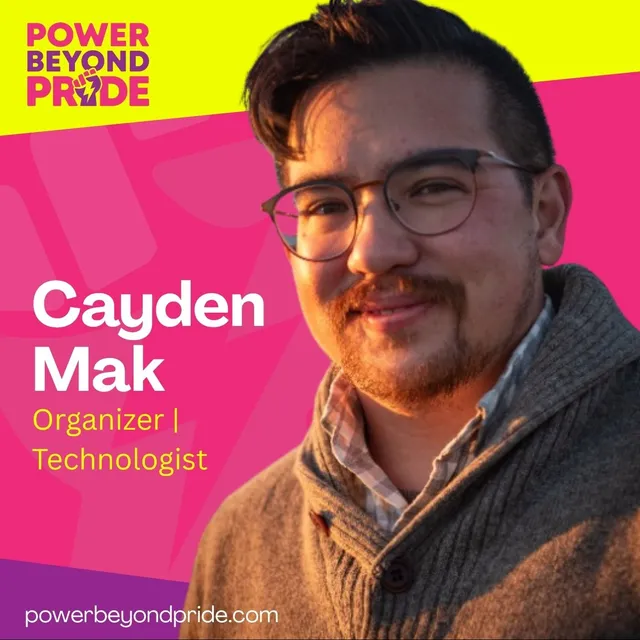
Logging Off, Showing Up, and Organizing with Cayden Mak
Listen or watch
In this episode
What happens when the internet turns politics into a consumer activity — something you watch, share, and feel, rather than something you do? Cayden Mak, publisher of Convergence magazine and host of Block and Build, joins co-hosts Daniel W.K. Lee and Kenyon Farrow to untangle the structural forces shaping digital organizing, from Shoshana Zuboff's surveillance capitalism to Silicon Valley's role in driving authoritarian consolidation. He pushes back on AI hype — arguing that much of it is marketing designed to launder ideology and remove human accountability from harmful decisions — while also insisting that the internet has been genuinely life-saving for young queer people cut off from affirming communities. Drawing on the legacy of ACT UP and the long-view thinking of Grace Lee Boggs, Cayden makes the case that real politics is not what you watch or repost, but what you do with other people over time.
TranscriptRead the conversationAbout 58 minutes to read · 8,717 words · Cayden Mak, Daniel W.K. Lee, Kenyon FarrowOpen
- Cayden Mak
- I think that one of the challenges with the culture of the Internet and the culture of activism on the Internet is that it has led us down a road that has made us forget that politics is not a spectator sport. Politics is not what you listen to, it's not what you read, it's not how you dress, but it's what you do. And I think the challenge that the combination of sort of neoliberalism, placing everything that happens in society within the confines of the market and naturalizing, like economic markets as the way that humans organize all their behavior, which is bullshit, frankly.
- Daniel W.K. Lee
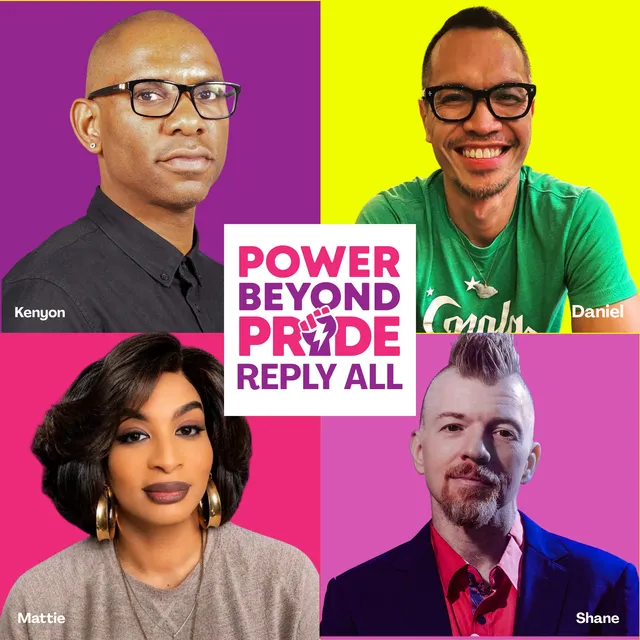
- Hello and welcome to Power Beyond Pride, a, uh, weekly queer change making podcast bringing you voices and ideas from across our fierce and fabulous spectrum to transform our world. I am Danielle W.K. lee, poet, author and unapologetic soy boy.
- Kenyon Farrow
- And I'm Kenyon Farrow, a writer, activist, and often referred to as your favor butch queen's favorite Butch queen. And we are your co host on today's queercast Journey. But also joining us today in this episode, we're talking with an organizer, technologist, and in his own words, an all purpose nerd. We're talking today with Cayden Mak. Cayden is a publisher at Convergence magazine. He also hosts Block and Build, a weekly podcast that examines the balance of political force and the US from a movement perspective. Welcome, Kaden.
- Cayden Mak
- Thank you so much for having me. It's a delight to be here.
- Daniel W.K. Lee
- So excited, so excited. Kaden and I, we met initially, at least very briefly too at Netroots Nation. And uh, that was my first time there actually. And so I don't really have much history to compare to. But from your perspective, what do you think has been the obstacles for conferences like Netroots and others to help translate digital organizing to kind of amassed, uh, political power?
- Cayden Mak
- Yeah, Netroots is a really interesting conference and I've been going for quite some time. I used to be, before, uh, I was at Convergence, I was the executive director at 18 Million Rising, doing Asian American racial justice organizing online. And really like, I was there for damn near nine years in a lot of different roles. So I've seen Netroots evolve. And you know what was interesting is 15 years ago or so there was this moment around the sort of really around the Obama moment where people were like, great, the Internet is the future. All this great stuff is happening. There was like a lot of like exchange between Silicon Valley and uh, Washington D.C. that was very in the like, Obama mode. Very like hopey changey. Something interesting is happening here. And I also think at that time Netroots was. It felt a little scrappier, right? Because netroots comes out of the daily coast, sort of like blogging network and then spun out to be its own thing. And one of the things that's been true over the past like five to seven years is some of the tech vendors have been bought by like hedge funds. M. This is like a big divide, I feel, in between the people who are doing like scrappy grassroots stuff and then more institutionalized things. And that's one of the things that kind of stood out to me this year, which is interesting. And I do think a lot about this question of like, how should we relate to the Internet as ah, social movements? Because it's long been my line that we can't leave any power on the table. Like we need to be using the tools that are available to us. But in this time of escalating authoritarianism, where a lot of the, like, leading lights and most wealthy people in the world who are Silicon Valley billionaires are driving a lot of that authoritarian consolidation, I do think that we need to be doing a little more deep reflection about how we use tools and why. And I don't know, it strikes me that there were a lot. There are a lot. There are like multiple streams of conversations that go on at a conference as big as Netroots. And I uh, do think that the sort of like explosion of people who are thinking and talking about how to use AI, for instance, is like something that I'm like, can we actually also have a meta discussion about like, why AI, who is pushing this and who's benefiting from it, that I wish there was more space to have, you know.
- Kenyon Farrow
- So, yeah, and so I think kind of to that point, thinking about just sort of strategy and power and where we lean into space and where the left is kind of conceded space. Your. So Convergence magazine's podcast Block and Build aims to help kind of refine progressive strategy and develop strategic unity in a time of really great peril for people and the planet. So where did the idea for the show come from and what's been the reception so far?
- Cayden Mak
- Well, so a little bit of background on Convergence that might be helpful is. So I got hired about two and a half years ago and I'm the first staff they've ever had. Some listeners who've been in the movement for a long time might recognize Convergence. We used to be called Organizing Upgrade, and we got started in like 2008, 2009 by a bunch of basically longtime movement heads, mostly who are working in kind of communications and like, communication strategy roles, being like, we need a publication where we can come together and talk about what is strategic, what is important. And again, this was like in the sort of wake of Barack Obama getting elected and being like, uh, what are we to do as the left right? What is the task right now? And those years were wild, right? Like, the Obama years also included Occupy Wall street, the beginning of the Black Lives Matter movement. There's a lot of really interesting stuff that's contained within that. The publication went dormant in like mid 2000 teens. And then in 2016, 2017, some folks on the existing editorial board wanted to revive it, specifically looking at the rise of MAGA and Donald Trump. And so the nature of the publication has always been volunteer run. And as a result, like, sometimes you can keep up with things, sometimes it's a little harder because, like, people have jobs, people have lives. And one thing that came along with being staffed was a strategic assessment that being in audio, being in podcasting, was actually like a real big opportunity, specifically because there's something so human about the human voice in your ear. And that like, aside from the sort of like cerebral analysis of what's going on that you can read on the page or on the webpage, how can we get the stories of what's happening now in our movements into people's feeds, into people's ears? And one of the things we started discovering is that allowed us to respond to the moment in a little more timely a fashion. I like to say that convergence is slow media because we're not trying to like, chase that, like, hype cycle. We're not trying to like, glom on to a viral moment. What we're trying to do is put forward some lukewarm takes that might actually help you understand the world better than just getting you angry about a hot take, you know. And so the podcast was in a lot of ways, like our desire to figure out, especially those of us who are full time staff, our desire to figure out ways to speak to the political moment in ways that were a little more timely and also have on guests who maybe didn't have time because of like organizing moments, popping off, didn't have time to sit down and write a 2,000 word essay about their work. Writing takes a lot of time, but like, a lot of times, like, we get folks on also who are not, they're doing incredible strategic organizing, but they're not necessarily people who are going to think, oh, I should narrate this, right? But getting them to be a guest on the show is like my little way of being like, no, your work is, like, badass, and people need to learn from it. People need to know your story. And then we do this little headline read at the beginning, which is a lot of fun, where I get to pop off a little bit about what I think about what's going on in our political culture. And the reception has been honestly great. I actually was telling people I was at a wedding a couple weekends ago, and there was another guest at the wedding who came up to me. I had never met them before, and they were like, I'm gonna fangirl for 90 seconds and then we can be normal. But I listen to your podcast every week. That's so great. That had never happened to me before. It was wild. I think the whole parasocial relationship of it all is something that's kind of a trip. But I think that the creative brief for our show is really like, how can we talk about what's happening right now in politics, in Donald Trump 2.0 in a way that is not gonna make people feel paralyzed, sad, demobilized, but is actually gonna make people be like, wait, there are other people like me all across this country who are fighting back with the tools that they have on the terrain that they find themselves. Because, uh, uh, props to, like, all of the progressive media out there, like, doing the hard work of uncovering stuff, talking about things from a critical perspective. Like, ah, if you consume too much of it, you're gonna be like, wow, the news is all bad. It's overwhelming. And in a lot of ways, we want the POD to be an antidote to that.
- Daniel W.K. Lee
- Yeah. From kind of, you know, what I've consumed already, it seems like it's trying to expand and inhabit a little bit more of a kind of thoughtful, discursive space, which I really love. Kind of. I love what you're saying. With, like, slow media, a kind of a pushback in a way of just churning over. We're definitely. I, uh, definitely want to get back to the Internet and AI. But before that, I'd love to kind of hear your story or trajectory of how you came, became really a change maker.
- Cayden Mak
- God. Ah, it's a long story. I mean, the oldest place that I can start is really. Actually this is my first sort of like gender transgressive moment is when I was like, I don't know, maybe four or five, and I had. On my mom's side, my grandmother was a very serious Catholic. And so she was like, we gotta get the kids baptized. We gotta get the Kids. And so I'd been baptized and I was going to Sunday school, prepare for confirmation. And she was still alive. So I had to have been like maybe four and a half, five years old. And in Sunday school, I was like, hey, when are we gonna stop doing word searches about Jesus and start reading the Bible? And the nuns didn't know what to do about this. They were flabbergasted. They called my parents and told them to come pick me up because I was being insubordinate. And so here I am, baby Martin Luther. And like. And so, I mean, my parents, my dad, who was an atheist, thought I was hilarious. Like, he could not get enough of this. And my mom was really worried about what her mom was gonna say. And she was like, what's the deal? I was like, well, I'm. I'm really interested in this, in reading books. I'm really interested in this information they keep talking about. The Bible's the word of God, whatever. And I was like, why can't we read it? And in retrospect, I think if somebody had sat me down and taught me about like, liberation theology or something like that, like any of the sort of, like, subversive history of the Catholic, like, parts of the Catholic Church, I think I might still be a Catholic, to be honest. Like, I was interested. I was told my grandmother I was interested in becoming a priest. And she was like, little girls can't be priests. And I was like, I don't see the problem. So, uh, me and gender in the Catholic Church, we go way back. It's complicated. But I came out in high school. And so this was the early 2000s in suburban Michigan, where I was really lucky that I went to a big nerd magnet high school. I was not going to the mainline high school because I don't know if I would have survived high school, frankly, if I'd gone elsewhere. But my, uh, senior year, some of my friends and I, we did this. We told the. We were in this old elementary school building, so we had a lot of like, single stall bathrooms. Anyway, we told the high school administration that we were going to stage a sit in if they didn't make some of our bathrooms gender neutral. And the principal was like, why not? Okay. And this was like 2004, right? This was just not something that was like, part of the discourse. I forget even how we came up with it, but, uh, those are some of my sort of earliest memories of being somebody who asks really hard questions and somebody who is doing, organizing. And then I will say that also the other pieces, I went to college at the University of Michigan, and the work that I did there with something called the Program of Intergroup Relations, really opened my eyes a lot to, uh, the structures of power in our society and how those structures act on us as individuals and shape us as individuals. And I'm still really good friends with a lot of the friends that I made doing that work and trying to bridge divides around race and gender and religion and class and very big and influential.
- Kenyon Farrow
- So great. So I think we need to take a break soon. So, uh, we will pause here and welcome our, uh, listeners to come back and join us after this break with Cayden Mak on Power Beyond Pride.
- Daniel W.K. Lee
- Foreign. Welcome back. This is Power Beyond Pride, a queer change making podcast. And I am Daniel W.K. lee, here with my co host, Kenyon Pharoah. In one of our recent Reply all episodes, we discussed how the Internet has impacted and shaped the lives of millennials and later generations. Can you talk about the significance of the Internet that has played in your life and how it might need to change in order to kind of maximize its usefulness for progressive social movements?
- Cayden Mak
- This is such a big question. This is like, honestly, like, to me, this is actually sort of my life's work. And, uh, like, looking back at college again, at some time during my senior year of college, I woke up and I was like, I don't understand why I can't major on the Internet because there's so much going on here and I cannot find a way, like, to fit this into existing modes of study. And a lot of the things that I've always been interested in are like. So we got, we actually got the Internet in my house growing up when I was pretty young, like, I think in middle school, my mom was a schoolteacher and she got a computer for free through the school district. And she was. Cause Internet thing sounds cool. And so we got aol. And sometimes I do say that I was radicalized on like, the AOL feminism message board. So shout out to those folks who are like. I mean, a lot of them were college and students and grad students, and they had no idea that I was like, 13.
- Daniel W.K. Lee
- What year was this? What year was this?
- Cayden Mak
- Uh, this was like the late 90s.
- Daniel W.K. Lee
- Okay.
- Cayden Mak
- Yeah, yeah. So the, uh, like AOL message boards were like, really wild in those times. There were a lot of people on them. Like, people were talking about all kinds of stuff. That's how I learned about, like, bell hooks and a lot of people like that who are very sort of like, foundational. And I Also think that as good as my com, my m small community in high school was like, it really gave me a window into a world beyond my sort of like very limited, relatively white, like suburban life that where was like full of straight people and full of straightness and like compulsory heterosexuality. And saw, I saw that there was a world beyond that was like worth living for and like really being like, oh, there are other ways of being that are available to me that there are like people who can be my peers in the future who are like hungry to ask some of the questions that I'm asking about like why does capitalism work the way it works? Right? So and I think that increasingly when we. It's even now like to relate to some of the stuff that we're looking at now, like all of these laws that are being proposed to sort of quote unquote, protect kids from like predators on the Internet or whatever, like a lot of those like age verification things, whatever, they're going to have a much longer term more negative effect, especially on young queer people for this exact reason that like queer kids who are growing up in places where they feel alienated from their families of origin in their communities of origin, that like getting online and seeing that there are other queer people who are older than them, who are out there thriving, who are like asking hard questions, who are finding love, finding belonging, like that is priceless. Like that is actual life saving technology. So on the one hand there's that, right? And I think that there's a lot of stuff about that phenomenon that also translates to people beyond the queer community, right? Like that this is an important piece of sometimes like people getting out of abusive relationships. There's all kinds of amazing ways that the Internet can allow us to connect with resources beyond our immediate environment. On the other hand, the Internet especially as it is currently designed, because everything we do on the Internet, of course, is designed by humans for a goal. And so much of the way that the Internet is designed, whether that's like the Web 2.0 sort of algorithmically driven social media stuff like Facebook, like Twitter, refuse to call it X, like Instagram, they're designed to hold our attention and make us consume. And one of the books that has been really formative for me about this is Shoshana Zuboff's book the Age of Surveillance Capitalism, which is a tome. But one of her main theses in it is that social media companies, in their drive to figure out how the heck their business model may actually make money, takes us not just from consumers or products to be sold to advertisers, but that our attention is actually becoming the raw materials of their business model because they're tracking our clicks, they're tracking our attention. And by doing that, they have this massive, just inconceivably large data set about human behavior on their websites. And so it's not even that they want to sell us as consumers to advertisers anymore. It's that they take this sort of byproduct of us being sold as products to advertisers and selling that back too. Right, That's. And that sort of culture, that sort of like stalker tech culture has become central to both how Silicon Valley operates. And I think it's feeding in a lot of these like really dark ways to things like normalizing surveillance, making it so that we just don't think Palantir is that bad. Right. Like it's okay that they're doing this like massive surveillance for ICE and all this stuff that like, it's part of a larger culture shift in Silicon Valley around surveillance and what kind of surveillance is okay. And also how to make money on surveillance. So, uh, that was a lot, but it's, I think it's stuff that we really need to be grappling with.
- Kenyon Farrow
- Yeah, I totally agree. And I think you kind of raise a couple of different points I think we want to get to. So one, you mentioned the way in which a lot of the sort of policymaking right now about the Internet or about is uh, under the guise of protecting children and kids, right. Which ends up taking a bunch of often kind of racist and then your revisionist history and kind of anti queer, anti trans policies really under this guise of protecting children. At the same time, the big meta and the big Internet or social, uh, media companies have actually stopped or cut back greatly on content moderation. Right. So they're not that much concerned about what kids are seeing. They're actually not moderating, uh, what people post in terms of violence or just racist comments or sexist transphobic comments, etc. Right. So it's like that duality. But one of the things like that's been also interesting kind of in this moment is the ways in which social media has also helped drive public attention to things that the mainstream media has, I won't even say failed to do, but actually has been resistant to do so. One of which is like covering the genocide in Gaza in a very clear and honest way. And so I would love to hear your thoughts about kind of that dichotomy. How do we, as kind of Progressives, the lefts, radicals or whatever, think about kind of engaging in these platforms, which we know are, as you said, really about, uh, kind of collecting huge amounts of data about human behavior in order to sell us back stuff or to do or to actually manipulate human behavior in particular kinds of ways, while we're also using these tools to actually try to address and ultimately halt human atrocity. For instance, like the genocide in Gaza.
- Cayden Mak
- Yeah. I mean, it's a really tough tension. And there's a couple of. There's a couple different ways that I think about this, right? And I think the first caveat, uh, I will give is that one of the amazing things about being in social movements is knowing that you don't have to do all this by yourself, right? That this is a collective project and that not everything has to be your personal ministry, right? Like you can go, you can figure out and carve out what your lane is. And so the ability to say no to something is actually like, really, I think, important for us as individuals, but also understanding that we need to all be good at the position that we play. Right? And so when I talk about saying no to things, I also think that we also have to keep in mind that other people may need to say yes. And so none of this is like a personal judgment on consumption or participation choices. The second thing is, and I think that one of the challenges with the culture of the Internet and the culture of activism on the Internet is that it has led us down a road that has made us forget that politics is not a spectator sport. And as my comrade and friend of the pod, Asha Ransby Sporn, likes to say, politics is not what you listen to, it's not what you read, it's not how you dress, but it's what you do, and it's what you do with other people. That's politics, right? And I think the challenge that the combination of sort of neoliberalism that is about this, you know, placing everything that happens in society within the confines of the market and naturalizing, like economic markets as the way that humans organize all their behavior, which is bullshit, frankly. And then the way that the Internet is designed in the way it's currently designed, which is again, reducing all of our behavior clicks, what we pay attention to and for how long into the realm of marketing, that those two things are related, right? And they have made it so that politics has become a consumer activity. Right? And some of this is. Some of this we have played into on the left, right? Some of this is like your moveon.org, let's sign a petition, whatever. And it's like isolating and isolated as opposed to let's do activities together and form collectivities, form a sense of ourselves as a constituency and actually, like, struggle together versus let's click on stuff. Let's like, participate in what is ultimately a market, right? And designed to be a market. So those are my two caveats about this. But on the one hand, I'm like, look, this is the first time, and this was the case with Black Lives Matter before, Before the. This moment of the genocide in Gaza that, like, we are able to see in real time. Stuff that is. Has historically been locked out of m the mainstream. And like, the shift right now in the consensus on Israel in the United States is a huge example of that. That, like, the stuff that we're seeing out of Gaza right now is like, more extreme, maybe more horrifying. But this has been the reality of the Palestinian people for 75 years. And I think that we cannot deny the power of that. That that is huge and that cannot be suppressed. And I think that a lot of the regulations combined with this, like, stepping back from content moderation sort of like, highlights, I think, a way in which the sort of, like, oligarchic powers that be are trying to figure out how to reassert control over the chaotic, messy human Internet, which in this country, unlike a lot of countries where you hear, oh, there's uprisings, and so the government turned off access to the Internet, our infrastructure, the actual material infrastructure of the Internet in this country is basically impossible for them to just shut off with a switch. And so they need to come up with other ways to control the discourse, basically. And I think that's kind of what we're looking at there. And I think that, like, the other thing is when we're thinking and talking about how we relate to the Internet and how we relate to, frankly, a livestream genocide on our phones 24 7, interspersed with pictures of our friends, kids and cute puppies and whatever. Is that like our weird little mammal brains are also just not set up for this shit, right? Being kind to ourselves. And again, to me, going back to Asha Ransby Sporn's point that politics is not what we watch, it's what we do. Gives us, I think, a framework to be like, hey, actually sometimes logging off is okay. Disengaging from politics is not okay, but logging off is okay. And that, like, recognizing that these systems are actually set up to flatten the affect of the content that we consume, because a video of emaciated children in Gaza is basically given the same weight and the same value as some like weird cooking video is. It is an affront to the senses for a reason. Right? And like that is actually your internal compass telling you something. And that, I don't know, even in the age of 24, seven, like cable TV news, you could still turn that off. You weren't carrying that around in your pocket. There's something that is. That it does to us that I think is really, is really profound and dark, frankly. So I don't know. To me it's like we can't look away. And also that like, on a larger level we can't look away and we should not be looking away, but that just watching videos of human suffering is itself not activism. And I think we need to remember that, right, that the questions that we need to be asking ourselves when we see a video of human suffering are what are the systems of power that made this come to be, that are allowing this to happen and are allowing this to continue? And that to me is also fundamental to the work of convergence, that we're trying to help folks understand what are the balance of forces that are invested in this continuing and protecting it. And why? Uh, because I think that otherwise we can get really wrapped up in how dire everything feels. Because it does feel dire, because it is.
- Daniel W.K. Lee
- You're touching upon, I think, technologies of power and technologies of control, which is kind of a good segue to what my question is about AI and circling back to block and build. I listened to that episode with Hagen Blix.
- Cayden Mak
- Oh yeah, he's great.
- Daniel W.K. Lee
- And the fear of it. Yeah, it was great. And it got me thinking about. And I agree that this kind of anthropomorphized AI doomerism is probably overblown. I mean, I recently watched like the, the robotics kind of Olympics or whatever at in China and you can see like these, like the robots couldn't really run themselves. Like there was a human that still needed to steer them or they were far from the then really kind of taking over the world. But AI has already been used as a tool for repression for the state you mentioned Palantir. And increasingly a tool of genocide for states and for corporations, because corporations are like, are profiting from it. It's kind of a hand in hand project. Do you think though? And I get. And this kind of brings back to your question before, is there possibilities of using AI for liberatory organizing? And if not, I guess the question was you were posing before is, well, why do we want that. Right. Knowing that AI essentially is kind of a. Is, uh, at this point really a tool for corporate power, right?
- Cayden Mak
- Yeah. Yeah. Well, I mean, one of the things that I do think about this, and it's helped me think a lot about this, is I just want to point to my friend Alex Hannah. The podcast that she does with Dr. Emily Ann Bender called Mystery AI Hype Theater 3000, which is an incredible name for a podcast. But one of the things that, uh, they're trying to do is really poke holes in AI hype, because I think that you're right. Like a lot of the mar. A lot of it is marketing. A lot of the attempt to make it seem like any of these algorithmic systems are all quote, unquote intelligent is pure marketing. And a lot of the like sort of methods, the algorithmic methods, they are in fact a lot older than this current moment of AI hype, Right. Like a lot of AI is essentially spell check with a sort of like algorithmically generated language database, which actually makes it worse than spell check because it's not like edited by a human person. And so disambiguating what it is that we're talking about when we're talking about AI is I think, part one, right. Being able to differentiate those different things, I think is really key. And the other thing is that a lot of the stuff that is most troubling is about these systems is they're also about sort of removing humans from decision making so that there's like plausible deniability about harm. And I think that's when we talk about AI being used in military context, we talk about the way that Israel, for instance, the idf, is using quote, unquote AI to identify targets. A lot of what they brag about is being able to identify more targets. So it's not actually about discernment, but it's about them being able to say, oh, the algorithm chose this for us. And so there's some like, air gapping between the decision to blow up a housing complex in Gaza and a human pulling a trigger, right? That there's like a, uh, supposedly more rational, more intelligent agent that is making the decision for us. And I think that first of all, it's bullshit people design that algorithm, right? It's also bullshit people chose to use the algorithm and that even if it's not about where to fire missiles, the decisions that are made by AI are, for these corporations are in a lot of ways designed to elide the decision making and hide the ideology in a lot of ways behind those decisions. And I think that's something that we really need to be vigilant about. I think that technology is ultimately designed by people. Right. And when we think about what things are used for, we also have to think about who designed those and to what ends, and what are the things that benefit them. What. And yeah, it's hard to say anything sort of like blanket about AI in that way, because machine learning and pattern recognition are useful tools, especially if you're using really large databases. I know some people, some friends of mine, who are medical researchers, who can go through larger databases of medical data and use those kinds of pattern recognition tools to great benefit for humanity. But we don't have to call that artificial intelligence, because that's actually like a tool set that has been conceptualized and used since probably like the middle of the 20th century, frankly. But it's just like we have more computational power now. Yeah, it's really complicated. I do think that checking out Dr. Hannah and Dr. Bender's podcast is really great. They have a new book out also called the AI Con, which is fantastic.
- Daniel W.K. Lee
- So that's excellent.
- Kenyon Farrow
- Awesome. Thank you so much for that. And what we're going to do now is take another pause here and shift into our, uh, third section when we come back from the break. And we're gonna get a little bit personal with uh, Kaden and go through our kind of speed round of questions. So join Power Beyond Pride after the break. Welcome back to Power Beyond Pride, a queer change making podcast. And I am queer your co host, Kenyon Farrow, here with my other co host, Daniel W.K. lee.
- Daniel W.K. Lee
- Yes. And uh, we're gonna take a little turn and get a little bit more personal in this segment. I want you to know, being uh, a magazine publisher, uh, podcast host, and you've worked with multiple different organizations, what are some ways or habits that you practice to avoid burnout?
- Cayden Mak
- Mhm. Such a good question. I mean one of the things is like really just like finding community, whether that's in work, within work or outside of work. I run a very small team, but our editorial board is very engaged and like we have a couple members of our editorial board who are in their 70s, but not in a like I'm resting on my laurels way. Like they've really kept up with politics and so like their long view perspective has been so essential to me. Max Elbaum, our editorial board chair and often columnists for Convergence, he just turned 78 this summer and he's been in the struggle for, since the 60s and is such an inspiration in that way. And then the other thing that I should plug is we co founded the Movement Media alliance, and our colleagues in the Movement Media alliance have been so essential to me not feeling isolated or like, losing it a little bit that having folks like that to commiserate with is huge. And also, frankly, get a hobby. Like, I play the gathering and my magic community is, like, so cool. It is just, honestly, these people are incredible and they're like, kind of like vital to my mental health, like, having something to do that, like, I can completely unplug from the thing, the concerns of the day, the stresses of work, all kinds of stuff with them.
- Daniel W.K. Lee
- So absolutely. I definitely recommend people having friends outside of the movement, for sure.
- Kenyon Farrow
- And interest outside the movement. Yeah, absolutely. Okay, so we're going to move into our final round, which is our speed questions round, where we get to know you a little bit better, Kaden. So we'll ask you some questions that you don't get any time to think about. First answer pops into your head. Go with it. Right, so you ready?
- Cayden Mak
- Yeah. Let's go.
- Kenyon Farrow
- All right.
- Daniel W.K. Lee
- All right, first question. When you're low on motivation, where or who do you go for inspiration?
- Cayden Mak
- It's a really good question. Okay. So over the summer, I was, or actually, I guess in the spring, was finally diagnosed with adhd. And it turns out a lot of my low motivation is just ADHD burnout. And honestly, a lot of the techniques around sort of dopamine loading are really big for me that, like, sometimes when I'm like, I can't focus on anything, I don't know what's going on. Going outside, taking a walk around the block is actually huge. Right? It sounds so corny. And it's the kind of thing where I'm always like, I'm too cool for this. But we all just have human bodies. And there's a reason that this shit works is that it's just that quick hit of I did something concrete, I moved my body huge. Really big game changer.
- Daniel W.K. Lee
- That's great.
- Kenyon Farrow
- Great. So what's one thing that you're surprisingly good at?
- Cayden Mak
- Uh, surprisingly good at? Well, uh, one thing that this is like another of my little hobbies that keeps me sane is weightlifting. So not powerlifting, but like Olympic weightlifting. Uh, and it surprised me because I was never an athletic kid. I was like, very much like the kind of kid who was like, I'm gonna pretend I don't have a body. I'm m a brain in a jar, but I'm very good at. Clean a jerk.
- Daniel W.K. Lee
- Yeah, I remember When I first started actually doing, like, deadlifts, like, for serious, I'm like, oh, I actually like these. Surprisingly.
- Cayden Mak
- Feels good, it turns out.
- Daniel W.K. Lee
- Yeah. Yeah. All right, next, do you have a specific spot in your home where you feel the most productive?
- Cayden Mak
- Well, this is my living room. And I like, this desk setup has been really great for me. I have a, uh, window right here so I can, like, see the sunlight, see the street. But the other place that I am very productive is my kitchen table. I'm a big kitchen table, spread it all out, spread out books, spread out papers kind of person. And I also do a lot of reading there. I like to. I'm, um. I cannot. I'm a kind of person who. I need to do something else while I'm eating. I can't just eat a meal quietly by myself. I need to do something again. Adhd. So I've started leaving paper books next to where I eat my meals. I've read so many books this year, y'.
- Daniel W.K. Lee
- All.
- Cayden Mak
- It turns out just being able to read five or six pages while eating lunch, you get through a book pretty fast. Yeah, love that. Love that table.
- Kenyon Farrow
- All right, so, uh, what's your favorite podcast? And I will just say quickly, no pressure to name your own, nor this one.
- Cayden Mak
- Well, I try to feel free to. Yeah, I try not to listen to my own podcast because, like, some. Does this ever happen to you where you listen to your own voice and you're like, who is that person?
- Daniel W.K. Lee
- No, I don't have that problem.
- Cayden Mak
- Oh, my gosh. I struggle so much to listen to my own voice. Uh, there's a couple that I find myself going back to time and time again, and my phone one is Gastropod the pod, about, uh, the science and history of food. It's so interesting. I learn about really interesting stuff every single week from the hosts, and they're constantly finding stuff about colonialism and food and technology and food, and you really. I mean, they go deep on a lot of neat stuff. And I don't know, I just think food is the thing that brings us all together. And in terms of political podcasts, I really love Kelly Hayes Movement Memos. That's one of my go tos.
- Daniel W.K. Lee
- Two podcasts I'm not familiar with. So that's very cool. Um, what's your favorite way to spend an evening with friends?
- Cayden Mak
- Well, I did mention that I play Magic the Gathering. So we are in my local magic community. We're really into Cubedraft, which is, like, you curate a big list of cards, and then people take turns picking cards from Pre made packs. So really my ideal evening involves probably pizza or tacos and beer and drafting with my friends. So. Yeah.
- Kenyon Farrow
- What's a historical moment in LGBTQ history that you find particularly impactful?
- Cayden Mak
- This is a great question. I don't know. I've been thinking a lot about ACT UP lately. I think maybe for obvious reasons, between the pandemic, between anniversaries, whatever, but. And, uh, the more that I learn about the work that ACT UP did in the sort of height of the AIDS crisis, the more inspired I am by that sort of vision and the willingness to put your body on the line in a really high risk way. And I think RFK Jr. Taking over health and Human Services and everything that's going on with the CDC and all that kind of stuff has made, uh, that history feel more. I just feel like we need to talk about it more because of the changes that are happening in those government agencies that queer people fought really hard to make more equitable and more just. And now this man is coming in and ruining it.
- Daniel W.K. Lee
- Yeah, yeah. ACT UP was so effective and they're so instructive. Anyone kind of want to do like, in your face, occupying space, politics with demands and everything? I think by anytime someone, a queer person says, oh, I've not seen how to survive how to survive a plague.
- Cayden Mak
- I'm like, gotta see it.
- Daniel W.K. Lee
- You have to watch it. You have to watch it.
- Cayden Mak
- And also thinking about the ways in which, like, ACT UP was the center of this, but there was so much other work that was happening, whether it was like mutual aid, taking care of folks who are really sick and dying of aids, or using arts and culture, like here in the Bay, the Sisters of Perpetual Indulgence like to reach people to talk about what was going on. That like, that moment is such a. Like under. We under. I think we under discuss it now. But there are a lot of folks who are younger, like Gen Z, folks who really don't know a lot about the AIDS crisis. I think a lot about how being a teenager in the 90s and early 2000s, like we grew up with knowledge of AIDS and like, being worried about it, but like kids now, it's like prep is everywhere. Right. And I think that that history needs to be revisited right now in a big way.
- Daniel W.K. Lee
- Uh, absolutely. What's a specific moment of solidarity that you've experienced within your community that really impressed you?
- Cayden Mak
- This is also a really great question. I, uh, do think a lot about the sort of like, moment right after October 7th when people were starting to come together in direct action. Groups here in the Bay, um, to end a genocide in Gaza. And that one of the things I love about direct action is the way in which people form into sort of affinity groups that are often based on identity. And I found myself hitting the streets again with a lot of folks who I had done direct action with, the sort of, like, mid 20 teens around black Lives Matter who were like, Asian Americans, who are like, no, we have a stake in racial justice, and we're really clear about that. And also then being Asian Americans who are like, we understand what it means to be in US Empire. A lot of the reason that a lot of our people are in the United States is because of US Empire. And being able to stand up in that way for Palestinians, for people in Gaza, was like, one of the. And a lot of those people are also queer. Right? It's just like, these things are all feel all connected. But. And then the deepening connections that I found through that work with Jewish, queer, Jewish comrades, that, like, we have a lot in common. East Asian Americans and Jewish Americans, to be honest, both in terms of, like, our experiences of assimilation, our experiences of colonization, and, like, what brought us the US in the first place. And that's been really inspiring to me.
- Kenyon Farrow
- Very cool. And I think on the subject of activism and solidarity, past, present, and maybe future, this podcast is called Power Beyond Pride. And something that we'd like to ask all our guests is, what does Power Beyond Pride mean to you?
- Cayden Mak
- To me, Power Beyond Pride is really about, like, how do we become as queer people? How do we become part of a governing majority in this country that puts us on the path to really reckoning with the stuff that we need to reckon with. My personal analysis and Convergence's analysis is that what we're living through right now is part of a coordinated backlash against the gains of the civil rights movement and before it, the gains of the labor movement in the 30s and 40s. And so if we are looking at a moment where the far right has taken damn near a century to put into motion the systems and processes that are now harming our communities, driving us apart, kidnapping people off the street, making it impossible for trans people to exist in public, we need to have an equally long view about what it might take for those of us who are committed to justice, to equality, to, frankly, living on a livable planet in the future and stopping climate change that, like, we need to take as, uh, seriously that kind of long view, that in everything that we do. It's not to say that everything we do needs to be about pointing at that 50 or 100 year horizon. But that like power is something that is built, is cultivated and that just because uh, we are losing a specific fight right now doesn't mean that we cannot be oriented towards that long view and changing culture more deeply. And to me that ultimately is really what power in general is about. It's like, how do we do that? How do we re envision what society is? And we're up against a lot. Right. It's going to take more than I think, what we are used to giving to the movement to win right now.
- Daniel W.K. Lee
- Um, yeah, for sure. Orchestrating a reorientation is uh, kind of long term project that is, that is worthwhile taking. And my final question or our final question is we like letting or leaving our listeners with an actionable point. So what is one tip you have for advocates or activists who are in a moment of feeling disempowered?
- Cayden Mak
- I think a lot about one of my sort of like movement ancestors, movement luminaries, Grace Lee Boggs, who was really dedicated to reflection as part of the process of taking action and that I do think that with the sort of nonprofitization of a lot of movement work, there's been a big focus on output, output, output. And I also think the political conditions make us feel like we need to act, to act. But part of the reason that I started working at Convergence, and I think Convergence is such an essential project, is doing that reflection that Grace was always telling people to do. Like you always need to take a step back at the end of a campaign. Whether it was a win or a loss, you need to take a step back, think about what you learned, what you're gonna do different next time, what it may have revealed about the enemy, um, how you've become stronger through the process, whether it was a win or a loss. And that that kind of reflection is actually what fortifies us for the long run because it teaches us again that there is a much longer horizon than a single Supreme Court decision, a single bill being passed. And that by learning from what happens, whether that's out in the world or something that we are acting on, we are able to fortify ourselves and think more deeply about that long game.
- Daniel W.K. Lee
- Absolutely. And um, with that, we're out of time for the podcast. Thank you so much, Kaden Mok, for joining us. Definitely would love to have you back here. So erudite and have so many great ideas that you're sharing with us. I know you're thinking you're raveling, but I think you're really nourishing our listeners. Um, where can people follow you or get hear about your work?
- Cayden Mak
- Well, it was totally a delight to talk to you both today. I really had a good time. Folks can find convergence@ahconvergencemag.com and we're on most of the social media sites. We're not really on Twitter X we post a lot on Instagram and you can follow me on Instagram at catachresis C A T A C H R E S I s and same username on bluesky. I try to check in now and then there but I got a lot going on so.
- Kenyon Farrow
- So with that we want to thank you again Kaden for being with us today. And again everyone can follow Kaden on those social uh, channels. Convergencematic.com I uh, can't quite repeat the IG one but we will probably place those in the show notes so people are able to get access to them regardless. So thank uh you once again. I'm um, your co host Kenyon Farrow and you can find me on all social media just at my name, ah.
- Daniel W.K. Lee
- Canyonferrow and I'm your co host Danielle W.K. lee, poet, author and jack o lantern fanatic. And you can follow me at strongplum on upscrolled as I continue to wean myself off of Meta. Uh, remember to subscribe and get your friends to subscribe to Power Beyond Pride on Spotify, Apple Podcasts or wherever you get your podcasts or whatever you're listening this podcast and check out our site@powerbeyondpride.com.
- Kenyon Farrow
- Um, Power Beyond Pride is a project from A Great Idea, a queer owned design and content agency. Learn more about them at a Great idea dot com.
- Daniel W.K. Lee
- This episode is produced by Mattie Bynum who is also our project developer. Our editor is Jared Redding with support from Ian Wilson.
- Kenyon Farrow
- We are both part of this podcast awesome host team and we invite you to send in your questions and comments@power.
- Daniel W.K. Lee
- Powerbeyondpride.Com and check out our new episodes. Uh, each week. We look forward to Queer Change making with you next time. Thank you from all of us at Power Beyond Pride.
Transcribed automatically and lightly checked. If something is wrong — a name especially — tell us and we will fix it.
Episode #62
Logging Off, Showing Up, and Organizing with Cayden Mak