

Episode #64 · Jul 14, 2026
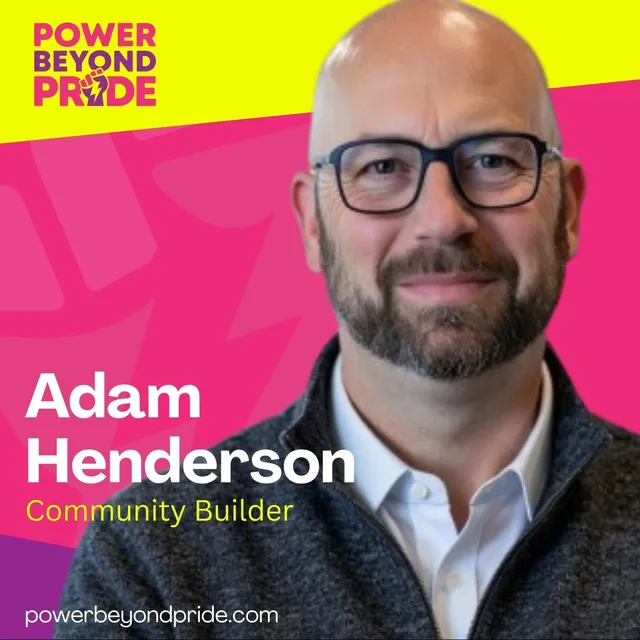
Justice, Community, and Clearing the Path with Adam Henderson
Listen or watch
Watch this episode
In this episode
What if the phrase "second chance" is itself the problem? Adam Henderson, VP of Sales at Orijin, opens this conversation with Shane Lukas and Mattie Bynum by challenging a widely-used framing — arguing that for many incarcerated people, it was never a first chance to begin with. The episode maps what's possible: Massachusetts' model of 24/7 in-prison programming, Tennessee's "hidden talent" workforce initiative connecting incarcerated people to major labor gaps, and Iowa's tech-based parole check-ins reducing costly technical violations. Threaded through it all is a sharp analysis of how race, gender, and identity shape who gets incarcerated, who gets harmed inside, and who gets a real shot on the outside — with a particular focus on the disproportionate impact on queer and trans communities.
TranscriptRead the conversationAbout 52 minutes to read · 7,847 words · Adam Henderson, Shane Lukas, Mattie BynumOpen
- Adam Henderson
- I heard you mention second chance. Uh, I hate that term because a lot of times it's the first chance. When you look at whether somebody's incarcerated just for being in the wrong situation or the color of their skin or where they grew up or different things like that. This could be their first chance to actually ingest education and figure out a career path, uh, and understand things that are actually available to them instead of looking at what was just kind of in their neighborhood.
- Shane Lukas
- Hello and welcome to Power Beyond Pride, a weekly queer change making podcast bringing you voices and ideas from across our fierce and fabulous spectrum to transform our world. I'm Shane Lukas. He him. I am a lifelong harm reductionist, a lifelong advocate activist. I own a great idea and I am slowly but surely trying to figure out how to do yoga. So I do welcome any tips there. That is my. That is my current fascination for the year. That and picking up Spanish. So I don't know what everybody else is trying to learn how to do, but I'm a lifelong learner too.
- Mattie Bynum
- All. Ah, right. That was a lot. So I'm going to try to follow that up. I am, um, Mattie, the loudest one in the room, except for today, because I do have a voice issue, but I am still here. And guess what? My personality is louder than my voice itself. So yes, we are here. Unlike Shane, I am not trying to do yoga because I am lactose intolerant, so I can't do that with my body. Secondly, also, you said you're learning Spanish. I think I know Spanish, but very un paquito. And I know just enough about leche and how to ask for a glass of Aquafino. That is about my extent when it comes to Spanish. And I do apologize. I am gonna do better with all that. But that is who I am. Our guest today is someone who shows up in the intersection of education, justice and humanity. He is a queer leader working in infrastructure, not just building systems, but helping to rebuild lives. Adam Henderson is the vice president of Origin. He works alongside correctional facilities and employers to make sure that justice impacted individuals don't just get a second chance, but get real tools, real dignity, and a real pathway to a sustainable future.
- Adam Henderson
- Thanks for having me. I'm glad to be here.
- Shane Lukas
- Thank you for joining us today. Power Beyond Pride.
- Adam Henderson
- Adam, so glad. It's great to connect. We, Shane. Shane and I have met a couple of times. Mattie. It's great to actually, uh, meet you. Virtually. So happy to be here.
- Mattie Bynum
- Yes, yes, yes. I will Say this to y' all who are listening and watching us. I just recently met Adam, but I can tell you he is the funniest person that you'll ever meet, and he is the smoothest person. So, I mean, this is going to be a great conversation. I'm looking forward to it.
- Shane Lukas
- Today, I feel crush energy going on right now. I feel all this crush energy going on.
- Mattie Bynum
- Just.
- Adam Henderson
- I don't know if you can see, but I'm blushing a little bit. So,
- Shane Lukas
- Adam, it takes a selfless person to work at the intersection of incarceration, education, and embedderment, right? So, I mean, it's incredible your commitment and work in this area. And again, it's a beautiful thing, and it affirms really early on what it means to think about those in society. When we talk about not just second chances, but we talk about what it means to live in a system that really wants to encourage people opportunities to bridge maybe past decisions or poor decisions and. And moving. Moving forward. And I'd love to know a little bit about what influenced you in your life to go into this pathway.
- Adam Henderson
- I was talking about earlier. I was in ed tech and education publishing for a really long time. And one of those things, it was like, all right, yes, we're helping students, we're helping teachers, we're helping parents in homeschool, but there has to be something more. And I had an opportunity to connect with the co founder of the company I work with, Origin, that I work with now. And it was like, all right, this. This is what is. What I've been kind of looking for is. I heard you mention second chance. I don't. I hate that term because a lot of times it's the first chance. When you look at whether somebody's incarcerated just for being in the back in a, uh, in the wrong situation or the color of their skin or where they grew up or different things like that, this. This could be their first chance to actually ingest education and figure out a career path and understand things that are actually available to them. M. Instead of looking at what was just kind of in their neighborhood. So it's kind of become a. Education has always been in the forefront, which is odd for me to say because I never finished college. I started and stopped my undergrad for many years, but it was until my mid-40s that I was able to find an executive MBA program to where I was able to do an MBA program in 12 months because I always kind of felt I had that thing lacking. But yeah, so it's always kind of been. Education's always kind of been. I've seen a path to what an individual deems as successful. We shouldn't judge what they think is success.
- Mattie Bynum
- No, but you're right. I would definitely say that goes back to the old cliche, those who can't do, teach. So don't, don't, don't be upset that it took you so long to finish your undergrad. I think in all honesty, we put a lot of emphasis on that piece of paper. We put a lot of emphasis on that three. But in reality, I had a friend break it down to me the other day and, uh, I actually had to agree with him. He was like, college itself wasn't just for the education. It was for the experience and the networking and. And I had to agree with him. I'm like, there was a lot that I learned in college, but then there was a lot that I Learned in college.
- Adam Henderson
- 100%.
- Mattie Bynum
- Oh, I think that that doesn't necessarily come from going to school. I think anybody can, can get that same type of learning in everyday life. But I do want to go back and touch on something because you made a comment about the education part, so it sounds like you have a bigger connection with education. So what got you into education and what made you an advocate for education?
- Adam Henderson
- So I started working for them and then did that for a few years and then kind of got an idea of, it's like, oh, there's more to this. And then started, got into the sales side of things, working for a publisher. And that's when we moved to Greensboro. And again, it was kind of like, all right, this is almost there, but not quite what I want to do. And then I got into, with another publishing company and they had a whole kind of homeschool division. And the interesting part was, and it was right when the 2008 crash, so there was a lot of white collar, uh, individuals were losing their jobs. And I'm talking to the, to these families where, all right, the father may have lost his job, the mother's still working, but they realize that they can pull their kids out of private school and form a network. And so dad maybe was a scientist, so he's teaching science. This other person was an accountant, so they're teaching math, so they're pulling these resources together. And that's when it all kind of clicked.
- Shane Lukas
- It's interesting you talk about non traditional, especially in this current moment where there's so much untethering from existing systems.
- Mattie Bynum
- Right.
- Shane Lukas
- The DOE is being undone, uh, many of these systems and infrastructures that have taken decades to put into place, that serve across communities. And it's now sort of forcing a reconciliation about what it means because a lot of that is done to diminish some of the benefits of public education where you created areas of multiplicity. Now it's really starting to target either private ownership or target stuff like religious affiliation and religiously affiliated schools. Are you thinking just bringing that expertise of having like non traditional education from the corporate side and then now you're working in these areas around providing and working with education for those individuals who have experienced incarceration. Are you seeing opportunities for transformative education where people may rethink some of these systems so that they do become more representative of how people are able to bring themselves into the room? Is there a desire and you see some, some, some pathway where this becomes more equitable over time?
- Adam Henderson
- That's a great question. So I work with the state, uh, of Massachusetts and every incarcerated individual in a state prison has access to programming 24 hours a day, seven days a week. And when you talk programming, it's not only education. So they have amazing team that pulls together the understanding where all of the. And they have about 5,500 people in state prisons in Massachusetts. But understanding the spectrum of learning, do you need to go back and understand what the, what letters and numbers are to phonetics, to basic math and reading skills? So they create programs and deliver it through the Origin platform. And then they actually have live instruction that they can do very similar to we're doing here through video. But then they take it. Okay. It's great to focus on the education. You have to address the trauma from the past. So what's understanding why you are incarcerated, Understanding that you have, uh, to take ownership of that. Granted there are some systemic things that could have caused it, but you have to understand that there is. You play a part in that also. And then planning for the future. Mattie mentioned, I think it was Mattie that mentioned about college. We had a generation, almost two generations that we pushed into post secondary, into college and university and not into the trades. So there's a huge gap coming and it's coming fast. Um, so understanding that you can make a great living getting your hands dirty, we working on plumbing, working on H Vac mechanics and different things like that. So it's really just trying to. But there are, in Massachusetts, they actually have all these different types of simulations to understand what you want to get into. What does it look like to be a H Vac tech? Or what does it look like this? And then what is your earning potential? And then they start trying to make the connections post release, so they have that, that kind of warm handoff to whether it's, uh, an apprenticeship program or actually employment. But then on the flip side, we still very much live in you. You did the crime, you do the time in some areas. So it's okay, well, excuse me, you don't get access to anything unless you can pay for it. And then so it's the spectrum. And you can highlight these really powerful programs that are happening, and they're seeing the recidivism rates drop and you're seeing employment gains and you're in. But then you also, on the flip side, you can see where individuals just struggle and it's the constant cycle. It's like, all right, you're released. I'll see you back in 60 or 90 days. So.
- Shane Lukas
- But that really underscores it. Uh, yeah, it really underscores that a lot of people aren't really maybe familiar with the impact that that type of education can have on recidivism.
- Mattie Bynum
- Right.
- Shane Lukas
- There's only one path when they try to go for traditional paths. If you do have previous incarcerated experience, and again, queer people, experiences from homophobia and transphobia, people who are incarcerated, people who are have histories of incarceration, experience these types of stigmas. And so there's initiatives like ban the box and other ones that have really tried to reduce some of the impact of that stigma, but it's. It's only so successful, right? It certainly has some success, but it's still a lot of barriers. And so being able to show that programs that give People avenues toward these gaps where there are these employment gaps that people can be there, but also the education to make sure that people who have experience incarceration do have opportunities outside of that experience once they, once they, once they become part of our larger communities. We're going to take a very short break right now. We're going to come back. This is a great conversation with Adam Henderson, here with my wonderful co host, Mattie Bynum. And we will be back in just a moment.
- Mattie Bynum
- All right, and welcome back to Power Beyond Pride. We are sitting here talking with the amazing Adam Henderson, y'. All, I told y' all in the beginning, he is so much more than just the conversation we're having today. He is the sweetest person I think I have met in one of the longest times of my life. And hilarious. He reminds me of someone I'm not going to name drop, but he reminds me of someone very, very funny that I haven't seen in a long time. But anywho, coming back into the conversation, and I'm also here with my beautiful co host, Shane. I can never leave him out.
- Shane Lukas
- He's not nearly as funny. So that's true.
- Mattie Bynum
- Uh, I was going to say, if I did leave you out, your shirt is so high, yellow, yellow highlighter, yellow, that we would never lose you. And so you will always be with us no matter where we go. You are the light that's happening in the world. Adam, I want to come back to you and talk about. You were talking about Massachusetts and I think that's a beautiful program that they have. But why is that not a actual national program? Why is that not across the board with all prisons? To have a system to help you to come back and acclimate back into life?
- Adam Henderson
- That's my goal. Uh, a lot of times it comes down to money. And I sit in, I sit in rooms with a lot of very powerful people in, uh, government. And understanding how who I'm sitting across the table from can be a challenge. Understanding trying to make sure that while I have very lofty goals and progressive goals, not the person across the table from me may not. So how do I get them to understand that investing in a person's life is going to benefit them? So a lot of times it comes down to, I can talk about all the programs and the outcomes and people gaining knowledge and workforce development skills and understanding their trauma and just becoming better humans. But a lot of times it boils down to, all right, what do you want on your balance sheet? Do you want somebody that is a liability, that's going to cost you anywhere from 65,000 to a quarter million dollars a year to house in prison, or do you want to actually spend money and rehabilitate that person and give them an opportunity to be successful and move them, uh, from a liability to an asset on the balance sheet? Because they now become, not only you not have to pay that yearly, yearly cost of incarceration, but they're now tax paying citizens, but not only.
- Mattie Bynum
- I was gonna say it's almost disappointing because like we were talking during the break, if you go to certain states, especially in the southern states, it's almost as if they're systematically trying to keep people in prison versus rehabilitating them to bring them out. So in that and with that segment of incarceration, how do you push back or what can we do to push back to stop things like that?
- Adam Henderson
- But then there was the workforce underlay. So the governor, Governor Lee in Tennessee is huge on workforce development. So he greenlit a program for all the county jails to have a unified program through origin to deliver the education and workforce development. And there's about 25 or 30,000 people that cycle through the jail system in Tennessee every year. But when you have huge projects happening, like Ford Blue Oval City in western Tennessee where Ford's coming in to build a manufacturing plant, but they are also building the city all around it with all the resources. So you need labor, skilled labor to do all of those things. You have the new Nissan football stadium being built, you have all of these different projects. And the leadership in Tennessee, we're able to see we have this gap of potential people to work. So I, I was at a conference and somebody gave me a new term instead of second chances. This is now hidden talent. So looking at people that were experiencing some type of incarceration, uh, that is hidden talent that is not being counted in the pipeline. But they can now point to, we have this population that has just been through electrical programs we need them here. This, this group has just been through IT programs and we need coders and different things like that. So looking at that's how a lot of times I have the conversations with more conservative areas that are not willing to really invest is you can. Labor data is public information.
- Shane Lukas
- I was saying with that in mind, when you think about, I guess obviously this impacts your workforce and your labor movements. Can you share a bit why queer people might be looking at this with more uh, seeing the value of what queer liberation means in this context? Because I think a lot of people don't recognize how many people who've experienced incarceration oftentimes as you mentioned before, some having to do with systemic reasons. Obviously, uh, there's a lot, there's a strong history of queer people being incarcerated for a variety of contexts. Can you talk a little bit about why our queer, our large queer community should be looking at these issues and really doing so with an eye about what it means to think about how we treat those who uh, have been incarcerated and what it means to have that path to, to, to be out in general populace.
- Adam Henderson
- There's a huge stigma when somebody reveals that they are incarcerated there. They have been incarcerated very much so. A, uh, lot of times when you reveal that you're queer, trans, gay, whatever, there's still a stigma depending on who's in the room. And that is, I try to have navigate some of those conversations when I'm sitting in the room with different people. It can be a challenge at times. But when you're looking at the vast number of people that are currently incarcerated or formerly incarcerated that are queer or even heterosexual or whatever, that whole spectrum we should all be able to relate to because we all have had a challenge at some point in our lives of based on, solely on who we identify as or who we love or who we have in our circles. And it's. I think, I think there's a, this may be slightly controversial, but I think there is a. I think there's a level that people reach, whether you're heterosexual, queer or whatever, that uh, we begin to look down on people that have less than. And I think we're experiencing that in this country right now. And I think we all will benefit across the spectrum to take a step back and say at any wrong decision, that could be me. I think a lot of people forget that it could be A lot of people are one paycheck away from being bankrupt or one medical emergency.
- Shane Lukas
- And I'm curious your thoughts on this is because oftentimes when we're talking about incarceration, when we're talking about punitive practices, we're often looking at the conversation solely from you as a human being have made a poor set of choices and therefore this is your personal value system. And society is structured in such a way as to penalize those differently depending on your race, your gender, your age, your, where you live, your education level, all these different things we talk about in terms of privileges. But the punitive system has, has, has used that over the years. Right. Those distinctions to then determine what level of punitive practice they're going to employ. Right. So whether or not somebody is found carrying some marijuana, for example, has just historically and numerically demonstrated the distinctions in that. Do you find in the conversations when you're talking about changes in carceral practice and opportunities, there's still this conversation about the system is just fundamentally stacked differently then we're oftentimes only talking about it as like a personal. This is about a person's value and their choices and somehow this happens independently, that they don't live within a larger system that fundamentally wants to see that recidivism low like that. We end up releasing people once they serve their time. They've technically done our national contracted agreement in terms of what that, that, that, that response to that crime might entail. And then we put them back in a system where there are very few choices, there are very few opportunities, there are very few things. And then we say they were just meant to come back into the prison system where the reality is we haven't really changed any of the system they originally were in in the first place. And so what are the other options? Because you take somebody, for example, who may want to go out into the world with another set of choices, but now their employment choices are limited, they're put out back into the general populace with little access to housing, resources, all these different things.
- Adam Henderson
- A lot of nonprofits won't help individuals that are registered sex offenders because that limits what else the other help that they can give to others. That's a huge challenge there. Uh, when you talk about being released on parole or you're on probation, the biggest cycle of re incarceration comes from infractions on parole or probation. It's not that they're going back out to do another crime. A lot of times it's they can't meet their parole officer, they don't have the transportation, they can't afford the fees that they have to pay while they're on parole or probation, they can't, they don't have the family connections to be able to have stable housing. So that's an infraction. So you're going back inside. There's this state of Iowa is doing a, uh, great program on trying to reduce those infractions by using technology. There's a lot of cornfields on Iowa. So instead of having people drive hours to meet with their parole officers, they're using technology for those live check ins. Okay, so I'm saying I'm randomly going to call you at uh and see and make sure that you are actually at work. I need you to fire up your video and turn spin your phone to make sure that you're where you're supposed to be and that comes a valid check in. So looking at doing the same thing, it, it's the different definition of insanity. Doing the same things and expecting different outcomes. We're seeing cracks across the country that were states are looking at why are we spending all this money and we're not seeing the outcomes that we want or deserve.
- Mattie Bynum
- Because a lot of people don't realize that what can actually get you landed on the sex offenders list.
- Adam Henderson
- Yeah, I, uh, thank God I grew up in a time where there was not technology because there's no video Evidence just urinating on school property. That simple act can let, uh, lead you to the sex offender. I have a friend who, whose nephew was dating. He was 18, she was 16. Parents were all, all good, but they got along and everything. For whatever reason, they broke up and the parents filed charge, statutory rape charges. And that nephew actually uh, had to do a time behind the wall, is now labeled a sex offender for the rest of his life.
- Shane Lukas
- There's a variety of reasons to do that, but because it's a blanket statement, but it also includes people who are having consensual sex in a park. It includes exactly like you said, urination in a public school. It is a broad like swath that has major ramifications and very little political courage for any politician to go in and actually try to create more of a variation among these. Right. To create a little bit more of a spectrum so that we are talking about something that might, you know, again, somebody who creates a very small infraction like, again like urination on a public, public school is still not great, but sure, it shouldn't be the labeled the same thing as somebody who's in the Epstein files, right? Like we, we need to cross some distinctions about what that is, but culturally we don't really want to do that. And for queer people, that's really important because so many of these are tied to and certainly include expressions of sexual identity and places that historically, you know and still are in many places criminalized or caused or could be considered under that criminal code. Especially again, for our trans community members. Like, again, gender expression can be included within that at different points depending on how it's applied. Obviously, even drag queens at one point have been one of the things that was threatened there in some of the codes and some of that conversation publicly in the last year or so. We're going to, we're going to take another break. This is a really compelling conversation. It's a very deep conversation. When we come back, uh, we are going to talk with Adam about one of my. I got to go to his chili lunch show. That was amazing. So I want to talk, I want to, I want us to talk a little bit about what it means to organize safe spaces and queer spaces sort of among our communities. And then we're going to go into a speed round. So we're going to learn even more about Adam. So join us. I'm here with my amazing co host, Mattie Bynum. We're here for Power Beyond Pride. Check back with us in just a moment.
- Mattie Bynum
- Yes. All right, baby loves. We are back with Power Beyond Pride. One of my favorite places to be in the whole wide world. I tell you, tell you I love being in the company of such great highlighted people like Shane, who decides to wear bright yellow colors and fishes and purples all, ah, every day of his life. Like, I love it.
- Shane Lukas
- I'm, um, a human highlighter.
- Mattie Bynum
- Power Beyond Pride. Yes, we love that. Okay, don't ask me to repeat it. Cause I can't say it again. But real quick, before we go into our speed round and talking about chili dinners and being inclusive, I do want to take, um, a quick moment to point out real quick. We are having a conversation about incarceration. I need people to understand that while this conversation, yes, you may not be incarcerated, or someone in your house immediately may not be incarcerated, but 1 in 6 people incarcerated are trans. That's 16% of the incarceration public. I, um, mean population. And within the trans population and they're 47%. One in two of them are black. That's something that, that really bothers our community. Just 40. Let me, let me make sure I have this stat correctly because I said it correctly. 33 To 42% of all population incarcerated identify as some form of LGBTQ in our community.
- Shane Lukas
- It's absolutely powerful. And it, and it's, it's important to know when we talk about liberation and queer liberation, we are talking about liberation for all. And again, the, and, and Adam, I'd love to hear your thoughts and, and, and in your own queer journey and really kind of your impact as a queer person doing this work. Like how, how, how these organizations really understand that, that number and why and, and, and how do they, how do they see affirming, uh, spaces. Is it a. Is an important value for a lot of them?
- Adam Henderson
- I will say that again, it depends on where you are in the country. There are, I've been in jails across the country where they've actually created, uh, specialized units. So instead of lgbtqia, uh, people working in, within general, what they call general population, where you know you're going to have a higher risk of assaults and rape and different Things like that. They're creating queer safe units. So if you identify, then you are able to move into those types of units and then you kind of have your own network of safety and resources by individuals. There are certain areas, certain states where if you uh, identifies trans based on the talking points or that we see in politics now that man only wants to go to the women's prison to be closer to women. Well, there's a whole process that we know has to happen before that person moves. And but we have states that are setting up again specific areas for that transitional period, providing all the medical care that's needed, the hormone blockers and the hormones that they need to actually make those transitions. So there are spotlights across the country, but there are still a lot of challenges. And when I'm, um, when I have the ability, the opportunity to go into a jail or a prison and I get to a chance to interact with the residents there, it's really powerful. And there's times that the gaydar goes off and you kind of look at wanting to okay, it is that person showing any sign of harm, Is that person showing. Not that I have a whole lot of pull with the jurisdiction, but I would know the specific people to kind of point out to and say, hey, you should probably have a conversation and check in with this person. But there are spotlights, but there are way too many challenges ahead.
- Shane Lukas
- I mean, and it differs. And the challenge is there isn't a universal response. Right. So really depends on the jurisdiction. And as you said, to be in a gender affirming space, it takes very. There are very few systems in the country that will acknowledge that process. Otherwise many of them go with birth assigned gender as their def. As their definition for where those individuals may be. And that can create its own opportunities for harm and violence depending on.
- Adam Henderson
- And if you started, if you started your transition prior to incarceration, and so if you were uh, born male, but we're transitioning to female, you're now housed on a male facility and then you have to go into protective custody. So you're now limited. You don't get access to programming. You're in your more than likely locked in your cell for 18 to 20 hours a day. So you only have a couple of hours to go make a phone call and take a shower and that type of thing. You typically eat your meals in your cell. So there's a whole spectrum of issues that happen and you want to go
- Mattie Bynum
- Through all of that. Ah, let's be honest. If I was to go to a mass Prison right now I, I'd make jokes that it would be a holiday. I really do. I tell people all the time, honey, you can't, you can't, you can't uh, spoil my good time with that. I'll tell people all the. I used to make jokes and say, hey, send me to prison, honey. It's a vacation. That's a lot of cock. And I enjoy all of it. Like little things like that. Those are things that we make fun of and we joke about. But in reality, do I want to sit by myself for 18 hours in uh, a 5 by 5 sale or a 9 by 9 sale? I already got to eat shitty food and now you gonna put me in a room by myself. So now I can't even comment about the shitty food with somebody else.
- Shane Lukas
- mean there's real, there's real violence and real assault. There's real reasons to be on. So again, I think this is again. And, and I know we'll move on to another topic here in a minute, but it's important to note that there, it's a real, it's a real space of violence. There's real, there's real repercussions and a lot of queer people, as we talked about before, uh, I shouldn't say a lot, but a number of queer people who are, are, who are facing those challenges are doing so in ways that are not related to what we would consider again violent assault or criminal. Like the way that they're being entered into the system has to do sometimes with their queerness and just simply an application of homophobia, transphobia, uh, an application of the system that is not inequitable, that is not equitable. And I think, you know, that, that there's a real reason for people need to think about how they're invested in that type of carceral, uh, revision because the systems just aren't, aren't, aren't good for our communities. They're just not, they're just not good.
- Mattie Bynum
- I agree that's not equitable is the fact that I didn't get a vote. Chili from this said chili day.
- Shane Lukas
- So we want to talk a little bit about creating community spaces and that what it means to. When your work, Adam, every day you get a chance to do some, some, some good really thinking about ways to create opportunities for, for individuals but also as a, uh, in your interpersonal life you, you, you've created. I got a chance to go just uh, this last weekend to a chilly afternoon that was just great. Had A lot of community members from those in the community, but also people outside the community. Just really kind of a neighborhood event. And it just got me thinking. That was really powerful around what it is to build spaces where we are getting more people to come together with very different lived experiences. And I'd love to hear a little bit about the genesis of it. Brings you joy in that experience.
- Adam Henderson
- So we have. We call it Chili Fest. And my family started it decades ago in Pennsylvania. My mom and my stepfather had a rather large piece of property outside of town. I grew up in a small town of less than 500 people. Uh, but they had this group of. They had this property and they would do it in October on the first day of squirrel season. Not really sure why, but it. There was no squirrel in the chili.
- Shane Lukas
- I was kind of hoping that's where this was going to be. Honest.
- Mattie Bynum
- Cornbread M and chili, that's a good meal combined, that's fine.
- Shane Lukas
- I eat
- Adam Henderson
- There was a lot of drinking and drugs and that type of thing going on. My stepfather passed away and then my mom was doing it for a little bit. And then we were going to try to do this rotating through the family thing because my brother would maybe do it, I would do it. My cousins or something like that. For the last 10 years or so, I've been the host. So I have. It's about a 30 or 40 gallon cast iron kettle that I cook chili and in the backyard, uh, on the open fire. And it's the same recipe we've used all these years. And then I just invite people. And Shane got to experience it yesterday. So we had some neighbors and some old neighbors and dear friends from different houses that we lived in in here in Greensboro. And we've had just friends that we've met. So there were a wide range of ages, a big spectrum of personalities. And it was funny, I was talking to one person and he kind of like, not really sure where he wanted to go. It was his first time here. I was like, you go. We hosted in the garage in January, so there's a little bit of warmth, uh, for the southerners. And I'm like, if you want to go out to the garage, it's kind of funny that the gays and days are on the left side and the straights are on the right side. You can go kind of go whatever. You just pick up, pick a table. Uh, yeah. So I try to make. Sean's my husband. We both try to have a few. I Won't say, lack of a better term.
- Shane Lukas
- Yeah. Can you speak to that current moment? What, yeah. What's influencing in the current moment?
- Adam Henderson
- For me, I need to block out the noise. A lot of times we've stopped watching. Uh, we stopped, we cut off cable a long time ago. We don't watch TV anymore because I, I was being consumed. And I realized that all of the negativity was actually weighing on me as a person. So I needed to, I need to re energize. And I want to re energize by having people that I care about across spectrums come and break bread with me. And people are like, that's insane that you have. There were probably 50 plus people here yesterday. And I, all day Friday setting up. I started cooking at 8:30 yesterday morning and I finally got done cleaning up everything about 9:30 or 10:00 clock last night. But I had the best time because I got to bring everyone together and just get hugs and feel the love and being able to just be community, I would say that's powerful for me.
- Mattie Bynum
- Yeah. You summed it up in one word. That's community. That, that love is community. Love is community. And I think people forget that because we went through a season, especially of, of COVID where people became very separate and it's, you know, we need to come back together. We need each other. So I do want to ask one quick question as we wrap up this evening. When you think of those moments of chili and you think of the community moment, what's a popular song or what's a song that pops in your head that just sets the tone.
- Adam Henderson
- I don't have rhythm and I can't sing. Those gene, those gay genes skipped me. So I, I'll be honest with you. Like this past summer we had what we call Gay Pride and Julian. So we have just a bunch of people come over and do a big swim party in June. And I put on like Queerty's 2024 playlist, summer playlist or something like that. And for me, music's a spectrum. It depends on my mood. You'll. I have to have music in my office where I am now. Just. I can't tell you what's playing, but I Have to have that noise. But I'll walk in. It's like, all right, today's an 80s hair band day. Or today is I need EDM or I need classic rock or.
- Shane Lukas
- It's okay. But it. But it. But it leads us into a good round of quick Q and A, because now we're going to. Now we're going to throw out some stuff, and you can't. You can't think about it. You just got to give us your first answer. And we're.
- Adam Henderson
- And we're.
- Shane Lukas
- And yeah, I'm gonna kick in. So. All right, I'm gonna start with what's a book you've pretended to be reading or actually loved?
- Adam Henderson
- So I just read. Finished Kamala Harris's 107 days. Absolutely amazing book.
- Mattie Bynum
- Was it not good?
- Adam Henderson
- Oh, my God, yes. I'm going to see. I got tickets to see her in Greensboro. An amazing book.
- Shane Lukas
- Now, now, Matt, now Mattie's gonna have to sit next to you.
- Mattie Bynum
- I'm just gonna go to my next question. What's your favorite comfort food other than chili that you like at home?
- Adam Henderson
- Ice cream.
- Shane Lukas
- Can't go wrong with that. Um, any flavor.
- Adam Henderson
- Usually the higher m. Sugar content, the better.
- Mattie Bynum
- So, uh, so you like moose tracks and rocky World.
- Adam Henderson
- There you go. Yeah, yeah, yeah. Then you throw a little extra peanut butter on top and. Yeah,
- Shane Lukas
- now that makes me want to go get something there. All right. Uh, the last thing that made you laugh out loud other, uh, than my
- Adam Henderson
- face, the conversation prior to starting this with Mattie, it was. And it's not a negative thing. Just being able to. I've heard a lot of great things about Mattie, but be actually being able to virtually meet her and connect with her. And I think she is an amazing spirit, and I can't wait to put my arms around her and give her a big hug.
- Shane Lukas
- I just wanna. That. I just wanna second all of that. All of that.
- Mattie Bynum
- I love y' all so much. Okay, Lo, we are. We're. We're cut on time, so I gotta keep going. I can't even. Thank you, thank you, thank you.
- Adam Henderson
- That I'm straight.
- Mattie Bynum
- Hot damn.
- Shane Lukas
- Do you love it or do you hate it?
- Adam Henderson
- I use it to my advantage when I need to, especially in the business world.
- Shane Lukas
- All right, what is your go to self care movie when life is challenging
- Adam Henderson
- Still Magnolias Oh, I, uh, wear a thousand.
- Mattie Bynum
- Feels so good. I buy some Southern.
- Shane Lukas
- Yeah, A Southern bell out of Pennsylvania. Go get that.
- Adam Henderson
- Sean and I will actually quote lines to each other at times, so I love it.
- Shane Lukas
- Okay, what's one line? Give me one line. I want one line. What's your favorite line out of it?
- Adam Henderson
- I'm going to paraphrase it because I can't remember. You're putting me on the spot. But we should sell T shirts because everyone wants to take a whack at Weeza.
- Mattie Bynum
- Weeza. Yes. I hit Weeza. We gonna sell T shirts. I, uh, hit Weeza. Okay. Sorry.
- Adam Henderson
- My wedding colors are two beautiful colors. Uh, or the most beautiful. Blush and bashful. Her. No, her colors are pink and pink.
- Mattie Bynum
- Like they sprayed the whole church. I would Pepto Bismol. That's what.
- Shane Lukas
- Right.
- Adam Henderson
- Exactly. Yeah.
- Mattie Bynum
- Okay, last question. What does power beyond pride mean to you?
- Adam Henderson
- To me, it. I want to push, uh, and have the uncomfortable conversations when I'm able to. I want to. I recognize my privilege as a white male, and I try to. I want to make sure that I am, um, clearing the path and opening the door for others. Everybody, I think everybody can look at their history and see that it was not a straight path or there were not rocks in the road. Uh, but you need to respect your history, and you need to understand and respect others and the lenses that they bring to where they are today. And I think as a white male, we should be clearing paths for people to, again, whatever they deem a success, but help them be as successful as they can be. And I think white males. And this is going to be. Probably, could be controversial or whatnot, but I think white males in this country have not done that in historically, and it is very powerful to be in a room with a lot of government leaders and try to navigate that conversation.
- Shane Lukas
- So thank you. Well, so tell us. Thank you very much for being here today. And again, thank you for sharing that. Where can people follow you and your work?
- Adam Henderson
- So I am, um, on LinkedIn. Adam Henderson there. And then we are. Origin Works is the, uh, my. The company that I work for. But I'm always open to have a conversation. Feel free to hit me up on LinkedIn and let's, uh, try to change the world together.
- Shane Lukas
- And Origin is O R I J I N For those of you following. That's fantastic. Doing incredible work. That's O R O R I J I N dot works. It's a. It's a really great. Again, a really great program. I thank you so much for being here, Adam. It means. It means thank you for.
- Adam Henderson
- Happy to. Thanks for having me.
- Mattie Bynum
- I've thoroughly enjoyed you. I do want to say that hug is coming. Most definitely. Yes, sir. With a bowl of chili, hopefully. Because I love my chili.
- Adam Henderson
- Okay, we can make that work.
- Mattie Bynum
- Amen. I'm right there with you. I'll bring the cornbread I got you. I am Mattie Piner, one of your amazing hosts here at the Power Beyond Pride team. And I love doing what I do, so that way I can make sure that y' all are staying informed. You can follow me on Instagram @maddysimone737 or you can follow me on Facebook at Mattie Piner.
- Shane Lukas
- I am the other co host, Shane Lukas, and you can follow me at ah, a great idea.com or shanelucas.com and I'm so gl be here with both of you today. It just means the world to me. Remember to subscribe and get your friends to subscribe to Power Beyond Pride on Spotify, Apple Podcasts or wherever you get your podcasts. And check out our site@powerbeyondpride.com and Power
- Mattie Bynum
- Beyond Pride is a project from a Great Idea, a queer owned, um, design and content agency. Learn more about them at a great idea dot com.
- Shane Lukas
- This episode is produced by Shane Lukas. That'd be me. Mattie Bynum is the project developer. Our editor is Jared Redding with support from Ian Wilson.
- Mattie Bynum
- Hi, Ian. And we are both part, uh, of the podcast awesome team here, me and Shane. And we invite you to send in your questions and comments to power beyondthebride.com so we can answer them.
- Shane Lukas
- Check out our new episodes each week and we look forward to Queer Change making with you next time. Thank you from all of us at Power Beyond Pride.
Transcribed automatically and lightly checked. If something is wrong — a name especially — tell us and we will fix it.
Episode #64
Justice, Community, and Clearing the Path with Adam Henderson