

Episode #42 · Mar 3, 2026
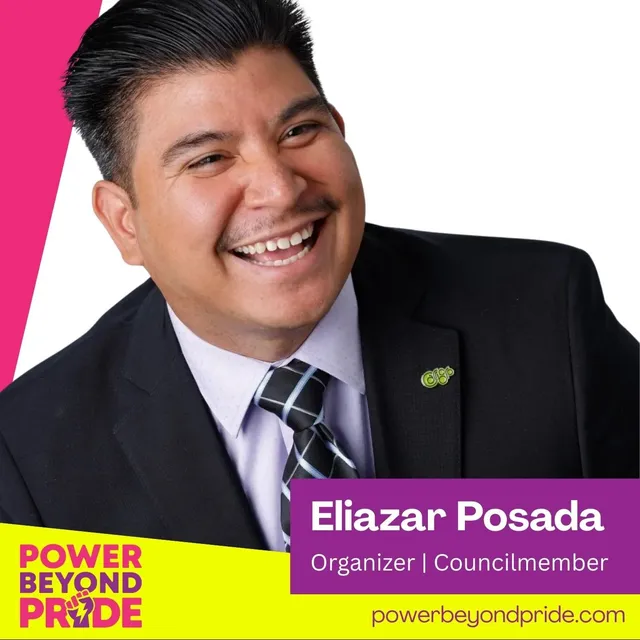
Immigrant Safety, Community Trust, and Queer Liberation with Eliazar Posada
Listen or watch
In this episode
Co-hosts Daniel WK Lee and Kata d’Adamo sit down with Eliazar Posada to talk about what community protection looks like when national politics turn hostile. Eliazar breaks down practical local strategies—non-discrimination ordinances, language access plans, and building trust so people feel safe seeking help. He also reflects on the emotional weight and responsibility of being a “first,” and his commitment to making sure he’s not the last by supporting other queer Latino candidates. At Equality North Carolina, he describes the shift into LGBTQ+ work as an expansion of intersectional movement-building, not a departure from immigrant rights. A rapid-fire round brings levity, then the hosts share ways to stay connected and support the mission.
TranscriptRead the conversationAbout 46 minutes to read · 6,974 words · Eliazar Posada, Daniel W.K. Lee, Kate D'AdamoOpen
- Eliazar Posada
- One of the things that triggers a lot about Equality NC is that we really have a mindset of, uh, we're doing this in community, right? No issue is siloed. Queer issues are reproductive issues, our immigrant rights issues, our voting rights issues, and the disability issues. We cannot say queer issues are only queer issues because it's not the reality. It's not a thing. It's a lie.
- Daniel W.K. Lee
- Hello and welcome to Power Beyond Pride, a weekly queer change making podcast bringing you the voices and ideas from across our fierce and fabulous spectrum to transform our world. My name is Daniel Lee, poet, author and life size Labubu.
- Kate D'Adamo
- And I'm Kate, femme organizer and former Gaby. We're your co host on today's queer cast journey. In this episode, we're talking to councilman Eliazar Posada, the executive director of Equality North Carolina. Welcome in, Councilman Posada.
- Eliazar Posada
- Hey, welcome. Thank you all for having me. It's a pleasure to be here.
- Daniel W.K. Lee
- How are you doing this afternoon?
- Eliazar Posada
- Doing okay. It was a little hot. We had a couple of events this morning that on Community, so it got a little sweaty out there. But back inside, back in the air conditioning, thank God it's working. It's doing good.
- Daniel W.K. Lee
- That's really awesome. Well, want to just dive in? Um, and since you're kind of really a pioneer, why don't you tell us, you know, what it really meant to you to be the first openly gay elected Latino in North Carolina.
- Eliazar Posada
- Yeah, it was very interesting, right. When I first ran, I recognized that the, uh, Latina community in North Carolina didn't have representation that we deserve, number one, right. And two, we didn't have any queer Latina folks elected in the state. So one of the reasons I ran was for that, but also because I love my community, right. I wanted to be able to be. Make an impact. I knew a lot of things happening in town, and I've been very involved for years. So it was a natural progression for me to really run for office and represent in a different way and bring some perspectives to town council. But it really didn't really hit me that I was the first until a couple of months after the election. Right. We had, we, uh, did the election, we get the campaign, we talk about it during the cycle, and it becomes a couple of questions that people ask and we talk about it. Then we pivot to, like, the issues in town. And then a couple of. About a month and a half after I get elected, I'm invited to. Because my election was in May, I get invited in June to a Latinx Pride celebration after party, where I was asked to take the mic while the queens are doing their break and talk about the importance of voting and representation. And of course, I'm like, why not? I can do that. I can give speeches. So I'm thinking no one's going to know who I am when I come in, right? This is a couple of towns over. People are going to be like, yeah, sure, okay, cool. But, you know, I'm introduced and the crowd goes wild, and I'm like, holy, holy, holy moly. Here we watching oim. That's funny. And then what really was the moment that I realized how important this was. After the speech is done, after the show, I'm hanging out with some of the queens in, like, the back patio of the, uh, of the space, and there's someone that's just, like, chilling a couple of feet away. And you can tell that they want to talk to you, like you want to talk to you, but they're, like, a little nervous or whatever. And I'm like, all right, I'm just gonna say hi. So I just was like, hey. Hey, what's up? How are you doing? And this is a queer person from rural North Carolina who had been following my. My campaign and my work before that, and who just wanted to say hi. And I'm like, oh, yeah, hi. Get to know you. I gave him a hug, and they start crying, right? And I'm like, what did I just do? What happened? Oh, my God, what did I just do? And then we talked a little bit, and they let me know they are queer Latina. M. Uh, in a rural area of North Carolina, a teacher and by profession and is afraid of coming out and has been following the work they were doing and never thought that they would ever see someone that looked like them in office and representing in the way that you do or that I do. It was just very impactful, right? Because it just. It hit me right there, right? This is a person that lives, like, almost two hours away from Little Carrboro. But the work that I was doing in a small town is impacting queer Latina folks across the state. So it was, uh. Since then, I've made it my mission to not be the only one, Right? We now have four queer Latina electeds in the state, two others of which I supported in their campaigns when they first ran and as they were doing it, because, yes, I was a first, and I think there was a lot of really great things that came from that, but I never wanted to be the last. And I know that My colleagues serving other municipalities will continue that work to push for representation specific to queer folks in office.
- Kate D'Adamo
- That's beautiful. Thank you for sharing that. And that's such an incredible impact. To be able to see and feel, literally feel in real time. That's so beautiful. And I'd love to hear more and kind of start at the beginning. What. Tell us a little bit about your journey. What politicized you? What made you even want to make change in the first place?
- Eliazar Posada
- Yeah, believe it or not, this started when I was a kid. I was raised by a single mother. It was my brothers and I. And one thing that my mother always told us is that she wasn't going to leave us with any riches, but she was going to leave us with a damn good education. And part of that is recognizing that there's three things in life that are for certain. One is your family. They don't have to be blood. They're your family, your community, and yourself. So you look out and you fight for those three things. So if you ask my mother, she'll say that everything I know, she, I learned from her. Right? She was an, uh, organizer of farm workers back when we were younger in South Texas and traveled across the US with. She, uh, would negotiate with farm owners and make sure that we had the labor and the pay and the living and all that fun stuff. So we. I have two brothers, all of them born in different states in different seasons. Right. My younger brother was born North Carolina tobacco season. I was born in Florida in sugar cane season. And my younger brother was born in Texas in. In cabbage season in South Texas. So it's interesting to see that. Right? But growing up with a mother who was. Even though we had some really tough times right. When we were young, I remember being in elementary school, have to wake up at four, five in the morning to help her peel potatoes that we make breakfast tacos to sell before we went to school and then helping her close the restaurant that she was managing afterwards. She always made time to be in community, right? There was this old lady in our block that I, we just, we could not get along. I was like a sponge is a little kid. She was older and little grumpy. And my mom always made me go take her dinner, always. And I'm like, she likes Josue, my older brother. She likes him. Why don't you send him? He's nice. But anyway, I say this because. Fast forward to. I, uh, go off to college. I have to wait, pay my way through college. I get involved in different pieces of work. Right. I went to Campbell University. There wasn't a queer organization or Latino Latina student organization. So I was like, I'm gonna start one, why not? So I gathered some folks and we started doing that work. And I recognized that I was very. One of my passions was similar to like my mother's is really representing community and being out in community. My whole plan was to go to law school. I got accepted into my top school. I was going to go to Georgetown and be this big time lawyer and make a lot of money and then be a judge and all this fun stuff that didn't happen. But I decided between my four year degree and law school to take a break. I had just worked a lot, did a lot of work and I was like, I'm a burnout. So let me take, let me take a year. And I started working at a nonprofit, um, that I had been supported by called Centro Hispano. Right. They had, they were at the time the only Latino organization having a support group for queer kids, specifically queer Latina folks. So I was like, I'm gonna give it, I'm gonna go there, work for a year, it'll be cute or whatever. That one year turned into two, turned into three, turned into four, turned into five. And I started off as a volunteer and ended up as a acting president, CEO of the organization. And this is in a five year span, the largest Latino nonprofit in North Carolina. I helped it expand. So along those lines I realized again that there were so many pieces that we can do a lot of work in. Uh, and so it just, it was just kind of a natural progression, right? It was, I get invited to talk to someone here or Durham Council is doing something funny and here goes Eliazar to speak up against it. And just being in a community, it was hilarious. One of my big time supporters and current elected official in Orange county met with me about two years before I ran and handed me a check that said LA's are for mayor. I knew you're going to do this one day and I'm going to be the first one to give you this check. And I was like, sir, calm down, you're crazy. No. And lo and behold, two years later I run for office and he gives me a new check with her counsel. So yeah, I think a lot of folks realize that I needed to be in this elected role before I did. But I knew that I wanted to represent community in a much deeper way since my young age. Where we'll go from here, I don't know. But I also know there's a lot of deep things, harmful things coming up in community. Right. And like they're impacting our folks. We talk about queer issues, uh, here in North Carolina and across the United States. What we're seeing out of dc, what we're seeing out of Raleigh. We talk about the immigrant folks in the state, how that's impacting our queer undocumented communities here in North Carolina which have a significant population. We talk about reproductive justice and how that's impacting our trans folks being able to access care. There's so many pieces that I'm very glad to be not only in local elected office where we can actually do some change that are impacting people's daily lives, but also in this, uh, executive role where the quality NC and the mechanisms that I have the privilege of leading to be able to impact some of these policies.
- Kate D'Adamo
- That's incredible. And what, what an amazing legacy that your mother has left. Thanks for sharing this.
- Eliazar Posada
- Yeah, yeah. She'll tell you that it's amazing too.
- Daniel W.K. Lee
- So, I mean you kind of just touch upon it already and we might be just leaping a bit, but obviously in this current moment, we've had a lot of antagonism, um, towards immigrant communities in which you, you are seated in the place where there are significant populations. And so what's kind of been, uh, the experience of or the temperature in the community now and what are the kind of interventions, do you think, like you've been able, or that the government has been able to create to allow these communities to feel more at ease or you know, like that in these scary times that won't, that they won't just get dragged away.
- Eliazar Posada
- Yeah. And it's. This is the unfortunate and very real situation that we're in. Right. We're talking about administration at the federal level who does not see our American community as people, who does not see the harm in kidnapping folks from the grocery stores or from their work and how that's impacting their kids at home, which also causes tremendous amount of fear. Right. We here in north. In Carrboro, actually about seven years ago, I started the Latinx, which is Latinx pride. And I. It started off as we didn't have a space in the big Pride. So we were like, why complain about. Let's just make one. Right. And that's been a, uh, pride that has been growing every year. And it happens here in Cordborough for the last six years. And this year we had a lot of folks who. Very fearful. Right. We had conversations with the organization. I'm obviously not organizing that anymore. I left the central and they are the ones holding it. But we had conversations both as a town council member, as a member of the community and alumni of the program about what's happening, how are we responding to this very real fear from folks. And they come back to a couple of things that is truly crucially important for local electeds. Right. We can't change what's coming out of the uh, cheeto up in D.C. right. Whatever he's going to do is what he's going to do. But we can prepare for it. You know, as local elected officials, we have the ability to create policies like non discrimination policies, like non cooperation with ICE and um, in our law enforcement, like trainings for know your rights, like information and sharing with community that maybe doesn't solve the whole problem, but allows folks to understand what's happening, to know that there's people who have their back and, and really be prepared. Right. Because it's not about if or maybe ICE will be in our communities. It's like, when is this going to happen and how are we preparing for it? Right. How are we creating policies so that our chief of police has to inform our community advocates about, uh, any information they get about ICE coming into our communities? How do we make it so that folks have a power of attorneys ready to go, know what their rights are, have different resources? Right. How is the town working with our local advocates and organizations to make sure that uh, there's funding for that? So there's a lot of really great work that we've been doing here in Carrboro. And a lot of our, my colleagues across North Carolina have also been working at the local level because again, it's not about if, it's about when. Right. And I'd make, want to make sure that uh, or at least we know that this is coming down the pipeline. So how we're preparing, folks, also we have a lot of work to do in the General Assembly. North Carolina is not unique when it looks at some of the bills that is being proposed and passed that are impacting not only queer, but also immigrant folks and requiring different cooperations and different policies that are making it easier for the federal government to come in and destroyer immigrant communities. And in North Carolina we have a, uh, we broke a majority in the House, Right. So we're able to uphold vetoes. So now it's not only making sure that those bills are vetoed, but let's uphold that. And sometimes we don't have the votes. And I get that, but we have a voice. We can't Simply just say, we don't have the votes. We can't do anything. Well, you fight every single second up until that thing becomes law. And even after it, you file some lawsuits, you do whatever it is you can. And many times local elected officials need a little bit of push from community and auto. Community rightfully focuses on the Congress or on the White House or on, um, the governor's mansion. But also folks, I always encourage folks to see what your local government is doing and how are they advocating for you and your communities and the communities you care about at the statewide and federal level. Because, yes, we are local folks who don't really have a direct line to the White House or to the speaker of the House and Congress. But we're not powerless. We have a lot of work that we can't do, a lot of conversations. We can have a lot of people who are also going to be looking to us to lead. And it's our time, as we looking at these perilous moments, to be leaders and bring in grassroots as we try to fight this massive attack on not just our queer and undocumented community, but, uh, on women's rights, on voting rights, on everything we hold dear. Absolutely.
- Daniel W.K. Lee
- And I can't wait to talk more about kind of these interventions, this resistance. But we're going to need to take a quick break, so please stay tuned to this episode of Power Beyond Pride, where we're in conversation with Councilman Elias. Welcome back. This is Power Beyond Pride, a queer change making podcast. And I'm Daniel Lee here with my co host, Kate d'.
- Eliazar Posada
- Adamo.
- Daniel W.K. Lee
- Just to follow up with before we, what we were saying before the break, I'd love to hear more about what kinds of interventions, resistance that your town has been able to make. Um, against really the move against ICE and the Trump administration to help protect immigrant communities, immigrant families. Like, what are some ideas that have already been put in place and might be able to be replicated by other towns or other citizens trying to mobilize people to create resistance.
- Eliazar Posada
- Yeah, and this is a great question. There's a couple of things that I would mention on this, right? So first and foremost is creating non discrimination ordinances that include legal, uh, status. Right? So we always see sex, gender, sexual orientation, all that is great. But we also have to include legal status in those so that we are letting folks know that this is a town, a space where no matter your status, you're welcome. And you'll not face discrimination on any town services. There's also resolutions that can be passed. There's A ceremonial ones, where we pass the statement condemning the administration, condemning actions, advocating for a change, which are great and important so that people know where we stand. But then there's also ordinances that can be passed, like changing policy, forcing. Not forcing, but basically forcing your police department to create policies that will ensure that local law enforcement does not cooperate with ice. Right. We have those in place in Carpa. We worked with our chief of police and all of our emergency services so that none of our emergency services will be cooperating with ICE in any way, shape or form. We're not going to be doing that. We can also create mechanisms between our communications officers and advocates out in the community to let them know if we hear. There is a certain amount of time that ICE has to give us, um, warning if they're going to be coming into our jurisdiction. Sometimes they follow that, sometimes they don't. But in the moment that they do, we have a mechanism so that we can. Our. Our community will know that's an alert that the town has received, because that is public information. It's not private. It's just sharing that information with communities. So you. Hey, y', all, we heard this alert. Be on alert. Make sure you have your. All of your things ready to go in the moment that you need to. Right. And there's also other things that you don't even have to just specifically talk about ice. There's other things that can happen to make sure that folks are in community and following and making sure that things are happening.
- Daniel W.K. Lee
- Right.
- Eliazar Posada
- So, for example, Carrboro is very unique because we have a language access plan that is extremely expansive, uh, depending on what you see in other communities. Right. So in Carbo, not only can you participate in any town council or any community advisory board in any of the 5M. Any language that you speak. Five of the most spoken languages will automatically be translated or interpreted if you're in the room. Right. And that also means our communications goes out in the five most spoken languages in the town. If you are speaking one of the languages that are not those five, there is mechanisms. We have to bring in an interpreter to be able to have those conversations and provide all the information in the language that you needed. That is important because, again, it shows folks that we are listening and we're wanting to hear from them, and then we want them to hear from us in a way that they can fully understand. Right. That's like step number one in building trust. We also have several community programs that we call Carrboro in Motion, uh, where we go out into communities and like Apartment complexes and bring services and do Zumba with them and ask them about what do they feel about our parks. How do you feel about this downtown vision plan coming down the road? We bring in our chief of police, our fire chief, different members of the town staff, our town manager or mayor. Some of us go to those things, and it's to build that community. So we need to do that before there's an emergency. Right. Because if you have an emergency, even you have the most wonderful mechanism in the world that shoots it off in all the languages possible. Uh, it's emailed to every email in town. If you don't have the trust of community, that. That doesn't go anywhere. Right. You need to have to build that. So I would say that there's a lot of really great mechanisms, but when you're looking at specifically against dice, we have the power to make ordinances in our town. We have the power to dictate who our police department works with and who they don't. And we have the ability to make it very clear to all of our community members where we stand on these issues. And I think any community who is willing and wanting to support our immigrant communities needs to do all through.
- Kate D'Adamo
- That's fantastic to have such a thoughtful and responsive local government. That sounds like such an incredible offering to the community and such a beautiful form of engagement. And I would love to pivot a little bit and talk about your work at Equality North Carolina. So, first off, you were the former head of Central Hispano, and I think the story of actually moving up and actually being served by an organization and leading an organization is exactly what we dream of in those spaces. And you, better than anyone, knows that we don't live single issue lives. Just because you are Latino doesn't mean you're not lgbtq. And so I'm curious, how has that shift been to kind of look at something from a different lens while still holding all of that history in that past of your. The. All of the places you have worked and been in community?
- Eliazar Posada
- I will say it was a little challenging at first, right. Because I definitely came into Equality and ceased. I mean, of course, I've been with El Centro. I ran a lot of their career programs, and that was part of my portfolio, and that was important. And. But that was a small piece of the overall work. Right. But I knew as a queer person that I needed to make sure that I was working for queer community on a deeper level. And that's why I joined Equality nc. But it was very, uh, first couple of Months. Very difficult to get out of, like, the immigration kind of alert space, right. Where, um. Because there's different mechanisms you have to follow in these different spaces, right. And there's a lot of emergency action that happens in LGBTQ spaces. But it's very different than immigration, right. Immigration is like, move now with queer issues. It's like, all right, we need to move. We have a couple of hours to figure something out and respond. And there's. Most of it is policy based, so it's like we have a little bit time to fight back on that. And then I also have to realize that my hat changed. So folks who were now leading immigrant movements, there's other folks who moved into leadership, so I need to give them space to be able to do that. Right. I was coming into some of these spaces and still sucking a lot of the air out of the room because that was what my role was before. And then I was like, folks were looking at me like, all right, what are we doing this? Okay, we'll move this guy, um, talk to this other one, get a collectivo up here, make a press release. And then I was like, wait a minute. That's no longer my job. Someone else has that. I need to come in here and shut up and just, like, blank and support the work that other folks are doing. Which was very difficult, to be honest. It was very difficult. But then I also realized that now I need to take that space in the queer movement, right? Because I'm taking over someone who was doing that work. So, like, we want to make sure that we're consistent. But one of the things that I really appreciate is I was able to bring in my, uh, immigrant rights movement contacts into the queer space and do some really great collaborative work together. Not that we were working together before, but it's just very different when you get to know these folks and you work with them directly, and that kind of building trust piece isn't. It's not needed to. To when I start this new role, right? So it was really interesting. And I think one of the moments that I treasure, or one of the things I treasure a lot about equality and see is that we really have a mindset of we're, uh, doing this in community, right? No issue is siloed. Queer issues are reproductive issues are immigrant rights issues, our voting rights issues and disability issues. We cannot say queer issues are only queer issues, because it's not the reality. It's not a thing. That's a lie. So we really moved into very much a, uh, collaborative way of working with folks. Right. When we first started at Equality, one of the first thing I did is go to the other folks who are also working on in the legislature, right. So we had the ACLU and Planned Parenthood and we were. There was work together that happened. But I realized that we're all going to the same people, we're all fighting the same bills, maybe look a little different. So let's work a little bit more together. And I started this group chat, uh, and I named it the Trifecta T R y Fecta because it's three of us. We try our darndest. We still get our butts whooped in that building, but we try our darndest. And we were able to really share resources. Right. So if someone is in the building, like, hey, we just heard this dropped, oh, Liz is in the building. Liz, can you go talk to them? Even if it's a query issue and it's not Liz's kind of domain, but was able to do that. Same with myself. I'm in the building and something comes up with planned behavior like, hey, can you go talk to this person? I got it. And really building that intersectionality of work and sharing that has continued to this day. And we have a working group where we're connecting with folks from different spaces and flanking and supporting. We all lead in the pieces that we are leading in. Right. So when it comes to queer issues, the, uh, one that helps coordinate what our messages. We're going to go over here, who's going to do this, who's going to do that, how are we going to plan the rally, who's in charge of the permits, all that fun stuff. But when it's like reaper rights, um, all right, what do you need me to do? And kind of holding that type of work has been really crucial and important. And I think one of the reasons that I'm able to do that is because of the fact that I come from a space that it was so natural to work with so many other people. Even when you didn't agree on a hundred percent of the things, sometimes you didn't agree on 90% of the things that you agreed on that like 10% that we were working on and knowing that you can't do this alone. So I think, yeah, I'm very proud of some of the work that we've done in that place.
- Daniel W.K. Lee
- Speaking of threes, you're kind of all organizations are under like a trifold threefold pressure of funding.
- Eliazar Posada
- Right.
- Daniel W.K. Lee
- Of federal funding, gutting local municipalities, organizations, of course too, or regranting organizations, immigrants of course, and people trans experience or gender non conforming folks. And so how has Equality North Carolina or Equality North Carolina kind of been like either reshuffled its priorities or has it, or like how has it kind of responded to current circumstances in terms of the work?
- Eliazar Posada
- Yeah. So that I think one of the things that we started doing last year was preparing for the eventuality of having funding reduction, unfortunately. Right. We started looking at reading the tea leaves and all that fun stuff and realizing regardless of what happens in November, we're going to see some um, changes. So we started planning what would that look like? And thankfully we don't have any federal funding or state funding that we seek and that is on purpose. Right. So most of our funding is through national and international funders as well as donors and sponsorships. Right. So we definitely have to hustle a lot to get people to be able to buy into our vision. But one of the things that I think has helped us is that we've kept our priorities. Our priorities are still Queer Liberation in North Carolina. It is still working with our partners to ensure that we flank and support, uh, anyone that is in this fight with us. The team is very clear as to the fact that no matter what's happening, uh, in dc, no matter what's happening in Raleigh, we are still here for the queer community and we're here for our partners. So we will continue to do the work that we're doing, whether it's showing up at Prides, because we also know that joy is a crucial piece of resistance. Right. And that's the first thing that the opposition comes for. They come for our joy, they come for our spaces of gathering. So we work to make sure that those continue to happen. We work for policies that are going to be, uh, supportive of our community rather than attack them and try and fight back against those who seek, uh, to limit our rights. Right. And we make sure that our partners know that we're here for them, we have their back. And then it's also helped them really dive into some of our work too. Right. So it, I am very privileged in the fact that we have a team who started planning for this, this shift and we have funders who have kept aligned on a lot of the funding that's coming in. Obviously there's always a lot of work to do when it comes to making sure that corporations continue to give us their sponsorship values because those are important. Right. And we've had a couple of folks who are like, well, we don't know with everything coming up and it's, we've had to have some come to Jesus moments with some of these folks and really push, uh, them to stand with their values rather than to let those wane. So it's always a work in progress, right. Nonprofits, we don't, we're not known for having boatloads of money. Right. And Quality NC is three different organizations in one. Right. So we have our C3, which is a non political part, our C4 which is political work, and then our PAC. Right. So RC, uh, 4 is really lobbying and our PAC is the one that really helps out with candidates. And depending on the time of the year, it might be easier to fundraise for the nonpartisan part. When we get close to elections, it might be easier to fundraise for the political side of it. So working with my, my directors also making sure that we are staying on top of it has been how we're dealing with some of these changes coming in the pipeline. Um, we're worried about sustainability, right. That's always a key thing because we can only do so much in the day, we can only do so much in the week. And there's other things that we have to do and asking for money is a part of it, but it can't be our whole job. So we're always cautious as to what's coming down the pipeline. But again, I'm very pleasant of having a team who we're looking at the long, at ah, the long game. And uh, we're a little prepared. At least we were prepared before this administration came on board. But as always, we can always use any, any support. So if anyone out there listening wants to Support to Equality NC, go to equalitync.org and give us your dollars.
- Daniel W.K. Lee
- Chris, you can't have any shame about needing support.
- Eliazar Posada
- Absolutely.
- Daniel W.K. Lee
- Well, that just sounds great. And we're going to take a quick break here and stay with us because we'll be back in a minute to play a speed round of questions with Councilman Vastada.
- Eliazar Posada
- We'll be right back.
- Kate D'Adamo
- Welcome back to Power Beyond Pride where we're talking with Councilman Elias Posada of Carrboro, North Carolina. I'm Kate and I'm here with my co host, Daniel W.K.
- Eliazar Posada
- Lee.
- Kate D'Adamo
- And so for our last question, Councilman M. Pesado, what are you fighting for these days?
- Eliazar Posada
- I think what I'm fighting for these days hasn't really changed since I was a kid. I'm fighting for my family, my community and myself. Right. As I think I told y', all, you know, that's One thing I learned from my mother when we were growing up and my family is not just my blood, it's the community that we've built around me. It's the folks who have been supporting not just my work, but my life over the last years. Um, it's my chosen family. It's folks that I adore and sometimes fight with, and that's always a fun fight. My community, of course, people who are not only relying on me to show up, but I'm relying on all of our elected officials and my colleagues to really show up for folks. Right. They're folks that are looking for leadership, who are looking for services, who are looking for that help. So that's my community. And then of course, me, right. I'm a queer Latino. How old am I? 32 year old. In a red state. Well, somewhat purple state. And all these things are impacting me as well. Right. You know, I've been called, I've been told to go back to my country in grocery stores. I've, uh, been profiled by law enforcement. Unfortunately, I'm a queer person who wants to build a family with my fiance. Right. I'm someone who can easily fall into different pieces of this work if we don't. If we don't stand up for us. Right. I think that's like I'm always and will continue to fight for those three things. My, my family, my community, and myself.
- Daniel W.K. Lee
- That sounds perfect. Well, we've been talking a lot about a lot of deep stuff. And so we're going to shift over to our speed round of questions where we're going to get to know a, uh, little bit about you and the kind of idiosyncratic things possibly. Or I'm going to ask you to tap into your reptilian brain and not, not overthink and just kind of give us the first answer that comes to mind. Are you ready?
- Eliazar Posada
- I got it. Let's go.
- Daniel W.K. Lee
- Okay.
- Kate D'Adamo
- All right, first question. What makes North Carolina barbecue better than Texas barbecue?
- Eliazar Posada
- It doesn't. That's it? No. Unequivocal. Uh.
- Daniel W.K. Lee
- So quick. Yeah. Love it. Who is your political inspiration?
- Eliazar Posada
- Uh, uh. Oh, too many. But. Rgb. Ruth Bader Ginsburg. Nice.
- Kate D'Adamo
- Worst place to take a first date.
- Eliazar Posada
- Worst place.
- Kate D'Adamo
- Worst place.
- Eliazar Posada
- The movies. Like, who does that? You can't talk.
- Daniel W.K. Lee
- Yeah. I wonder why that's such a persistent. Yeah, I like.
- Eliazar Posada
- I don't know. I want to get to know somebody. Like the movie. You have to sit there and something a little awkward.
- Kate D'Adamo
- It only it works. When we were teenagers and didn't know what to do on a first date and just needed to do it to get out of the way. I think then it was perfect.
- Eliazar Posada
- Yeah. Yeah, that's right. That's fair.
- Daniel W.K. Lee
- Or maybe it was just the thrill of maybe being able to hold hands or something in the dark and not have like your friends judge you. I don't know. Maybe.
- Eliazar Posada
- I don't know.
- Daniel W.K. Lee
- Favorite junk food?
- Eliazar Posada
- Hot cheetos.
- Kate D'Adamo
- Nice. One piece of advice for your younger.
- Eliazar Posada
- Self, go, uh, crazy dude. Things are going to happen. You'll get over it. Don't be too passionate.
- Daniel W.K. Lee
- Right on. Cats, uh, dogs or neither dogs.
- Eliazar Posada
- But I live with two cats, so that's a little controversial.
- Kate D'Adamo
- Mountains or beach?
- Eliazar Posada
- Beach, yeah.
- Daniel W.K. Lee
- Who's the morning person? Your partner or you? Or neither.
- Eliazar Posada
- Ah, that's me. Yeah, that's definitely me.
- Daniel W.K. Lee
- How early?
- Eliazar Posada
- I'm an all day person. Okay. Yeah.
- Daniel W.K. Lee
- How early are you going?
- Eliazar Posada
- I don't know, maybe six. Huh, that's not bad.
- Kate D'Adamo
- Ideal vacation spot.
- Eliazar Posada
- Rio Grande Valley, Huasla, Cotejas. That's where I grew up and love that place.
- Daniel W.K. Lee
- And what does Power Beyond Pride mean to you?
- Eliazar Posada
- It means holding joy, holding space, showing up, knocking some heads when we need to, but you know, just continuing to be ourself and in community, I think.
- Kate D'Adamo
- And last question, where can people follow you and support your work?
- Daniel W.K. Lee
- Yes.
- Eliazar Posada
- So you can go to equalitync.org to follow all the work that we're doing at EqualityNC. Also we have all the socials, Instagram, Facebook, Bluesky, QualityNC and you can also follow me at uh, elizarposada on all of the socials including, well, no longer Twitter because we don't like her. But you can follow me on Instagram, Facebook and bluesky and you can always find my email at the Carrboro town council if you everybody wanna anybody wants to get in touch with me, just go to carrboronc.gov to find my info there.
- Kate D'Adamo
- Well, I want to thank you so much for being here with us. We are out of time for this podcast, but we'd love to have you join us again and share more of your work and your thoughts.
- Eliazar Posada
- Calm down. Yeah, let me know. Awesome.
- Daniel W.K. Lee
- Uh, well thank you councilman Posada for taking time and I'm Your host, Daniel W.K. lee, author, poet, shredder, aficionado.
- Kate D'Adamo
- And I'm Kate. Hi, Femme. And for Burgaby. And you can follow me@ah, reframehealthandjustice.com or on Instagram at Harmony Production.
- Eliazar Posada
- Femmes.
- Kate D'Adamo
- Remember to subscribe and get your friends to subscribe to Power Beyond Pride. Um, on Spotify, Apple Podcasts, or wherever you get your podcasts and check out our site@powerbeyondpride.com Power Beyond Pride is a.
- Daniel W.K. Lee
- Project of A Great Idea, a Queer owned design and content agency. Learn more about them atagreat idea.com this.
- Kate D'Adamo
- Episode is produced by Shane Lukas. Mattie Bynum is our Project Director. Our editor is Jarrett Redding with support from Ian Wilson.
- Daniel W.K. Lee
- We're both part of this podcast awesome host team and we invite you to send in your questions and comments@powerbeyondpride.com check.
- Kate D'Adamo
- Out our new episodes each week and we look forward to queer change making with you next time. Thank you from all of us at Power Beyond Pride.
Transcribed automatically and lightly checked. If something is wrong — a name especially — tell us and we will fix it.
Episode #42
Immigrant Safety, Community Trust, and Queer Liberation with Eliazar Posada