

Episode #56 · May 26, 2026
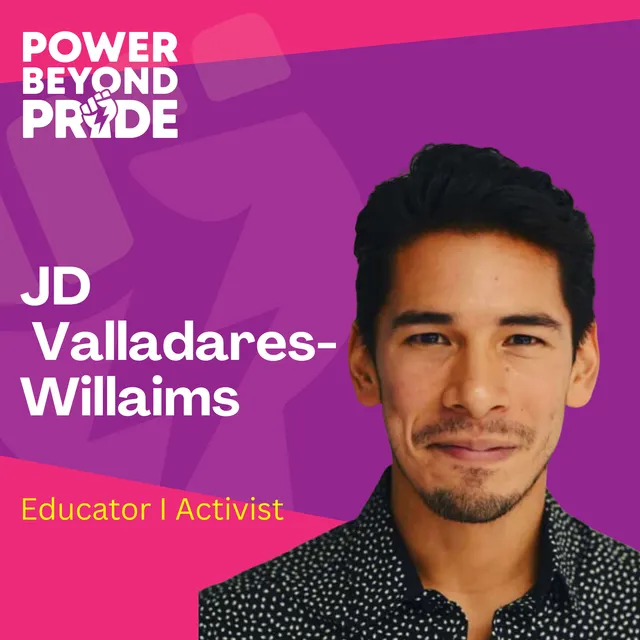
Identity, Empathy, and Power with JD Valadares Williams
Listen or watch
In this episode
JD Valladares Williams joins the hosts to explore how emotional intelligence shapes the way we connect, lead, and advocate for change. Drawing from their upbringing in Peru and experiences with migration, JD shares how empathy is built through lived experience rather than logic alone. The conversation highlights how emotional storytelling—rather than debate—can shift hearts and minds, especially in movements for LGBTQ+ rights. JD also reflects on their work with queer youth and the importance of helping people feel seen, valued, and historically grounded. Listeners walk away with a deeper understanding of how emotions drive both personal growth and collective change.
TranscriptRead the conversationAbout 51 minutes to read · 7,606 words · JD Valadares Williams, Kenyon Farrow, Shane LukasOpen
- JD Valadares Williams
- What I've learned from all of the work I've done is that humans are not rational beings. Humans are emotional beings. And so when we try to reason our way to acceptance with people, it doesn't necessarily work where someone is able to see, wow, you cared for your partner when they were sick the same way I cared for my partner when they were sick. It completely removes the rational part and it connects to the emotional rather than this logic of, of course everybody should have the same rights because there's no. There's nothing tying that person to that at the ro.
- Kenyon Farrow
- Hello, and welcome to Power Beyond Pride, a weekly queer change making podcast bringing you voices and ideas from across our fierce and fabulous spectrum to transform our world. I'm Kenyon Farrow, writer, activist, communications nerd, and super happy to be here with our guest and my co host.
- Shane Lukas
- I'm super happy to be here with you too, Kenyon, all the way from California, so very excited, very exc. I'm Shane Lukas, he him his. And I am a harm reduction activist, owner of a great idea, and lately been dancing to random obscure pieces of vinyl like 1970s Egyptian disco. So I'm really like, living into the just the absolute amazing sounds of this world. And I'm excited about today's conversation very much. Kenyon and I are your hosts on today's queercast journey. We'll be talking with emotional intelligence and awareness coach, J.D. valadares Williams, and they are an instructional designer, content writer, and my favorite beautiful storyteller. Their expertise lies in enabling individuals to gain awareness of their emotions, evaluate how emotions influence their actions, and understand the impact they have on others. So a lot of great conversation today. So please join me in welcoming the wonderful JD Valadetis Williams.
- JD Valadares Williams
- Hello. Hello, everyone. Thank you. Happy to be here.
- Kenyon Farrow
- We are very thankful to have you here with us on this episode of Power Beyond Pride. So to get us started, I just want to say I'm really intrigued. How does one become an emotional intelligence trainer? And how did life equip you into getting into that space to begin with?
- JD Valadares Williams
- Yeah. Oof. Loaded questions already. Right from the start.
- Shane Lukas
- We, we, we don't hold back. We don't hold back.
- Kenyon Farrow
- We just get right to it.
- JD Valadares Williams
- I would say first that, uh, for me, the emotional intelligence training or becoming an expert in this field, researching it. And I even hate using the word expert because I'm really just trying to practice it every day. And some days it works, some days it doesn't. But it really came out of a necessity of a lot of the, I would say, ways in which I was coping when I was younger weren't necessarily helping me succeed. Sometimes they were holding me back. Things like, uh, not being able to receive feedback and really understand what it's about, or not being able to control my emotions under a moment of stress and really be able to think clearly. So to me it was, I grew up with a lot of just repress your emotions or the way that you solve problems is through just brawling it out with somebody. So I really had to, uh, shift the way I was navigating the world because I wasn't going to get to where I want to get to if I kept using the same old coping methods.
- Shane Lukas
- I mean, I think that's powerful because again, I, I, I, I think my favorite, I, I was not a big fighter in, in school, but I always imagined like footloose fighting or get a little west side Story, like dance it out. But that always. But I love the idea you're talking about, like, hey, this is a way we can respond to violence. This is a way by not by finding other challenges, by other ways or other, other strategies to, to, to, to respond to trauma. When your video series, Fearless Communicators, you reference your childhood just like you shared now, and it can you share a little bit about growing up in Peru and kind of that influence it's had on you?
- JD Valadares Williams
- Yeah. So I moved to the States when I was 11. And so before that, uh, I lived in Lima, Peru with my family. And one of the reasons why we migrated to the US was because this was a very unstable time in Peru. There was a lot of civil unrest. It was during the terrorism era of Peru, the Shining Path. So not only was it uncertain in economic ways, but it was also uncertain as far as your safety. Two blocks away from where I lived was a, uh, police station right across the street from where I went to school. And, and one night it was just like, there was just this big boom. And then all of you see, all of you see it's just like this cloud, this red cloud in the sky. And like the, the apartment windows have shattered and everybody's waking up and I have no idea what's going on because I'm like seven, eight years old. But what has happened at the time was that the terrorist group, uh, set up a car bomb right outside of the police station. And so that's the explosion that we heard at night. And then the next day, uh, going to school was such a surreal experience because it was seeing like, the police station no longer there, the tennis courts that were next Door completely gone as well. And parts of my school sectioned off because remains and things had blown and kind of landed in parts of the school as well. So I say this to say that sometimes we are really removed from experiences around the world and conflict. But having experienced something like that, and even though it was just that one time for me, uh, that discomfort, that pain, that whatever you want to call it, has made me connect to people in other parts of the world that are experiencing things specifically right now. So I think my upbringing in Peru was very important for who I am today because it taught me a lot of empathy for those that I don't know their conditions or their resources, and I can hold back judgment and instead think of how can I just empathize with these people.
- Kenyon Farrow
- Thank you for sharing that. I think just hearing your experience with that kind of, uh, really kind of traumatic experience brought about by kind of political instability or that level of violence, and we obviously know that that is happening in many parts of the world, and. And even in our current US Context, one can certainly talk about school shootings and these sort of dynamics or even what ICE is trying to do in schools in terms of pulling kids out of classes and whatnot is producing that level of violence. So I'm just curious to know also, what is your experience, um, doing this work, particularly with LGBTQ youth, and how your work around kind of emotional intelligence is also kind of working within the context of our community and youth?
- JD Valadares Williams
- Yeah, it's funny, because the way I've gotten to working in emotional intelligence hasn't been linear at all. It all. It's all connected by learning and being really interested in behavior. Like, my first job out of college, I. I studied biology because I wanted to be a doctor, and then realized that I did not want to be a doctor, but I started doing human behavior research at Columbia University's Medical center, and I just really wanted a job out of college, but I started working at the HIV center, and I started working with LGBT folks. Particularly, we were focusing on gay men, sex workers, and the transgender population to reduce their incidence of hiv. So it was a lot of behavioral work. And that made me actually have to go out there and interact with my community and learn about them, specifically those that are maybe sometimes disenfranchised from the rest of the community. So I realized that there was a lot of work to be done there. But I also, at the time, found that there was. There's always a lot of, uh, bureaucracy that gets involved in research and grants and investments. And so I saw that Sometimes if somebody's election was coming up, they would not want their name attached to something that was funding research for sex workers. Right. Even though that's the population that really needed help. So I decided to. Kind of disillusioned with research, I kind of went off to Madrid and said, I'm going to teach English in Spain and just travel the world. And I fell in love with teaching. But eventually I had to move back home. And when I moved back home, I realized I want to work with the LGBT youth population in schools. Uh, and so that's really how my work started with LGBT youth, because it was, we are all feeling pretty lost, uh, sometimes alone, confused as adults when we're just thrust into the world and it's, what if we were able to connect with each other before we get there? Or what if we equipped these kids with some of the tools that would help them feel better about themselves, feel better worthy of things? And to me, that is part of emotional intelligence, the self awareness, to know that you are worth a lot, that you contribute a lot to society. But somebody has to help you figure that out and also teach you your history, teach you what your community has done before you were even here. And the things that they won't teach you in school, but are definitely part of your culture and your history that are going to make you feel worthy of things.
- Shane Lukas
- Are there ways that communities can respond? Because we're seeing whether it's censorship in the schools, preventing young people from having access to just queer narratives, right. To just be able to see themselves? Are there things that people can do to shift in their, in their local communities, these conversations, so that there is more of a conversation about queer youth and how they can, how, uh, they can come into community, come into their own, be seen. Is there something that you've experienced in your work that you think are like, hey, if more people knew this, it would be so much easier for us to get some of this, some of this accomplished?
- JD Valadares Williams
- Yes. I think that what I've learned from all of the work I've done and just even studying human behavior is that humans are not rational beings. Humans are emotional beings. And so when we try to reason our way to acceptance with people, it doesn't necessarily work. And there's research that has been done about this. The before same sex marriage was legal at the federal level in the US there was, I remember four states were voting on the same day to see if they were going to pass this bill. And the, uh, LA LGBT center ahead of this vote, decided to do this Canvassing, but they called it deep canvassing, where they sent out LGBT folks from door to door to talk to people, but, uh, just talk to people about their experiences, their life, their connection to their partner. And so what they found was that once you get to that emotional connection with someone where someone is able to see, wow, you cared for your partner when they were sick the same way I cared for my partner when they were sick, it, um, completely removes the rational part and it connects to the emotional part. And they found that when they would follow up with these people, 90 days later, those sentiments were still there. They didn't go away because they were tied to this emotional connection rather than this logic of, of course everybody should have the same rights, because there's no. There's nothing tying that person to that at the root.
- Shane Lukas
- Can I. Can I ask a question? I want to. I'd like to follow that up with a question, just because in the current state where there's so much attacks on immigrant, refugee communities, and as somebody who immigrated to the United States as a. As a young person, do you feel like that's a place that. That queer people have dropped the ball because queer people haven't necessarily been invested in that movement, and that there. There may be opportunities there to. For. For queer people to develop a stronger empathy when it comes to conversations around immigrant refugee rights?
- JD Valadares Williams
- Oof. That's a lot. I would say, though. I would say we can always do better. What I mean by that is specifically thinking about the U.S. yes, we have same sex marriage, but trans people still don't have rights in many states. So it's what is a priority here. So to me, it's is the priority helping people of this community, knowing that there is this huge intersection between, uh, immigration, refugees and LGBT people, and that a lot of times you are escaping anti LGBT violence. So I think there's always more that could be done, but I think people have to be really intentional in calling that out within our community. I think a lot of times it's just kind of, well, maybe we'll support it from afar or, yes, we're kind of worried about that, but since it's not us, then it's not really a priority yet. That's what we always tell other people. One day it'll be you. So we need to be the priority, but we don't necessarily act the way we're preaching what we're saying. Yeah, yeah.
- Kenyon Farrow
- I wonder a lot of your work, or I would imagine around sort of emotional intelligence partially involves helping people to be more empathetic. Right. To uh, people that they are different from or situations that they may be different and how you really develop that a deep, deeper level of, of compassion and empathy. You worked with LGBTQ youth, you worked in kind of nonprofit settings, but you've also worked in corporate settings. Right. And I would venture to say that corporate CEOs or the C suite of corporations aren't necessarily viewed as the most empathetic people, um, to sometimes their estate, their workers and corporations or to the larger public, et cetera. How do you see that work? I think with folks in sort of the business or for profit sort of or in corporate spaces and the um, being able to sort of do the development of empathy, et cetera, with, with folks who again are usually looking at very hardcore bottom lines around profit.
- JD Valadares Williams
- Yeah, it's, it's always going to be an uphill, uphill battle to try to teach people practice empathy in a capitalist system where profit is the ultimate outcome and not necessarily other people. So what I found, and I learned this during my time in working in the diversity inclusion field because before Emotional Intelligence, I was doing diversity and inclusion work because I did want to see our workplaces change. But I realized that maybe um, the way we were going about it wasn't reaching the people that I personally wanted to reach, which are these leaders, these executives, or maybe the people that as soon as they see a training about bias or I'm not going to, that I don't care about that, it's, I'm looking to reach those people. So how do I reach those people? In a capitalist system, it has to be what's in it for them. So to me it's, do you want to be a, uh, good leader or a great leader? Because great leaders are self aware. Great leaders are able to empathize because then they know when something's up with one of their employees and are able to catch that before it becomes a huge fire. And so it's maybe empathy is not important to you as far as like caring about other people, but maybe empathy is important to you as far as your success in this business. And unfortunately if you don't like it, it's going to be to your detriment because people would rather work with somebody they like than somebody they don't like. If they have the choice, they're always going to pick the other person.
- Kenyon Farrow
- Very true. And with that, it's time for us to take a quick break. But please stay tuned to this emotional episode of Power Beyond Pride where we are in conversation with J.D. uh, Valadez Williams. And we'll be right back.
- JD Valadares Williams
- Welcome back.
- Shane Lukas
- This is Power Beyond Pride, a queer change making podcast. And I'm Shane Lukas here with my fantastic co host, Kenyon Farrow. And JD So glad you could join us today and really share about your experience as an expert in emotional intelligence. Obviously, you bring a lot of lived experience, a lot of learned experience in this mix. And you stated that your role in this life is to challenge the way that people think, which is really powerful. I know. It's one of the things that I adore about you. It's also one of the things that secured you a We Create Space award. So I want to acknowledge that and your incredible, you know, that incredible acknowledgement. How has your experience as a queer, neurodivergent Latino shaped the role you play in that conversation around challenging the way people think?
- JD Valadares Williams
- Yes. So I do say that I, I like to challenge norms, and that's because I, I have no choice, I feel, in, in this world, but to challenge those norms because so many times I've gotten resistance for something I wanted to do because of some norm. And so I say that because growing up, I wanted to both, uh, play the sports and do the cooking and the sewing and the baking and those things. And I wasn't allowed to do both or when I wanted. I remember Christmas, a hot pink bike. My dad put up a lot of resistance or like, suggesting maybe you want to get another color. I'm very appreciative that in the end, he did get me that bike, but it ended up creating a lot of animosity around my dad for making that decision. And so from young, from early on, I knew that I wanted to challenge these norms because they made no sense. And as I got older, I realized that, oh, my God, everything in the world is made up. Like our gender is made up, Right? Uh, but not gender, but like our. The way in which we say, like, male and female, it's. Yes, that's great. But biology is so diverse that there's so much variety even within that that we can't pare it down to that. When I think of ways in which our norms just sway with the wind depending on whoever did dictates things, right? Like heels were originally designed for Persian soldiers to be able to stand up on horses and be able to shoot arrows. And then eventually the nobility in Europe, when they were starting doing trading, saw these shoes and they thought, oh, we can be taller than everybody else, so, you know, we're going to start wearing these. And then the trend caught on and Then everybody started wearing them. So then Louis XIV was like, only the nobility can wear the shoes with a red sole, which is where Christian Louboutin comes from. But it's all of this to say that now we connect heels to women when originally they were designed for soldiers. And so everything that we have in our society is made up. And unless we challenge it, whenever we're put against the wall of you can wear heels, it's. What do you know about heels, actually? Do you know what they were for? So I think that's how I like to challenge norms, through unpacking the history that's already there. But that, uh, we just forget about and then repeat it.
- Shane Lukas
- No, it's really powerful. And. And that your father. That you had this sort of conflict with your. With your father, uh, at sun Young, such a young age sounds like it kind of formed this. Hey, I. I'm being told that what I. What I want to experience in this world isn't. Isn't in alignment with what everybody else expects. Were there other people in your household who did kind of were a, ah, safe space for. You did provide that space of affirmation?
- JD Valadares Williams
- Yeah. That person was my grandma, my. My dad's mom. After. After my mom passed away when I was seven. That was. I'd say that was a really difficult time for my dad. Now, as an adult, I realize that losing the partner, the love of your life in your early 20s can do a lot of damage. You can like being an adult. Having studied psychology, understanding trauma, grief, now, I can see it. But as a kid, I was just a kid, and so I saw that this person that's supposed to leave me is kind of disengaged. And so I really tied myself to my grandma. And she just so happened to be a very understanding person for me because to everyone else, like, she was a little scary to other people because she was a very strong woman who didn't take crap from anybody. And so she was like, kind of my greatest defender in the household. And, um, I would be able to bake things and also sew and things like that when she was around. And those are memories that are very vivid in my mind of. I was so happy here. I was so happy in this moment.
- Kenyon Farrow
- So one of the things, uh, I'll bring up something that just kind of happened in the break we were kind of talking about. Shane asked you about the pronunciation of Valadares and whether we were getting it correct or not. And you said, well, it's actually not really my name. So, uh. And we could talk about it. So I'm just curious, since you, you gave us permission and being a queer podcast, we do love a little bit of tea, so.
- JD Valadares Williams
- Ooh. Yes.
- Kenyon Farrow
- So if you could talk to us about that. About your. Yeah, about your name and. And, uh, having a different. Either professional name or. Or sort of how that. How that happened.
- JD Valadares Williams
- Yeah. We have such different connections to our names, and I feel like sometimes we don't even maybe explore what that means. To me, my last names have always had an impact on how I've navigated life. First, because living in Peru, there is unfortunately still this bias depending on what type of last name you have. And so you're seen as lower on the totem pole. If you have an indigenous last name, you're seen as a little bit higher up. If you have a Spanish last name, and if you have a British or German last name, then that's even higher up. And so for me in school, having a, uh, Spanish last name and a British last name, I was treated differently just based on last name alone, which was then a really interesting experience moving to the US where we don't use both of our last names.
- Shane Lukas
- Right.
- JD Valadares Williams
- In Latin America, you use your father's last name and then your mother's last name. You use both. Here they just cut it down to the first, and the first is Spanish. And here that meant a totally different type of treatment that wasn't that great. But the other part of the last name that also had an impact on me growing up is that my dad only has sisters. And so I felt as an only child, it was my responsibility to continue the family's last name. And, um, for a long time, that took a toll on me. That was a pressure until I started researching our last name and our roots and thinking about, well, where did this come from? And then tracing it back to my dad's part of the family. My grandfather's part of the family is Afro Peruvian. And so it's not their last name. It was at some point they were given this last name by whoever at some point owned part of my dad's family. And so once I realized that we didn't have an actual connection to this last name that comes from Khaleesiya, I realized this is all, again, made up by society, and I don't actually have any obligation to this last name. But also, it doesn't really mean much to me. And so when people mispronounce my last name, it doesn't have the same effect that it did before, because it's to me, I Just see it as it's not even mine. I don't know where it came from. And it makes me feel better not to be tied to it too.
- Shane Lukas
- I mean, that's really powerful. I know for a lot of people that they do have expressed. I changed my last name, so I'm, I'm. I kind of understand that relationship to the name you may have been come into from your family and then your own relationship to it and kind of how you want to frame your relationship to it. And I think for many in the queer community, there is often this conversation about what legacies I want to carry with me, how I want to approach my existence with that legacy was like that journey that you've had. Now as an adult, do you, do you think about the way that you approach that conversation about ownership of queerness in, in communities where you are is like, hey, there's this idea about what it is to be normalized, to sort of get into these spaces as a queer person and what people expect. And because you're talking with organizations and you're talking with companies, like, they're coming in with some preconceived ideas about how, uh, how this works. So are there strategies you're using to say, hey, they're like the rules that you're applying don't necessarily always apply to those of us who have come through processes where we've made choices, we've been intentional. Has that intentionality influenced your own instruction and workshop creation?
- JD Valadares Williams
- That's definitely a conversation I've had with my therapist. And then, um, whatever I've learned from those experiences, I've tried to share with others on how I've worked through it. I think every space we walk into, it's a performance no matter where we are. Whether, uh, sure, there are differences in how we might code switch if a space might not be as friendly or open or safe, but we are always shifting a little bit of our behavior depending on who we are around. We're not the same around our family a lot of the time as we are around our closest friends. That's not the same as when I show up to the office and I'm supposed to do a training, right? I'm supposed to be more formal. So I think up to a degree, all, uh, the spaces in which we go into, we're putting up an act. So I think what matters is through that act, are you ever feeling, like, uncomfortable or cringe about the alignment between what you're putting outside versus inside? I think, to me, is what's important. It's not. I don't need to tell everybody the I am queer and that I'm, uh, an immigrant and all of these things, but if I'm in those spaces and somebody says something negative about them, I am going to challenge it. And so it's maybe I'm not showing up super intentional about being visible, but I am sticking to my values if something in that space contradicts them. So I think that's the intentionality that I would encourage others to have that you don't have to be the loudest or most outspoken person in the room, but you do have to speak up if something isn't aligning with your values.
- Kenyon Farrow
- Well, let's take a short break here and, uh, please stay with us because we'll be back in a minute to share some fun facts, plus a speed round of questions to get to know JD a little bit better. So come back and join us here at Power Beyond Pride.
- JD Valadares Williams
- Foreign.
- Shane Lukas
- Welcome back to Power Beyond Pride. And I am here with my amazing co host, Kenyon Farrow. I'm Shane Lukas. And we're here with the fantastic and talented, uh, emotional awareness guru, JD Valladeras Williams.
- Kenyon Farrow
- Thank you, jd. So before the break, you were talking about emotional, not the emotional challenges. I'm sorry, but you were talking about code switching and how to sort of how we show up in different spaces. And a lot of the work, particularly in the kind of DEI space, diversity, equity and inclusion is often a way to help kind of institutions understand how different people based on culture or gender or et cetera, show up in workplaces and can still be valuable even if they don't kind of hold the norms of whatever the dominant kind of culture or space is. Right. Um, paraphrasing. I'm not a DEI expert, I'm just, just spitballing here, but given that, I'm curious to know with this current the Trump administration and just a general kind of right wing push back on DEI programs and protocols and you know, we made a lot of companies, organizations and even schools either streamline or completely do away with all of their dei, uh, protocols or programs. How has this impacted your work in this.
- JD Valadares Williams
- Yes, so I saw this sentiment coming for a while. I think all of the signs were leading there. And so that is one of the reasons why I switched from that diversity inclusion work that I was doing and opened up my own consultancy focusing on emotional intelligence. It was also the going through that experience as a facilitator and trainer to other people that I found it wasn't helpful or good for me. On the training end either, because a lot of times what happens is people of color are put into these positions of DEI work because it's kind of like, well, that's who we should have. And then it's, okay, let's have them train the other people on how to spot their bias or how to avoid microaggressions and whatnot. And what we don't talk about enough is the, uh, toll that that takes on the trainer or facilitator to be exposed over and over again to invalidations, to resistance when it's connected to your identity, to your culture. And so I found the work to be very harmful to me, as a queer person of color, in the way that we were doing it. And so to me, it was, how do I continue doing this work, but from a place where I feel safer, where I feel more protected? And to me, that was going back to my roots of having studied biology and psychology. I thought, well, what if I've approached this from a scientific lens? What if I bring data? What if I talk about the human body and the hormones and the brain and all of this that impacts your human behavior? And you can't see it as an opinion because it's a fact. It's science. And so to me, it was a way to protect myself by still trying to get people to get to the same outcome. Right. The outcome was for people to be aware of themselves and how they were maybe being judgmental of others. So I'm not calling a training, uh, spotting your bias, but I am calling it training being aware of your emotions as a leader when you have to make important decisions. And so, yes, you might not care about bias, but you care about being in control when you're making decisions. And for that, you have to be aware of your emotions and how they're dictating what you're saying about this person versus this other person. To me, it's. I'm getting to the same outcome of you spotting that there is a difference between these two. But I'm not going to call it bias because I know I'll lose you the moment I use that word.
- Shane Lukas
- I mean, it's, it seems, again, a really great way to invite people in who, and you talked about this earlier, a little bit of discomfort. And managing that discomfort is simply by also reframing the conversation in such a way as to say, hey, like, we, we all share challenges in decision making, and there's going to be things that impact us in that process. So I, I really, I. I think there's a Lot of power in what you're sharing, so thank you for that. Now. Now is the time, though, that we are going to get to know you even better. So, jd, are you ready for a speed question round where we're going to ask you some questions and you don't take a lot of time to think about it? Like, we just want the first thing that pops off top of your head.
- JD Valadares Williams
- So.
- Kenyon Farrow
- Great.
- JD Valadares Williams
- What could go wrong? What?
- Shane Lukas
- What could go. Nothing. Nothing could go wrong. Every. We're bringing our full selves into the room. So we're all here. Are you ready to do this?
- JD Valadares Williams
- Ready.
- Kenyon Farrow
- All right, perfect. So first question. Do you hit snooze? And if so, how many times?
- JD Valadares Williams
- A good. Five to ten times.
- Shane Lukas
- Five to ten.
- JD Valadares Williams
- Wow.
- Shane Lukas
- Yeah, I love it. Do you have, like, a worn down.
- JD Valadares Williams
- There's a lot of judgment in that response. Just pointing that out.
- Shane Lukas
- There's no judgment. There's no judgment. I just want to know if it's worn down on the button. Like, I want to know if you, like, have you worn it?
- JD Valadares Williams
- Well, no, now it's on the phone, so now it's just, uh.
- Shane Lukas
- Oh, there you go. Now it's.
- Kenyon Farrow
- Yeah, it's not so much. Okay, maybe it's a little bit of judgment for me, but it's because I have. I have dated people who are five, 10 snooze hitters, and it has. Drives me crazy. Like, if you don't turn that damn thing off.
- Shane Lukas
- Uh, sometimes I like it because I get half thoughts in the middle of that. I kind of get. My brain's kind of half awake, so I get a little bit of that dream state. So I'm with you, jd. I think I'm on board. I'm on board. Sometimes you got to do it. So, TV show you're currently binging.
- JD Valadares Williams
- I am re. Watching all of, uh, Project Runway.
- Shane Lukas
- The first season is still going.
- JD Valadares Williams
- You know what? Yes. Although the language. We've made some. We've made some, uh, evolutions in the language that we use and how we treat people and even the models. So it's interesting to also see that change and what, as a, uh, collective we. I agreed was okay and what isn't now? I mean, even America's Next Top Model is another one that I sometimes binge. And it's like, yeah, in that episode, she just shaved everyone's heads, and we were all cool with was. It was different times.
- Shane Lukas
- Is there one contestant that you're like, this contestant should have made it. Like, this contestant should have done it. Now, in retro, do you kind of look back and go, oh, this one?
- JD Valadares Williams
- No. But I will say that, uh, Wendy is still my favorite villain, and she was, I think, from the third or second season. And, uh, I would watch anything that she's on because people just really dislike her. It makes for good tv.
- Kenyon Farrow
- Hilarious. Okay, so what's a travel goal you have for the next five years?
- JD Valadares Williams
- I definitely want to. And it's on my bucket list to go to Cambodia. I want to visit Angkor Watts. I feel like this place has been calling me all my life. Weirdly, uh, I'm not even. I don't know where I land on the spiritual part. I'm very atheist a lot of the time. But something about that place tells me that I need to go before the world's over, and who knows when that's gonna happen? So in the next five years, I should definitely go.
- Shane Lukas
- We encourage that. We encourage that. So what color crayon would you be?
- JD Valadares Williams
- Ooh, fluorescent beige. No questions.
- Shane Lukas
- Awesome.
- Kenyon Farrow
- Wow. What's a guilty pleasure that you're not guilty about that.
- JD Valadares Williams
- I'm not. I'm not gonna feel guilty about my guilty pleasures. That. That means that I'm just caring about what people on the outside think. No, if it's good for me, it's good for me. Fair.
- Shane Lukas
- What's a tradition you cherish?
- JD Valadares Williams
- A tradition I cherish is Sunday zooms. So during the pandemic, since my family is in France, in Spain, and in Peru, we started zooming just because it was. Oh, we're able to actually spend some time with each other as nobody can go outside. But after the restrictions were lifted, we kept doing them, and we're doing them every weekend. And it's really no obligation. It's, hey, if you're around and you want to pop on for a few moments and talk, you can do so. But, uh, if you don't like, nobody will say anything. So that's how we've been able to continue it since the pandemic, in that there's no obligation to show up. But it is a way to see the kids growing up and not going a year later and be like, oh, my God, I don't know you now. I actually feel like I know my family, and I always make a little bit of time to show up to those calls.
- Kenyon Farrow
- What's a sound that evokes a sense of nostalgia?
- JD Valadares Williams
- Oh, um, old boleros, like that old Spanish nostalgic kind of music. Reminds me of sitting around on Sunday afternoons with my grandfather, and he had this vinyl connection, and I just loved just spending Time with him and playing the different records, he would let me place them. He would get very frustrated with me sometimes because I broke many needles. This was back before the automated one, so you had to be very careful about how you placed it. And me being a 7, 8 year old, I wasn't necessarily the most delicate at ah, doing it, but I, it always reminds me of those times. And sometimes when I cook, I just like to put those on.
- Shane Lukas
- My heart just melt. I'm a vinyl person, so uh, just all the warmth there, um, my heart's melted. What's a community space that makes you.
- JD Valadares Williams
- Feel safe and welcome nowadays in Brooklyn? It's a club space, but it is the only place I have been to so far where when you go in there's this kind of the entrance, the ticket booth part. They give you a chat about how you're able to navigate the space. So it's. You don't touch anybody without their consent. There are no phones allowed on the dance floor. And if there is some problem or somebody's bothering you or there's a safety issue, there's people around with a uh, glow in the dark bracelet. They are monitors in the space giving anything. And so they set the guidelines for that, how they expect everybody to behave in that space before they go in. And it really sets the tone that people know what's not allowed there. And so it always feels incredibly safe because everybody came to a space with these expectations. Mhm.
- Shane Lukas
- Thank you.
- Kenyon Farrow
- And what's a common misconception about the uh, LGBTQ community that you'd like to correct?
- JD Valadares Williams
- That we are progressive.
- Shane Lukas
- No lie, no lie.
- JD Valadares Williams
- I mean I, I've been chatting with Shane the other day that I just, I started trying to get back into dating again and I downloaded Hinge and just the amount of conservative and moderate men on the app is the majority. So to me it's the biggest misconception is that we are this open minded, forward thinking community when in reality we're very much a mix of all of the things. Some of us are very on the radical end, but some others are very much on the other end. There's a, uh, a gay Republican cruise happening that they're selling tickets for right now. So it's, it's uh, again a misconception that we're really anything forward thinking. It's.
- Shane Lukas
- Kenny doesn't want a ticket is. What is that? The look on Kenny's face was like.
- Kenyon Farrow
- People listening to this didn't see my face. But Lord God, thank you for sharing that.
- Shane Lukas
- Um, one question I want To. So one last question is not really a speed round question, but you know, this is called Power Beyond Pride. So I'm curious what Power Beyond Pride means to you.
- JD Valadares Williams
- Power Beyond Pride to me is. Let's see. Yes, there's something about having a sense of pride, having a sense of worth, feeling good. But then what are you doing with that? Because the people in power are always enforcing their power. So if you aren't using your worth and your self esteem to kind of uplift your own community, then you are just another person or being in the system being crushed by that power. So to me, the pride is that my pride makes me exert that power because I love myself and expect better from the world and demand better from the world. So I'm exerting the power through the uh, really just feeling good about myself.
- Shane Lukas
- Love it. Well, we feel great about you being here and so glad, so glad you could join us today. It just means a lot.
- Kenyon Farrow
- And where can people follow you and your work?
- JD Valadares Williams
- Yes. So, well, people can find me on LinkedIn. I uh, of course I have a huge name so I just shortened it to JD Vawi V A W I. And you can also find my website, bq-me.com. that's where you'll find more information about my emotional intelligence consulting.
- Kenyon Farrow
- Well, thank you so much JD for your time. I'm um, so glad you were able to join us, but we are out of time for this podcast. We do hope that you'll be able to join us again, uh, and have you back to talk more about any of the things emotional intelligence and cringy hinge dates.
- Shane Lukas
- I was gonna say Kenyon has a taste for the tea. So as you, and as you continue to explore those apps, there's invariable strength. We all have stories. We all have stories. So the cringey hinge episode, we need a cringy cringy episode like that.
- JD Valadares Williams
- Oh yes.
- Shane Lukas
- Again, thank you so much Ad. It's been such a joy to be able to get to know you more. We both were, uh, part of the We Create Space group. And so it was just such a great honor to meet so many great people and the work that you're doing every day to influence our young people to speak to corporations, to encourage them to think about their emotional intelligence capabilities is just, it's important. So thank you for being with us today. And again, everyone can follow JD on those LinkedIn and obviously check out your site. I'm your co host, Shane Lukas. He him his and I am the harm reduction activist and owner of a great idea and um, dancer to vinyl, which JD you and I just need to put on some vinyl. We're just going to get some vinyl going. We're going to, we're going to bode Arrows are amazing. So I am all on board with that too. So, so good. Good listening ahead.
- Kenyon Farrow
- And I am your other co host, Kenyon Farrow, activist, writer, comm strategist and you can follow me on all socials just at my name, kenyonferrow. And remember to subscribe and get your friends to subscribe to Power Beyond Pride on Spotify, Apple Podcasts or wherever you get your podcast. And you can also check it out at our website, powerbeyondpride.com Power Beyond Pride.
- Shane Lukas
- Is a project from a Great Idea, a queer owned design and content agency. You can learn more about them and me at a great idea. Com.
- Kenyon Farrow
- This episode is produced by none other than my co host Shane Lukas. Matty Bynum is the project developer.
- Shane Lukas
- We love you Mattie.
- Kenyon Farrow
- Our editor is Jared Redding.
- Shane Lukas
- You too Jared.
- Kenyon Farrow
- With support from Ian Wilson.
- Shane Lukas
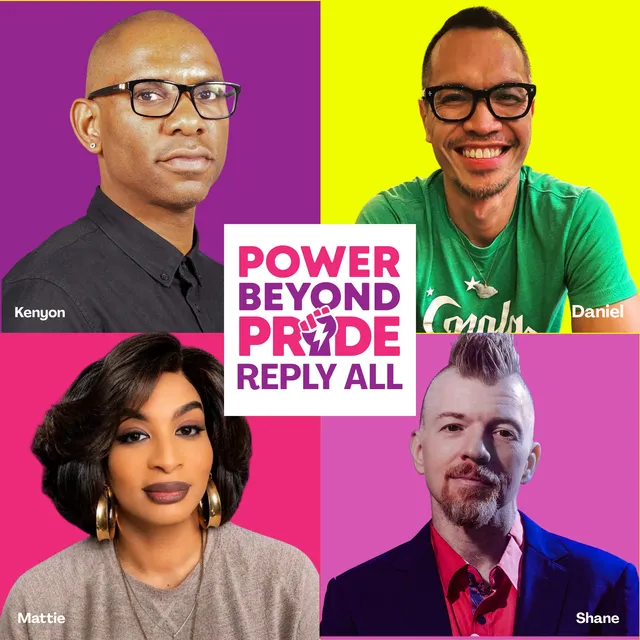
- Go Ian. Kenny and I are both part of this podcast awesome host team and we invite you to send in your questions and comments for our monthly Reply all episode where we take your questions as well as talk about news and recent events and you can submit those@powerbeyondpride.com check.
- Kenyon Farrow
- Out our new episodes each week and we look forward to queer change making with you next time. Thank you from all of us at Power Beyond Pride.
Transcribed automatically and lightly checked. If something is wrong — a name especially — tell us and we will fix it.
Episode #56
Identity, Empathy, and Power with JD Valadares Williams