

Episode #57 · Jun 2, 2026
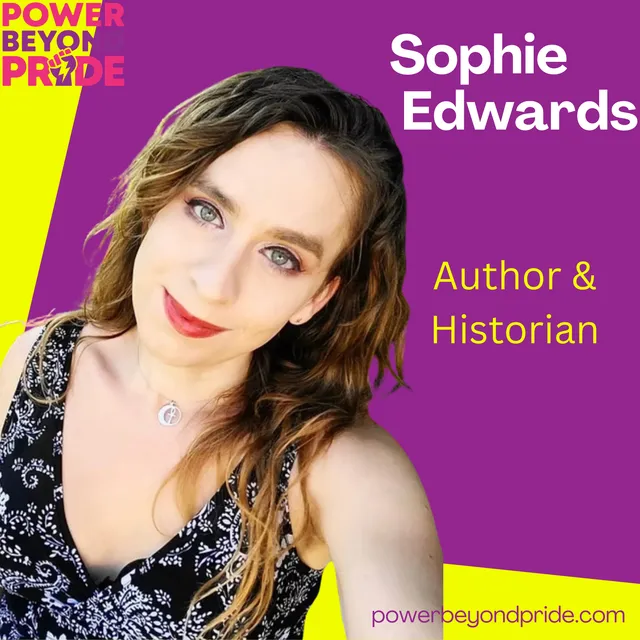
History, Trans Legacy, and Courage with Sophie Edwards
Listen or watch
Watch this episode
In this episode
This episode explores why history matters in the fight for LGBTQ+ visibility and belonging. Sophie Edwards discusses the importance of creating trans-centered educational content that goes beyond explaining trans people to cis audiences and instead helps trans people understand their own historical legacy. The conversation examines healthcare, gender-affirming care, political challenges facing queer communities in Canada and beyond, and the role social media plays in public education. Sophie also reflects on language, identity, and the ways cultural narratives shape how communities are understood. Together, the hosts and guest unpack the power of storytelling as a tool for connection and resistance.
TranscriptRead the conversationAbout 48 minutes to read · 7,253 words · Sophie Edwards, Mattie Bynum, Daniel W.K. LeeOpen
- Sophie Edwards
- I think for a lot of trans creators, a lot of it is geared towards CIS people and geared toward helping CIS people better understand what we are and what we're about. It is important to educate people to, like, counter all of these ridiculous narratives they're putting it. I wanted to make content that was specifically for trans people. My goal is to help trans people understand our place in history.
- Mattie Bynum
- Hello. Hello, and welcome to Power Beyond Pride, a weekly queer change making podcast bringing you voices and ideas from across our fierce and fabulous spectrum. Um, to transform our world. I am Mattie Bynum, the hostess with the mostest. I am, like I say all the time, a comedian, an actress, uh, an activist, a lover of all things, passionate about many things, and very quickly, easily will block anybody and everybody. That's just who I am. I'm a Leo, so hear me roar. And I am also just in company with the amazing Daniel, my co host. So Dan, Take it away.
- Daniel W.K. Lee
- Hi, I'm Daniel, poet, author, Palestinian liberation agitator, and former fat kid. We are your co hosts on today's queer cast journey. I'm very excited about today's guest. She's a Canadian writer, historian, and voice, uh, feminization coach. Sophie Edwards is the host of, uh, we have Always Existed, a video series that explores the rich history of transgender people in the ancient Mediterranean and Near East. Welcome to Power Beyond Pride.
- Sophie Edwards
- Thank you. Thank you. I've been accused of those things before, so let's see if they're true or not.
- Mattie Bynum
- I love it. Well, Sophie, thank you again for being here today. I hope you are enjoying yourself, even though we just got started so far. I hope that you are enjoying the banter between the two of us and look forward to more coming your way. Uh, let's get started about. First off, can we just have a round of applause? Our first Canadian guest since we started the show.
- Sophie Edwards
- So awesome. Breaking the maple ceiling. The poutine ceiling. Good Lord.
- Mattie Bynum
- Yes, yes. Uh, I want to ask two good things about Canada or two interesting things about Canada. How is the process of what's going on with us in the United States affecting Canada? Our big brother, as you are so eloquently called, and geography. And also, how does it feel just knowing that you are Canadian? Yes.
- Sophie Edwards
- My parents are both born in Canada, but they. My mom's parents lived in Florida, so my parents moved down there to just live in Florida for a while, and they lived there until 1984 and they moved back so they could have their children here. They wanted to have Canadian kids, and I thank them for moving back every chance I get. Canada has a lot of problems. It really does. We are far from perfect. I think a lot of Americans view Canada as this beautiful, perfect, magical utopia. We're really, really not. We have a lot of problems. There's a lot of things about Canada I don't like. We have a lot of conservative governors. We don't have governors. We have premiers. But there's a lot of conservatism in Canada as well, and it's screwing things up left, right, and center. We. It's. It's not far from perfect. Very far from perfect.
- Mattie Bynum
- I don't blame you. Not one bit. I don't blame you. I think a lot of Americans right now are starting to question their citizenship. Um, there's. Yes, I definitely agree. That's interesting and wonderful to hear. Like I said, Canada is, as you did put it, as Americans, we do view you as this utopia. Utopian society, because the way it does preview to us, I would say definitely. How does it feel living in Canada, though? I will say, because y' all were one of the first countries to, across the board, legalize gay marriage and also other LGBT initiatives. So how does that feel as a Canadian?
- Sophie Edwards
- It's like in the US when, like, Roe v. Wade passed, like, when it. When it was a thing. It's great, but in many ways, it feels very precarious. Again, there are conservative movements in Canada that want to reverse those rights, and any right that is granted by the government can be taken away by the government. So as nice as it is to have it in place, I. I don't know if we can be too comfortable about it, which is frustrating, because living next door to the U.S. y' all are lo. And so a lot of Canadians are more up to date on what's happening in US Politics than on Canadian politics, which is a real problem, because Canadian politics affects Canadians, and obviously, US Politics affects. Affects us as well. But a lot of us just don't really know what's going on in our own country. And that's. That's frustrating.
- Daniel W.K. Lee
- For sure. For sure. I mean, obviously, our president is doing his best at gambage. The relationship between our countries, with tariffs sparking boycotts and everything, with boycotts of liquor, which I thought was. I think, is really, really fascinating. What's been your impression of the internal narrative and changing dynamics that Canadians have with respect to the flaming dumpster south of Your borders.
- Sophie Edwards
- It's so around the corner from my house, there's somebody who, for as long as I've lived, I've lived in my neighborhood for about four years now, I think. And as long as I've lived here, they were flying a MAGA flag. And yeah, yeah, we, again, we have our share of conservatives here and like far right conservatives too. And once the tariffs started, they took their mega flag down. So I think even Canadians who are very conservative, really, really, really, really hate Trump because he's screwing up our country too. And that I use my dad as an example too. He's, he's very conservative himself. He hates Trump. He lives in New Brunswick, pretty close to the border, and he said, I used to go to the US all the time. I won't go there as long as, you know, for, for a very long time. I think some Americans underestimate just how pissed off we are up here. We like most of you, we like most Americans. I've traveled all through the US I've been to Memphis, as I mentioned before. I've been to Indianapolis, I've been to Philly, I've been to, to all over Florida. I've been New, uh, York City, I've been all over the place. Chicago. The vast majority of Americans I meet, I have met on a day to day basis. Both pre and post transition have been wonderful. Most of y' all are great. You just have a terrible habit of picking shitty governments.
- Mattie Bynum
- Yeah, you are fine. Okay.
- Sophie Edwards
- Okay. Yeah, most, most of us realize that. Most of y' all are cool. It's uh, unfortunately, your leadership really sucks. And that's true of a lot of countries. Right. Daniel, you mentioned you're a Palestinian, uh, liberation activist. I know, I'm sure a lot of Israelis are great people, but their government is fucking awful. And that's true of a lot of countries around the world.
- Daniel W.K. Lee
- Absolutely.
- Mattie Bynum
- Historically, I think all governments have their moments where they are pretty much shitty and try to get better and do better. But I do want to tie that back to you being a historian and I love that down through a lot of your excuse, uh, me on a lot of your videos that I have watched. I like how you tie in Canadian history and just history in general, along with talking about how trans people have existed all through history in the different things that we have shown and showcased. Could you tell us a little bit about the journey of how you became the historian that you are and how it has become a very vital topic in your Life.
- Sophie Edwards
- If it's not, has nothing to do with classical music. It is about, it's the study of the ancient Mediterranean. But that's history. No, there's more than history. It's archaeology, it's literature, it's language, it', uh, it's sociology, it's, it's a bunch of different things all wrapped up in a bow. Right. Ancient Mediterranean has always been something that I've been fascinated in. I was born in Canada, but my, I'm, I'm Sicilian ethnically, and so I've just always been interested in the ancient Mediterranean. And I transitioned in 2018. Between graduating and transitioning, I started a business and most of my, and I was in bands over the years and stuff like that. So that was mostly my, my focus. And then I, once I started transitioning, I started hanging out in more trans space. And I heard people talk about, oh, did you hear about these ancient priestesses who drank horse piss to feminize themselves? Or did you hear about this trans Roman emperor or whatever? And it's that, that's interesting. I want to learn more about this. I want to find out more. Aside from like stuffy academic texts, nobody was putting this together in a way that was like consumable for non academics. And so I was like, somebody should do something about this. Wait a minute, I know enough. I can do it. And so I did it. It was, it was a pandemic as well. And I was, um, pandemic's not over. But it was, it was lockdowns, I should say, but it was, yeah, it was lockdowns.
- Daniel W.K. Lee
- What are your feelings more broadly about the state of trans centered educational or infotainment content in YouTube and across social platform? I mean, do you see a drawback of kind of being educated, quote unquote, through social media?
- Sophie Edwards
- So I think there's two different questions there. So I'm going to address what I think are two different questions. First of all, what do I think about the state of trans centered content? I think for a lot of trans creators, and this is not a, um, not a criticism of anybody, I understand why they're doing it the way they're doing doing it. I think a lot of it is geared towards CIS people and geared toward helping CIS people better understand what we are and what we're, what we're about and stuff like that. That is absolutely a way bigger audience. And from a like, shrewder, more like platform building perspective, I can understand why they create content like that. From a, from a, uh, like creator perspective. I also see the importance of content like that because it is important to educate people about what's going on with trans people to help them understand why J.K. rowling is so bloody awful. To help them understand why everything they're saying about trans kids is, is, is made up. Everything they're saying about like that, that boxer is completely made up to like counter all of these ridiculous narratives they're putting out there. Totally necessary content. Again, no criticism. I didn't want to make content like that. I wanted to make content that was specifically for trans people. Like, it's, it's not that CIS people are not allowed to watch it. Please do comment, subscribe. All the cool kids are doing it, but it's, it's not, that's not the goal of my content. My goal is to help trans people understand our place in history. So that is what was my like, main approach there. Is there a drawback to this sort of stuff being taught through social media? Yes and no. Education is, uh, government centered. Education is more and more vulnerable to cutbacks and political interference and stuff like that. Tons of cutbacks are happening here in Canada, in, in Ontario at least. I don't know how it works in the US but in, in Canada, education is dealt with on a province, provincial basis. So Canada or uh, Ontario's had a conservative government for like, I want to say seven years now. It could be longer, but tons of cutbacks in, in the education space has been a real problem. And so they're not going to teach this stuff. They're just not. And so unfortunately it is left to people like me to do it. And am I the most qualified person in the world? No, but I'm certainly not the least and I don't, I try to be fairly, um, in depth and fairly nuanced with the content I do create. Is that going to be true of everybody? No, it's not.
- Daniel W.K. Lee
- So are you finding a lot of joy though, in the process?
- Sophie Edwards
- I, I, uh, the. There was A, uh, video that I did. In fact, two of the videos that I've done this year, they were more archaeologically centered and I had people in the comments saying the, like, several people in the comments saying that like, the videos moved them to tears and that I thought was really beautiful. And I, it makes me grateful because it means that I've properly conveyed the sense of wonder that I was feeling when I was researching this stuff. Because what I'm. What you get in the videos is not necessarily stuff that I already knew. It's stuff that I'm researching and putting together. So I'm going along the journey with you and, and discovering all this stuff as I put it together. So I'm feeling this incredible sense of wonder. I'm able to convey it to other people.
- Mattie Bynum
- I think secretly though, everybody on the show currently today is a nerd. I, uh, think that's something that we all have in common.
- Sophie Edwards
- Yeah, probably.
- Mattie Bynum
- But I love that. And like I said, watching your videos, I definitely can understand that the content is very informative and intriguing as well. And. But I will say right now we have to take a quick break, but please stay with us. Come back with us as we go on the journey with Sophie and talk about how the beautiful history of trans people.
- Sophie Edwards
- All right,
- Mattie Bynum
- Welcome back to Power Beyond Pride, a queer change making podcast. And I am Mattie. I am here with my co host Daniel. And we are here with the very interesting and historically insightful Sophie Edwards, who by chance, I promise you, Sophie, you will always be on my charades team and my trivial Pursuit team. Because I think just with our Powers Comb, we will take over the world. I think that much. M. But I will definitely take this time. Daniel, I want to throw it back to you. You had next question.
- Daniel W.K. Lee
- Yeah, I just wanted to pivot really quickly and ask a kind of broader question about kind of healthcare in Canada. Obviously y' all are known for having universal, um, healthcare, which is at least to my mind, something great here. Of course, we can lose our livelihoods of getting ill in sense of getting going medically bankrupt. I'm curious, kind of what's the state of kind of healthcare Canada more broadly and then more specifically, how and where does gender affirming care kind of fall within that system or your coverage?
- Sophie Edwards
- So I can't really speak to the nuances of Manitoba healthcare. I have no idea. I live in Ontario, so I can speak to that and again, because we have a Conservative government that there's a lot of cutbacks that have been made in Ontario healthcare. It is, it is very unfortunate because I'm a big proponent of universal healthcare. I think it is a good thing actually for people to not be sick. Bit of a controversial opinion. I know, super, super, super radical idea there. But yeah, it is, uh, it is nowhere near as comprehensive as a lot of people in the US Think it is. It is better than what you have. Again, for sure. It is still, there's, there's still a lot you have to pay for out of pocket. Again there, there have been improvements made. Dental care was recently just added. But it's far from universal. It is, it's only if you don't have benefits. And there's a bunch of different factors that you have to consider like if you're, if you qualify or not. People. I have my, my, I have private healthcare through my girlfriend. So she's uh, she, we live together so we get, we get, she's got healthcare through her job. Extended benefits which covers things like dentistry and chiropractic and stuff like that, massage, that kind of thing. So you. So yeah, it is, it is far from, far from universal. Could be a lot better and it is currently being made a whole lot worse in terms of trans healthcare. And I didn't have a whole lot of trouble getting access to healthcare. I. And it is, it's, it's interesting because my girlfriend is also trans and she came out like a decade before I did or something. I don't remember exactly, but like a long time before I did. And for her she was on like a six year wait list before she was able to start. Um, I think it was six years, don't quote me on that, but she was on a long wait list. Whereas for me it was like, okay, you're trans, let's, let's go through the steps. And so my doctor was like, I'm not gonna, she, she said to me, she's not gonna put up any barriers that are not medically necessary. So it did take me a while to get on hormones. I had some health issues that I had to work out. Those were worked out. And then we, unrelated to being trans, we worked those out.
- Daniel W.K. Lee
- So it's actually kind of province specific where you can have. Sorry Just a quick follow up. A province can be like, oh, we don't want to cover HRT or any kind of trans or gender affirming care.
- Sophie Edwards
- Yeah, yeah. And in fact, in Alberta, they're working on banning it. Um, Alberta is our Texas to give you a kind of a, A comparison in that it's both like a really beautiful space, really beautiful country, like landscape. I mean, a lot of cool stuff, a couple of kind of like relatively like liberal bastions and then a whole bunch of, whole bunch of hicks. And they're working on banning it. That goes against the Canadian, uh, Charter of Rights and Freedoms. And so they're currently duking out in the courts over it. So.
- Mattie Bynum
- Well, Sophie, not only are you a historian and a knowledge plethora encyclopedia of all things Canadian, I, uh, see you are very well rounded as a speaker, also as a writer. And I would like to bring some light to your body of work. So if you could pick one. I guess this is a crazy question as you are a writer. Which is your favorite to write, fiction or nonfiction?
- Sophie Edwards
- I had a lot of fun writing fiction. I've got my novel, of course, I've got several short stories that I published. Um, I also have a half finished second novel sitting on my hard drive. And I've recently, just like a few months ago, I was talking with my girlfriend and I was like coming to the realization that I might not ever be able to finish that novel because I've gotten so much into the history work that I've been doing. And um, it's not only is it connecting with me personally in a way that like, creative work that I've done in the past never has, it's also connecting with others in a really profound way. So that's. That is my focus these days and it will be for quite some time, I think.
- Daniel W.K. Lee
- You never know when that kind of a, uh, fiction bug can swoop in and then carry you, Carry you away in a good way, of course.
- Sophie Edwards
- Right, yeah, that's true, that's true. But I also make more money off the YouTube stuff too. Again, from a shrewd kind of like,
- Daniel W.K. Lee
- regarding your kind of not. Well, your nonfiction work. You wrote an article for Queer Toronto Literary magazine called It's Trans Women. Two words, not trans women. One word.
- Sophie Edwards
- Oh my gosh, I wrote that six years ago. I barely remember that one.
- Daniel W.K. Lee
- It didn't have a date stamp. But you take on the semantics and grammar of each and the kind of, the cognitive consequences of it. Uh, you just said that you don't really remember it, but Maybe you have a semblance of a memory of what you were seeing or experience that kind of necessitated writing that piece.
- Sophie Edwards
- I do remember like the kind of like general thesis statement, and I still don't think it's wrong. But it's interesting to reflect on one's body of work from the perspective of being both a, the socio cultural place in which it was produced as well as the like, personal place in which it was produced. Basically like the first four years of my transition, I wrote like a little personal essay like every single day and posted it on Instagram. And uh, that piece that you're referring to kind of came out of that as I realized actually there's more to this. Maybe I could get it published. Uh, and of course, obviously I did, but it was, it was at a time that felt much more optimistic toward queer rights. And so the semantic details felt like more of a relevant conversation. To say, look like when you say trans space women, you're talking about us as a category of women. Just like you would say tall woman or Indian woman or annoying woman or whatever. It's an, it's a, it's, it's, it's a modifier to woman. Whereas trans women becomes a separate thing linguistically. I'm also like a, I'm a professional writer. So these are, these are the sorts of things I think about. Uh, but I think in a time where we're very quickly losing access to our rights worldwide, the gains that we've made are very quickly being clawed back. I think conversations around that sort of, that sort of space have become less relevant because it's, we no longer have the luxury, I think, for conversations like that.
- Mattie Bynum
- It's a constant pulling, push and pull because the conversation does get pushed forward. And then there are always people that want to come and bring the conversation and pull it back. So I think that just knowing the difference between trans space woman versus trans woman, I think that is a big thing because I think a lot of times people like to just lump and group things in sections that shouldn't be lumped and grouped in the first place. Like, we are not just a lump of people. We are A multifaceted community of people. And I think this should be very much individually exposed through all that. And speaking of that, like, I know one of the things that you say we, ah, talked about that you do is voice feminine feminization training. So how does that, what are the techniques that one uses? And I know I'm not asking you to give away a free class, but what would be some of the techniques that you do teach people? Whenever we are thinking about feminizing our voices.
- Sophie Edwards
- Sure, sure. In terms of working through that sort of process, there are, there are different muscles involved that we use in voice that we don't really think about because we just use them without really thinking about it. And a big part of the process of voice feminization is learning what those muscles are and learning how to, how to directly control them. So a big one is your larynx, which is, it's a collection of like cartilage and muscles and stuff in your, in your throat. Your, your Adam's apple or Eve's apple is attached to it. And it, uh, is something you can take direct control over, but it's something a lot of girls don't know how to do. And a lot of guys as well, a lot of people don't know how to control their larynx independently. You can do, but it's a process of teaching girls how to control that, which is a bit of a weird process because like for most people, unless, unless you've had some sort of horrible injury and you had to relearn how to walk, that sort of thing. Most people haven't done anything like this since they were like literally a tiny little baby. Learning how their body works. Right. Learning how to put your arm up, learning how to crawl, that kind of stuff. Most people haven't learned how to use their body in a different way. So in a lot of ways the process would be just as weird as if I said, maddie, did you realize you have a third arm growing out of your back? And then you're like, wait, what? What? And then you like, start learning, like, you start figuring out how to control it. That sort of thing. It, it's, it sounds bizarre, but if you' directly used one of your muscles before, it's that unusual to try to access it. So for a lot, for a lot of, a lot of what I focus on is mindfully working through, getting in touch with how your voice feels, which is difficult for a lot of girls I work with because I work exclusively with trans people. So I work exclusively with a, uh, population of People who've spent the vast majority of their lives dissociating from how they feel in their bodies. So to say, like, how does that feel? Often the answer is, I don't know. And so it's, It's. You have to, like, with as much sympathy as possible, we have to work through it and say, okay, let's take some time, let's listen.
- Daniel W.K. Lee
- Yeah. Yeah. We're gonna take a quick break here. Stay with us because we're gonna come back in a minute to share some fun facts, play our speed round of questions, and I also want to have a quick follow up question on, um, how exactly you got into this vocal feminization work. We'll be right back. Welcome back to Power Beyond Pride, where we're talking to the creator of the YouTube series. We have always been here, Sophie Edwards. Following up with, uh, what you were talking about earlier, or before we went to break, how did you come to, you know, voice feminization work?
- Sophie Edwards
- So I do some search engine optimization work as well. And I got a client in, in Washington, D.C. and she owns a speech therapy clinic there. And, uh, so we went through. She needed a new website as well. I went through the process of convincing her that she should give me her money. And then we, uh, we went to talking about what she wants on her website, and she's like, I want a page for stuttering. That the other. And she said, I also want a page for a voice, transgender voice. I'm like, that's cool. And then she starts, like, explaining to me, like, what a trans person is and why they need voice. And I'm like, what the hell is happening right now? And then. And then I realized, like, I had just never mentioned that I was trans. Not that I'm. I don't try to hide it, but it just never came up. And so I didn't think to mention it. And so I was like, oh, that's really cool. As a trans person, I think that's awesome. And she's like, what? You're trans? How did you do that with your voice? Oh, my gosh. That's incredible. I'm just like. Like, I don't know. I didn't realize my voice was anything noteworthy at that point. Like, I. I had. I did work hard to, to. To feminize it. But I didn't realize it was that noteworthy. And we just left it there. And I don't know, not to brag or anything, but, like, we knocked it out of the park with her. From an SEO perspective, her clinic grew quite a bit. She ended up having to hire, uh, new people. And she asked. She. She. We were talking on the phone one day, and she's like, I want you to. I don't have time for this anymore. I need you to take care of my trans clients. And I'm just like, m. I. What? Ah, I don't know how to do that. And she's like, yes, you do. You just don't know that. Let me teach you how to know what you already know, and then you can teach other people. So I was like, okay, sure. My general mentality in life has always been like, all right, let's. Let's give this a shot and see what happens. I'm usually down for whatever. I'm like, I like to try new things. So I thought, screw it. Let's see what happens. And, uh, so it turns out I'm good at it. So there we go.
- Daniel W.K. Lee
- Happenstance. So magical.
- Sophie Edwards
- It is fun because when you. When you really get really good at this sort of thing, you can actually learn to switch your voice in the middle of a sentence. It's a lot of fun to mess with people like that.
- Mattie Bynum
- And it's funny. You said as a comedian, I do the same thing on stage. I have particular jokes that I will drop down into my lower range to talk. And it does. It. It really. I love, uh, how it does catch people off guard, especially quick story. Whenever me and my friends had went out one time, this guy was being very rude and disrespectful. We had went to dinner, and so I got irritated with him after a while, and then so finally I just dropped my voice. And he was like, wait a minute, what's going on? And I was like, honey, everything that looks good ain't good. I need you to know everything. That glitter ain't gold always. But. And I just.
- Sophie Edwards
- Well, thank you.
- Mattie Bynum
- So we, uh, are now at the time of my favorite part of the show, which is called our speed round Question time. So, Sophie, this is a time where we get to get just a little intrusive, a little bit more invasive. It can get spicy. It can stay pg. It just depends on how we're feeling that day. Daniel, don't you feel just depends on how we're feeling if we get a little spicy or racy with the question. But if you are game to play the game with us and have questions be asked to you, just say yes or no.
- Sophie Edwards
- Bring it on.
- Mattie Bynum
- All right, so, Daniel, I think you have the first question.
- Daniel W.K. Lee
- I do. I'm curious. What is your favorite book that you're embarrassed to tell people that you love?
- Sophie Edwards
- I'm not really embarrassed to tell people stuff. Like, ever since I transitioned, like, that was the big secret in my life, and now it's. I don't know, whatever. I like what I like, like. So I don't think I have a book I'm embarrassed to tell people of. I'm sorry, that may be a boring question or a boring answer, but
- Mattie Bynum
- m. Is that.
- Sophie Edwards
- Is that, like, embarrassing to just be, like, super. Just, like, plugging my own stuff? My book is the best. Buy it.
- Daniel W.K. Lee
- No, no, no, no. Be shameless. I don't. I don't have any kind of, like, imposter syndrome, so I don't have any qualms about. You should love my. You should love it, you should read it. That kind of thing.
- Mattie Bynum
- I mean, and even Barbara Water said, the best. The best advertiser you have is yourself. So always put yourself out there. Do not be ashamed to plug yourself. Now, I do know that you like playing games. I think. I think that was something a little birdie told me. So what type of games do you like playing?
- Sophie Edwards
- Uh, my girlfriend works in the gaming industry, so we play a lot of games together. We played a game called Cult of the Lamb recently that was pretty fun. Personally, I just like to play Super Smash Bros because it's something I can pick up and then put down. Right. It's not like I'm getting into it and sinking, like, eight hours into a game. I can pick it up, I can play it for 20 minutes. I can move on with my life.
- Daniel W.K. Lee
- I wish I were good at that. Then during the pandemic, I was like, all right, I'm going to get a switch and I'm going to get good at it. And then I realized that I really don't need to involve myself with.
- Sophie Edwards
- I never said I was good at it.
- Mattie Bynum
- I wouldn't say it's not about being good, Daniel. I think my favorite game is awesome. Going to be Grand Theft Auto, because after a long, hard day of dealing with people, it's good to run over somebody. So games are good. Like, it does allow you to get out that fence of aggression to deal with.
- Daniel W.K. Lee
- This is true. I mean, I am more of a button masher for sure, but like in Smash Brothers, if you don't even know how to get yourself from falling, like you can just fall off the terrain and it's like womp, womp. And your game is really over. So I can't even really do that. And if I do, I'm able to climb, climb out and it's just completely like I wasn't really doing other than smashing buttons.
- Sophie Edwards
- Fair, Fair.
- Daniel W.K. Lee
- Next question. Do you prefer small gatherings or big parties?
- Sophie Edwards
- I prefer to grab a small group of people at a big party.
- Mattie Bynum
- Mhm.
- Sophie Edwards
- I like to be able to float from group to group.
- Mattie Bynum
- Okay. Social butterfly, just fluttering all around. I like it, I like it. What was the moment in life that you felt that you were truly saf.
- Sophie Edwards
- The last video I put out got like a whole lot of views and I was like really, really excited about it. And again getting those comments from people being like, wow, this brought me to tears. Brought me to tears too as I was like researching this stuff. So feeling the sense of awe that I felt and then seeing other people feeling the sense of awe, it's like I've sufficiently conveyed to you how fucking awesome this stuff is.
- Daniel W.K. Lee
- Yeah, that's awesome. That's awesome. Uh, what is your favorite non physical way to feel close to someone?
- Sophie Edwards
- Mhm. Sharing music together. I love, I love music learning like sharing like my favorite music with someone, having them share their favorite music with me. That, that's, that's my thing is there's
- Daniel W.K. Lee
- like a quick follow up. Is, is there, is there like an artist that if they say I'm into this, you're just, just you're, you're going to have eyeballed emojis.
- Sophie Edwards
- A lot of. I love heavy metal. I love, I love like 70s soul and funk sort of stuff. I love uh, I don't know, I love a lot of different types of music. Um, I don't know if someone's into Judas Priest or Dark Throne or something like that. I'm, I'm into it. If somebody's into doom metal, I'm into that. If someone's into like black metal. But in a black metal can either be like really progressive and anti fascist or it can be like literal Nazis. So you're either like, like I want to be your friend or stay the fuck away from me before I gouge your eyes out. So it's one of the two. Um, yeah.
- Mattie Bynum
- So I want to take you to a channel your Inner Miss Congeniality, if you remember the movie, Miss Rhode Island. And so what would be your ideal first date?
- Sophie Edwards
- My ideal first date. Okay. An interesting conversation where it feels like this could continue, but we're just ending because we have to move on with our day. The environment doesn't really matter, I guess. I'm not super bougie. I like dive bars, I like local coffee shops, that kind of thing. It's less the environment as much as it is the personal connection. For sure.
- Daniel W.K. Lee
- What history book do you think everyone should read?
- Sophie Edwards
- That's my first thought, but that's not a history book. I can hear people saying, come on, come on, just give me a break. The Iliad and the Odyssey, they're such fascinating texts for so many reasons, and I could nerd out here for hours. But it is an oral poem. As far as we know. There. There was a city of Troy. It was destroyed. There were Greeks present. That is what we know of the historicity of the Trojan War. But. And roughly it was destroyed around 1250 BCE. Homer, if he was one guy, I'm not going to get into it, wrote the Iliad and the odyssey in the 700s. So there's like a 500 year span of time where this story was passed down through oral poetry. And you can find the DNA of that in the entire process. So you can find descriptions of a, uh, like a sword from the 1100s striking somebody's shield from the 800s. And they, they use. They're wearing a helm from the 1200s and like all these different layers. And you can see that it was, it was an oral poem. So a lot of the lines are repeated and it's just an awesome, interesting story.
- Mattie Bynum
- Yes, it is, uh, one of my favorites as well. So I would say. What would be. Let's see here. Let's think of something juicy. Are you a hugger or a kisser when it comes to affection?
- Sophie Edwards
- I don't know. Both, I guess. I do, I do very much love hugs. Okay.
- Mattie Bynum
- Uh-huh.
- Sophie Edwards
- I don't know. I like kissing, too.
- Mattie Bynum
- I mean, they do go hand in hand together, I mean.
- Sophie Edwards
- Yeah.
- Daniel W.K. Lee
- And I have the final question. Which? Do you prefer a sweet or savory breakfast?
- Sophie Edwards
- Savory. No question. Yes. I. I'm not big on sweets.
- Mattie Bynum
- No.
- Sophie Edwards
- My mom ate. Ate is. Is like a big sweet tooth and ate a lot of sweets when she was pregnant with me. So I think maybe I just developed this. I don't like sweets because I was just overloaded with it while I was in the womb. So I. I don't know. Maybe that's just something I'm making up. I don't know. But never big. Never been big on sweets.
- Daniel W.K. Lee
- I'm very much a savory person. I'm, um, very much like a, uh, a lot of Asian folks, especially first generation or 1.5. We grew up eating leftovers for breakfast. So that's what I've always done. Or when I was younger at least. And I usually want savory rather than, you know, pastry or something. Unless the pastry was savory.
- Sophie Edwards
- Right.
- Mattie Bynum
- I mean, I think that's across the board, though. Cause ain't not like a good piece of cold fried chicken or cold pizza the next morning for breakfast. So I'm like, what? She was sav. Savory is always gonna be pissed. So we always like to always end our questions with this. Sophie, uh, what does power beyond pride mean to you?
- Sophie Edwards
- Just being yourself and doing your. Putting what you want to put out into the world, regardless of what, what. What people think. Obviously there's certain, certain limits to that, but in terms of, like, creating your Persona, creating your. Your work, doing what you want to do in the world, it's just taking that, Taking that power and pushing forward for sure.
- Daniel W.K. Lee
- And then one final question. What are some actions that people need to take or should take if they want to advocate for trans people?
- Sophie Edwards
- Oh, gosh, listen to. It's the same as what can you do as a white person to push back against racism? Call out your fellow CIS people when they say transphobic things. Not in a, like, aggressive sort of you're bad sort of way. Because nobody, like, scolding doesn't help that. That is a. We tried that through the 2010s. If that worked, we wouldn't be where we are right now. So even though it's not even necessarily wrong, we have to recognize that that is a failed strategy. That is not an effective approach. We need to re. Reorient our approach. So just le. Less of a you're bad and more of a calling in sort of thing. Well, that's.
- Daniel W.K. Lee
- And that's a really great tip. And unfortunately, we are out of time for this podcast. We would love to have you back if. If you have time. Uh, where can people follow you?
- Sophie Edwards
- The channel's called we have always existed. What's the URL? I forget the URL. Whatever it's called. We have always existed. On YouTube, I'm @gender History on Blue sky, it's called. And those are the channels that I'm most active on. Also Instagram at Queer Trans writer Sophie, you can tell I'm an SEO.
- Mattie Bynum
- That's wonderful and we thank you again so much. It's been a pleasure talking with you today. I thoroughly feel like I have learned a whole lot. Like I said, just being in presence of just a great, wonderful being like yourself and just knowing that hopefully people can take the time to stop by and look at your YouTube because I want to tell people as you listen today, it is a very good way to learn as a good, good edutainment outlet. So please go by and show some love to our, um, beautiful friend Sophie and all her social media outlets. With that being said, I am Mattie, your co host here, the hostess with the mostest and I have enjoyed this show this evening.
- Sophie Edwards
- You're so sweet. Thank you so much.
- Daniel W.K. Lee
- And I'm your co host Daniel, poet and author of Anatomy of Want. And you can follow me at danielwklee on TikTok, Daniel wklee on, um, bluesky and strongplum on, uh, Instagram. Remember to subscribe and get your friends to subscribe to Power Beyond Pride on Spotify, Apple Podcasts and wherever you get your podcast. And check out our site@powerbeyondpride.com and Power
- Mattie Bynum
- Beyond Pride is a project of a great idea, a queer owned design and content agency. Learn more about them at a great idea dot com.
- Daniel W.K. Lee
- This episode was produced by Shane Lukas. Mattie Bynum is the project developer. Our editor is Jarrett Redding with support from Ian Wilson.
- Mattie Bynum
- And both me and Daniel here are two of the awesome hosts of the host team that we have here at Power Beyond Pride. And we invite you to send us your questions and comments so that we can always stay fresh and focused on things that need to be discussed. You can send them at powerbeyondpride.com that's
- Daniel W.K. Lee
- powerbeyondpride.com and check out our new episodes each week. We look forward to Queer Change making with you next time. Thank you from all of us at, uh, Power Beyond Pride.
Transcribed automatically and lightly checked. If something is wrong — a name especially — tell us and we will fix it.
Episode #57
History, Trans Legacy, and Courage with Sophie Edwards