

Episode #61 · Jun 23, 2026
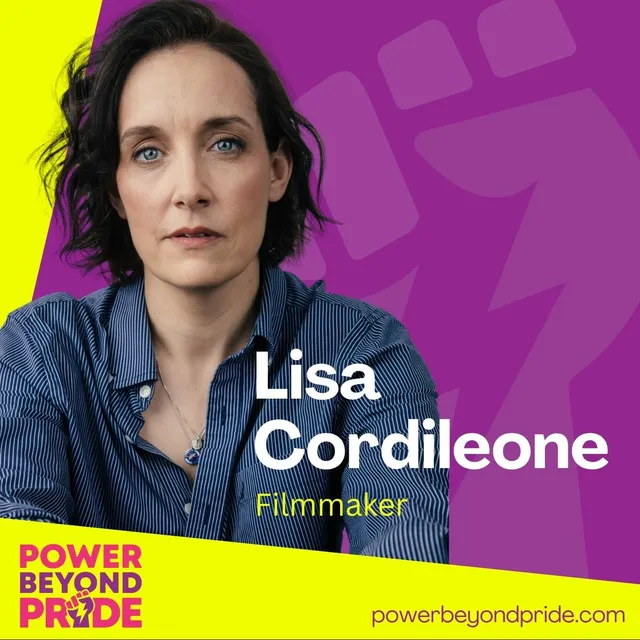
History, Hollywood Hustle, and the Lavender Scare with Lisa Cordileone
With Mattie Bynum and Kenyon Farrow
Listen or watch
In this episode
The Lavender Scare — the 60-year federal policy that allowed gay people to be legally fired from government jobs — is the subject of Lisa Cordileone's historical fiction TV series Committed, and in conversation with co-hosts Kenyon Farrow and Mattie Bynum, she makes a compelling case that its echoes are very much present today. Lisa pushes back on the tendency of queer film to market itself as an education for straight audiences, arguing instead for stories where queer people simply exist, the way they always have — intersecting across race, class, gender expression, and history. Drawing from nonfiction, stoicism, and overlooked histories like Hidden Figures and The Imitation Game, she builds characters who battle with morality rather than slot neatly into hero or villain roles. She's particularly drawn to questions of colorism and passing — and how her own experience as a white queer woman means living simultaneously at the intersection of privilege and otherness. For Lisa, Power Beyond Pride means thriving without shame: not just surviving visibility, but choosing a life of truth.
TranscriptRead the conversationAbout 44 minutes to read · 6,578 words · Lisa Cordileone, Kenyon Farrow, Mattie BynumOpen
Transcribed automatically and checked by hand for names. Expect the odd mis-hearing — the audio is what was said. If something is wrong, a name especially, tell us and we will fix it.
- Lisa Cordileone
- Hollywood's melting right now because it's AI and uh, tech is moving so fast and so much faster than public policy. Like we're seeing something where this is a moment for independent storytellers to go make their thing. I think everything's hard no matter what you're making, so you might as well just make the thing you want to make. I mean, yes, it's hard, but you just are going to choose your hard. Do you want to play within the system or do you want to make your own system?
- Kenyon Farrow
- Hello and welcome to Power Beyond Pride, a weekly queer change making podcast bringing you voices and ideas from across our fierce and fabulous spectrum to transform our world. I'm Kenyon Farrow. I use he, him pronouns. And I'm a writer and activist based in Cleveland, Ohio.
- Mattie Bynum
- And I am your other co host today, Mattie Bynum, your actress, comedian, and once former dominatrix in a former life. But you know what, we're here today to start something new. And in this episode we are joined by the beautiful Lisa Cordelion. She is a LA and Raleigh and Durham based writer and filmmaker working on Lavender Scare film M and other, uh, queer specific films. Welcome, Lisa.
- Lisa Cordileone
- Hello. How are you guys?
- Mattie Bynum
- We're great. How are you doing?
- Lisa Cordileone
- Good, good. This is nice. This is so happy Sunday.
- Kenyon Farrow
- I'm glad you're here with us. So thank you for taking the time to join us for this conversation. So first and foremost, looking at your body of work, you've accomplished a lot in a short period of time.
- Mattie Bynum
- And what I mean, yeah, it feels
- Lisa Cordileone
- like it's been a long, long road to, uh, God knows where.
- Kenyon Farrow
- Okay, yeah, I understand that feeling. But we're still young at heart, if not young and sexual violence. So, uh, but based on that, you know, what would you say are the experiences in your life that help kind of shape your activism and, you know, your movement work?
- Mattie Bynum
- Now?
- Lisa Cordileone
- I think that being an actor is, or being any kind of artist, being an activist. You know, if you're an actor, you're auditioning, auditioning all the time. And if, uh, you can get the auditions. It's been pretty slow in our industry lately. And that caused me to start writing early on, started writing and figuring out what I have to say as an artist and taking time with that. And that naturally became bigger than just auditioning for other people's work and figuring out what I have to say as an actor and I think as a gay woman and as a white gay woman, as I look at how the world is continuing to change and how my world is Opening up to me. I'm looking at, uh, God, this is such a big question. I'm looking at, like, my own biases that I hold for myself and how I was raised and maybe how I see the world around me. And I'm diving into the things that scare me most, and that inherently is activism and political sometimes. So I use my work as an actor, writer, producer to tell the stories that align with my mission, which is giving representation to our community, all of our communities, in the best way I know how.
- Kenyon Farrow
- So you mentioned just in that response, kind of the ways in which you think about using your privilege to help other people in terms of the work that you create. But, you know, what roadblocks did you have you faced, you know, when you were starting out either as an actor or making that transition to writing or directing and producing?
- Lisa Cordileone
- I feel like for me, everything's a roadblock. I mean, it just. This is a, uh, this industry, the entertainment industry has. It's been hard. Like, I didn't really know anyone in the industry. My family wasn't part of this industry. I'm the only actor in my family. So I picked up and moved to Chicago for 10 years and worked on stage there and then went to LA after that for. For a while. So for me, it's. There's always been just getting in the room, just getting a meeting, let alone an audition. It took me many, many years, took me almost 20 years to sign with an agent for TV and film. And I've been studying and training and doing work for years. But just to get in the room is hard. Then once you're in the room, well, then you're in the game. You haven't even really gone into the game. Cause you haven't booked anything yet. So it's. It's such a. A long journey and it has been. So I've. I've run into a lot of roadblocks just getting in the room. And, uh, I'm interested in building. Building rooms with people that I want to work with because it's so hard. This work is so hard. So I want to have fun and I want to be challenged and respected. And so those are high standards and hard to find all the time. So I'm always interested in building teams. Building teams. I think that's what Gets me more excited than just auditioning or just trying to get in the room is how do we.
- Mattie Bynum
- Well, since you're now in the room, and welcome. We love having you in the room.
- Lisa Cordileone
- I like this song.
- Mattie Bynum
- So beautiful. It takes you back to my childhood. We used to sing a song called Plenty Good Rooms, so there's lots of room in this room for you, and we love that you're here, and I see that, you know, a lot of your films are doing really well in the international film circles and all those things. So I want to ask you two a super question. One, where do you draw inspiration for the stories that you tell other than just your life and. Or things that are directly in your life? Where do you draw other inspirations? Um, and also tell what particular filmmakers have inspired you the most as you go on your journey?
- Lisa Cordileone
- It's changed from my 30s into my 40s. What's inspiring me? And over the past five years, I would say I read a lot of nonfiction, and I read a lot of history, and I read a lot about technology. So I'm really into old tech, analog tech. I'm, um, into the history of women in tech. Things like Hidden Figures or. Or the Imitation Game. These are the types of movies that I really love. And, like, what are those stories that we haven't heard about before about LGBTQ characters or black characters or all different characters that never heard their story from underrepresented communities who've changed the world in. In ways we never learned about in school? I want to learn about who these people are. So I'm drawing inspiration from history and technology and nonfiction books. I'm also. I was reading books about, um, stoicism and a lot of books about stoicism and philosophy, and I started to instill some of these different traits into the characters I was writing, like, integrity and morality and justice and basic good human qualities. Because I. I like to see a character battle with their morality instead of just the bad guy or the good guy, you know, so I'm drawing inspiration from that.
- Mattie Bynum
- I love that. I think as an actress, I think eventually that's where I want to transition is into production. Because to me, I would say being on set is a beautiful thing. But one of my favorite things is sitting with post production and watching how they do and put everything, all the pieces together. So, uh, I, uh, do want to double back to your project, Lavender Scare. Can we talk about that? Can you give us some information?
- Lisa Cordileone
- Sure.
- Mattie Bynum
- About what's going on with that?
- Lisa Cordileone
- It's set during the time period of the Lavender Scare, which began in 1947 and it lasted really, I think until Obama repealed Don't Ask, don't tell, so till 2010. So it lasted for 60 years in America is making its way back into, into our world right now. And people know about the Red Scare, which lasted for like two years, but the lavender scare actually lasted for 60, which meant if you were gay, you couldn't work for the government legally, you could be fired. Uh, and I just found this very interesting. So I created a TV series and this proof of concept, Crazy as a Loon. And I created these like original characters who I thought could plausibly live in this time and space. So they're not based on any one person, they're just figments of my imagination. So it's historical fiction, but it lives in that Lavender Scare time period. The proof of concept called Crazy as a Loon is now making its festival debuts. We just got into Dances With Films in Los Angeles, so we screening there next month, uh, which is great.
- Kenyon Farrow
- It's funny because I, one thing I just realized is the three of us. So I, I don't talk about it much anymore, but I, my, my background is in theater. I was an actor. I've studied theater in undergrad and eventually stopped acting for some of the challenges that you mentioned that were more business related than they had to do with my talent and went into
- Mattie Bynum
- writing essays
- Kenyon Farrow
- So the kind of lavender scare we're obviously seeing in the. What's happening with the rollback of LGBT protections at the state level and then obviously at the federal level. But then there's this kind of undercurrent of going after people for various kinds of political stances. Right. In a way that we saw in the 1950s and 60s. And you have spent your time kind of living and working in projects between LA and in Raleigh, Durham, NC. And so much of how our, uh, kind of politics right now is animated by blue state, red state, north, south, big city, smaller city, rural, urban, you know, these sorts of divides. So I'm curious to know, as you've kind of done work and lived in both places, you know, how do you. What would look like meaningful change in the country that kind of honored those different sort of dichotomies? North, south, east, west, big city, small city, red state, blue state, et cetera?
- Lisa Cordileone
- I think what I can say, what I think would garner change, is conversation. And I think that's what art does, whether it's a painting, sculpture, picture, and in this case, a movie or a TV show. One of the greatest things about going to film festivals or going to community centers, like, we screened this in Durham, at Duke Memorial, the church, and at a local bar in Raleigh, just as a community gathering and conversation about our history, about our shared history, and about American history. It's not just LGBT history. It's America. It's not black history. Uh, it's everyone's history. It's American history. And I think having conversation, whether it's in Los Angeles or it's in Raleigh, Durham, North Carolina, or in Charlotte, where we shot it, is all a benefit. And one of the greatest things I like about being back in North Carolina is it's such a purple state, and you really do get an opportunity, I think, to have conversation with people, if they're willing to have it in la. I lived in West Hollywood. Everyone's very blue in West Hollywood. So now that meaningful conversations don't happen there, because they do, and people are fighting. But if. If there's one thing I could say that would bring us together, it's conversation and having discernment and wanting to learn about other types of people and really understanding that we have so much in common, we have so much in common with one another.
- Mattie Bynum
- But yeah, and we love a good story, especially storytellers. I do want to say we have to go for a short, quick break real quick, but we will be back with the beautiful Lisa. And I definitely want our viewers to continue to keep listening because it's going to get juicy as we keep talking. All right, I know.
- Lisa Cordileone
- All right, stay with us.
- Kenyon Farrow
- Welcome back. This is Power Beyond Pride, a queer change making podcast. And I am Kenyon Farrow, here with my co host, Mattie Bynum, talking with the amazing Lisa Cordleone. Um, yes.
- Mattie Bynum
- So, Lisa, I have a quick question for you, and I think this is a topic that a lot of people are wondering about you, because as I'm looking at your extensive bio over here, you are everything from a writer to a voiceover actress to TV show, to, uh, acting and producing, and now also a founder and freelancer. So how do you juggle time and where do you find your comfort space to recharge?
- Lisa Cordileone
- Where do I. Well, how I find my comfort space to recharge is in the move back to Raleigh, Durham, really, to be outside of la. I found perspective and some peace. I've been hustling for 20 years in Chicago and LA, and during the pandemic, I made my way back here like a year after the pandemic and then our union went on strike. And I don't know, there's something about being around family and there's something about getting older where you, uh, know, I've hustled for a long time and I have a nice. I have a deep network and great relationships with wonderful people all over. And I just learned that I don't need to be any one place to do what I love. So I'm finding peace just being back in North Carolina and, uh, and also that space early in the morning, I get up pretty early and I try to read and read or write very early in the morning. And that is grounding me for each day to stay, like, aligned with like, what I'm doing and stay on track. But yeah, I juggle a lot of things because I'm curious about a lot of things and you gotta make money. So I'm auditioning for TV stuff or for films. And then like, if I book an audiobook, I'll like, dip over here and like record a book for a week and then I'll get back to my writing. And yeah, so it's. It's Always a juggle. Multi hyphenate.
- Kenyon Farrow
- Uh, so with all of those various projects and roles that you take, tell us about your favorite project. Know a lot of artists don't like to say what their favorite project is. I'm like, all my favorites.
- Lisa Cordileone
- Oh, my God.
- Kenyon Farrow
- If you have a favorite, would love to hear about it and why it's so important to you in this moment.
- Lisa Cordileone
- I can. Oh, uh, man. So hard. So I have, like. I have, like, a favorite play I just did and a favorite audiobook I just did. And a favorite, like, I would say this. Crazy as a loon. This idea for my show Committed, is probably the thing I'm most proud of in terms of as a writer, producer, and an actor. The team we brought together for this, we brought in 40. We hired 40 people to shoot this from seven states. We. We produced the hell out of this thing. And I'm very proud of how we produced it. We used recent graduates and alumni from North Carolina School of the Arts and Elon, as well as very established people in New York and la. And it was a great mentorship, learning situation on set, and even for myself as an actor, which is why I wanted to. Part of why I want to make this is to get those opportunities to work on set. So I'm really proud of this project that I made here with, with. With our team. I'm really proud of it. I just narrated this audiobook that's coming out soon. That's for. It's about LGBTQ history and to. I, um, want to say it's a book for maybe, like, middle school. Like maybe 5th, 6th, 7th, 8th, something like that. Like, middle grade book and art up. And it has, like. It spotlights different people in history, like Harvey Milk and like, all the way back. Like, it goes through time. And I, uh, was really happy to have that book land in my lap. And I think it's coming out during Pride Month. And I'm like. I got very emotional, just like, reading the forward in the book or the introduction of the book, because I wish I had had that book when I was a kid. And I was like, I can't believe this is a book that kids get to have. Cause I never would have had. I never had that book. And so get to get to narrate. It was like, that one was really special recently. Yeah, I forgot. I have to, like, look up the name. I don't even remember the name of it.
- Mattie Bynum
- is going to be running to the Audible subscription to look you up, because when I tell you I have a very vast Audible collection, and now that I know your name specifically, I'm going to be like, oh, did she read my book? Is that who I'm listening to? So I'm definitely going to go and be more intentional about what I listen to so I can listen. I promise.
- Lisa Cordileone
- Cool. All right, Cool.
- Mattie Bynum
- So I learned a new word recently. Well, I didn't learn a new word, but I guess I'm really getting more into the word that, um, and it's becoming more, um, reverent in my. Everything that I do. But do you see the power in intersectionality? And do you think that that is something that we need to talk more about or discuss more in the world? Like a bigger topic? I would say, I guess, is that something that we need to dive into more as a collective of?
- Lisa Cordileone
- And when we do talk about it, it's very important. And I think that it's critical to represent. I'll speak to it in terms of, like, even, Even my work. It's critical to represent. Like, in my show, I have characters who are Native American, who are white, black, queer, bisexual, trans, uh, all different types of characters. And it's not to check boxes. It's because we all exist. And so because we all exist, we need to see how we. I think how I dreamed it, um, up is how we all existed together at one time and still do. And in our industry, when you're making, like, a film that's LGBTQ film, it's usually geared towards men or towards women, and more recently towards trans or non binary audiences. That way it can be marketed in a specific way and reach those audiences, which I can understand. But what I don't see a lot of is crossover, and that's the intersection of, can't we just exist? And I'm starting to see that even in how our film gets programmed or not, we're actually not hitting so much with the LGBT film Film festivals because, uh, I think, in part, I don't know the answer, but I think in part because it's not inherently queer, it's. It's really where our hook is, that it's an American story. And so there's. It's not outwardly sexual or anything like that it's about a family who happens to be a mixed race, mixed family, adoptive family that exists today. And I. I just thought, well, wouldn't they have existed back in the 40s and 50s? And what would their life have looked like? And how would they have had to survive and, uh. Or try and thrive in some way? What would that have looked like? So, yeah, I think intersection. I could go on and on, but I think intersectionality is, uh, critical. And I. And I'm really interested also in diving into race, and not just race, but colorism and femininity and masculinity. I'm, like, very interested. When, uh, I saw Passing and what Rebecca hall, speaking of an actor who had a directorial debut, Rebecca hall did Passing with Ruth Negga and Tessa Thompson. I just thought that was a gorgeous film, talking about that nuance of how we pass because we choose to. Then I went down a whole dissertation thing and read a whole dissertation about passing and whether people passed on purpose or not, if they voluntarily passed or if they involuntarily passed because it was put upon them. And these are very interesting things I could at least relate to in some small way as a white woman because of my queerness. So I'm living at the intersection of privilege and otherness. So I'm very interested, like, I could go on and on. I'm very interested in, uh, how. How we play with priv. The line of privilege that we have and the line of otherness that we have and how we live and exist in the world together.
- Mattie Bynum
- And I will agree that is a conversation that definitely. No, no, no, no. That's a conversation that needs to be had because I definitely agree with you on, ah, all of those as passing as something. And colorism is something that we don't discuss. We do not talk about that, whether it's just in black and brown communities or just as a collective, as the whole of American history, because that's. That's a big thing.
- Lisa Cordileone
- So, yeah, I'm still learning. I'm still learning, but that's. That's. I'm very curious to learn, uh, more about this.
- Kenyon Farrow
- Yeah, yeah, I think. And one of the things I hear you say too, in thinking about, you know, your work and trying to tell. Kind of embed queer people in stories in an authentic way that isn't like, this is the gay film, this is the lesbian film, you know, this is the trans film, you know, that kind of thing, which. And it's one of the things actually that I get frustrated by as a viewer with kind of a number of LGBT specific, especially when it's very clear that it's being marketed to kind of cross into a mainstream sort of straight audience. There's a level at which sometimes the scripts to me are always like, this is what bothering is. This is what.
- Mattie Bynum
- Like this.
- Kenyon Farrow
- You know, like, it's very like. And I'm film goers sometimes and those things. It's like, I'm often like, well, this isn't for me. This is purportedly about me, but it's not for me.
- Mattie Bynum
- Right.
- Kenyon Farrow
- In that way. Because it's. It's so much of it is trying to set up as like, uh, an education on certain things in a way that can be frustrating as a queer person living in the community, living in this body that, you know, we have starting to see that in some things that get produced. But, you know, just to ask you a question, not so much about that, but like, you could. You could be making work about anything, right? About. You could. You could. You could take an easier route, I think is what I'm trying to suggest.
- Lisa Cordileone
- My family is like, you're taking the hardest route. Like, even when I've talked to mentors, I'm like, oh, I'm gonna. I'm gonna adapt nonfiction into narrative, not a documentary. I'm m gonna take nonfiction, create completely original characters from the past and put em. They're like, man, you're making it so hard on yourself. And I'm like, but it's. I. I don't mean to. It's just where my natural curiosity is. And although it takes time, the process of that time and the processing of information is changing how I see the world, and it's changing what I have to say. So I don't know even what I have to say.
- Kenyon Farrow
- Yeah. And so is that.
- Mattie Bynum
- So, yeah.
- Kenyon Farrow
- My question was going to be, you know, what inspires you to kind of do the hard things, right, as opposed to going. Doing. I. I don't even want to say anything to like, shade any other work that's out there, but you know what I mean, like, doing something that could be more just an easier route of. Of stories to tell.
- Lisa Cordileone
- Like, tech is moving so fast and so much faster than public policy. Like, we're seeing something where this is a moment for independent storytellers, independent filmmakers to go make their thing. That this is. This is a time for artists, because Hollywood's changing. So, uh, I, uh. To your point, I think everything's hard no matter what you're making, so you might as well just make the thing you want to make and find a way to do it. And to me, it doesn't seem like it's. I mean, yes, it's hard, but you just are going to choose your hard. Do you want to play. Do you want to play within the system, or do you want to do the hard outside the system and make your own system?
- Mattie Bynum
- Like, everything is hard, so just choose your hard. And I think that is very true to it, because, one, I think we can all agree on the two things. One, as LGBT members, I love how people I know. I heard this growing up, why would you make your life harder than it has to be? And I'm like, well, who said I made it harder? Not you, but me, you know? So I think that anything that we do is going to be hard. But even as an actor, I love tackling the harder things because to me, the beauty of acting and the beauty of storytelling is finding the nuances of the underlying story. So, like you said, not making it out loud queer, but having a queer underlining. To me, I love that part because then I get to really do the hard part to make that underlining come to life. So where it's like, you come to the movies. I love going to the movies to see one thing and then end up leaving, learning something totally different. So it's like, as an actor, that's one thing that I try to work on. So I definitely agree with you on that one. And I do have to mention that we do need to go to break and take a quick, short break so we can continue to pay the bills and keep the lines flowing and the recordings going. And so if y' all don't mind holding just a few seconds with us, we'll be right back. With the beautiful Lisa and the always amazing Kenny. All right, be right back. Welcome back to Power Beyond Pride, where we are talking with the filmmaker, producer, and media activist powerhouse, Lisa Cordelone. I am Mattie Bynum, the hostess with the mostest. And I'm sitting here with my always fabulous, beautiful. He looks good in leather. He looks good in suede. He wears anything. Kenyon, Pharrell and Lisa, I just. You know what? You have truly brightened our day. So I thank you for being here first and foremost, But I do want to come back in and ask you a question.
- Lisa Cordileone
- We'll see how it goes.
- Mattie Bynum
- Well, I'm going to let Kenyon think the first question, because I don't know if you're ready for my question just yet, but Kenya's going to start us off, and we're going to get personal, and we're going to dig a little people. Okay?
- Kenyon Farrow
- Right. The first question will be, uh, a little. Little gentle. So when we talk about queer movement, we often talk about, you know, pride, right? Pride month, Pride weekend or what have you. But, you know, this podcast is called Power Beyond Pride. And so when you hear that phrase, what does that mean to you?
- Lisa Cordileone
- Power beyond pride means to me, it means no shame, and it means thriving beyond. It's like a breakthrough or something like that. It's not just pride. It's living in joy. Thriving. Yeah.
- Mattie Bynum
- Well, there ain't no shame in my thriving, honey, because I'm gonna keep stepping whether they like it or not. So I agree with you on that one. Most definitely. So now we're gonna stay.
- Lisa Cordileone
- I'm terrified. Terrified. I have no clue. I have no idea where we're going. Okay, go ahead.
- Mattie Bynum
- That's the beauty of it. I love it. Look here. If y' all could actually see our faces right now. We are having way too much fun here together, but we are going into our rapid fire realm. And what I love about rapid fire is I like catching people off guard because you can't think. You have to say the first thing that pop in your head, whether it's X rated, G rated, L rated, Y rated, whatever you want to consider ratings nowadays, pvma, all of those things. So just whatever pops in your head, let that come out your mouth. Okay? There's no holds bar.
- Lisa Cordileone
- Okay.
- Mattie Bynum
- You want to start us off with the first round.
- Kenyon Farrow
- I'll start us with the first question. Okay, so first, first one. What's a song that always makes you want to dance?
- Lisa Cordileone
- Anything by Dua Lipa. I don't know.
- Mattie Bynum
- Okay.
- Kenyon Farrow
- It's true.
- Lisa Cordileone
- Yeah, Anything by Dua. Or any funk. Any funk music. Like, I really love funk. I don't know why.
- Mattie Bynum
- I do.
- Kenyon Farrow
- Me too.
- Mattie Bynum
- Yeah, well, wait a minute, hold on. Because I don't like all kinds of funk. Because people's funk and funky and then funkadelic. That's. That's a mixture of things that may not go together.
- Lisa Cordileone
- Yes, that's fair. That's fair.
- Mattie Bynum
- We gotta be careful with the funk. But I would say that. So what was the stupidest dare you've ever agreed to doing?
- Lisa Cordileone
- Uh, probably like a bungee jumping thing when I was like in college. Uh, like one of those things that like swings you through. Yeah, I have a fear of heights, so I don't know how I did that, but yeah, I'll do, I'll do anything. Once zip lining in Mexico. I went ziplining in Mexico and I have a massive fear of heights. Yeah.
- Mattie Bynum
- Mhm.
- Lisa Cordileone
- I was terrified.
- Kenyon Farrow
- What's your favorite book or book series? But that has come out in the 21st century, so books published in the last 25 years. Your favorite.
- Lisa Cordileone
- Oh my goodness. Books published in the last 25 years. I mean, I read non fiction, so it's okay. All right, look, I have one right here. Okay, here's the one. Here's the one I'm reading right now. This is like an actor glossary. This is Brene Brown's Atlas of the Heart. I love this book. This book, like, breaks down emotion for you. It's a great book. Okay, I'll go with that.
- Mattie Bynum
- I don't know if I need my emotions already broken down because I may not get back up. But, uh, I will definitely dive into a good nonfiction book over here. Which filming techniques best captures your vision?
- Lisa Cordileone
- Filming techniques. I'm not a director, so that's why I always hire directors who are smarter than me. Oof. I, I'll just say I, I like, I lean into as a writer. Silent scenes. I really love silencing. I like taking, I like taking, uh, somebody's senses away, whether it's sight or sound, and amplifying the other. So that's, that's a technique I like to do as a writer.
- Kenyon Farrow
- Since we're talking about the fall, what's your favorite band?
- Lisa Cordileone
- I'm not good at bands. When I was Young. It was like Rage against the Machine or something like that. You see right now it's like John Batiste or something. I have no idea. So I'm more in that zone. I'm very Cynthia Erivo radio all day long on my thing. So I'm like, I'm over here now. I'm like, more like Pink as she gets old. Like Christine. I like singers who can sing. So that's where I'm at. Mhm.
- Mattie Bynum
- And I like singers that can age with their age. I guess that's the word I'm looking for. That are not still trying to do the things they first started. Like you could see their progression as they come along. I love that. So dating wise, let's get into dating. What is the worst dating experience you've ever had?
- Lisa Cordileone
- And as we're talking she's, she goes, yeah, let me just, Let me just text my wife. And I was just like, wait, wait, wait, like you're married? Uh, and she was like, yeah, my wife's in Toronto, I'm here in la. I used the app to make friends. And I was like, this is like the first I was hearing about it, like being friends. And I was like, then why are you on that? Wait, you're married and you want friends and you're on this? And I was like, I feel like you're using it wrong. Or I'm a. And I just lost like 18 on a single drink. And I like, I wish I had just. So that was pretty. I'm like, what? What? Ah. So I don't, So I don't use the apps anymore. I'm off the apps. I'm not into that. I like pd, you know, I'm old school. I like meeting people in person.
- Kenyon Farrow
- Oh, what's the most irrational superstition that you have?
- Lisa Cordileone
- Irrational, uh. Oh God. Irrational superstition that, that the Buffalo Bills will finally win a Super Bowl. And if I, if I wear my old, uh, if I wear my old sweatshirt from the 90s, that they're gonna win one year. So that's ridiculous. But I'm a big Bills fan. I'm from New York.
- Mattie Bynum
- I Like it.
- Kenyon Farrow
- Right.
- Lisa Cordileone
- I'm from New York originally. We're from upstate New York, so I'm a big Buffalo Bills fan. Yeah.
- Mattie Bynum
- When you are preparing to do a voiceover, how would. How do you get into that process? Like, what's your process? Getting prepared for it.
- Lisa Cordileone
- If it's a commercial or anything, animation, I warm up. And if it's audiobooks, I warm up. I. I warm up. I warm up my voice, I warm up my body, I warm up. If it's a book, I prep the book by reading the whole book first and prepping it like I would a
- Kenyon Farrow
- script and last one. So if you had to say,
- Mattie Bynum
- when
- Kenyon Farrow
- this is all over, when you look back on your life, God, what is this experience that you want to say that people had of you who came across you personally or your work?
- Lisa Cordileone
- That it was honest and that it was from the heart and that it was. Yeah. That it's. That it's truth or the truth is I experience the world. It's. That it's honest. M. No bullshit. No. I think probably my favorite word is integrity, so I'm just a dork for that. I. I just don't want to make anything that's not true.
- Kenyon Farrow
- Wow.
- Lisa Cordileone
- That's the hard. That's the hard route. That's the hard I chose was, oh, uh, man, it's gonna take me a long time to get in.
- Mattie Bynum
- I think that sums it up completely right there. Integrity and was it honest? I love that. I think anyone who truly does take the hard road, that's really what we want our legacy to be is like, was it honest and pure and truth? I like that. Lisa, where are some places that people can connect with you now, like your social medias? Where are you located? What do you do? Things like that?
- Lisa Cordileone
- What do I do? It sounds like all I do is read and write, which is true. That's pretty much what I do. I'm on Instagram. That's really the only social media I use. It's just my name, Lisa, uh, Cordleone. So, Lisa Cordleone, our. Our short film has, like, azyazaloon. If you do that on Instagram, it'll show up. That's pretty much the best place to reach me, I guess.
- Kenyon Farrow
- All right, thank you so much, Lisa, for being here, but we are out of time for this podcast, but we hope that we can have you back again and you know that you will be able to join us.
- Lisa Cordileone
- Thank you, guys. Thank you for this. This is a great conversation. I feel like I may have let you down with some very serious answers. But because I came in and it was so, it was so fun when I got here and then I, I
- Mattie Bynum
- Got, I was like, no, you have been a ball. I've enjoyed it. You know, our shenanigans go from highs, uh, to lows, to mediums, to east to west. But I truly enjoy this conversation. I feel like I've got a new best friend. So I can't wait to meet with you outside the show and let's connect and get together and do some stuff. But yeah, I definitely thank you again for being here. Like you said, uh, y' all can find her at Instagram, Lisa Cordleone. Not the Don Cordleone, but Lisa Cordleone. And she is always at a bookstore near you or on Audible if you want to listen to her voice first to get to know her voice and that way you can get to know her personality later. Just look up Lisa Corden Leone on Audible itunes. Apple all those beautiful things. And I am Mattie Bynum, your co host with the mostes and I am here with the beautiful Kenyon. You can follow me at. Ah maddysimone737 on Instagram Mattie Bynum m on Facebook and I do not give out my ex cause I try not to be on there because I'm trying to be a y person at this point in my life.
- Kenyon Farrow
- Uh, I'm similar. Thank you so much Mattie. Again, I'm Kenyon Farrow, your co host and you can follow me on all socials at just my name kenyonferrow. Again, I keep the X only because I don't want someone to steal it and then use it to do nefarious things. But you can find me pretty much on everything else just at Kenyon Pharaoh and also just to the audience out there. Remember to subscribe and get your friends to subscribe to Power Beyond Pride on Spotify Apple Podcasts or you get your podcast and be sure to check out our website@powerbeyondpride.com and Power Beyond Pride is
- Mattie Bynum
- a project from A Great Idea, a queer owned design and content agency. Learn more about them atagreat idea.com this
- Kenyon Farrow
- episode is produced by Shane Lukas. Asmita Sarkar is the project developer. Our editor is Jared Redding with support from Ian Wilson.
- Mattie Bynum
- We are both part of the Podcast awesome host team here at Power Beyond Pride and we invite you to send in your your questions and comments to uh, our website powerbeondprod.com so that we can stay abreast on what is going on in the streets. All right.
- Kenyon Farrow
- Yes, indeed. And check out our new episodes each week. And we look forward to queer change making with you each time. Next time, thank you from all of us at Power Beyond Pride.
Episode #61
History, Hollywood Hustle, and the Lavender Scare with Lisa Cordileone