

Episode #38 · Feb 10, 2026
Culture, Critique, and Care with Randy Kim
Listen or watch
In this episode
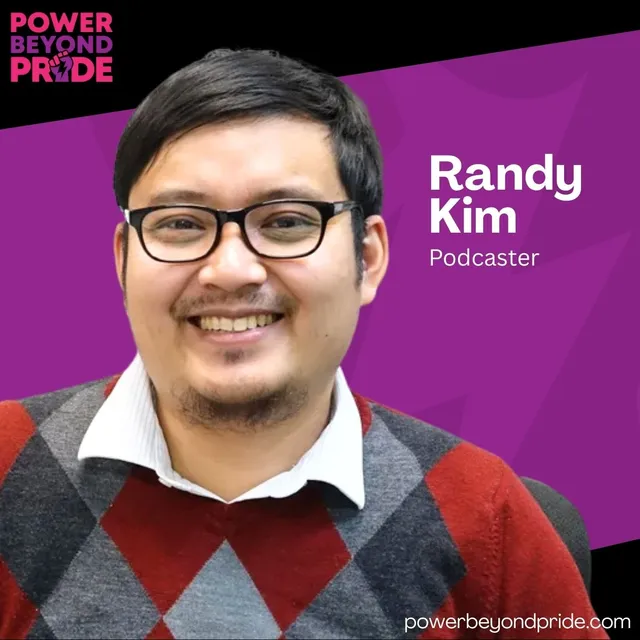
Co-hosts Daniel W.K. Lee and Kenyon Farrow talk with podcaster Randy Kim about what it took to feel whole inside his intersecting identities as Vietnamese, Khmer, queer, and American—especially after growing up without language fluency and with pressure to assimilate. Randy shares how finding queer Asian community helped unlock a deeper sense of belonging across Vietnamese and Khmer spaces. He reflects on learning Vietnamese later in life, letting go of perfectionism, and treating language as a path to connection. The conversation keeps returning to what it means to show up bravely, without apologizing for complexity.
TranscriptRead the conversationAbout 47 minutes to read · 7,031 words · Randy Kim, Daniel W.K. Lee, Kenyon FarrowOpen
- Randy Kim
- I remembered going into these storytelling spaces, like maybe being the only Asian person. I had started feeling quite resentful because there's so many stories that these producers have not even attempted to tap into or were not able to because of the fact that they lack the understanding and the knowledge of, uh, the communities itself. And so when I had worked with my former mentor, she was kind of already producing her own storytelling shows which featured Asian American, Asian diaspora storytellers. And so when I had started working with her, I could see myself in these stories with these folks. And this is kind of where I started feeling this community.
- Daniel W.K. Lee
- Hello and welcome to Power Beyond Pride, a weekly queer change making podcast bringing you voices and ideas from across our fierce and fabulous spectrum to transform our world. I am Daniel W.K. lee, poet, author, and dusty ass cultural critic.
- Kenyon Farrow
- And I'm Kenyon Farrow. And I am also a writer, essayist, and overall communication strategist. And we are your co hosts on today's queercast Journey. So on today's episode, we're talking with a guest who doesn't just host conversations. Creates space. He's the Vietnamese Cambodian creator and voice behind the Banh Mi Chronicles, a podcast where Asian American and bipoc creatives and community leaders are seen, hear, heard and honored. He's a queer activist, a, uh, community builder, and someone who understands that someone's story can change the world. So help us welcome Randy Kim. Hey, Randy.
- Daniel W.K. Lee
- Hello.
- Randy Kim
- Hello. Thank you so much for having me. I'm Daniel and Kenyon.
- Daniel W.K. Lee
- Thank you so much for joining us on Power Beyond Pride. Before we get to the questions about your work, you and I have actually a similar backstory. So I'd love for you to tell our audience a bit about your background and specifically how you've navigated that sense of being Vietnamese, Khmer and American enough in our suburban Chicagoland. And relatedly, how goes that journey, learning Vietnamese as a geriatric millennial?
- Randy Kim
- Yeah, yeah, I am a. I am at the top of the, uh, millennial food chain. Um, millennial. Going to be 43 in June. So I would say when I look back on these intersecting identities as being Vietnamese, Khmer, and being queer and being born in America, I think that it has taken me probably, like into my 30s to get to a place where I am comfortable being all these identities and not feeling the tension between these identities that I used to have. I say this because growing up both Vietnamese and Cambodian, I know that both countries have always been more adversaries. And so that was never an easy place for me to walk into both of these Community spaces growing up, because I. But always hear things about maybe you're like, I'm not quite enough or that there's this passive aggressive attitude about hearing things that are anti Cambodian or anti Vietnamese from both sides. And it tells me and my brothers that I don't think we really belong. I don't think that there is a sense of, um, belongingness. And also it didn't help that I wasn't able to speak my parents languages very well because I was born in America and my father really wanted me to assimilate as the only way or the best opportunity for me to become successful in America academically and eventually professionally. Yeah, I think it has taken me a really long time, I think, to get to that place. It starts with having to be, uh, to be connected with trusted friends in the community that I inadvertently ran into. And you know, me being queer I think was the one that kind of unlocked that after I left Korea, after like living there for three years in my mid-20s as an English teacher. And I knew that when I came back that I wanted to have the sense of this, this belonging. Because when I was living in Korea, it was actually the first time that was hanging around Asian folks. And um, there were Asian expats from other parts of the United States. There were Vietnamese, there's Korean, there were Hmong, Chinese. There were folks that were living Asian folks that were living in England, Australia, in Canada. And so I started to, you know, gravitate towards being around those folks because prior to all of that, I had grown up in a predominantly white community and I wasn't really around a lot of Asian communities. I think coming back made me realize, like, well, where's my belonging? Like, I knew that I had. I'm, um, always in a very different place. Like when you live abroad for three years, your perspective of what home looked like for them looked like then for you is very different. And so I wanted to find spaces that I identify with, but also with my queer identity as well. And so I think connecting with the queer Asian community helped to unlock people from the Vietnamese. And there was this Khmer friend that basically introduced me to the community. And you know, I think it made me slowly realize that, uh, not everyone in our community sees me as like some foreigner and that there is a place for me. So I think that's kind of where my relationship began for both communities or any of the communities that I've currently been in. Because it really started with just allowing myself to bravely walk into these spaces and slowly start asserting my own Identities without feeling like I have to reluctantly say that, yeah, I am Vietnamese with the level of guilt, or I am Cambodian with a level of guilt. Like, I feel like I can now see myself in my fullness. And I think someone had asked me, well, do you see yourself more Vietnamese or more Cambodian? I said, well, I think Grace Jones once said, at best that I think someone was asking her, do you like men or do you like women? And she was like, well, if I didn't like either of them, then I wouldn't be loving myself. And. And I think that's something I take to heart because I don't like, I don't tell people, Well, I feel 50% Cambodian, I feel 25% Vietnamese. I'm 100% of both, so why not? And I think that there's no one right way to be one or the other. And I think that is what people will have to start realizing is that there's not a linear way to be a, uh, Vietnamese person or a Cambodian person or a queer person, because there's so many different layers to the experience. And who are we to gatekeep that experience and identities and what the Vietnamese learning? I think so far it's been going well. I have to say that I am like texting a lot in Vietnamese more than I ever realized. My speaking is. It's, ah, a little choppy. It's a very difficult tonal language. Like, you really got the pronunciations right because one little inflection means a different word. And so that kind of messes up the dynamics. And some of my relatives, some of my friends, Vietnamese speaking friends, they're like, okay, you're getting better, you're getting around that. I could understand maybe 50m to 80%. And I'm like, okay, all right, gotta nail it. And plus, not only that, but you also have to contend with the different, uh, dialects too. For me, what I was more familiar with was the southern dialect, which is most of the Vietnamese diaspora folks. The northern has its own dialect, the central has its own dialect. So there's also that to contend with. So I also have to constantly be mindful of it. And even the reading, it's like I'm still kind of working on it. I mean, after seven months, I. I don't have the expectations of being fluent. And I think that's, that's part of why I feel more confident learning at this stage of my life, because I don't have to worry about the expectation of being fluent or being taught that I don't speak well enough. I Just feel like for me, learning reclaiming this language is my way of making deeper connections with other Vietnamese folks.
- Daniel W.K. Lee
- Yeah.
- Randy Kim
- Yeah.
- Kenyon Farrow
- So I'm curious about the Banh Mi Chronicles. It sensors Asian American, bipoc creative. So you can just tell us a little bit more about the project. And also, why was it important for you to be that specific space?
- Randy Kim
- Yeah, I think around 2019, I was doing a lot of storytelling shows. I was performing at, uh, different, uh, venues. And I had a mentor who was also an older Asian American woman, was a professor, and had been doing theater work.
- Daniel W.K. Lee
- Was this in Chicago?
- Randy Kim
- Yes, this was in Chicago. Yep. And so I was doing these storytelling shows. And what was very surprising was that for as diverse as Chicago is, the storytelling scene in Chicago is very white, and it's also very, uh, suburban. A lot of transplants. So I remembered going into these storytelling spaces, like, maybe being the only Asian person or maybe being one of two, uh, people of color, you know, on that lineup. And sometimes I will share stories about trauma, about something that's very intensely personal, that's very connected to my own family experiences. And. But then, um, a lot of the white storytellers would just tell stories that are very, I'll uh, be very honest with you, very surface level. And they would start talking about stories about bad relationship breakups and make jokes about it. And then here I am doing a story about my dad's survival from the Khmer Rouge. So I was like, something doesn't fit, right? And so. And I'm like, thinking to myself, like, okay, why am I being brought on? M. Is this, like, am I. Am I fulfilling a quota for the producer? Am um, I this shiny new toy to them? And so I had started feeling quite resentful. And I was like, there's gotta be more stories. Because, like, there's so many stories that these producers have not even attempted to tap into or were not able to because of their audience, and also because of the fact that they lack the understanding and the knowledge of the communities itself. And so when I had worked with my former mentor, she was already producing her own storytelling shows, which featured Asian American, Asian diaspora storytellers, most of them first timers, and also with other black and Latino and other folks of color into them, because she felt that it was very important to bring these stories out and that you do not have to be a trained, seasoned storyteller or performer to tell stories, because there's so many first timers that have stories that we really do need to be hearing. And so when I had started working with her. That was kind of when I realized that this is something that I feel safe in and that I feel like I could see myself in these stories with these folks. And this is kind of where I started feeling this community. And then my mentor decided to challenge me. She was like, randy, I just need you to make your own project, independent project. I'm going to challenge you. But that's also code word for okay, I really need you to do things on your own now. So, you know, which was a good challenge, which I also felt like I needed because I was working under her vision, and now I needed to start working on my vision. And what I wanted to do at that time was like, look at podcasting. Because I was like a guest on, um, maybe two other podcasts, the Vietnamese Boat People podcast and the Queer Asian Social Club, which was then called the Gay Asian Podcast. And I thought about how unique that experience was being on a podcast. And around 2019, I was like, maybe this should be my project. I want to start featuring stories of Asian American folks in Chicago doing organizing work, activism work, specifically people that I've known in the community for a number of years do by working nonprofit and through being in the LGBTQIA spaces. So I thought about maybe going in that direction. And so it started off going in that direction. I thought, uh, well, okay, let me just kind of start off small and see where it goes. And then, of course, Covid hit several months later, and all of a sudden people wanted to be podcasters. And, uh, and the next thing you know, like what happened with George Floyd and Breonna Taylor started happening. The anti Asian hate crimes started happening. And then there was this urgency to continue, but to not only talk to Asian American folks in Chicago, but to, ah, also talk to other folks nationally. These included authors, these included community leaders, uh, educators, artists, uh, folks that could really speak to the experiences of organizing, but also understand the intersectionality and intersecting work and doing the anti racism work. And I felt like that was very needed, especially what was happening back in 2020, and then what happened with the Atlanta spa shootings a year later. And so that became very critical. And so I felt compelled to continue this work. And the idea of Banh Mi Chronicles was really started. An idea of breaking bread. Banh Mi means bread in Vietnamese. And so I like the idea of breaking bread, but also it kind of goes to show you, like, the Banh Mi sandwich was like both a Vietnamese food, but also that there's Westernism influences from the French, and so there's a colonialism aspect of it too. And me being born in America with both of these identities, I felt like I was kind of like a banh Mi sandwich kind of being, trying to be seen as palatable to my white classmates. And so I kind of saw that as like a metaphor in some way. But yeah, I think that I didn't realize that it was going to take me on a journey like the next four years until I sunset it back in 2023, which now I brought it back like a couple months ago.
- Daniel W.K. Lee
- We're going to have to take a quick break. Stay tuned for this episode of Power Beyond Pride. And we'll be right back with Randy. We'll talk a little bit about the return of the Bunmut Chronicles and then keep, uh, on keep on with this interview. We'll be right back. Welcome back. This is Power Beyond Pride, a queer change making podcast. And I am Daniel W.K. lee, and I'm here with my co host Kenyon Pharaoh, and we're getting into a great conversation with Randy Kim. You, uh, recently dropped a highly critical video about Bowen Yang in light of Matt Rogers controversial directive, you can call it, on their Las Culturistas podcast and instructing, uh, listeners not to support or donate to representative, uh, Jasmine Crockett's campaign, which you attributed or attribute to anti blackness. And your indictment of Yang is that of what I would describe as his passive complicity and perhaps what you might charitably call his deference to whiteness for his failure to challenge Rogers. So let's dig into what this occurrence means to you and what you think it is indicative of regarding. Regarding CIS Asian American gay men.
- Randy Kim
- Yeah, I'm glad that you brought this up because this has been something that's been stewing in my mind this whole week. And Bowen Yang is someone that I have respected for a while. Like I have respected his work with SNL and I have like a few of his other works. Like I did like the Wedding Banquet. And I've always kind of saw him as a person that, okay, he doesn't seem very problematic. Okay, maybe he might be safe enough where I'm like, okay, I may be able to look past the potential white centric side of him and okay, let me kind of test it out. And so I was kind of cautiously rooting for him. You know, I mean, I want to root for him because, like, as a gay Asian man, like, I do see the impact that he would have onto our community. So, yes, I want to support that, but I also felt like part of me was like, I don't want to be seen as a Debbie Downer if I'm too critical of him, because I tend to be very much a negative Nancy to a lot of things in Hollywood. And so. And I think the last couple of months, I had to reach this point of what the celebrity fandom, um, mean to me and my relationship with it. Ah. And I think it started with the concerts that I've been going to, because God knows I spent a lot of money in concerts. Beyonce was one of them. And I definitely spent rent money on her concert and the merch. And she decides to hang out. Her and Jay Z decided to hang out with the Kushners. And I just felt incredibly disheartened by it. And, gosh, this is terrible. And I'm like, I think that starts settling in, that celebrities, especially in this time, they're extremely wealthy, are using our capital to sleep in bed with the oppressors. And it's very hard to watch this unfold, especially when you have consumed their work for a number of years and definitely put in a lot of money where I feel like maybe I should have actually invested on people who actually are better, but also could provide more value and the community can provide more, get more value out of the money that I spend. And so that started happening. Coldplay. I went to a Coldplay concert, like, right after that whole scandal that happened. And Chris Martin, he's always about this whole love is love, and I think it's kind of cute, but a little corny. And, uh, he kind of went on this whole, like, this soft. The softening of Charlie Kirk, like, to the audience. And I was like, you know what? This is not time for it. I am, um, like, this is disgusting. We really cannot be, like, normalizing Charlie Kirk. And I don't care what anybody says, but I'm gonna mouth off. The man deserved what he got. So let's be very clear there. And I think that was another turning point for me. And then System of Down, one of the more radically progressive bands, at least that's what I felt. One of their drummer is a Maga, and not Serge, but I can't remember his name, but he is. He's like, the second man on the band. And Darren, and he got into a fight with his fans on Instagram, and he was, like, chastising his fans because they were, like, questioning his political motives. And he basically called himself the far middle. And I was like, okay, that's it.
- Daniel W.K. Lee
- What the fuck does that mean?
- Randy Kim
- What does that even mean? I don't know what that, uh, Means, I mean, it's so contradictory. It's such an oxymoron. And it's like, yeah, please explain that. Please fucking explain that. And so it's, geez, like pretty much every band that I've been, every artist that I've been seeing is have the degrees of being very problematic. And it's. Yeah, this is kind of when I started having this conversation with my friend. I'm like, I don't know if I should be doing this going into next year. Yeah, I love going to concerts. I love consuming pop culture for the fun of it. But at what cost? At, ah, what detriment? And I think that's a moral question that I had. And so I think what Bowen did, and being complicit in enabling Matt Rogers to continue this uninformed directive, uh, about not donating to Congresswoman Jasmine Crockett. Now, I think it's one thing if you start to have a dialogue about her policies, her political stances, especially on Israel and taking AIPAC money, I think that that's fair game. We should all question our, uh, politicians, put them on a celebrity pedestal. Like, let's have serious conversations about our candidates that we're putting into office. Because, you know, we've seen Senator John Fetterman turn his back on the American people. We've seen former Senator Kyrsten Sinema, who basically like blockaded votes and she considered herself to be a progressive but then turned completely middle, which is a very white woman thing to do. Yeah. Um, and so, so I think with this, with that said, it's. I think we should be able to question. But what I think what Matt, where he really stepped on a landmine is that he didn't give any context, he didn't do any research. He doesn't know the. He doesn't know Jim Telarico, who's the other candidate. Like, you don't live in Texas, and so you're just basically spouting off this nonsense and just saying, just don't donate to her. Uh, what context is it because you're afraid that you don't think a black woman's capable of winning an election. Now, I think it tells you that there is this idea that we should not be supporting black women because they're not electable, which I do think is a very reductive, dangerous take to be taking and a misogynoir take. So I think that the fact that he went without that context and just kind of went in into a huge platform that he has that he and Bowen shared, I think this is very dangerous. And it also speaks to the bad reputation that podcasters have that, you know, that we're not like journalists that were basically safe spaces for problematic people or that or safe spaces to have problematic views, viewpoints. And so I think that puts more pressure on people like us who are actually doing the due diligent work to hold people accountable. And I think what Bowen did was also like a symptom of how gay Asian men are seen as being submissive to white gay men, and also how white gay men see Asian men as being dominant, as fetishizing. And, um, for like, Bowen, I don't want to say that he's doing that, but it's the behavior that leads to this fetishism of like white men, like this worshipping of some sort that feels very ick to me. And so, yeah, I think that what Bowen did or didn't do really or didn't do what he didn't do, his.
- Daniel W.K. Lee
- Guilt is silence, right? He's guilty of silence.
- Randy Kim
- He's guilty of silence. And also, you're not. This is not a live show. You have editors, you have the executive prod. Like, you have the executive, uh, decision making to stop and start saying, you know what, maybe this is not a good idea to have this on. But yet the ignorance really showed itself in true colors and the privilege itself was left unchecked. And. And it sure did. And Matt Ryder just made an apology that was about himself, that was censoring himself. Well, well, I always respected Jasmine Crockett. Then why the hell did you say that? If you really. And Bowen basically said, well, what he said, that's basically his response. That's not an apology. Like Bowen, you have a mind of your own. You are way more famous than Matt Rogers will ever be. Let's be very clear here. And yet, Bowen, you're willing to bow down to your co host. Who knows?
- Daniel W.K. Lee
- Now you're being nice because you have definitely said bootlicking.
- Randy Kim
- I could say that too. Yeah, uh, that is very true. You said it. I mean, so, yeah, I think Bowen lost a major opportunity. And yeah, could he be redeemable? He can only be redeemable if he really holds the accountability. If he starts having serious dialogues, like, I think accountability, and I don't feel like I should be speaking on that, uh, as a non black person. But I feel like, look, if you really wanna, you start repairing work, just bring Congresswoman Jasmine Crockett onto your show and start having a dialogue. Let's talk about why you have reservations about it and maybe let's talk about this insecurity that you have about a black woman, uh, being able to win a stateside election. I think that's something. If you really wanna hold yourself to the fire, then you do that. But here we are, we're still waiting a coup, and I don't know where it's going to go, but I think for Bowen, I think he's finally learning some humble pie.
- Kenyon Farrow
- Another, uh, while we hear in the controversial, we also know there's been kind of another lightning rod figure, and that's Amanda Gwynn, right, Who you've also had some critique of. Uh, and so I want you to also talk about potentially that situation with her. But, but, but also get to this, the issue of what do you think this kind of, as the kids say, pick me. The sort of pick me ism in relationship to whiteness and how it contributes to Asian Pacific Islander folks and bipoc folks more broadly, just in terms of those relationships and those dynamics. Like, what do you. How do you see these sort of trends in relationship to this. You've been talking about this sort of desire to sort of be in relationship to whiteness and this sort of pick me ism in a way. So you could talk about that.
- Randy Kim
- Yeah, I think that what. As we see more Asian diaspora, Asian American folks, like, make their headway into film and music, into different forms of entertainment, a lot of the people that they have to associate with are predominantly white. And so. And there are people in Hollywood and in places with big budgets that have that power. And I think for a lot of Asian actors, Asian artists, there is this, like, level of pressure to conform, but also to get access to that power, and to have that access means having to try to, uh, behave in similar ways that white men, white people in general do. And so I think that when you accumulate a level of privilege, it becomes more, I guess, I mean, I can't speak on that because that's not my experience, but it just seems like when you start to get to these places and get more access to it and you get the adulation not just from your colleagues, your white colleagues, but also with the audience, it feels like you're very much invincible and that you can start to be more provocative and you can start getting away with more things. And I think what Bowen or other people have fallen into is that. That you can't really. That you can't always get away with it. And I think to be, to be a culture vulture, in this case, especially with las culture Recess podcast, I've actually Never listened to an episode of it because I think the title itself was already a red flag when they're both not Latino. And that was already, like, okay. That really caused into question about their intention of making a title about it. I really think that. I really think that they do fall like that. It's easy to fall short when you realize that you actually aren't. That you don't have the same privilege, that you are actually not the same in that you create this division, this separation from other Asian American folks and other Asian and bipoc folks, that you're not one of us anymore. You're not one of them. Like, I think that there's this tug of war in this identity crisis that I guess. I guess privileged Asian folks struggle, uh, with. And I think that sometimes they will have to fall into the humble pie and realize that you fuck around and find out just quickly.
- Daniel W.K. Lee
- Like, going back to Amanda, though, like, she's kind of doing. I think the. The big thing about her was obviously, like, the blue origin, right? Like this. Performing progress, yada, like, going into space and, oh, we're doing this for all of women or something. Right? I mean, that. I mean, she's. She said she. She got a lot of flack from it or ever. She was like this. This is so much more than any one human brain can bear, which was. Seemed a little bit melodramatic. But is there a side from this kind of what I find to be like a performance of progress? Is there different acts that you have to grind for her?
- Randy Kim
- Yeah. So I'll give you a little quick story about my Amanda Nguyen story here. So a couple years ago, like, I've been aware of who she is. This is a person who has been a trailblazer on, um, the issue of, um, sexual survivors and advocacy for sexual survivors and so sexual assault survivors, I should say. And I think that there's something to really respect and admire about that. And as a Vietnamese person myself, like, it's really awesome that she was trying to become an astronaut and do this groundbreaking work that none of our community members were able to have access to or couldn't even think of. And so there's respect for that, and I absolutely respected her for those things and what she was able to champion, like, several years ago, and she got, uh, I believe she was a finalist for the Nobel Peace Prize at one point. So a few years ago, like, three years ago, I think there was the shooting in Minori park that killed, like, 10 other Asian folks. And she posted on Twitter about the devastation the sadness that she felt, the hopelessness she felt. And I decided to chime in, and I was like, you know, I. I can't remember exactly what I said, but I said something that was very encouraging to her. That, uh, we are all in this together in this kind of manner. I don't know the exact words. And she actually retweeted it, and we started following each other. And so I was like, okay, that's pretty cool. I think we're all kind of, like, on the same page. It felt kind of empowering to see that kind of solidarity in that moment. But I think my suspicions started probably after October 7, 2023, which was what happened in Gaza and also the political hellscape of the election, of the 2024 election. And she remained completely silent on, um, everything that was going on. Nothing that was said about what was happening to abortion rights, nothing that was said about what was happening with trans women getting murdered, nothing about being in solidarity for immigrants, especially her coming from a family of refugees. And what was happening with ice, I mean, it didn't just happen this past year. It was happening for a really long time. It has only just escalated. And so she has stayed silent. And this whole time, she would start. If you look at her Instagram, which is, to be honest with you, which is quite insufferable, it's like, I'm looking at. Am I looking at an activist or am I looking at, like, a Vogue model? So which one is it?
- Daniel W.K. Lee
- I don't know how many times I'm a lifestyle influencer.
- Randy Kim
- Exactly. So, like, how many times do I have to see her in a fucking space uniform? Like, every fucking day. Like, with the slow motion marketing where she has her helmet and marches slowly. It's like, Jesus Christ, say something. Like, the world is on fire. And she has done nothing, nothing, nothing, nothing on these issues. And so I'm not asking you to be Greta Thunberg. I'm not asking you to be Ms. Rachel. Uh, just acknowledge that there's a problem, because I don't know what's at stake for you, but I feel like if you had actually used your voice to acknowledge there will be people that will support you, including myself, because the work that you do for sexual assault survivors is connected to all of these issues. ICE agents have been known to sa, uh, immigrant women and children. What's been going on in Palestine has been, like, you see IDF or iof, uh, like, sexually assaulting women and children, too. So there's connections. It's all interconnected. And yet she fails to bring light to that. And that's a big failure and a missed opportunity to at least acknowledge that. And so when she decided to go to space, if you call it, or take a little taxi ride around the Earth, around orbit, like she did it under Jeff Bezos dime like to be with Katy Perry, Laura Sanchez, which is Basil's wife, and Gayle King. And it's like they did this whole publicity stunt while Ice Rays were happening in la. Like this gives nothing but Marie Antoinette. Let them eat cake. And I just feel that Amanda, uh, just again doesn't see outside of her own bubble. And it's hello, like the world is on fire. What's more offensive about her post recently? Like her being very depressed about being hated and whatever. Boo hoo hoo. My thing is that she, she didn't understand where that disdain is coming from. I think she feels that's because she's a woman, a woman of color. No, it's not. Because you decide to co sign with Bezos who is against women's rights, who supports Trump. So it's what the fuck is wrong with you? And it's. Yeah, so I know it's, it just, it burns my toes. And the thing is that I ah, know as a guy that's not good optics for me to attack a Vietnamese woman. But I feel like that needs to be called into question. And so when I was on threads, I basically said that if there's a performative activist, Amanda Winning was one of them, man, doesn't matter when fans just came after me and I literally got into arguments with them and I was ready to die on the hill for my points because I was so charged up and I literally told those wine moms to put down the Bordeaux and look like you. Tell me, tell me that going to this is empowering for a woman. Okay, As a guy, I shouldn't be having to mansplain this to you. It just feels wrong for me to have to do this. But it's come on like you are co signing with billionaires and you are working with Zionists. You're working with people who don't have your best interests at heart and we're going to try to applaud. And you think that this is okay? People think that I'm um, being too hard on her, that we're expecting her to speak on every issue. No, I want you to acknowledge that the world is on fire and yet you're not doing that. You're going on these red carpets still and you're crying about people not like liking you or supporting your stupid trip to space. Get the hell out of here. It's just like.
- Daniel W.K. Lee
- It's very tone deaf. It is tone deaf. And then all she too becomes like, uh, guilty of silence. We're gonna have to take a quick break here. Stay with us because we're gonna be back with the speed round of questions to get to know Randy just a little bit better.
- Randy Kim
- Foreign.
- Kenyon Farrow
- Welcome back to Power Beyond Pride. I'm, um, Kenyon, here with my co host Daniel, and we're having a very interesting conversation with Randy Kim, the brains behind the Bomby Chronicles podcast.
- Daniel W.K. Lee
- Okay, it's time for our speed round where we get to know Randy a little bit better. So we're going to ask you some questions, and we don't want you to overthink your responses. Just give us your reptilian brain answers. Ready?
- Randy Kim
- All right.
- Daniel W.K. Lee
- Awesome.
- Kenyon Farrow
- All right, so first question. Comfort food that feels like home. What is it?
- Randy Kim
- Uh, there's a food called um Bun b Hue that I absolutely love. It's a Vietnamese, like a pork soup dish. It's. It's a spicy broth. It hits the spot. Especially if you live in the Midwest like I do in the winter. It hits the spot more than pho does for me.
- Daniel W.K. Lee
- What's M? One indulgence you're reclaiming for yourself in 2026.
- Randy Kim
- Oh, geez. Indulgence. M. I would love to have more vacation time. I would love to do more traveling. And when I travel, I love to eat and have good massages. Cheap massages in warm weather.
- Daniel W.K. Lee
- Sounds like you're going to be traveling far.
- Kenyon Farrow
- All right, finish this sentence. If my community knows one thing about me, I hope it is that I.
- Daniel W.K. Lee
- Am.
- Randy Kim
- Willing to be brazen and go with the punches.
- Daniel W.K. Lee
- Who is your dream podcast guest?
- Randy Kim
- I have either said it's either Ocean Vuong or Yo Yo Ma.
- Kenyon Farrow
- Um, m. Very different. It's very interesting. I love it. Okay, so group chat title that best describes your friend group.
- Randy Kim
- Um, Inside Randy's Chaos. Yeah.
- Daniel W.K. Lee
- Okay, so you're the main character in your friend group?
- Randy Kim
- Yes, I am. Uh, yes, I am.
- Daniel W.K. Lee
- What's a song that feels like your personality right now?
- Randy Kim
- Oh, geez. I think the song that really has stood out for me the most that I would play when I need a pick me up is Losing youg by Solange. That song always gives me this kick.
- Kenyon Farrow
- M. It's so sad, though.
- Randy Kim
- It is a sad song, but damn.
- Kenyon Farrow
- The beat is jamming, but it's a sin.
- Randy Kim
- It also has this. This fu energy, too, that I kind of like, as well.
- Daniel W.K. Lee
- Yeah.
- Randy Kim
- Yeah.
- Daniel W.K. Lee
- The question.
- Kenyon Farrow
- Yeah. If your life and work had a, uh, slogan, what would it be?
- Randy Kim
- Take a nap.
- Daniel W.K. Lee
- All. Uh, right. That's really funny. Your rogue ingredient in your banh mi that you're afraid to ask for.
- Randy Kim
- Ooh, there are people that hate cilantro. I'm kind of, like, neutral on that. I like having my jalapenos in there and my pate. It's kind of weird for me to say include the pate, but I do like pate. I know that it's a very divisive opinion there, so. Yeah, I'll go with that.
- Kenyon Farrow
- All right, well, it's not rogue.
- Randy Kim
- I'm sorry. I don't. I know. I'm pretty plain that way, too. I'm not that adventurous with my bun me, I guess.
- Daniel W.K. Lee
- Okay.
- Kenyon Farrow
- Uh, favorite place to eat of all time in Chicago.
- Randy Kim
- Uh, Jesus boy. A place that I probably wouldn't get tired of, I guess that I could still go back to time and time again. I have to say. Oh, my gosh. There is a place called China in Chinatown. There's a place called Shy Cafe. I do dig them because they open really late, too. They open to, like, maybe 2 or 3am in the morning, I believe. A lot of good comfort Chinese food. Yeah, I think I would go without.
- Daniel W.K. Lee
- Okay. And, uh, finally, what does Power Beyond Pride mean to you?
- Randy Kim
- Power Beyond Pride means that we are not always rainbows, that we are also punches. We also have fuck you energy. It's about having unapologetic energy and that we don't always have to be nice. We don't always have to ask for permission, and that sometimes we just have to do things to be. To be brave. And sometimes that means taking these risks. Calculated risk.
- Daniel W.K. Lee
- Absolutely. And where can people find or follow you and your work?
- Randy Kim
- Yeah. So you could follow me on Instagram at, uh, BANM M B A N H M M. I underscore Chronicles. And you could also subscribe to my substack, which you can also get my podcasts and my writings, my musings, and that's through randykim.substack.com or you can just find. Simply go to the Bun Me Chronicles and subscribe on either. On, um, Apple Podcasts. I'm not gonna say Spotify. M. I'm not gonna say that either. Uh, YouTube and, like, any other platforms. So, yeah, you can absolutely follow the podcast. I'll be, uh, excited to be producing more episodes very soon. So, yeah, stay tuned.
- Daniel W.K. Lee
- It's really awesome. Thank you so much for joining us on Power Beyond. Pride. Unfortunately we're out of time, but we'd love to have you on again.
- Randy Kim
- Absolutely. Thank you so much for having me on, both of you.
- Kenyon Farrow
- Thank you so much for being here. And again everyone make sure uh, you follow Randy Kim at all of uh socials at Bundy Chronicles. I'm your host Kenyon Farrow and you can follow me just at my name on all the things enyonferrel.
- Daniel W.K. Lee
- And I'm your co host Daniel W.K. lee and you can follow me at uh, Strongplum on Instagram and upscrolled and Daniel wkleastguy Social on Blue Sky. Remember to subscribe and get your friends to subscribe at our uh to Power Beyond Pride on wherever you get your podcast and check out our site@powerbeyondpride.com Power.
- Kenyon Farrow
- Beyond Pride is a project from A Great Idea, a queer owned design and content agency. Learn more about them atagreat idea.com this.
- Daniel W.K. Lee
- Episode is produced by Shane Lukas. Mattie Bynum is the project developer. Our editor is Jarrett Redding with support from Ian Wilson.
- Kenyon Farrow
- We are both a part of this podcast awesome host team and we invite you to send in your questions and comments@powerbeyondpride.com check out our new episodes each.
- Daniel W.K. Lee
- Week and we look forward to career change making with you next time. Thank you from all of us at Power Beyond Pockets.
Transcribed automatically and lightly checked. If something is wrong — a name especially — tell us and we will fix it.
Episode #38
Culture, Critique, and Care with Randy Kim