

Episode #51 · Apr 21, 2026
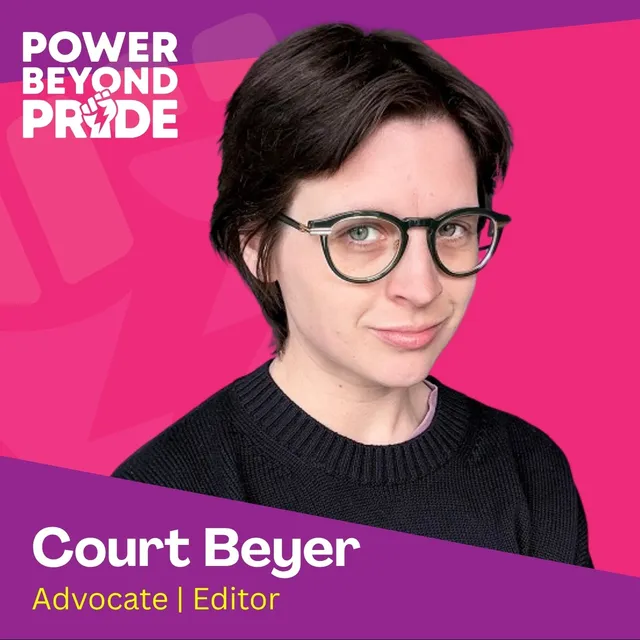
Community, Courage, and Humanism with Court Beyer
Listen or watch
Watch this episode
In this episode
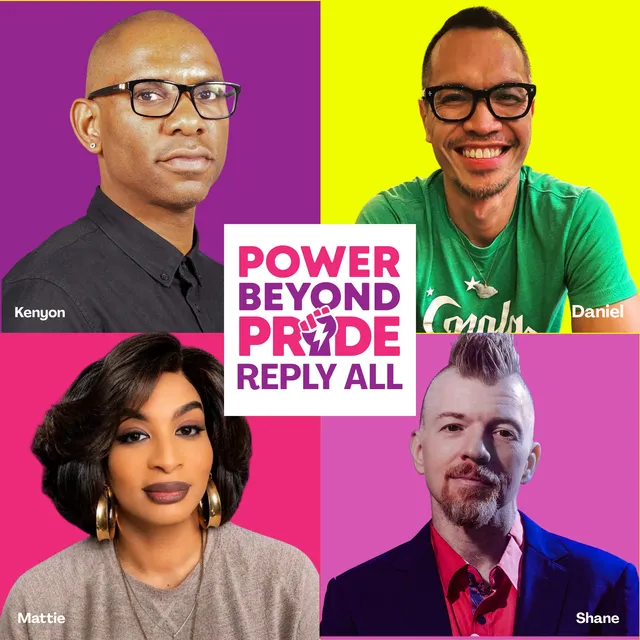
Court Beyer (she/they) joins co-hosts Mattie Bynum and Shane Lukas bringing both heart and strategy to a conversation about queerness, humanism, and the power of community care. They reflect on growing up feeling “different,” navigating political spaces that felt transactional, and ultimately redefining their values outside traditional systems.
The episode highlights the importance of mutual aid, moral courage, and creating spaces that include both faith and non-faith perspectives. Listeners will hear how the Empathy Project is lowering barriers to activism by offering funding and tools for grassroots service work. The takeaway is clear: meaningful change starts small, grows through connection, and is sustained by people who show up for one another.
TranscriptRead the conversationAbout 55 minutes to read · 8,277 words · Court Beyer, Mattie Bynum, Shane LukasOpen
- Court Beyer
- I think the biggest misconception about our movement is just that we're anti religion. I think something that the secular movement has realized is that there are a lot of positive aspects to organized religion as far as, like, social infrastructure goes. It gives people a place to come together in community. It encourages people to take acts of service. And that's really the empathy project. We are hoping that this is really for folks who want to organize around a service project, but haven't really done this before or don't know where to start.
- Mattie Bynum
- Hello and welcome to Power Beyond Pride, a weekly queer change making podcast bringing you voices and ideas from across our fierce and fabulous spectrum to transform our world. I am Mattie Bynum, one of the hostess of, uh, Power Beyond Pride. I am always the loudest in the room, whether I am laughing, talking, or just standing. And my presence has to be made. That is me. And I am, um, partnered ton with one of my favorite co hosts, Mr. Shane himself. And I'll let him introduce himself.
- Shane Lukas
- He, him, his. And I am a lifelong harm reductionist, bodily autonomy activist, as well as probably the gayest man at your dream wedding. I'm telling you, like, I'm gonna bring out. I'm gonna break that dance floor is what I'm saying. Like, I am just gonna. I'm gonna break that dance floor and we are gonna. We are gonna. We are gonna jam out, we're gonna do some rolls, we're gonna do some disco stuff. Um, and honestly, I'm gonna get that locomotion going because then no one brings that back. I think we need it so.
- Mattie Bynum
- Right?
- Shane Lukas
- Am I right?
- Mattie Bynum
- I'm right.
- Shane Lukas
- We need some dancing.
- Mattie Bynum
- You are not wrong.
- Shane Lukas
- We need dancing in this current moment. I'm telling you, everybody, this is a moment where we need to get more dance floor time. And that's the thing, because we're doing so much hard work. And today's guest is no stranger to putting in the hard work. Our guest today is Court Beyer. They are the communications director at the American Humanist association, senior editor of the Humanist, and the former Democratic Party insider. They know where all those bodies are buried. Um, so welcome Court. We are. We want to dig in.
- Court Beyer
- It's great to be here. I hope I can indulge a little bit.
- Mattie Bynum
- We are delighted to have you joining us today. So I want to jump right on in and just start asking questions and let's get the conversation moving. Cor, now that you are currently working with the American Humanist Movement and Association, can you give us a little background? Explain to us what the organization is? What do y' all stand for?
- Court Beyer
- Yeah. So the American Humanist association as an organization has been around for almost 85 years and we exist to represent the humanist movement in America. What's a humanist? Is a great follow up question that many folks have. And really humanism is a non theistic religion or belief system that basically puts moral agency in the hands of humans and says that we don't need a higher authority to tell uh, us what is right. Humanism as a movement has been very associated with atheism and agnosticism, the secular movement as a whole. We're really trying to give people something to believe in and fight for. Humanism as a tradition, uh, dates back really all the way to this country's founding. But we signed our founders signed manifestos in the early 20th century, back when that was a cool thing to do. And not.
- Shane Lukas
- Who doesn't love a little manifesto?
- Court Beyer
- You know, something that we as an organization have been paying a lot of attention to is what we like to refer to as the crisis of cruelty, which is I think pretty self evident as to what it's describing. But really the environment we're in right now as a nation and as a people with our neighbors being abducted and deported in the middle of the night and in broad daylight and just like the attack on social safety net, I think people everywhere are seeing costs rising. Like it's just a very vulnerable time for a lot of people. And something that humanism is a belief system, an academic tradition that's been around for a while, but it's also, there are humanist communities around the country and I think that is like the direction we're trying to move. Humanism is to get people involved in their communities, getting to know their neighbors and what, what's a better way to do that than through service? And that's. Sorry M. I'm trying to get around to the new thing my organization is doing. You know, the thing I'm supposed to plug. Um, but in response to this crisis of cruelty, we sort of talked as a team and thought how can we meet this moment? How can we make people feel empowered, take one step forward in combating or addressing the harm that a lot of our neighbors are feeling?
- Shane Lukas
- And so it's wonderful again what you're what you're sharing. Because in all to, to be transparent, as many people may have heard on the show, I identify as a humanist and certainly I know Mattie's heard me use the term before and it's something that I've identified with for several decades. So I'm excited to have you here because I think it's really a great conversation to have at this particular cultural moment. Like you said, at a time where people's values and their morals are being put in the spotlight and they're being really uh, forced to reconcile their own relationship with decisions that are being made either nationally on their behalf or locally on their behalf. And really where they're going to, where they're going to stand in an environment that is looking to dehumanize and actively dehumanize other people. And so I appreciate you sharing around, around what it means to be a humanist and I'm excited to talk about your new projects. So we're just going to. So those of you listening, you're going to be excited about this too. So we are going to, we are going to get to that in a minute. I want to step back a little bit though before we get there because core, I'd love to hear about your journey. Your journey and, and you grew up like me in the Midwest and. Right. And so like how did you come to the idea of humanism? Did it feel like it was a easy one? Like you heard it like, hey, that's that, that's me.
- Court Beyer
- Yeah, so I would say like humanism as a term, like I don't really think I came back to it until the last year or so, but like my non religious identity, I think it's been an important part of my life and like my just like self discovery and actualization as a person. I, I knew both my parents were raised in Christian traditions. They didn't really push it on us as kids and I, I very, very grateful for that. But it's funny, like I kind of came to this moment when I was in like 8th grade where I just was realizing there was something so different about me from my friends and my classmates. And part of that was being queer but not realizing it at the time. But something legible that I could point to that made me different was like I, I just didn't believe in God. I don't like it wasn't something that I spent a lot of time thinking about but like my, my extended family was pretty religious and so the fact that like we hadn't gone through confirmation was kind of like a big deal. I like I'm, I um, love my grandma so I don't, I don't want to like cast aspersions but we were kind of lower on the grandchildren favorite ranking because we hadn't participated in.
- Shane Lukas
- Now you want to see this ranking system. Does a great grandparents sit there and have, do you get like is it, it's like a competition. So every year you like to see
- Mattie Bynum
- whether like have a ranking system. SHANE they may not say it out but I think all grandparents uh, parents have a ranking system.
- Shane Lukas
- If I were a grandparent, you'd be number one for me COREY
- Court Beyer
- thank you. I actually think I have ascended in the ranks since being a child. Yeah so I actually the religion stuff really doesn't matter to her anymore. She's grown quite a bit as a person but yeah so that when I was a teen that was something that felt made, made me different than everyone and, and I did grow up in a pretty religious conservative area and so anytime I heard my friends talking about gay people it was like that they were going to burn in hell. And so that was just in combination with these other kind of like unidentified feelings and identities at the time. Like this was the thing that made me feel like oh I, I'm different because of this. But as an identity I like, I think I went through like my little angry atheist phase, you know maybe like in that time where I was like losing my friends because of this. Uh, but then I think my like just world kind of grew when I like found my people, my queer community and went to college and diversified my world a bit. Like it stopped being like a part of my identity I guess because I didn't feel like I needed something to say oh I'm like it just like religion wasn't, religion wasn't important to either of my parents and so I just didn't have this like need to feel like oh I have something but how this connects to humanism, I'm getting there. Like I, I see it as a bit of a political label or maybe that's kind of what I aspire to turn it into because as you hinted at my background is in Democratic politics. That's kind of like where I cut my teeth as like a professional and I, I put so much hope into that institution to do the things that would secure rights for everyone. And working on the inside, it just became very clear how transactional some of these coalitions are or just the relationships that make them up. And it really, really radical. I mean, radicalized me against kind of the, like, using electoral politics specifically as a means of fulfilling change. But also, I think my identity was too wrapped up in it, too. I don't want to call myself a Democrat anymore. I don't know many people who do, honestly. They vote for the Democrats. But is that. Is that how you identify yourself? Like, no, you say you're a progressive or whatever on the left. So I was leaving, leaving, like, consulting work on the left and feeling. Feeling pretty cynical. And so I. And I saw that the American Humanist association was under new leadership and was trying to do some really bold and exciting things, and I was like, I have never seen, like, a job out there like this to, like, try to popularize, like, a lifestyle philosophy. Like, what. What an interesting challenge. Yeah, let's do it. And so that's kind of how I got here, honestly.
- Mattie Bynum
- Well, can I ask, how does the. Your upbringing, and as we were talking a while ago, your earlier part of your life, how does that show up in you as a humanist today and in the work that you do with the organization?
- Court Beyer
- I have a. My dad voted for Trump three times, and my mom is. Is a lib. We have our issues. She's like a classic dumb. And I. So I grew up around them having these political arguments all the time in front of me. And they're. They're now divorced, so it's like, we're all good. That's not important to. To mention. I'm sorry, just for everyone's context, they're still not married. They're not married anymore. But I don't know. I guess I. My family, My dad lives in Northern Wisconsin, and my extended family is up there. It's very rural part of the country. It just. Sometimes it feels like they have a very limited worldview. And I've had to kind of. I've had to stretch and grow myself to be able to communicate with them and have a relationship with them. And I know, like, a lot of queer people, like, have had to do that, approximating and figuring out what kind of relationship they can have. But I think something that I pride myself on, like, from, I guess those relationships is, like, being able to. I think I'VE I've developed a thick skin or a tolerance for just like the language and Republican messaging or at least I, I maybe understand where some of it is coming from. I, I talk politics.
- Mattie Bynum
- I wanted to ask you because you made a comment of how you had to stretch yourself and you had to lean in. How does that make you feel? Because that's a conversation I have with some of my friends a lot of times and they're like, I think people should meet me where I'm at. And then sometimes I'm like, but sometimes we have to go to them too. So how did that make you feel, having to lean into that?
- Court Beyer
- Yeah, some, some days I do feel a bit resentful about it. I think it's, it's an, it's on an individual level. While I understand where people are coming from and that it's not, it's not on me to educate you. I, I like, I believe that and I, I agree with that in spirit. And yet like I, I do think like we can challenge, we can grow by challenging ourselves and it doesn't have to be in big ways but you know, kind of challenging that zone of comfort that you're in, it can, it can lead to some really beautiful personal growth and people can surprise you. I just, I, I, I know people who have worked on coming out to their parents and they, it starts small and then they surprise themselves with the amount of um, candor they're, they're able to have with the parent.
- Shane Lukas
- Challenging people to growth is I think a brilliant, it's a brilliant idea. And I want to dig more into that after we come back from a break. We're going to take a quick little break right now and come back with Court Beyer who's really sharing such an amazing insight into basically what is the largest population in America in many cases growing, which is the nuns, the people who are unfaith, not faith affiliated and really talking about the American humanist movement, which is a, uh, relatively, in many cases especially among young People not as well known. So I'm excited to share, to hear more about that and also the Empathy Project. We're going to come back right after the break and have that conversation, so stay with us.
- Mattie Bynum
- Welcome back. This is Power Beyond Pride, a queer change making podcast. And I am Mattie Bynum, your hostess with the mostest, sitting here tonight with my best friend Shane, having a wonderful conversation with Cort and Cor. We were talking before we went to the break about growing through challenge. And I know we were um, drifting towards the Empathy project that American Humanism association is working on. So I definitely want to get into that. But I did have another quick question right before that and I wanted to know what are some of the biggest misconceptions people have about secular and humanistic advocacy? And then how does the Empathy project bring light to the.
- Court Beyer
- I, uh, think something that the secular movement has realized is that there are a lot of positive aspects to organized religion as far as like social infrastructure goes. It, it gives people a place to come together in community. Uh, it encourages people to take acts of service. Obviously the caveat that comes with religion of all the other bad things it does, but that's, there's something to learn from organized religion is, is what kind of where we've landed as a movement. And that's really the, the Empathy project. We are hoping that this is really for folks who, who want to organize around a service project but don't haven't really done this before or don't know where to start. Uh, we're giving out at least a hundred thousand dollars in grants to change makers around the country. And basically if you don't even know where to start but know that you want to help out your neighbors in some way, we've got different project guides that are like pre templated kind of projects to get you started, get you thinking. If you have an idea bigger than that, we're open to funding that as well. It's, it's really a big mutual aid project and something that, you know, as humanists, we really, we want to show humanism in action. We want to show that this is a movement where you can find people who you connect with and who have similar feelings and values as you do. But we feel better about ourselves and like more firm in our identities when we kind of act on our values and put them into motion. And that's really kind of what we're trying to do with this project on a, on a small scale. A hundred thousand dollars isn't going to, isn't going to change the world. But it's really about kind of planting that seed of inspiration in folks minds and like uh, getting them thinking about how they can take those steps in their community to make their neighbors lives easier.
- Shane Lukas
- I think it's really powerful to really also bring around the conversation that a lot of times as somebody who I consider myself a non faith participant, so I always call, I consider faith participation meaning that you become a participant, you invest in the story, it becomes part of your cultural traditions. And like you said Court, there's a lot of incredible value in that, in that there are enormous legacies and familial traditions and pieces of heritage and that really honor ancestors, that honor honor. Different components. But it's also a case like you said, where religion can be used as a politic itself. And being able to separate that out, this idea, find a faith participation from how I want to be in the world, how I want to be in my, among uh, my neighbors, among my neighborhoods and that really a lot of those of us who identify as non faith participants or nons or humanists, we still live in a world where we believe our moral selves, our good selves can take action, can be part of these communities, can be connected. So I do really love the idea that you're, you're bringing that in a conversation. I'm curious on your own journey, I know when you shared a little bit of that path about coming to or at least understanding your own at the time, atheism again I know that there's certainly a broader range of names and communities around non faith participation and I appreciated learning about humanism because it helped me contextualize my own. Uh, but I realize also like my queerness also kind of made sense. So I'm curious what your thoughts are because you talk about them a little bit. I'd love to hear about your also your queer journey and how that influences also your sense of things like how you also came to understand your own identity and then the ways that you're seeing as you're having conversations with other humanists but also across feeds the way that they're looking at queerness in relationship to those faith traditions and then where there is potential partnership that can be done across multifaith or non faith partnerships or however we want to look at that, that language I'd Love to hear your thoughts around that because I know for a lot of us in their career journeys, um, there is something about the way we see ourselves in the world.
- Court Beyer
- Yeah, it just, I, I, I felt like very repressed in that way. And it was funny in high school when I felt like I found my people, all my friends were queer. And I like, uh, my roommate in college is Tran, was trans. It's trans. And I didn't really think anything of it. I just always thought, oh, I'm an ally, I'm probably bisexual, but who's counting? I've kind of always been like, I think for the longest time I was really allergic or averse to labels and I, uh, if I'm being kind to myself, that's, that was out of a place of fear of what I would discover about myself if I chose to take a label like non binary or like queer. I, uh, think. But all my friends at the time were exploring and so college for me was still like, felt a pretty like in the closet time. It wasn't until I like, honestly began working in Democratic politics and meeting more queer people that I felt like comfortable taking on those identities. I have friends who grew up in kind of high control religion and indescribed times in their life when they were homophobic. Um, and like, I just, I can't say that I personally have had that. Um, and I guess I to a degree feel lucky in that sense, like not having to unlearn all of that because I know how like, toxic that can be and just not a place you want your head to be. As I was like learning about my gender identity and like feeling more comfortable identifying as trans, I was seeing like where the party was standing on the issue too. And I was like, like Joe Biden famously said, there are at least three genders and, and that's like the most like, affirming thing, I guess any potential candidate has ever said.
- Shane Lukas
- That was his last coherent thought. So there we go.
- Court Beyer
- That was the exact.
- Shane Lukas
- Was the end of that.
- Court Beyer
- But yeah, you guys, you originally asked about religion and I'm making this about the party, but it's, it's, it's hard to not think about religion. And it's just the harm it's done to the queer community. I just, I guess so many of my friends, like, that's, they're on learning, deconstructing. And like, I honestly, I don't personally know a ton of queer or trans people who have found like, community in a Christian or theistic setting. I mean, most of us, I feel like, see, this is the thing too. It's like, it's. How do people identify versus what are their actual beliefs or habits? Right? Because, like, I, I don't think I would have actively identified as an atheist like five years ago. I would say, yeah, I happen to be an atheist, but it's not something I spend a lot of time thinking about, you know? And, um, so I would say from. I would imagine that a lot of queer people who are leaving religion, like, kind of feel a similar way where it's. Or just they don't, they don't know that. Like, I think the narrative, narrative is you leave religion, then you're without religion. Then it's not what, like we were talking about earlier, like, there's, it's like my therapist said about any kind of like, crutch you might use. Like, if you, if you remove it, you're still going to have the need for whatever you were using that crutch for. And I think the same applies here. If, if that's why people are so afraid to leave religion, right? It's because, like, their entire community is there. It's how they learned what was right and wrong.
- Shane Lukas
- I, I'd love to. Again, I appreciate you sharing that because it, it is one of the things I feel like as an activist. I, I, I feel competing narratives. And I know, Mattie, uh, you, you shared about your faith and, and how important that is to you and your story. I've certainly run across in movements a lot of faith participants who are doing incredible work who identify in the queer community and, and I do that there's been a reinvention of some areas that there are different faith communities who are having a reckoning. But to that end, it's an important thing. And I, and I, and, and Mattie, uh, I'm sure you have some, some, certainly I would love to hear your thoughts on that.
- Mattie Bynum
- Because I consider myself very spiritual. I have a relationship with God. However, I do agree the construct of religion is persecution. And I don't agree. So I do agree that there is a difference between the two. But we also have to recognize that in our communities we have to stop using religion as a way of persecuting people. We have to. I don't understand the whole need of making people feel they're wrong or they're bad or they're going to hell because I don't breathe the same way you breathe or don't agree with everything that you say you agree with. I get you on that one. I think a lot of times too we have to remind ourselves, like you said, when you remove religion. And I like, I like spirituality because spirituality doesn't just exist on one plane. Spirituality encompass really everything that we know as one higher being, spiritual presence or just your place in the universe, in the space and in the world. Yeah, I agree with you. I definitely, I understand what you mean by there are a lot because I do notice as I get older and change that as an activist I know people who are in our community that are still religious, quote unquote. But I am finding more spiritual people than I am religious people in our community than the other.
- Shane Lukas
- Uh, yeah, well, no, and I, and we're going to take a break here in a minute, but when we come back, I'd love to step a little bit back from this only to talk a little bit about something you hinted at, Court, which is for especially trans community members. Right now we're seeing a reduction in support from some of the same communities, some of the same adjacent communities and queer communities. And so I think some of this is being fueled through some faith communities. There's certainly some of that narrative that's in there. Um, and so I'm wondering, and when we get back from break, I'd love to maybe we can hear some ideas or we can talk through some ideas on strategies organizers can use to think about how do we really push back against the pushback, if you will. I, I'm here. I, I'm, I'm, I'm, I am so lucky to be in community here today with my amazing co host Mattie Bynum with Court Beyer who is just, ah, a phenomenal talent and communications, just leader in encouraging people and challenging people to live into their better selves through their current work with the American Humanist association as well as your work through the Democratic We're Going to Hope we can Save Them party and, and we will connect with all of you right after this break.
- Court Beyer
- Foreign.
- Shane Lukas
- Welcome back to Power Beyond Pride. I'm Shane Lukas here with my amazing co host Mattie Bynum. And our guest today is Court Beyer and they work with the American Humanist Association. They have a history of political organizing. And before the break we were talking about something really powerful which is when you look at the progressive politics and obviously the Democratic Party for many people represents the largest power within that conversation. You're really talking a party that has for many people of trans experience, for many of our queer community members been the closest thing to having access to power and support over these last several years. And what's I think interesting in the current moment and really frustrating is that we're seeing this repeal, even just an attitude like this reduction in support, this quieting of a conversation and confidence around transport for our community members. And I think what I'd love to hear from you Cor in in is your thoughts because the humanists are really committed to social justice and all of its really the humanity of all people and elevating that humanity. And now we're kind of in this point where there is a national conversation that is incredibly vitriol and hostility. How do we start to bring or bring communities together?
- Court Beyer
- Yeah, I wish I knew all the answers off the top of my head and I, and I wish I had some, some billionaires contact information and start pitching them, start funding this project on how do we get the world not to, to hate trans people so much. I please fund that project immediately. But no, I think there, I think there, there has been a, a bit of uh, a backslider, a pushback and it is a scary time I think for trans people, queer people, anyone who just doesn't, doesn't fit the, the white CIS he model of being. I think there's, there's no reason that faith organizations can't be a, a part of, you know, the movement for trans rights. I think, I know that there are some trans people who feel there actually is like an affirming God out there that like why wouldn't God want us to become our true selves? Like God wants us to participate in the act of creation. That's why God gave us grapes instead of wine. Like that kind of thinking. I uh, didn't read the Bible so I don't.
- Shane Lukas
- I love that Actually paraphrasing your.
- Court Beyer
- Yeah, yeah, yeah, my, my, my butchered synopsis there. But I, I think there's. Trans people have always been here and um, will continue to be here. And so there's, there's no reason that there's no reason not to include us a. In, in public discourse and in, in decision making.
- Shane Lukas
- Do you think that there is room? Was one of the things that I think about as an organizer because as somebody who's a non faith participant I go to a lot of events and the, the thing that I think is interesting is like there's not a lot of space made for people not a faith and I think, I wonder if there is more interest in multi faith partners who recognize that the people in the room who share that common interest, who are interested in addressing housing, food. Because again queer rights are certainly something all of us in this conversation certainly see ourselves invested in, but we're also invested in our neighbor. We're invested in, in making sure that we're combating ICE and ICE raids and making sure we support our immigrant refugee neighbors, that we're supporting all of our communities in different ways. Uh, housing, food, all, all these areas that we are part of those conversations, including many who don't see themselves as being aligned with any particular traditional faith tradition. And so I do, I do encourage if those who are activists out there really thinking about how you're creating space to make sure that you know it is, it is, it is open and accepting in the way everybody. I love going to faith services. I love faith organizations who do see that value that they are looking to address in themselves around the, the well being of all individuals wherever, wherever they come from and however they, however they exist in this world because they see them as humans. But I wonder if, if, if there's things that, if there's things they can do to make it more open and opening the door for those who have non faith to organizations like Aha. To organizations like American Atheists and other, other organizations that generally have just felt there is no welcome here and, and that uh, that ends up stopping the conversation.
- Court Beyer
- Yeah, we definitely need to have a welcome mat of sorts. It has to, it comes down to leading with some moral courage and I think that's why a lot of people feel disillusioned with Democrat. The Democratic Party specifically right now is like there's no affirmative message. Just because you don't say something negative doesn't mean you are supportive of my right to navigate the world as who I am. So I, I think it's like saying something is, uh, it's a really low bar. Like showing up on the issues when, when they're in front of the Supreme Court calling out transphobia when it's happening in your community, which is something the American Humanist association did several years back. I won't get into it now because I don't know the depths of the lore. But, like, we took an award away from Richard Dawkins, who fancies himself to be a very important scientist because he is a transphobic piece of shit, and we once called him Humanist of the Year, and, well, that's only an award we can give out. And we're no longer Humanist of the Year. Richard Dawkins. Like, we're, we, we're such a small movement, the secular movement. And so it's. What I'm learning is that the politics, there's always internal politics to movements. And I think not. I don't want to say clean house, but like, we, we need to do some, like, self, uh, hygiene and naming where we're falling short on our values.
- Mattie Bynum
- I think, I think as a whole, the Democratic Party itself needs to restructure and redress because I think we have a very poor leadership currently. I think there's too many cheese, not enough Indians 1 and 2. I think the direction that should be going is horrible because. I'm sorry, I still get stuck with the whole idea of, is this a popularity contest or are you actually doing your job? I see more Democratic representatives on social media being catchy, funny, and pop cultured more than I actually see y' all doing what needs to be done for us as a group of people.
- Shane Lukas
- Can we refer, can we refer to our community members in ways that feels like everybody is seen and included in this conversation? And I think it's, it's. I would Say it's the same when we talk about non faith participants. Is that. And I remember there was one. One point. I think it was it. I think it was the State of the Union and I think it might have even been Biden, honestly. So I guess kudos to the first term or some level. But there was some. It might be, uh, I can't remember who it was, but it was somebody who basically said those of faith and those. And included that those Not a fake like that there is just a recognition that not everyone. And I think it's. It's really important in an era where Christian fascism feels slightly hyperbolic, but also at the doorstep at some level of institutionalizing some of these practices, that it's really important that we acknowledge that it is not a universal part of everybody's identity in terms of their faith alignment and how important that is. And, and that can be done at simple level. And there was. Whether at county meetings or organizational meetings is just asking the question like, is everybody in the room? Are we really making a space that feels like it lives into that multiplicity? Because that's. That's really a critical thing to think about in this current moment.
- Court Beyer
- Mhm.
- Mattie Bynum
- And Cor, I do want to ask, as we get ready to move into our speed round question time, which is always my favorite time because that's when we get to get a little risque and a little fun. I do want to ask one more question and this is more so to just leave a lasting impression. But what do you see as we go in the future for young. For the younger generation of the LGBT community, if they are going through whatever in life? What are some words of advice that you can give them to continue to keep their hope alive and to strive to keep moving forward?
- Court Beyer
- Yeah. Find your people. I know that's like really vague, but show up for your people and they'll show up for you. I think that has been like the biggest source of resilience for me in my life is just having people in my life, like having a support network. I know it's like a very tangible like therapy piece of advice. But like, think about your support network. It's only going to get harder as you get older and you are right and get away from the institution of college. See, like, pay attention to where and when you like, show up as your like best and true self and stick around those people, people who make you feel like yourself and make you feel. Feel good. That's. That's advice I would give.
- Shane Lukas
- I just wanted to welcome, welcome, welcome, welcome. His memory and his, his, his. I think, um, that's also really important. So thank you, Court. It's really time to get to know you even better. As Mattie said. This is our speed round. This is where we bring you some questions. We try not. Don't think about them too much.
- Court Beyer
- Yeah, so ready. As ready as I'll ever be.
- Mattie Bynum
- All right, so your first question is going to be Wisconsin winters or D.C. politics. Which is the coldest?
- Court Beyer
- Uh, oh, D.C. politics. They're a different breed. I couldn't.
- Shane Lukas
- No, everyone's out the thermometer at points, I'm sure. Which is more powerful, faith or facts?
- Court Beyer
- Oh, facts.
- Shane Lukas
- I love, I love. I love that. That feels the. Keeping that hope alive. We are keeping that hope, uh, alive. So thank you for that.
- Mattie Bynum
- Into it. It was like a slide into the facts.
- Court Beyer
- You know, like my, My heart wants to say faith, but my head wants to say facts. And so that's what I wanted. I get that.
- Mattie Bynum
- I get that. So what's your toxic trait during election season?
- Court Beyer
- Oh, I'm on Twitter way too much. There was, and I can justify this, this is partially for work, but there was a period where I was getting every single Donald Trump tweet pushed to my phone. Like, I would get a notification. And that was while. Before he was banned. Uh, sorry, Axe. It's what it's actually called these days. But, yeah, that's, that's my most toxic.
- Shane Lukas
- Okay. So for those of us who I, I don't even follow Twitter anymore. I mean, again, we, we have it for our. We have it for our clients now. Again, we certainly keep it, Keep it. But I don't personally want to be on there so much. Are there channels that you think just for people's mental health, that you enjoy the social interaction of.
- Court Beyer
- Like, I, I, I follow journalists and reporters on there. I, I would recommend staying away. Blue Sky, I think, is a much better, healthier community. You can find a lot more activists on there. But honestly, Twitter is just. It's a platform that I've Been on since I was a teenager. And so I just. It's. It's like a part of me I like. I don't know that I can leave it, which is kind of scary.
- Mattie Bynum
- Twitter, also. I like Twitter because it does have more of a political. To me, it's more of a journalistic political. At one point, it was. And so I'm not gonna. Yeah, don't really actively use Twitter that much anymore, but that was one of the draws to me for Twitter. It was more.
- Court Beyer
- Yeah, political.
- Mattie Bynum
- It was more news, more so than anything else.
- Shane Lukas
- I think when it was. At one point, it had more journalism that was political. Now it's more political, less journalism. And that's where I think we're all kind of hunting for. Where's a. Was a better place for us to. To look into. And there's. There's certainly a few. Few options out there.
- Mattie Bynum
- Go outside and get active. That's all you got to do.
- Shane Lukas
- Go outside, actually talk to people. That's good.
- Court Beyer
- Touch grass. Yeah.
- Shane Lukas
- So, Court, be honest. Do you secretly love a good political debate, or is it not a secret at all?
- Court Beyer
- It's not a secret. I mean, uh, that's what I grew up with. I grew up with a political debate every morning at breakfast. So in a way, it feels like home, not.
- Mattie Bynum
- You got prepared while eating your Eggos in the morning.
- Shane Lukas
- Yeah.
- Court Beyer
- Yeah.
- Mattie Bynum
- Okay, so if democracy had a love language, what would it be?
- Court Beyer
- Acts of service. Because democracy, right, is all about, like, you don't get paid to vote, even though maybe there's an argument you should be paid to vote. Like, this is acts. Acts of will from within.
- Mattie Bynum
- I like how you turned it. At first, I was like, acts of service. What are the Democrat Party doing right now as service? But I see what you're saying. A lot of. They ask us to volunteer our services.
- Court Beyer
- Yeah. No one's required.
- Shane Lukas
- All right, I gotta ask because, uh, if Court had a soundtrack. M. What's your banger? To get you moving, to get you motivated, like on the Hard Days. What's the one. What's the song you throw on? Volume 12?
- Court Beyer
- I don't know why, but Ape Shit by the Carters just came to mind. That random collaboration that Beyonce did with her husband. Um, it was a weird album, but apeshit. They filmed that music video, like, at the Louvre. I don't know. Just sometimes ape shit. That's just kind of like some shit. That's what I'm.
- Shane Lukas
- Exactly. Yes. No, that sounds. I love it. I Love it. I love it.
- Mattie Bynum
- Okay, so I will ask this question. Mornings or nights? Which is your best time?
- Court Beyer
- Oh, I'm a morning person, for sure.
- Mattie Bynum
- Oh, yes. I love it.
- Shane Lukas
- We rarely get, like, early, early morning or 8:00am Morning.
- Court Beyer
- Oh, I'm definitely up by 8:00am Naturally. Like, I. I willingly work Eastern time hours because that's just, like, where my internal clock is, even though it's, like, an hour difference.
- Shane Lukas
- All right, so are you a dinner date out or a dinner date in?
- Court Beyer
- Um, dinner date out. Yeah. I don't know. I live in Chicago. There's so many good restaurants.
- Mattie Bynum
- Yes, it is.
- Shane Lukas
- That's true.
- Court Beyer
- Eat in every other night.
- Mattie Bynum
- Yes, it is. Our last question will be, what does power beyond pride mean to you?
- Court Beyer
- What? I feel like power beyond pride is us. I don't want to ever get rid of pride, but like, us even having to make a conscious effort to include our stories. I just want to be a, uh, part of an accepted part of American life that queer and trans people are just. We. There's not this, like, heteronormativity or whatever that it is just an accepted way of being that people do not shudder at. Thank you today. Sorry, it wasn't a great answer.
- Shane Lukas
- I love it. No, I think it's, uh. I think it's great because, again, it's. It's. It's. It's. It's. What I'm hearing you say is that it is something bigger. It is bigger than the pride conversation that we have most of the time. And it's something that sees our queer community as something bigger, which I think is important, especially in this current moment, as we talked about before. It's just important that we continue to bring that back. Where can people follow you and your work?
- Court Beyer
- That's a great question. I would recommend they check out the American Humanist Association's handles. I think we're at americanhumanist. I used to have a public Twitter page, but that is no longer a requirement of my job. So I'm a little under the radar these days.
- Shane Lukas
- Absolutely. And.
- Mattie Bynum
- And.
- Shane Lukas
- And the American Empathy Project, people should really check that out as well. And again, if you want to be considered for the grant, there is a. There is a deadline for that, but you don't have to get the grant to participate in the American Empathy Project. So I think that's really important also for people to know is that what's the date on the American Empathy Project?
- Court Beyer
- So, yeah, we're building towards a big day of action on May 2nd. We, in years past have done the secular week of action during that time. And so we just turned it into a big day of service. So. Yes. May 2nd.
- Shane Lukas
- Again, I'm. I'm so glad you took the time to join us. It's wonderful to hear about the work you're doing with. Aha. The incredible work they're doing to build community and strengthen community across faith identities as well. So, again, really trying to create a big space for people to come together, really, about, uh, humanizing our. All of our different communities, and I think that's so critical. We are out of time for this podcast, but I'm hoping you will join us again. As Mattie said during the break, we have so much to talk about when it comes to these conversations, because this is really a. A point in America where people are really figuring out where they're going to fall in terms of their value systems, in terms of how they want to be in the world, from their.
- Mattie Bynum
- I think we would definitely love to have you back. I definitely am grateful for learning about the humanist and not the humane group tonight, because I will say who are also humane.
- Shane Lukas
- We're humane, too, so we should. Just a quick side note for listeners. Mattie, when she first. When she first learned about this conversation. Mattie, do you want to. Do you want to share what you thought initially, what you read with the first run?
- Mattie Bynum
- I will. So, as y' all know, I am the script writer, the project developer. So I. When I read it, I thought it said the American Humane Society. Now, keep in mind, I am dyslexic, so I do see multiple different things 247 and think I'm reading stuff is not there. But it was funny because for the longest time, I really thought you would work with. You work with the Humane Society until, like, halfway, I don't think. I was probably on the last question that it hit me, and I was like, humanness. Now I understand why we're talking about faith and religion. Like, all of it was so oblivious to me in the beginning of me writing a script, because in my mind, I kept thinking, humane Society versus Humanist Society.
- Shane Lukas
- We do all have dogs, so all of us who are on today's podcast
- Court Beyer
- today, I'm happy to represent Humane Society, too, if that's what they want.
- Shane Lukas
- We do appreciate the Humane Society, too. So if you're out there in the Humane Society, we do appreciate it. Uh, but we are talking about the humanist
- Court Beyer
- Adopt, don't shop.
- Shane Lukas
- Yeah, yeah, exactly. Adopt, don't shop. There we go. That's. I love it. I love it. And I am your other co host, Shane Lukas here again. So grateful for you to be here, Court. So grateful to be here with my co host Matty. You can follow me at shanelucas.com or@agreat idea.com I am a lifelong harm reductionist, bodily autonomy activist and the owner of a great idea. And I'm so glad to be here with my amazing co hosts. And we have co hosts from all across the country and you have to remember to subscribe and get your friends to subscribe at Power Beyond Pride on Spotify, Apple Podcasts or wherever you get your podcasts. Check out our site@powerbeyondpride.com and keep in
- Mattie Bynum
- mind that Power Beyond Pride is a project of a Great Idea, a queer owned design and content agency that is ran by none other than Shane Lukas. And you can learn more about Ed a Great Idea Dot com.
- Shane Lukas
- This episode is produced by, uh, me and I couldn't do it without Mattie who's our project developer. Our editor is Jared Redding with support from the amazing World Set.
- Mattie Bynum
- Me and Shane are just a part of, uh, the awesome host team here at Power Beyond Pride. But we invite you to always send in your questions comments to powerbeyondprod.com so we can always answer those and stay in the know.
- Shane Lukas
- And you can check out new episodes each week where you get to meet amazing change people, makers like Court and many others from across the country. We look forward to career change making with you next time. Thank you from all of us at Power Beyond.
Transcribed automatically and lightly checked. If something is wrong — a name especially — tell us and we will fix it.
Episode #51
Community, Courage, and Humanism with Court Beyer