

Episode #35 · Jan 20, 2026
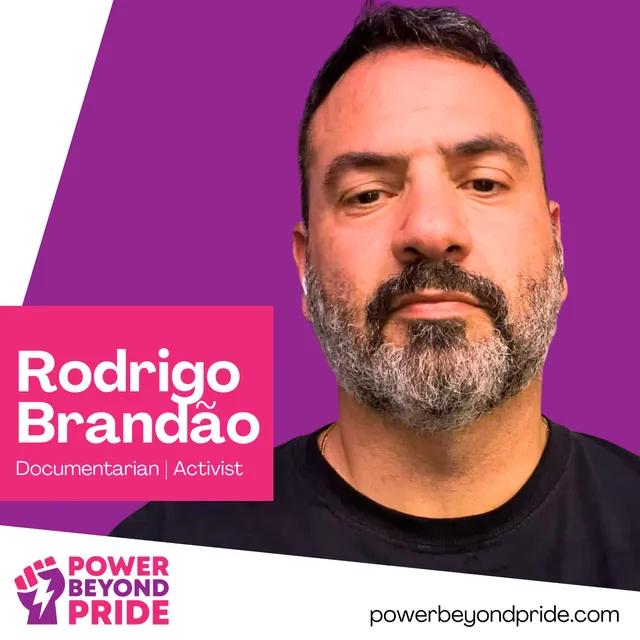
Clicks, Coalitions, and Creativity with Rodrigo Brandão
Listen or watch
In this episode
Rodrigo Brandão joins co-hosts Kate d'Adamo and Daniel W.K. Lee to explore the evolving role of media, activism, and art in driving social change. Rodrigo recounts his path from film student to communications leader, highlighting the value of storytelling and community in organizing. The episode examines the struggle for independent journalism, the strategic use of social media, and the need for inclusive coalitions. Listeners gain insight into Rodrigo’s philosophy of joyful, art-infused activism and the lessons learned from both Brazilian and American movements.
TranscriptRead the conversationAbout 59 minutes to read · 8,863 words · Daniel W.K. Lee, Kate D'AdamoOpen
- Daniel W.K. Lee
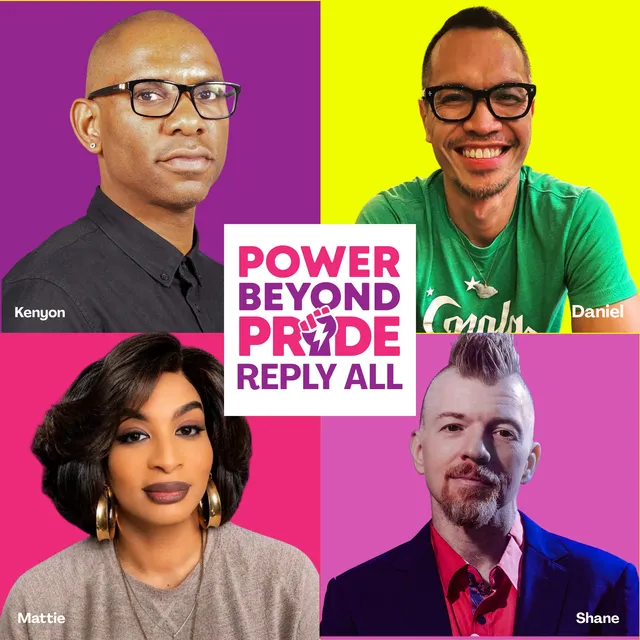
- Hello and welcome to Power Beyond Pride, a weekly queer change making podcast bringing to you voices and ideas from across our fierce and fabulous spectrum to transform our world. I'm Daniel W.K. lee, poet, author and salt on watermelon stand.
- Kate D'Adamo
- And I'm Kate, your resident high hard fam. We're your co hosts on today's queer cast journey. In this episode we are talking to Rodrigo Brandão, a Brazilian born communication professional working on social justice, climate and environmental issues. Rodrigo previously was the senior director of communications at the Intercept news organization and freelanced for the Marshall Project, Al Jazeera and other journalism and social justice organizations. Most recently, Rodrigo handled the New York press for the no Kings march. Welcome, Rodrigo. Rodrigo Brandão: Thank you, Kate. Thank you, Daniel. Excited to be here.
- Daniel W.K. Lee
- We're excited to. I'm particularly excited to have you. I've known you for, oh, gosh, many years. Rodrigo Brandão: I know. I'm glad that you got that out of the way. No one has aged. Yeah. Well, before we talk about your movement work, why don't you tell us or our listeners a little bit about yourself. Um, about growing up in Brazil, coming to the US and kind of how it's informed your work now and how you even see your home now in the U.S. yeah. Rodrigo Brandão: So, yeah, as you said, I was born and raised in Brazil. I basically lived in Rio de Janeiro for the first 20 years of my life. And I moved here when I was like just four months before I turned 21. So to go to college, I got a scholarship to study film. And it was my passion. I was like a film nerd. One of my first gay experiences I've ever had was like watching my wedding banquet in a movie theater alone. It's a funny story because I literally thought I was going to meet the love of my life if I just gathered the strength to go see this film alone. So I like laughed and I was like, oh, uh, it would be so amazing. And I walked in. Great film. No one even saw I was there. But it was like. But yeah, film was really my thing and that's what brought me here. I actually started my communication Studies in Brazil. I ended up doing a double major in four years. So I have a degree in film and then another in art history. And I moved to New York City in August of 2001, so right before 9 11. And that's really kind of like, the beginning of my kind of identity as a immigrant, as a. An activist or whoever. Whatever I am. I don't even know if I'm an activist. I'm more of a social justice person, I think. And. But, yeah, I think that moving here, moving to New York to sort of start this internship, but, uh, it was also like the internship of my dreams. I really had. Like, I interned at Sony Pictures Classics, which is the distributor of all these foreign language films. And it was a very hard to get internship. So that was great. So I moved to New York. Like, I'm going to intern at this place. It's going to be magical. And I'm going to have the time of my life. And then major terrorist attack happens. Then I realized that I can't survive on $5 an hour. And so history begins. I moved to New York. I didn't know anybody. I literally Googled, like, gay Brazilians because I wanted to meet people that I could talk to. And I ended up finding this queer Brazilian group called Brazilian Rainbow Group. I don't even think it exists anymore. I remember. Rodrigo Brandão: Yeah, I started doing stuff with them, and they. Through that, I ended up being connected with all these other queer groups. And I remember two months after I joined this group, there was an offer from alp, the Andre Lauder Project, to do a leadership, uh, meeting. And then my. The guy who ran the group was like, I don't want to go to this. And I was like, oh, let me go. And it's like, okay, go. So two months after I joined this group, I was going on a leadership quote, like, retreat. And then I met a lot of people there. And I think it was through those circles that I met you then, Daniel, and that I met some of the friends that are still my friends to this day. And it was sort of also the beginning of my political life in the United States. Sort of how I started learning about social justice, LGBTQ history, like, from an American perspective. And Then also as 9 11, the war on terror began, as the sort of, like, m attacks on Muslims, and all this sort of renewed racism and xenophobia started kicking in the US that was also sort of my. When I started to sort of, okay, what do I do? What am I doing here? Why am I here? Yeah. So that's Kind of the beginning of my life in New York.
- Kate D'Adamo
- Interesting. And I love, uh, that you say, I'm not an activist, I'm a social justice person. I'm curious what that means to you. Rodrigo Brandão: Yeah, good question. And I say that maybe first and foremost because I really respect activists. And I, um. It's funny, the people I'm surrounded by, activists, and they are not only the smartest people I know, but they're also incredibly, incredibly pragmatic. They are strategists. They can talk to anyone. They can talk to far right Republicans if they had to. They don't that much. But you know, like, it's just people that really can read a room and can sort of strategize, can go for realistic goals without losing sight of the sort of big dreams. I don't know. So I just have a lot of respect for activists and I know the skill well. I have a sense of what the skill is. And I think especially organizing is a really kind of a magical thing to sort of. And organizing in like, kind of democratic ways that we want things to be organized from the ground up. Like really listening to the base, listening to what communities need and want, not just what you think is best for them, you know. So I think that kind of stuff requires a particular skill that I don't have. I think these people are so. They're just great. And I'm, like I said, surrounded by them. I work for them, with them. So I'm always learning. I think in a way, like, I've definitely picked up some skills from them, but I think my contributions have been more sort of on the media side, sort of either from the communication side, like thinking about how do we engage this with, you know, traditional media, how do we translate this to the media landscape and then messaging with making films and videos. So I think that's really my specialty, if I have any. You're offering kind of the perfect transition. So I'd love to know more about that contribution. And you recently worked on the no Kings protest and m. The incredible coverage of those got. How did you get involved with that? Rodrigo Brandão: I think that really started because I'm been helping other campaigns in New York. I've been involved in other climate work in New York and social justice work in New York. So it was sort of an organic thing that people, uh, that were involved in that campaign or sort of the core group, they really came to me, frankly, five days before and we need someone to, we need help. And I was like, let's do this. And lots of things didn't happen the way that they could have happened if I had a month or. But also, I think we really did a great job. And we ended up doing a press briefing that really got picked up by every major network. And Mark Ruffalo showed up, Ilana Glaser, and we really, I think, were able to create a situation for them that they felt comfortable with. So, yeah, so I ended up, like, contributing. And I think that last year I helped folks that were organizing this campaign to basically pressure Citibank to stop investing in new fossil fuel projects. It was called Summer of Heat. Yeah. And it was basically like a series of sustained actions, sometimes three to four actions a week in front of Citibank in New York for four months, really. And also with like, different coalitions with really kind of with migrants. We, like, at one point brought migrants from the Gulfs. The Gulf South. Yeah. States. So we were like, really, the folks that organized this really did an amazing work in terms of like, kind of putting together a broad coalition of groups and people that wanted to come and support this. But it went really well. And I think that, um, my sense is that it's not the largest or one of the longest, like, sustained climate political actions ever. It was really. And we really pressured Citibank to explain both, sort of explain their greenwashing and also talk about how can you sort of say that you were friendly sustainable bank while also putting billions of dollars towards all these fossil. New fossil fuel projects. Mind you, we're not. And it's so funny to sort of, when you do that kind of work and to see how other people in the far right paint this caricature of leftist demands. We were very explicit that we were talking about new fossil fuel projects. We were. These were very, like, hard demands. And we knew that they were pretty big demands, but they were not impossible in a sense that it could be done. And the far right kept saying that we wanted like, all banks to stop all fossil fuel projects right now, cut oil from. You know, it was just like, no, we're not stupid. We're not. Like, no one is asking for you to turn off the gas, your local gas station and throw out cars into a precipice. But, you know, it's to the right and to the oil company's advantage to play the. To paint the right or the left or climate activists in this way. Oh, you guys are demented, right? Yeah, we got our media people, they got theirs.
- Daniel W.K. Lee
- Yeah, yeah, you're talking around this kind of idea of messaging which you kind. Rodrigo Brandão: Of have, uh, I mean, you have. Great experience on that mentioned before you, you worked at the Intercept. And for those who don't know what the Intercept is, it's a news media organization that had been started by Jeremy Scahill, Grant Greenwald, Laura Coydras and kind of took off right in the wake of like the Snowden revelations, which kind of was huge. Obviously despite kind of like this, I would say more recent like blossoming we'll say of like other organizations. Not like Zateo or Teo. Uh, yeah, Zateo, obviously from Jeremy and Ryan Grimm. I'd uh, love to get your thoughts on the challenges of what we might call like left wing media to kind of counter like mainstream or even mainstream also kind of being right wing, right leaning narratives, just big picture. Like your thoughts like why doesn't a show, aside from. I think the obvious answer would be money but like why doesn't the show like Democracy now, which has. Has a lot of cred among left leaning or left wing individuals, like why doesn't that show or other kinds of like media organization have the same kind of presence or influence over the news media landscape and how it shapes like discourse politically or socially? Rodrigo Brandão: Yeah, really good question. The challenge is that there are many. I mean one, I think it's easy to say it's sort of this, the corporate controlled like profit oriented inclination of our media landscape. I mean we, I mean people are chasing clicks, they are chasing view eyeballs. And in a way that's really not productive to the sort of. To journalism as a kind of effort. I mean if journalism is supposed to be something that puts the public interest at its center, right now we have profit at its center. So that's like a basic way of sort of. That I at least sort of think about what's wrong with media media landscape today. I think with that and not maybe just because of that, but with that comes this sort of uh. The phenomenon of like access journalism is the fact that there was a time there was this sort of. Journalists used to be a lot more confrontational and be a lot more interested in investigating really digging deeper and weren't always interested in sort of just getting close to power getting. And I think that we've lost that to a certain extent to the point that when you have journalists like Intercept, like Ryan Grimm, Mehdi Hassan, who aren't afraid to just call it like it is, to just like confront power, to really run stories that aren't comfortable to anybody, to Republican, Democrats, independents, like they really just sort of. And it doesn't mean that they're not politically savvy. There are fewer people who are savvier than Ryan Graham, but he's not gonna not run a story about someone in the Senate because they're Independent or Democrat. It's just not gonna happen. They don't. That's not how they're thinking about their work. So. And they're not the only ones obviously doing that. There are other the nation. There's a whole set of. You could call it leftist or sort of more. I'm, um, forgetting the word for this kind of like investigative journalism that was like done in the 60s and I remember, but it's a kind of more. Yeah, leftist leaning orgs and publications, but they are struggling with funding. Democracy now is definitely one of them. And they are also in a scenario that doesn't value that kind of approach to journalism. They're sort of. They're considered like in their best day, punks. Oh, that Ryan Graham. And in the worst day, they're like, well, you're unhelpful, aggressive. There's a list of objectives that are used to describe anyway. Lots of things. So. And that's not true. And you might disagree of their perspective. You might disagree of the way that they do. They report a certain story. They certainly made mistakes in their lives. Uh, every journalist does. But I think that kind of approach to journalism and to sort of finding a story, finding scoops and that kind of approach to power is getting rarer and rarer. And it's also not something that funders are really interested in being a part of because it puts them in the middle of different, very difficult situations and conversations. Because they can't. Yeah, they sort of have to respond to these moments where they're not advancing a particular ideology that they might be interested in. And at the Intercept, there was never any interference from funders. And I know because I was there, I was part of the. The great thing about working at the Intercept is that it was relatively small newsroom, so comms was not like this separate thing on the side. I was part of editorial meetings sometimes. Probably spoke more than I should have, but definitely was allowed to like, sort of say what I. Whatever I wanted to say. Obviously I wasn't making editorial decisions, but I was. I know that there was not. There was zero pressure from funding funders and even if they were us, none of them would have taken it. Uh, the opposite actually would have had the opposite effect. But I do think that's rare and also puts funders in this kind of complicated situation because they're expected to Advance. Even in a kind of nonprofit world, you're expected to. What is your theory of change? What is your three year game plan? I think that's the mentality that sort of funders often have. And journalism sort of works in its own way and has its own pacing and it's invested in a different set of values. So you really can't think of journalism in the same way. It's also just like expensive and also to uh, produce that kind of journalism where you're not just sort of sending a reporter out to write five stories a week or 15 stories a week because you need hits and you need like a bunch of, and you need like lists and whatever it is that's going to attract eyeballs. The reporters at Intercept would sometimes spend like weeks or months like digging a particular piece, would go travel nationally and internationally would, would. I mean they would kill stories that, if they thought the stories were not solid, like I think that they, I thought that they most of the time were doing things the way that they should have been. That was the only newsroom that I worked at that point and I thought, oh, I'm sure everyone works like this. It's not true. It's actually an uh, an exception. So yeah, I think the whole world is moving into this kind of like right wing space, conservative space. I think that's just the nature of capitalism. It's just sort of taking us to this place. Like even if you just sort of. It's where this ocean, the water is taking us. So to just sort of stay in the same place or go a little bit in the other direction, you have to put a lot of effort. Even I think newsrooms that aren't necessarily like right wing or conservative, it gets very hard for them to do like work that's really challenging power in a kind of meaningful, fundamental way. We just have to take a short break, so everyone please stay tuned as we continue our conversation with Rodrigo Brendel. Welcome back. This is Power Beyond Pride, a queer change making podcast. And I'm Daniel and here with my co host Kate, talking to Rodrigo Brown down. I'm, um, just going to go back a little to what we were talking about earlier and thinking about like social media as a disruptive but perhaps also a amplifying space for media and news and messaging. Obviously it says kind of furtive and fruitful as any kind of space, but I kind of wonder like, how do like organizations and, and nonprofits also kind of use that space to kind of message to the people that they're serving or Their kind of constituents or the people that they want to affect or influence. Like, what aren't they kind of getting right in order to kind of shape the conversation around the, uh, issues that they are, that they're working on? Rodrigo Brandão: Yeah, Uh, I mean, I think I can give you a very personal answer to that question. And I. And it's sort of based on my experience working in climate spaces. And I think I'm sort of perhaps like I'm sort of trying to frame myself as a person that sort of both sort of works at this kind of level, kind of maybe abstract narrative level of messaging and focus, thinking of distribution channels and audiences and et cetera, but also has like, more than one leg or side of my body, whatever it is, like, on the organizing side. Because I think that often what you have, obviously in activism or in everything in life, you have this movement where things get unequally valued. Right. Like where like, sort of mainstream media sometimes gets more value than doing the organizing work in a local town or setting up a local group meeting of organizing your neighbors. Like, right. Oh, that's cute. But really, what's really important is just to get a hit on cnn. No one ever said that. But I think that. I think it's important to really avoid that and really to think of sort of the offline and online as like, part of one goal and to really not have a movement that doesn't recognize that there are multiple hotspots, that we need multiple hotspots and multiple strategies to really accomplish what we're trying to accomplish, to have meaningful social change. We're not gonna, uh, you can't really do anything without social media. So, like, also to say, well, let's forget the Internet. Let's just, let's just take to the streets. Well, great. But like, it's. It would be very ill advised to not use the tools of like, digital organizing that are in our hands. Except that what you sometimes have is for entire organizations that are only thinking about creating kind of like audience profiles and Facebook ads and Twitter ads. And it's just, well, that's not going to solve it either. You need a theory of change. You need connections with local, national, regional groups. You need respectful connections with those groups. So you need to really understand what their goals are and try to articulate, like, small and broad coalitions to get, uh, those objectives, to even think what those objectives are and what are the things that we can work together. And then you need this sort of like, narrative strategy work. You need sort of, how are we telling this story of this campaign of this movement in a kind of. In many arcs, right? Like in a kind of quick arc, in a sort of medium arc, in a long arc. And how do you do that without leaving in a way that's effective, that really speaks to people's living conditions and doesn't let. Throw other people under the bus? That's not what we're seeing, for instance, a lot, not a lot. But there were occasions in the climate movement, for instance, where you'd see people putting out climate messages that are basically like, oh, we need to solve the climate crisis, because otherwise these immigrants are going to come over. Like, that's why we should really fix the climate crisis, because we don't want all those immigrants coming. And it's. Please don't do that. It's just like, that's not. You don't have to also jump on a bandwagon, just get your message. Or in the middle of, like, all this national security talk, sort of have conversations like, it's really important to spend money on climate change and military. Like, sort of. So how do we tell these stories without supporting other structures that we know are bad or other narratives that actually throw other kinds of people under the bus? Like, that criminalizes more people. Like, how do you defend immigrants without saying, are good and bad immigrants? If you don't work and accept minimum wage and don't let us exploit you, you're a bad immigrant and you can go to jail. And you can. So those are not easy questions. I don't want to also say, I know exactly how to do that. Hire me. But, like, it's not at all. I don't know. But. But not knowing what not to do is part of it. What. How can I. How should I not talk about this? It's already part of the conversation. So I don't know. I think that. And that should really inform, I think the social media and the digital and the online conversation too. I think we're over the sort of canceling period. I think that only the right really talks about the left as a canceling parade, like canceling each other into infinity. But how do you, like, change the. How do you tell people, hey, let's, uh, not talk about this. Let's talk in this other way. You don't want to throw these other people on. How do you call people within. Right. In a way that's. How do you call movements in? And I don't know how to do this. Like, today at work, I didn't. I called something out. I called someone out. I didn't call them in. But just as a reminder, we should try to do that as much as possible, because that's how we build coalitions. And often that person that makes a mistake or sort of hadn't really examined a point of view or hadn't really understood how their narratives are potentially causing other problems over there, they can become an ally. And I think we do need broad coalitions. So. Yeah, uh, that doesn't exactly answer your question. I do think the narrative work is becoming really. It's been for a while now, like, um, in certain circles, like, very. A cool thing to do. I think it can be powerful in some instances, but I think only when it's really connected to real groundwork, to, like, real. Like it's nothing without something to back it up, without an organization that really understands, has an audience, has a community that it's serving, has very good, clear, sophisticated goals. Doing narrative work for those orgs and for those campaigns is a lot of fun. It's. Wow, this is a really. Uh. Because the ideas are already there and you're just. You just have to sort of distill them and kind of rearrange them in a way that's interesting. But otherwise you're just. And I think, like you and I, Daniel, we discussed a lot about marriage equality, for instance, like how there were many instances in which the movement was very. Was really set on getting marriage equality past and sort of achieving those goals. Fine. Can you do that without throwing trans people under the bus? Can you do that without sort of reaffirming, like, sort of the military and doing that without questioning some complicated things about the military that need to be questioned? Hate laws. And so I think that there's. And hopefully we learned a lot from it. Right. I think that also even the way that the dire situation of the trans movement now. Well, not the trans movement is doing really great. Like, trans people are super organized and doing beautiful work. I think that the, uh, queer folks, like gay men and like all of other people haven't really showed up in the way that we should show up for the trans movement. And that's why we're now where we are in terms of. They're again, like, being. I think that trans people are again, vulnerable in terms of legislation in this country, in terms of being expelled from military and from jobs that they want to keep and be a part of. So. And you could really make an argument that really started with when we left them behind around 20 years ago or 15 years ago, when we were so set on marriage equality, on sort of normalizing a vision of queer life. And now who's paying the price again for that? Like, it's in part trans people, I think.
- Kate D'Adamo
- So I would love to go back and pull on, uh, a little bit of what you were talking about around the use of narrative. And I was just sharing with your memory. Go. I came up as a community organizer, and I feel like, especially as a young community organizer was really taught that narrative is kind of. It draws people in. And the use of a personal story is like public awareness about your issue. But it was always a really flat way of thinking about narrative and art. And I'm curious, especially coming from Brazil, which has just such a different culture and different relationship to activism and art, I'm curious how you think, what is the role of art and narrative in social change beyond just the quick, uh, quote at the top that gets you to open the article before they transition to the quote unquote expert? Rodrigo Brandão: Yeah, I think you. It's a great question and not an easy question. And I think also you. Right away, you touched and exemplified. One of the biggest, largest problems with that is that sometimes the movement thinks of artists as like, illustrators. Like, they brought. They bring artists in, you know, when everything is done. And so can you do this design for me? Can you do this image? Cartoon logo? And that's not. Artists are creative and really, uh, creative geniuses. Like, they're creative people. That should be part of the entire process, right? Like, we should bring them in to really think about how the messaging comes across. And hopefully their aesthetic can inform everything that we do. Not just like the image that comes up that shows up when you click on the ad or when you click on the Evite. It should be really thought of as how do you build an experience? I hate to. This is sort of like a product. Folks use, uh, the word experience a lot. So I don't mean that way, but I mean, like, how do we. How do we make the entire experience of being an activist and being in community with activists, like, beautiful, joyful, like an artful experience, Something that really nurtures people as opposed to just drains them or makes them feel like they're not doing enough or gets them angry? Because art is nurturing. Art is. Is beautiful and joyful. It's not the only way to make art. I think art can be angry and art can be heavy as well. But. But how do we think. How do we bring artists and sort of let them be part of the whole process and learn from them in terms of building a static experiences that are Sort of larger than just a specific medium or a moment that kind of inform a whole art also sort of provides the perfect background and scenario for community experience. Right. Like it's sort of. And not. And I don't mean just making art together, but definitely that. Like, sort of doing. Painting together or doing work together is also beautiful. But also I think just like the. An art piece or a show or whatever it is that an art create can really sort of make a, uh, community experience, can improve the experience of a community, can improve how people relate to each other because they're going to be surrounded by beauty or they're going to be embedded in a context of an aesthetic context. Like they're going to be embedded in beauty. So, yeah, I think artists need to be brought in early on that they need to be listened to and they should be informing our politics, um, not just sort of illustrating our politics. And because we need our politics to be joyful and we need to go of these tiny discussions about whatever it is that we're discussing this week that is like super tiny and irrelevant. Like, I think artists can also take us out of our own heads. Wow, let's look at this together. Let's sort of experience this, take this in. Uh, and really kind of let. And also we talk a lot about emotions, right? Using our emotions in our politics. And let us feel something, whether it be anger or. But like, art really helps with that too, I think. And we know that because we all seek art in that context, whether it's music. And I think that's something that. I think Brazil does it differently. And I probably understand better the way that Brazil does it. It's just. Music is everywhere. It just. You don't have to sort of invite a musician to come to it. It's just like, they'll come back, it just shows up and they'll have drums and they'll have a guitar, and it would just happen, like, organically. And I think that it's also about a kind of flexibility and like a more kind of elastic way of sort of engaging with social spaces too. I think it allows for. In a city like New York, we're not even supposed to step on the grass. And it's harder to create art because you're just like, okay, you have all this little box here. You got to make an art in this bathroom. And you know what I mean? And in Brazil, it's just whatever. You can just paint any mural. But I think we can all. And it's something that we're actually talking. I'm talking with organizers about sort of how do we bring artists early, how do we let this really inform the experience? And also, it doesn't. The messaging doesn't have to be only like, in this kind of direct language. It can be poetic, it can be open. It should be poetic. It should be open, it should be expansive. It shouldn't be just like, we want this, right? It should be like we want beauty, like we are. We want to live well together. I don't know, it's just. I mean, Dan should really talk about poet poetry, not me, but. Or UK as well. But like I said, I mean, poetry is something that really fascinates me. And I. I don't read enough poetry. And I know zero about it and I still read it. I never took a poetry course. I was never told how to read poetry. I know I read it wrong. I'm sure, I'm sure I don't engage with it in a proper way, but, like, I just buy random poetry books sometimes and I just find it so relaxing and I don't know, I don't know.
- Daniel W.K. Lee
- There's a way to read it wrong. I think maybe there's just, oh, uh, some of the things that you didn't, like, you didn't hit, you didn't grasp. Sometimes the register is high and you're like, I'm not quite getting. Or there's a little bit of opacity just because of like, syntax or the way things are being phrased. But I mean, I think for me at least, like successful poetry or just like successful art, like communicates something and provides an experience one one way or the other, like emotionally, particularly I'm interested in the emotional aspect of it. And maybe that emotional aspect is kind of at the gateway to a, uh, narrative or communicate a kind of a political idea, just unbeknownst to you or whatever. I mean, I mean, you're. This is not that different, I think, to the language of film, which you're a filmmaker, we can kind of talk about that. Like there is essential about any kind of art is this kind of. Is communication. And I don't think that. I think fundamentally that they align that way. Maybe the kind of nomenclature, the language might be a little different, but we're all kind of like trying to say something, as it were. And speaking of saying things like, tell us about filmmaking, like, how did you become so passionate about it? And you worked in film and like the business side, you worked at Kino Orburg. You helped establish a cinema slate, right, which focused on Latin American cinema. So you kind of done work to kind of platform Latin American filmmakers in film. Tell us a little bit about your journey there and where is it now, outside of the social movements, kind of like work that you're doing. Rodrigo Brandão: I guess I just want to say too, because I think maybe m. Also my point was that there is a spec. There is a knowledge to art, right? Like, I totally agree with you, but I also think that there is good poetry and bad poetry. There's a knowledge to filmmaking. And not to say that there's a list of good films and bad films, and you should not like bad films. You should only like good films. I'm not saying that, but I'm saying that it's a skill, It's a knowledge. It's a. There's a history to it. These are specific mediums that have been doing different things. There are movements within these mediums. And the same with poetry. And I think it'll be great to get people like you who study poetry to bring poetry at that high level to movements and bring filmmaking at that high level to movements and bring in theater. Because those things are incredibly complex. And it's hard to make good theater, good film, good poetry, and let the people who know how to do it. So I think we just need to sort of build the space for them to come in and take it over. I think. And I think for me, I mean, film was always kind of my escape and my little church and my little. And it's also a rabbit hole. It's. Once you start. I remember going to this vhs, like, rental stores, and I think I really became like a cinephile. Was. When I went to. There was this little store, like, hidden, like, near my apartment, my home in Brazil. And they would let you rent. Like, you could rent up to 20 films. And it was like $1, let's say, per film. And you could keep as many days as the number of films that you would rent. So I would leave with 20 tapes, like, barely, like, literally dropping tapes. And I would bring the tapes home and I would copy them. I would make copies of tapes because I wanted to keep the films. And I was like, just like, watching and watching films, like, compulsively. And you. And then you learn, wow, this is like a whole world. There's, like, people in Poland making films about death penalty. I remember when I saw, like, a short, uh, film about killing. It just completely blew my mind. It's just like, who is Kielski? And then you just look it up and, oh, this film actually was so powerful that he Helped banish. And that capital punishment in Poland, when it came out, it was like, so like you realize, oh, this actually has consequences. You can make something that is so powerful that it can actually move people to do certain things. I don't think that's the point of art. Make people do ab. Get them to put something in their basket. And it's not like that. But I think that definitely it moves people in certain directions and you can get people to reflect on things. So I mean, I think that honestly I've always liked the sort of distribution, commercial side and marketing side of filmmaking too. And I really wanted to work on it. I also was passionate about cinematography. I am still passionate about it. So I think all things being equal, I probably would have become a cinematographer after school if I had the option. But I had to get. I wanted to stay in the US I had my first boyfriend. I was like, I'm going to stay in the US and we're going to marry, whatever. And yeah, and I was like, I needed always about marriage. Yeah, I actually don't think I was thinking about marriage. But anyway, like, I wanted to stay in the US and I needed a visa. Uh, I needed someone to sponsor me to stay. So I was like, go and do distribution work and try to get a job that way. And I did and I got a job and I was able to stay. So mission accomplished. But it's also I think that even if I had done cinematography work, if I started working in film sets and had taken that route, I still would have. Would have had that side that wasn't fulfilled. So I'm not. I don't even regret it necessarily the path I took. But I was still. I've never really stopped sort of thinking about making films and sort of. But I think that the more I also sort of was introduced to kind of experimental cinema and to kind of academic. The film festival circle and like academic film circles. Like I started also thinking of film more outside this sort of shopping mall, commercial theater like Marvel Movies, spaces like. And I realized that the more interesting spaces are this kind of smaller are uh, the film festivals that show these odd films that don't get distributed in most. And that's why I wanted to work in distribution actually, because you get to work in the small companies that do pick up and distribute and find artists for films that are weird and rare and kind of that need to be seen, I think. And I did that Aquino and I did that with cinemas late when I released like a bunch of Brzena films here. So. But I've. Yeah, I've always. I kept making little things and I am now I'm sort of working on two short documentary projects. One is about an activist of all things like, and it's really about civil disobedience and sort of this man's. He's a musician. Is sort of his own relationship to activism and just sort of coming out gay like late in his life. And why is. Has it taken on. Why is he being arrested every week like protesting Citibank and Zionists? And I'm working also on another short film about. I'm really interested in housing like issues. I mean obviously if you're in New York, you'd not be like shocked by like rents and like housing injustice in this city. So I ended up getting involved with. I got uh, two fellowships in the kind of housing urban space. And I've developed a couple of video projects with them. And I'm now uh, with this uh, work called Housing Narrative Lab. And I'm working on a short documentary about the Red Hook port, the development plans. So they're trying to make. Turn the port in Red Hook and to build housing there. Basically a sort of. And obviously luxury housing like this build this gigantic towers. They're going to sell for millions of dollars because you get to view. You get like a Statue of Liberty view. But also. But you know, it's really not what the neighborhood needs. The neighborhood doesn't have any kind of like infrastructure, doesn't even have subways. The public housing there is in terrible condition. That really needs to be the focus. And they really should get more public housing there and not more luxury housing. It's not what EDC wants to do. And there's a whole community organizing trying to fight it. And also there's this sort of. It's the only port that's working port in Brooklyn that could still be developed and could be. We could have manufacturing jobs there. We should have a uh, resiliency plan in that neighborhood. And to. Because there's too many traffic is already impossible and there's like literally 10,000Amazon trucks a day in that neighborhood polluting the whole place and making transportation even harder. They could be bringing some of those packages and products in via the waterways. And it's also really a film, I hope, and a project about like why doesn't New York develop its ports? Like why are returning. I was sort of port area into like luxury housing and like we are an island. Like we should have working ports. We should have a better relationship with water. So I know. So those are two things that I'm working on right now and. Yeah. And that kind of gets me going. Just sort of like it. It's sort of important for me to be creative in some way. Have a tiny part of my life that's still creative and still kind of grabbing a camera and going somewhere. It just makes me happy.
- Kate D'Adamo
- Well, both of those sound absolutely incredible. But we do need to take a short break here. Stay with us because we'll be back in a minute to share some fun facts, plus a speed round of, uh, questions to get to know you. Welcome back to Power Beyond Pride, where we're talking with Rodrigo Brendao. I'm Kate and I'm here with my co host, Daniel. Okay, so time for speed round questions where we get to know you even better. Rodrigo Brandão: Mm, mhm.
- Daniel W.K. Lee
- This is where we ask you some questions and you don't. Well, try not to spend too much time thinking about it. Uh, just give the first answer that comes to mind. Are you ready? Rodrigo Brandão: Okay, just give me a second. I am. Um. Go for it. Okay, good. Inhale, exhale. Rodrigo Brandão: Yes. Uh, okay, first question. If you had to sing karaoke right now, what song would it be? Rodrigo Brandão: I will survive. You told me not to think. So you're good. Yeah. That's great. Rodrigo Brandão: That's gonna be way more than you. Than you want to know. I think it might answer the next question that we had.
- Kate D'Adamo
- Next question. What's your favorite gay anthem? Rodrigo Brandão: Oh, gosh. Any Kylie Minogue song can get you out of my head. Nice. Rodrigo Brandão: Um, yeah.
- Daniel W.K. Lee
- Yeah. Uh, that's a good song. Uh, well, speaking of songs, what's the last song, movie, or book that made you cry? Rodrigo Brandão: Oh, gosh. So I watched this Steve Sotomberg film. It's like a haunted house movie that I thought was, like, really fascinating. Presence. Yeah, it's called Presence. It made me cry.
- Kate D'Adamo
- That sounds amazing. Rodrigo Brandão: Yeah. What do you wear to bed? Rodrigo Brandão: What do I wear to bed? A mix of like, naked to just like fully clothed. Sometimes. Yeah, It's a mess.
- Daniel W.K. Lee
- Depending on the weather or how, like, how cold the air conditioning is.
- Kate D'Adamo
- Yeah. Rodrigo Brandão: Or just sometimes I get really lazy and I'm like, I'm just gonna sleep like this.
- Daniel W.K. Lee
- Uh, okay. If you could have sex with a celebrity or any celebrity, who would it be? And what do you think it would be like? Rodrigo Brandão: Oh, gosh. Oh, my God. I'm gonna. Okay. I think Bradley Cooper. Sorry. I just, like. Because I actually saw him in person once and I didn't think he was attractive. And then I saw him in person and I was like, whoa, this man is Interesting. So. Yeah, it would be tender. I love it. Question mark. Tender. Rodrigo Brandão: Yeah. Yeah, I know. Maybe so.
- Kate D'Adamo
- I feel like every celebrity encounter for me is, you're not the size I thought you were. Was Bradley Cooper the size you thought he was going to be? Rodrigo Brandão: No, not at all. And that's exactly what shocked. I. For some reason, I thought he was, like, a short man and he's, like, tall and just, like, very proportionate and I don't know, just. And this smile that's just. What is that? And kind of looking very. Just kind of easygoing, you know? Yeah. I mean, not the only person in Pedro Pascual, for sure. But that's. Who wouldn't. That's everyone's answer, right? Rodrigo Brandão: Yeah, I know. So I don't. I don't want to be that.
- Daniel W.K. Lee
- Yeah. What's tall, too? You're like six three. So, like, your height. Rodrigo Brandão: He was kind of my height, and I don't even think of myself as tall, but I had just imagined him as, like, 5, 4 for some reason. Yeah. I don't know. So I suddenly, I'm like, wait, you are Bradley Cooper. Like, you're coming for the Short Kings. Oh, my goodness. Okay. Rodrigo Brandão: Totally. I'll take that. Rodrigo Brandão: I love shirt, guys.
- Kate D'Adamo
- Uh, notice. Next question. Have we ever actually had a hot president?
- Daniel W.K. Lee
- No. Rodrigo Brandão: Sorry. I agree. Uh, what's the one item you can't live without? Rodrigo Brandão: Well, Lula is a hot president, so. So maybe not. Not in the US But Brazil. Say that again. An item that I can. Yeah. One item that you can't live without. Rodrigo Brandão: Fan. I really love Clack fan. No, not even. But sure. Yeah. But I actually. I'm, like, addicted to the sound of fans. And it's been a problem in every relationship. I will want to sleep with a fan on or a fan near me. And the white noise situation. Rodrigo Brandão: It's not even white noise. I just need the wind, too. Okay, so it's like a whole thing. Yeah. And I need cameras. I like cameras. Fans and cameras. Right? Rodrigo Brandão: Yeah. Yeah, that's it.
- Kate D'Adamo
- Nice. Is a hot dog a sandwich?
- Daniel W.K. Lee
- No.
- Kate D'Adamo
- Correct. Rodrigo Brandão: Yes. Oh, I'm glad.
- Daniel W.K. Lee
- What was your AIM handle? Rodrigo Brandão: Oh, shy Yow. Yes, it was. RPM M. Brendao. RPM M. Okay. Rodrigo Brandão: Yeah, I remember. Yeah. Uh, it sounds butch. Rodrigo Brandão: No, it wasn't. Kate, you don't even know what that is, do you? Do you know what an AI? Yeah.
- Kate D'Adamo
- Oh, absolutely. I am currently of the AIM GeoCities era. Rodrigo Brandão: Okay. It's AOL, right? Like, yeah.
- Daniel W.K. Lee
- Okay. AOL instant messenger. Rodrigo Brandão: Yeah. Okay. Oh, my God.
- Kate D'Adamo
- And if you made that bring noise Right now we'd all jump for our laptops. Rodrigo Brandão: Absolutely. Most overlooked Brazilian dish. Rodrigo Brandão: M overlooked Brazilian dish. I guess it's uh. I mean fishoadas are just look wonderful. Like veggie fajoadas without like meat are just really great and people don't really give it a choice. Give it a chance.
- Daniel W.K. Lee
- Sounds excellent. And then finally, what's the best place to get Brazilian food in New York City? Rodrigo Brandão: Oh, uh, so there are two Brazilian restaurants like near my home. I actually had lunch at one of them today. They're not the best, but they're like dear to me. So they're the ones I like. What is that place? It's like a really famous one. It's really good. It's just so expensive. The one in Midtown? Rodrigo Brandão: Yeah. Yeah. Fogu Dichisham is really good. Yeah. Fogojishom is like a steakhouse chain as well. Those are both really good.
- Kate D'Adamo
- Well, thank you for those and thank you so much, Rodrigo, for joining us. And thank you for painting such a beautiful picture. Thank you. Of what it means to organize out of beauty and joy. I think all of us especially right now, can live in that visual for a little bit and think about more ways that we can make our spaces more beautiful, more emotional, more connective, and the ways that we need to bring in art right now to do that. Uh, so thank you for gifting us that image and that vision. Where can people find out more about you or follow you and your work? Rodrigo Brandão: I guess I'm on Twitter. I Brendao nyc terrible Twitter handle or X handle. And I guess I have a website. It's Rodrigo, just my name, rodrigobrandell. Com. I don't put everything there, but there's just a short bio and a couple of samples of things I've done like a long time ago. But uh, and ah, I have a video of Dan that I want to. I need to put out one day like shot in 2003 or something.
- Daniel W.K. Lee
- It's so wild.
- Kate D'Adamo
- Well, we're very excited to follow your short projects and look for a video where we're going to talk about 2003. Dan. Rodrigo Brandão: What? Next time. Oh God. Thank you, Kate. That was such a lovely conversation. I really appreciate you bringing me on. Well, thank you so much. I'm your co host, Kate and you can follow me and find more at reframehealth and justice.com or on Instagram at Harm Reduction fans.
- Daniel W.K. Lee
- And I'm your co host, Daniel W.K. lee, author and poet. You can follow me on bluesky@daniel wkle and on uh, Instagram @strongplumb. Remember to subscribe and get your friends to subscribe to Power Beyond Pride on Spotify, Apple Podcasts or wherever you get your podcasts and check out our site at, uh power beyondpride.com power beyond pride.
- Kate D'Adamo
- Is a project from A Great Idea, a queer owned design and content agency. Learn more about them atagreat idea.com this.
- Daniel W.K. Lee
- Episode was produced by Shane Lukas. Smitha Sarkar was the project developer. Our editor is Jarrett Redding with support from Ian Wilson.
- Kate D'Adamo
- We are both part of this podcast awesome host team and we invite you to send in your questions and comments@uh.powerbeyondpride.com.
- Daniel W.K. Lee
- And check out our new episodes each week. And we look forward to Queer Change making with you next time. Thank you from all of us at ah, Power Beyond Pride.
Transcribed automatically and lightly checked. If something is wrong — a name especially — tell us and we will fix it.
Episode #35
Clicks, Coalitions, and Creativity with Rodrigo Brandão