

Episode #60 · Jun 16, 2026
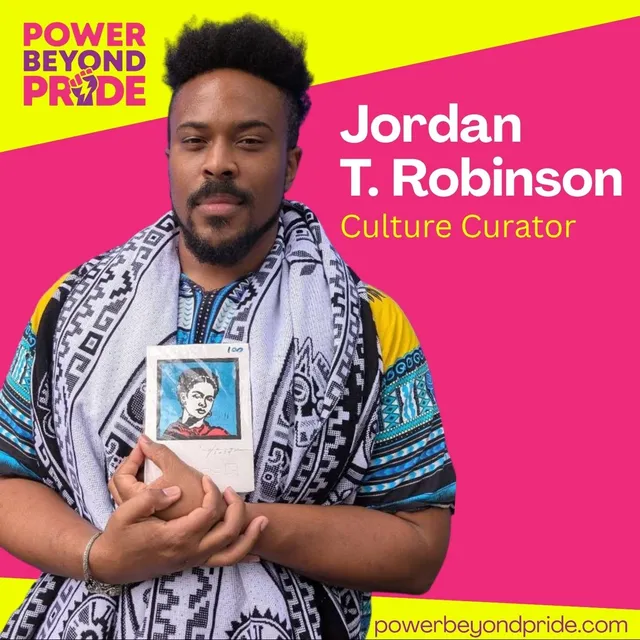
Art, Community, and Change with Jordan Robinson
Listen or watch
Watch this episode
In this episode
What happens when creativity meets civic engagement? Jordan Robinson explains how his experiences in education, museums, and community programming inspired him to build projects that create both beauty and impact. From transforming neglected spaces into playgrounds to organizing exhibitions that spark meaningful dialogue, he demonstrates how art can help communities connect, heal, and grow. The conversation also tackles current challenges facing the arts, including funding cuts and political pressures, while offering practical ways listeners can support creative organizations. It’s a thoughtful discussion about leadership, service, and the lasting power of culture.
TranscriptRead the conversationAbout 44 minutes to read · 6,535 words · Jordan Robinson, Kenyon Farrow, Mattie BynumOpen
- Jordan Robinson
- Curators are people who care for the art, the artist, and the reasons why we should even continue to care about these things. Art itself is a cultural artifact. Art is proof of our existence. And for us as curators, it's our job to preserve that narrative, preserve that history, preserve that culture that's embodied in the artifact.
- Kenyon Farrow
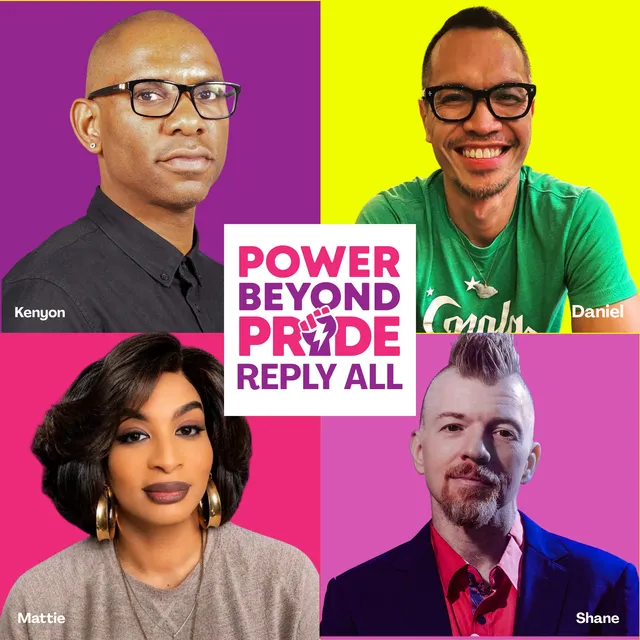
- Hello, and welcome to Power Beyond Pride, a weekly queer change making podcast bringing you voices and ideas from across our fierce and fabulous spectrum to transform our world. I'm Kenyon Farrow. I'm a writer, communication strategist, Strategist, Sorry, activist, and very glad to be here today.
- Mattie Bynum
- And I am Mattie Byno. I am always the loudest person in the room. Whether I am speaking or just standing, my presence is always well and known. So we love that. And we are sitting here today with the amazing Mr. Jordan. And, uh, today we get to welcome someone who reminds us that art isn't just something that we hang on walls. It is something that we live inside of each and every day. Jordan Robinson is a creator in every sense of the word. He is the founder of JTR Presents, a contemporary art museum and a design firm rooted in creative community services right here in North Carolina and Raleigh, to be exact. In today's world, Jordan shows us that joy can be intentional, that art can be accessible, and that building communities can both be beautiful and bold. So thank you, thank you. Thank you, Mr. Jordan Robinson, for being on the show with us today.
- Jordan Robinson
- Well, thank you for the privilege of having me here. It really is an honor. And thank y' all for even thinking of me.
- Kenyon Farrow
- Uh, oh, no, thank you. We're so glad that you're here to join us. So, Jordan, as an artist, curator, illustrator, designer, and founder of JTR Presents, SO one that's just, like, an amazing set of titles and descriptions for you. But before we get into that and your kind of work, now, um, tell us about your origins. I often like to say, if this was the Marvel Universe, what is your origin story? So for you, how did you become the artist, curator, illustrator, designer, and obviously founder of this organization?
- Jordan Robinson
- Yeah. Oh, I like that analogy because it makes me feel like I'm a superhero. Yeah. So I am born to a family of educators. Mom, um, has been an English teacher for about 25 to 30 years. My brothers, they both worked at NC State, Chapel Hill, just to name a few. One of them continues his career in education, working at a charter school. So I've been around a bunch of educators, and so I think of, uh, art often. With education and cultural preservation, we can get more on that later. But to answer your question, we're all New Yorkers, but I was raised in the South. I moved down here when I was two. So I. I kind of had the best of both worlds. The way I say it, it's. I have a New Yorker mindset with a Southern personality. I'm the most polite person to ask you to move because you're in the way. And as far as the arts, my family's just been so supportive with mom and dad, supported me and my brothers in everything we did, be it Scouts, sports, band. I was playing with instruments and drawing pictures since I was like two. And they just kept pouring into us and I kept going and doing it. So by the time I was eight, because I think it was eight, whatever grade I was in, uh, I remember someone asking me, like, when I grow up, what do I want to do for a job? And I was like, if I got to get out of bed every day to do something, I want it to be something fun. I want to do cool things with cool people that matter. And so artists, engineers, designers, all of the architects, all of that looked interesting to me when I was looking at job professions when I got a little older. And so by the time I got into A and D, I was planning to be an architect because I was signing up for the architectural engineering. And they put me in art, which was the best mistake they ever did because that's how I met one of my mentors. I can also expand on that later. So, yeah, that's a little bit of an over summary of just my experience and kind of where I come from.
- Mattie Bynum
- Well, the good thing is you were. You said you started in college as an architect major, but art is an architect of life, so it does still kind of go hand in hand in what you're doing. You're still an engineer of sorts. Now, instead of constructing buildings, your engineering life. And I think a lot of times, especially as an artist, that's a harder but more rewarding job because you create the soundtrack that people's lives develop too. You create the illustrations that depict a person's mood and feelings. So when you think of as an artist and you are in that creative moment, what was the moment in life that most influenced you to tap into that creativity? How did that get sparked inside of your.
- Jordan Robinson
- Yeah, gosh. The first thing that comes to my mind was. So after I just said my parents poured into me, the first memory that comes to mind is mom. So I remember I had been like four or five, and we were playing with Legos like, we had like tubs of Legos. And I remember we were building this house and mom had like, we were putting in like different blocks or whatever to make it. To make the kitchen appliances. This is the refrigerator. Like, we were going in details. And when we were done, I was just fascinated about that. And I was like, oh, that's really cool. So one of the reasons why I wanted to do an arc, wanted to be an architect, was because it just reminded me of that experience. And again, doing cool stuff that matter, you're designing spaces that people are going to be using every day. In fact, in high school, we had to do a graduation project. And so I was doing some research about particularly climate change, specifically with our carbon footprint. And a lot of that comes from energy consumption, which use, which uses like coals, I think natural gas, if I'm not mistaken. And while using alternative energies was helpful, it still was kind of a big problem. And so I was doing research on how does architecture help cut our, our, uh, carbon footprint. And one potential avenue was designing homes that self heat and self cool throughout the seasons. So you won't need to use your H Vac, which makes up about 50% of the energy consumed in an average household at the time. So I did a whole research project on that. And then when I went to A and T, we were doing our graduation project, I was like, well, why not I just pull that research back up and then design something to fix that. So that ended up being my graduation project again for college. But to answer your question, it started with mom, it started sentimental. And then mom and dad, because dad, I mean, we bond over music. So dad would give me the history of sort of the classics of jazz, particularly like Ella Fitzgerald, Duke Ellington, Sam Cooke. Dad was more on the music side. Mom was more visual arts. Because I remember one time in middle school, I was drawing in, like one of my notebooks. She's, I'm tired of you drawing stuff, these beautiful things, and it's on lined paper. We just cannot have that. So she took me to an art store to buy me an actual sketchbook. So it's like little things like that.
- Mattie Bynum
- Yeah, I love it. That sound like something that my mom would have done too.
- Jordan Robinson
- Yeah, it was just. It was so dramatic too. Just, that's enough. We're going to the store now. But that was so that is what really drives me with a lot of this stuff. It's like the journeys we get to have with each other, the memories we get to. The memories we get to create with each other. That we can cherish. And then, if I'm being fully honest, it's nice to know if whatever we create actually helps other people too afterwards. So that's always a sweet spot. That's just kind of been. Again, at eight years old, um, that's kind of what I was envisioning. And I felt like those jobs would provide that. And thankfully I was right. Yeah.
- Kenyon Farrow
- So kind of fast forwarding to where you are now. You work at this kind of intersection of art, of museums, and kind of community service, community programming work. And there's been a lot kind of written and said or demonstrated over the years about people think about museums as kind of an exception, exclusive kind of space that. That actually a lot of community don't necessarily have access to.
- Mattie Bynum
- Right.
- Kenyon Farrow
- There's a lot of debate in the art world, has been for a long time about that. So for you, why do you feel like this intersection is so important in terms of bringing art the kind of museum space and then community together? And what's your sort of take on what's happening now in terms of arts and the attacks from the current administration?
- Jordan Robinson
- Yeah, a lot to go from there. I want to break up your question a little bit. So the first part with how I see particularly museums and like art institutions, there is. There's like a larger narrative and then a more personal narrative. So starting with a larger narrative, there seems to be a bigger effort. Even before everything that's currently happening was happening, there was already a bit of a shift to museums and cultural facilities. They were becoming more of lived in cultural spaces rather than quiet places for you to just quietly look at art and then go about your business. And with the change of audiences, like particularly with millennials, Gen Z, Gen Alpha, as newer generations are starting to come of age to where they're entering in these spaces and engaging with these spaces, they're engaging it differently than the previous generations. And I think a lot of these institutions caught on that and was trying to make and are trying to make that shift now. I think it's a balancing act mainly because those that support those institutions, be it through grants, private donors, there's always a little bit of pushback. Right. This reminds me of my time at the Mint M Museum. When I was at the Mint Museum, I was only working at the front desk. And at some point, one of my mentors who was part of the community engagement program, she was running an event with Dr. Aleo Ah Twiggs on a series of art pieces he did to commemorate those that were affected by the Charleston Nine Shooting. And so I had brought up to her, hey, I, um, I played around with Live Stream before because that was a new feature that YouTube was doing. And then later on Facebook and all the other social media platforms were doing live streams. So I. I just finished grad school at SCAD with arts administration. And I remember from that program, I was thinking about, like it was talked about, of how community engagement is a way for institutions to kind of connect with the communities they're supposed to serve and understand what opportunities there could be for those institutions to continue helping the public so they can get more support. And so all that said to say livestream was something of interest to her. So she indulged and we did a live stream, and it slowly gained popularity. So that was where we got a lot of our online engagement from younger audiences on YouTube and then more so on Facebook when we made the shift to that part platform. And so that's to say, like, on a larger narrative, these institutions were already starting to change in little and big ways on how they can still serve the public and the new generations to come. And now, on a personal note, I think about. And this goes back to changing spaces. Uh, there's so many moving pieces, right? There's managing what you. What resources you actually have. There's listening to your audience. And I want to kind of go back to another part of your question about what got me interested in any of this in the first place. So I used to be an apprentice to Edie Carpenter over at Greenhill. I had done an internship with her, and I remember one advice that she said, if you want to be a curator, you need to curate shows. But I recommend that you curate shows that are socially minded, because that's what the public tends to focus more on and seems to care more about. And so when I later went to grad school, learned about supply and demand, and also like your product, if your product serves the need of your audience, it creates this sort of cycle of support, like, they'll buy into it, which then allows you to market it, improve the product, so on and so forth. If your product sucks, it's hard to market it. It's hard to get people to support it. And it just kind of. It turns into a vicious cycle. So when I was interning at Alliance Theater in Atlanta, they had just done the production. This is like 2016. They had done their production of, uh, Disgrace. And it was this play about racial tension, about tensions between teenagers, different religions, different ethnicities, different nationalities. And it was so impactful to the community that the Leaders from both the Jewish and Muslim communities in Atlanta wanted to do like a town hall meeting at our theater. And so when we hosted that, and we first started talking about the artwork, the themes that it, like the art of the. Of the play, the themes that it touches on how it relates to real life, and then that helped translate the conversation to actual things that we can do for one another in the community to have a better relationship. And that was where all of this kind of hit to me about the power of art and space building. I think art has the ability to hold space for the act, for the organizers and actors to come together. It has the power to facilitate the conversations for us to kind of ground our focus in something that can then translate into action. And that's a very similar model in marketing about Aida. Awareness, interest, desire than action. So I think there's some opportunities and I see a bunch of puzzles in our community and our creative industries that we could utilize to better organize our leaders, to better organize our constituents, to better organize folks towards a focused cause.
- Mattie Bynum
- Real m. Quick, I do want to pause you real quick because we do have to take a quick break. I love this conversation. So we're going to come right back to Power Beyond Pride, and we're going to drive right back into this conversation about politics, activism, um, art, music, and how they will all make our world a better place. We'll be right back with Power Beyond Pride.
- Kenyon Farrow
- Welcome back. This is Power Beyond Pride, a queer change making podcast. And I am Kenyon, and I am here with my co host, Mattie, and we are into a great conversation with Jordan Robinson. So, Jordan, bring us back. I, uh, want to talk more about your. Some of your projects. So you started JTR Presents, a contemporary art museum and design firm that conducts creative community service projects back in 2016. So you're coming up on your 10th anniversary?
- Mattie Bynum
- Now that I think about it, yes.
- Kenyon Farrow
- You know, I heard there was even a story linking it back to professor that you had at North Carolina A and T. You started to talk a little bit about that. But since you started the firm, how have you seen it making m the change in the community that you envisioned when you started it? What's been the impact?
- Jordan Robinson
- I try to think of it project by project. So each project has its own unique input. Like the PlayPad, which is where we took an abandoned parking lot near a charter school and then turned it into an active blacktop playground that then had interactive features that helped with the kids lesson plans or helped with the teacher's lessons plans. That was one Particular impact. Another impact is the Transparency Project. And that one is one of a series of exhibits that I wanted to plan. I want to plan and conduct to try to build the same effects that I saw at Alliance Theater, right. Where, again, making meaningful programs that speak to a specific need in the community. And so, trying to answer your question, the I try to pay attention to what the culture wants and then see what makes the most sense with the time and resources that I have and just try to address it, like the direct needs that I see at the moment. And that's a little bit of how JGR Presents has been operating. So, uh, at the time, people were asking me, like, I have friends that started small businesses. My dad started a small business. And so folks were asking me for logo designs. And at the time, I was looking for a job. And so while I was still hunting for a job and being. And being rejected because I was told they didn't have the experiences they were looking for, I was thinking, well, since I don't have the experience they're looking for, why not? I make the experiences that they're looking for and figure out how to make money off of that and go from there. So, in a way, JTR Presents is a bit of a prototype, just as a whole, of trying to test everything that I learned in grad school to test and build on my skills as an administrator, as a creative professional. And, uh, yeah, to just try to build whatever seemed to be lacking. And so. But I want it to be meaningful from the jump. I didn't want to be doing a bunch of passion projects for my own ego. I wanted to do something that we can look at and be like this, went towards this. So all my client and client work that helped me get money to survive, I portioned that out too, to fund projects like transparency.
- Mattie Bynum
- Well, you actually just, uh, feed me right into the next question, which I love. One of our conversation just goes organically the right way. But, Jordan, I am very interested in knowing what your views and your stances are about art and politics, because I think a lot of times we forget that art itself is a form of activism. Whether it's music, print, visual, whatever. Any form of art, literary. It's a form of activism. So to you, what does it mean to be an activist and an artist? And what do you think the responsibility falls back on the artists and the curators to do their job as activists in a political stand?
- Jordan Robinson
- That's a great question. I have a working theory about that. So for curators, it's in the name Curators are people who care for the art, the artist, and the reasons why we should even continue to care about these things. Art itself is a cultural artifact. I remember one artist, her name is Lena Gray, Beautiful illustrator. Like, her illustrations are phenomenal. And she was part of the Transparency Project. In an article from yes Weekly, I think she had mentioned about art is proof of our existence. And I see so much of it. Uh, when I heard. When I read that, it just clicked. Art is proof of our existence, be it a whole society, be it a specific group of people. And for us as curators, it's our job to preserve that narrative, preserve that history, preserve that culture that's embodied in the artifact. As far as art relating to politics, again, I think back to my experience at Alliance Theater and the Mint Museum for that matter. If I remember correctly, after the shooting of Keith Lamont Scott, like the year after his murder, they had hosted space for the Charlotte Mecklenburg Police Department and the neighborhoods that were affected to try again, somewhat like a peace talk and like, how can we work better together as a community? So I. These examples are all case studies in my mind about how art can have social and political influence, how it can build community. Mhm. By holding space and facilitating the conversation through the art and through the artists and their voices.
- Kenyon Farrow
- We're obviously living in a really, uh. I just heard Cardi B in my head say we're really living in a hellhole right now. If you remember that from 2020.
- Jordan Robinson
- That'S real.
- Kenyon Farrow
- Yeah, yeah, sure. So we're living in this time when LGBTQ rights, particularly trans rights, are being openly challenged. So how does. How does that and just the overall context of this administration shape the reality of your work? Or how. How, um, is that impacting either how you see your. Your work or just direct impacts on it?
- Jordan Robinson
- It makes me feel like I'm on the right track right about again, creating something meaningful. I think when I did transparency, it did not go as great as I had imagined, but it happens. I even remember one of the art galleries that I did part of the exhibit in. They were also serving as, like, a mentor role for me. So we had kind of a debrief after, and I remember them asking, uh, how did I feel? And I was just reminding myself, like, while there's plenty of things that could have went better, I do acknowledge and take pride in the fact that it happened. I did the thing because how many institutions did something in their programming specifically to speak on that issue? And that's. There's complexity to that. But by the end of the day, in my mind, I think about what did we do or not do? And I think that influences at least me a lot of the times about, again, how do I. How am I serving my community? How do they need to be served? Is what I'm doing in alignment to that? And, uh, if I'm, um. If I'm doing that, great. If not, okay, well, what's that about with what's going on right now? And again, this is easier said than done. Right. I'm not an institution that's getting hundreds of thousands of dollars from the NEA or from a government, another government agency that could be threatened, depending on any administration. Right. So I have to factor in that. That is a real consequence that some institutions have to think about. In fact, I remember talking to some colleagues at a couple of museums I've worked at who were in higher leadership, and that's some of the tough conversations they have to have. I recently did an artist. We did an ME and some artists did a talk about William H. Johnson and his work with the Fighters, uh, for Freedom. There we go. The Fighters for Freedom exhibit. And I made a comment about how, again, some things, either you as an institution, either you do it or you don't. And we have to have those conversations about what makes the things that we do worth doing or not, and then own what consequence comes from it. And that does include, like, having honest conversations with your constituents with grant funding or with whoever's supporting with your volunteers. Uh, this is the part that I meant earlier about. There's a lot of moving pieces. But I digress because I'm not sure if I'm really answering your question. The short answer in it. Yeah, that. That's all that comes to my mind.
- Mattie Bynum
- Well, let me ask that because you, You. You are answering the question. You're on that. That right. Push. So what is it that. Because you made a comment about not receiving a lot of funding, being in a funding space. And we know that funding for the arts as a whole since 2024 and 25 has gotten slashed very much so because of our government. So how can the community get involved? Like, how. How can we partner, uh, with you to.
- Jordan Robinson
- Yeah, I mean, I think that that's fair. So definitely volunteers, personal donations donating directly to the organizations. So JTR Presents is not a 501C3. However, we do partner with 501C3s with transparency. Specifically, we had done a fiscal sponsorship agreement with the Arts Council for Greater Greensboro, which then allows us to then offer you receipts for your donations to write off your taxes if you need that other people just donated to be donating. And that went directly towards the project. Helping out with the logistical needs in kind donations. That's ultimately it. Like volunteering in kind donations or giving money to organizations that are doing stuff that you want to be involved in, I think are the most direct ways that people can assist. I think another way too is there's. There are folks that are, uh, advocating for the arts, like the American for the Arts. That's an organization I see on LinkedIn all the time giving us information on who to reach out to in terms of our representatives of asking them to support the arts. There's also that other part. Talk to your representatives about how important the arts are in your community. Look at the people that are making those arguments and then just join in on that. Spread the word, even sharing it on your social media pages. So those are avenues I think people can directly support. At the very least me on these causes, but also the institutions that they respect and appreciate.
- Mattie Bynum
- I, uh, think the biggest thing that you're saying out there to our listeners is there's nothing that you cannot not do. So I need y' all to pay attention when things like this do come up. That because, uh, the arts is under attack, not just for any particular community. It's all of us are benefited as well as we are all affected when the arts leave our community. So, yeah, this is not a thing where it's, well, this doesn't bother me. It bothers somebody else. So I don't have to jump in. No, please jump in. Every child deserves the right to grow up knowing what art looks like and how it can benefit our life, how it sets the tone of your life. Music is our soundtrack. Like, we need these things. Go ahead, Jordan, real quick.
- Jordan Robinson
- Yeah. And pay attention to the larger narratives. Right. Depending where you're living. The arts and creative industries are the biggest employers in some places. That was the case in Georgia when I was in Atlanta. The arts was the biggest industry in terms of jobs for the whole state. Now, they weren't the most paying, but they were the most hired.
- Mattie Bynum
- Well, is art ever really paying? It's not a financial thing that we do as artists. This is more of a passion for. We do have break. We are going to come right back with more of Jordan and our, uh, speed round. We're going to come back talking to him to get more to know about Jordan personally. Have some fun with Jordan, laugh with Jordan and just continue talking about how art shapes our lives. So stay right here. Stay tuned. Be right back.
- Kenyon Farrow
- And uh, welcome back to Power Beyond Pride. I'm Kenyon, here with my co host Mattie. And again we're having a very interesting conversation with Jordan Robinson, artist curator, museum founder, etc. And so now we're going to get into our speed round of questions to get you to. To get to know you even better. So this is when we just asked you some questions. We don't want you to overthink your responses. Just the first thing that comes to your mind is your answer.
- Mattie Bynum
- Right.
- Kenyon Farrow
- So fair enough. Are you ready for that?
- Jordan Robinson
- I will try.
- Mattie Bynum
- First question, museum opening. Oh, I like this question, Jordan. I think this will be a good one for you. Museum opening or house party with good music? What's your flavor?
- Jordan Robinson
- House party, believe it or not.
- Kenyon Farrow
- What's your most used emoji?
- Jordan Robinson
- A black heart. I like black and I like love. So a black heart.
- Mattie Bynum
- Okay. Yes, black hearts. I've always wondered what the different colors represented because I be getting confused because a heart is a heart to me. But you know, to each whatever you want. So let me ask you this question. Are you a messy studio or organized chaos person?
- Kenyon Farrow
- Oof.
- Jordan Robinson
- Organized chaos. I try to have some structure. Whether it's actual structure, we don't. That's up to the interpreter. But the more I can pre plan, the better.
- Kenyon Farrow
- So who is your first art crush? It could be a designer, another artist, a, uh, fictional character. But first, art crush.
- Jordan Robinson
- Art crush. Maya Lin. I really love Maya Lin's like monument sculptures or all her conceptual pieces, or Todo Ando for all of his architectural designs. But I'll leave it at that.
- Mattie Bynum
- If you were thinking of your emotional state right now, what color would your aura be?
- Jordan Robinson
- Dark blue. Blue's my favorite color and I like darker colors. So dark blue. I feel pretty good. I'm in a good headspace.
- Kenyon Farrow
- Okay, so are you more risk it all and send the risky text or are you type it, delete it, overthink it, rinse and repeat?
- Jordan Robinson
- I think we know the answer to that. That part definitely. Yeah. No, no, no. I take calculated risks.
- Mattie Bynum
- You are an overthinker. Okay, yes.
- Jordan Robinson
- If I think it's serious, I will overthink it.
- Mattie Bynum
- Well, I'm going to ask this question real quick. Canyon. Are you an overthinker? I'm.
- Kenyon Farrow
- I probably am a, uh, calculated risk as well. Like I'm pretty direct in terms of the risky tech situation. But if I do it, I pretty much have already thought through the consequences or I already highly suspect you down.
- Jordan Robinson
- With it or calculated the probability of something bad happening and realizing it's not that high. So why not take the risk, right?
- Mattie Bynum
- Mm mhm. I'm a risky person. I'm a true Leo. I'm just gonna put it out there. I'm just gonna be honest. What's the worst you gonna do? Yes or no? Like which one is it? And if you come back and be like that was scary, I'm calling the cops, I'm gonna be like, well my daddy is one and I got him on speed dial, so you ain't gotta call. So I will. I say just risk it and do it.
- Jordan Robinson
- Hey, I honor your courage.
- Mattie Bynum
- I'm just saying you only live once. What's the worst that can happen? I mean. Well, no, let me take that back. Of bad things can happen. If you just send the risky text. Especially if you, because I have done this before, thought I was sending it to one person and sent it to a whole nother person. Yeah, that wasn't problem. So.
- Jordan Robinson
- Yeah. Yeah. Or you want to send a flirt, you want to flirt with your partner and that flirt accidentally reached your boss. Didn't happen. But that's like a nightmare I have.
- Mattie Bynum
- Uh, we're gonna leave that one alone. Cause I got so many things I can say to that. So your next question would be what's your go to outfit when you feel powerful? And I wanna make this a two parter. So since we talked about Marvel earlier, if you were a superhero with your powerful outfit, what would be your superhero? Or I mean what would be your superpower?
- Jordan Robinson
- All right, it's two parts. Cause there's one for winter, one for summer. So in the summer I have this yellow, green and blue daishiki that I just wear. It doesn't matter what else I wear with it, just that daishiki and how vibrant it is and how yellow the yellow is. It just, it makes me feel, I have energy to tolerate the day. So that's in the summer. And it's light, it's like light cotton so it's like I can breathe in it. It's flowy so it's not constricting my body. I like how it sits on my body and I feel comfortable with it in the winter. I, I, I do like me a good blazer and pea coat and a scarf. So anything that has me in that, I recently got like this wine, like this dark red wine merlot colored coat that uh, I've been kind of sashaying around in. So that, and then like a blue ravenclaw or like a blue scarf that I one of my friends just got me a new scarf for Christmas, so I've been rocking that lately.
- Mattie Bynum
- So wine and cerulean are the colors for this season, I have heard. So wine and cerulean blue.
- Jordan Robinson
- Ooh.
- Mattie Bynum
- Okay.
- Jordan Robinson
- I feel like I do well with primary colors. Just red, yellow, blue.
- Kenyon Farrow
- What brings you instant joy?
- Jordan Robinson
- Friends and family? Friends, family and my partner. Um, very specific people. Just being around them, I feel safe. I feel seen, heard, affirmed. And whatever shenanigans we get into, be it a hiking trip, camping trip, board games, or watching Dragula, I know I'm down for a good time. So spending time with those I care about, that gives me instant joy.
- Mattie Bynum
- What's a song that you play when you need to hype yourself up?
- Jordan Robinson
- I guess the most consistent one would be Beyonce's. Who Runs the World?
- Mattie Bynum
- Uh, yes. Queen bee. Okay.
- Jordan Robinson
- Yeah, I think that's it.
- Kenyon Farrow
- All right, so last question in this series and speed round. What does Power Beyond Pride mean to you?
- Jordan Robinson
- Power Beyond Pride, I think, means genuinely thinking about and, uh, genuinely participating in any effort that leads to us having a more peaceful, calmer, and accepting world, no matter who you are or what you're about. For us to work together, to look out for one another, I. I think Power Beyond Pride for me is really about essentially being your brother's keeper or being your sibling's keeper. We're gonna keep it all inclusive and figuring out what that fully means. And, uh, I try to reflect, and I think a big part of that's also just walking your talk. Whatever value that you're standing on, make sure you're. You're standing two toes down on it.
- Kenyon Farrow
- All right, thank you so much for that and for answering all those questions honestly. So just lastly, where can people follow you in your work?
- Jordan Robinson
- Yeah, so for me, as an artist, there's Jordan Robinson on Instagram, and then any platform that has JTR presents. You can follow me on either one of those.
- Kenyon Farrow
- All right, so you heard it, audience, where to follow Jordan and his work. And so, 1. I just want to thank you so much, Jordan, for being here. We are unfortunately out of time for this podcast, but hope that you will join us again in the future, because we would love to have you back.
- Jordan Robinson
- I'd be honored to be here. Thank you for the privilege again.
- Mattie Bynum
- Anytime, anytime. It has been great. It's wonderful when we can sit amongst friends and have a great conversation. So, yes, great experience, Jordan. Love you. Real quick, is there anything coming up with JTR Productions or is there anything that you're working on that people need to look out for.
- Jordan Robinson
- Yes. Uh, right now it's just my work as an artist. With JTR Presents, we will be launching some online programming. We did something with Fall of Freedom recently, so we may bring a reboot to that. So just stay tuned on our platforms. Just for Me personally, there's two art exhibitions. One in Charleston from February 2nd to the 27th and there is a solo exhibit I have in Charleston, Virginia in one of their public libraries. So follow my socials, I'll give you more details.
- Mattie Bynum
- Beautiful. Beautiful. And I am one of your many co hosts here at Power Beyond Pride. I am Mattie Bynum. I am always the loudest person in. Like I always say, whether it's my hair, my clothes, anything. I am always a personality that you want to get to know and hang out with because I'm cool like that. You can also follow me on social media Instagram maddysimone737. You can also follow me at Facebook at Mattie Bynum. And those are all my socials. Kenyon. I think I'm pretty good. Yeah.
- Kenyon Farrow
- Yes. And I'm your co host Canyon Farrow and you can follow me on uh, most of the things just at my name just Enyonferro. I'm very boring and don't have more interesting handles than just my name. So you can follow me there. But remember to subscribe and get your friends, your homies, your lovers to subscribe to Power Beyond Pride on all the platforms where you can get podcasts. We're pretty much on all of them. And also check out our website, powerbeyondpride.com.
- Mattie Bynum
- Empower Beyond Pride is a project, uh, from a great idea, a queer owned design and content agency. Learn more about a great idea at a great idea dot com.
- Kenyon Farrow
- This episode is produced by Shane Lukas Mattie Bynum, who you also just heard is the project developer. Our editor is Jared Redding with support from Ian Wilson and we, me and.
- Mattie Bynum
- Kenyon are just, like I said, a portion of our amazing host team here at Power Beyond Pride. We invite anybody and everybody. Please send us questions and comments so that we can stay in tune with you and always current with our events.
- Kenyon Farrow
- Check out our new episodes each week and we look forward to change making with you next time from a queer.
- Mattie Bynum
- Perspective because that's who we are.
- Kenyon Farrow
- Thank you again from all of us at Power Beyond Pride.
Transcribed automatically and lightly checked. If something is wrong — a name especially — tell us and we will fix it.
Episode #60
Art, Community, and Change with Jordan Robinson